
Diana and Her Nymphs — History & Facts
Five women sit in a shady glade. The central figure, in a yellow skirt and white blouse, bends her head while a kneeling woman at the right tends her foot. Beside them a woman in blue and red sits close, another in orange turns her back to us, and a fifth stands in shadow behind.
A small dog sits at the lower left, and dark foliage closes in overhead. The central woman is Diana, goddess of the hunt, recognizable by the crescent-shaped diadem in her hair. The Mauritshuis says Johannes Vermeer chose not to illustrate a specific tale about her but to show her resting with her virginal nymphs after the hunt. He painted it around 1653–54, among his earliest known works. When the Mauritshuis bought the painting in 1876 it was credited to Nicolaes Maes, a pupil of Rembrandt; in 1885 his monogram was found to be forged, with Vermeer's signature hidden beneath.
A blue patch of sky at the upper right was later found to contain pigments not available in Vermeer's lifetime, and restorers covered it with a thin layer of dark brown paint. It is in the Mauritshuis in The Hague.
More Artworks by Johannes Vermeer

View of Delft
Johannes Vermeer

Girl with a Pearl Earring
Johannes Vermeer
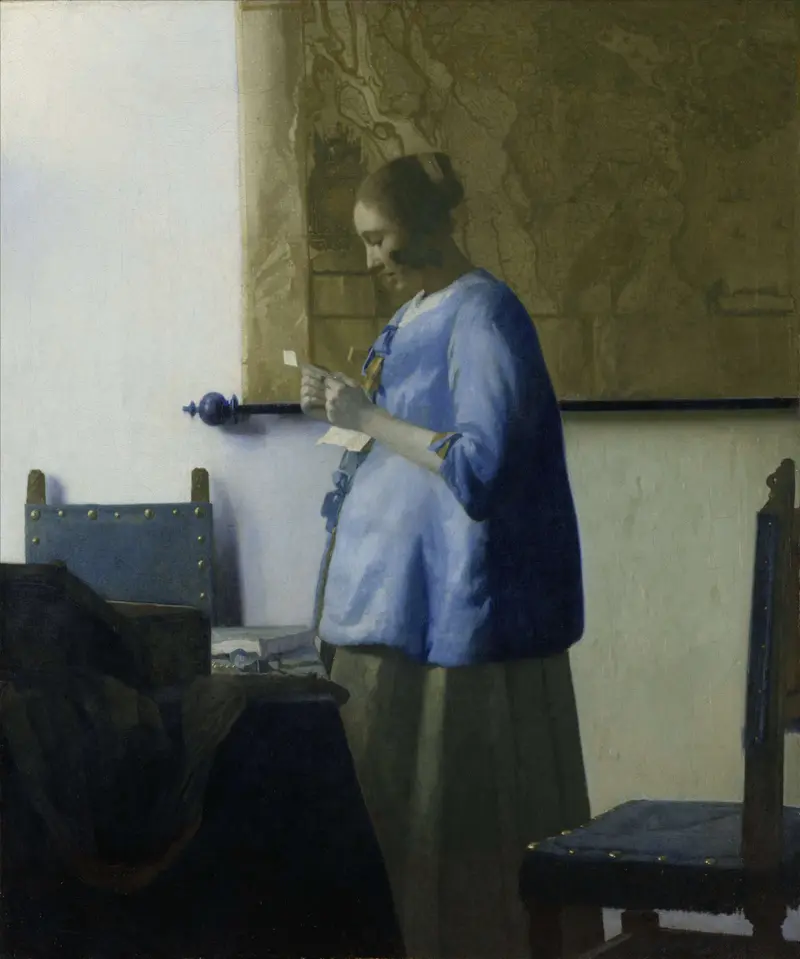
Woman in Blue Reading a Letter
Johannes Vermeer
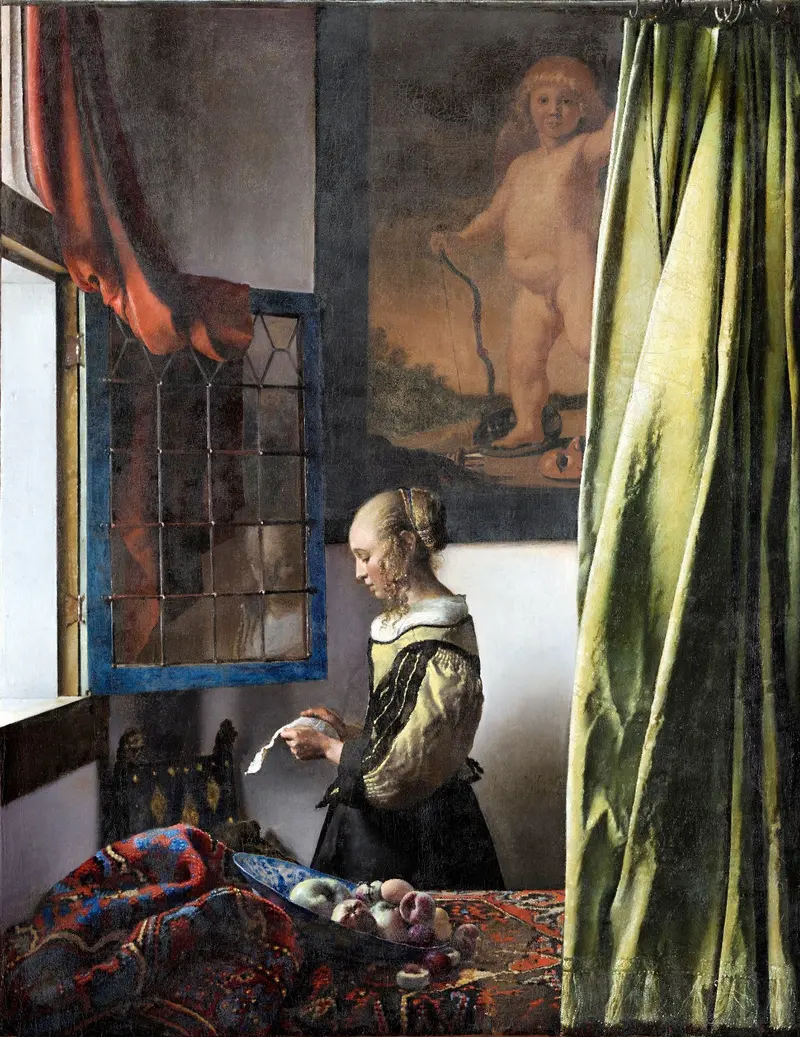
Girl Reading a Letter at an Open Window
Johannes Vermeer
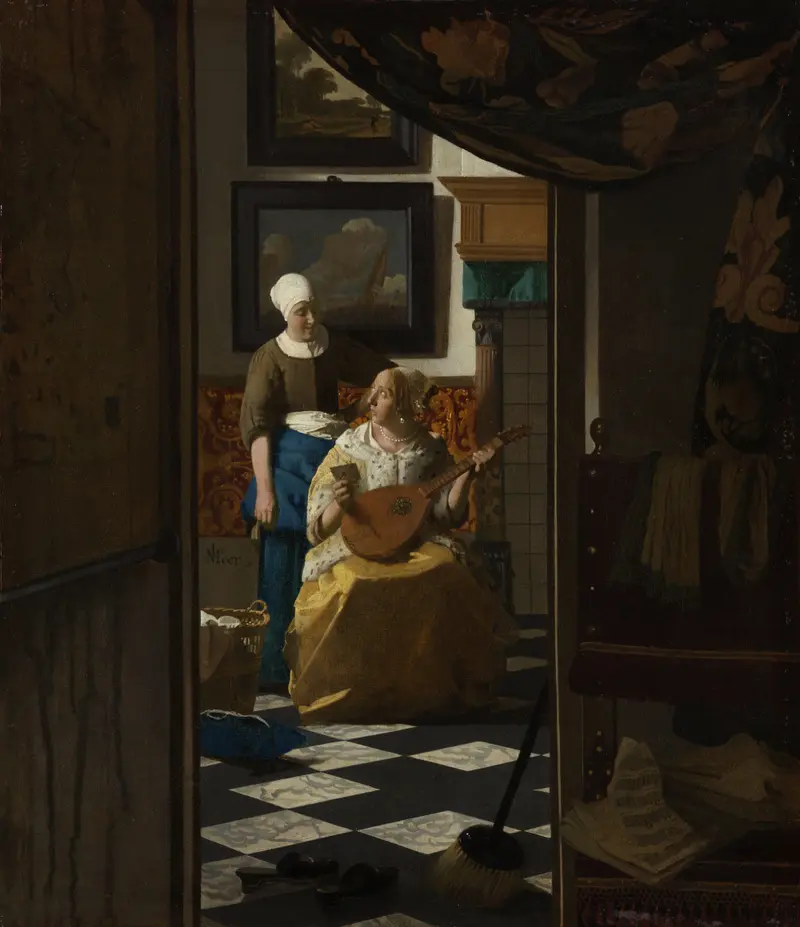
The Love Letter
Johannes Vermeer

The Music Lesson
Johannes Vermeer

A Girl Asleep
Johannes Vermeer
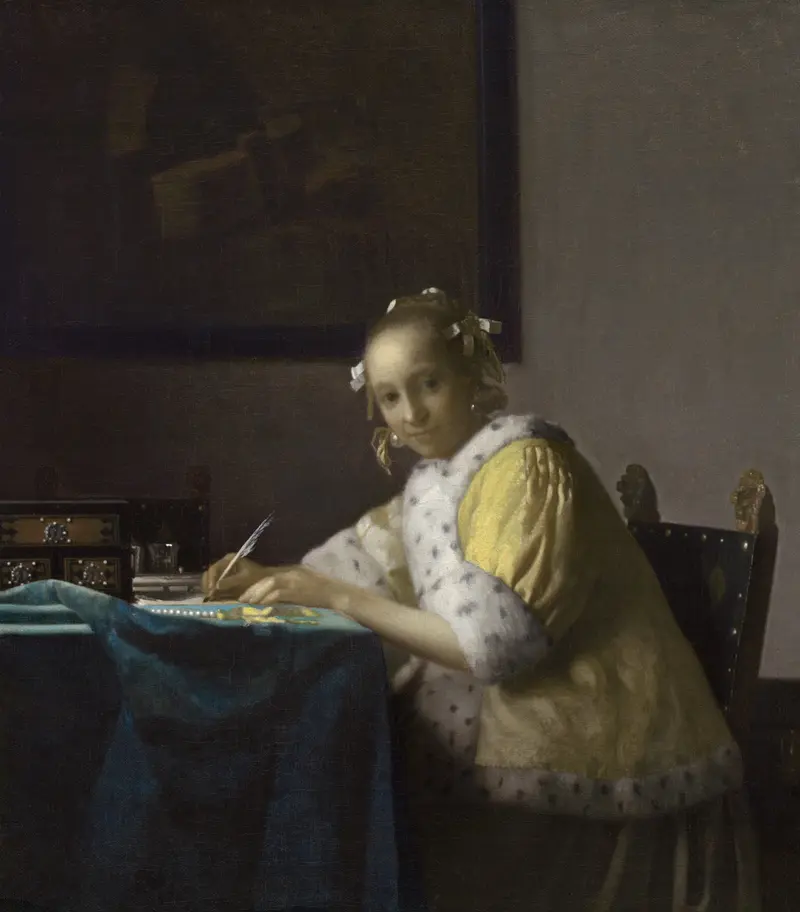
A Lady Writing a Letter
Johannes Vermeer
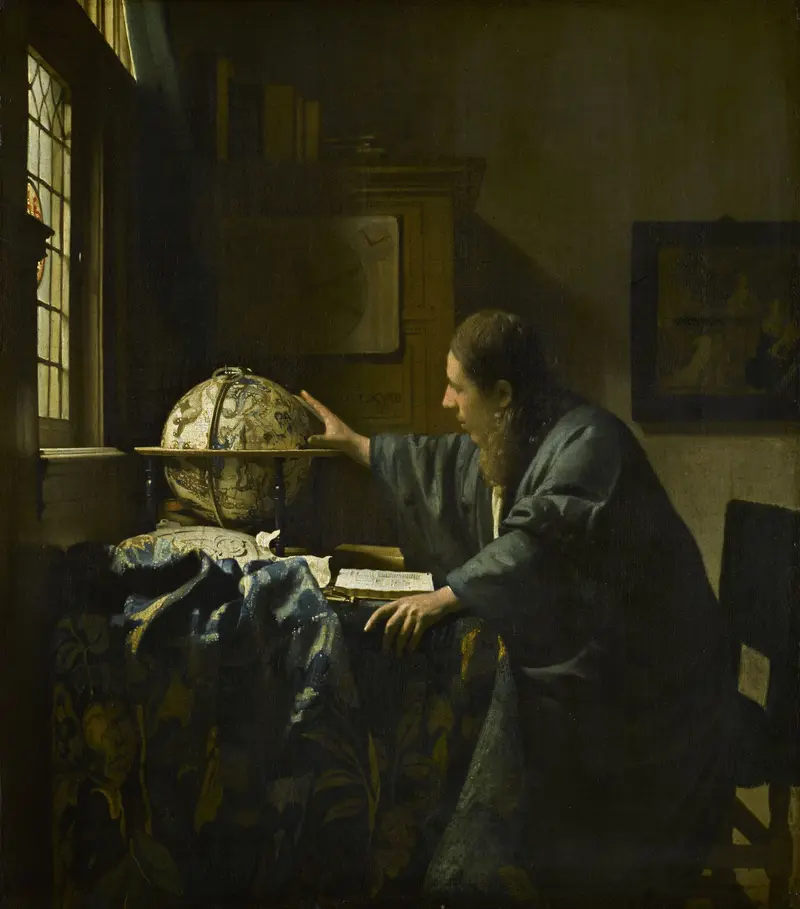
The Astronomer
Johannes Vermeer
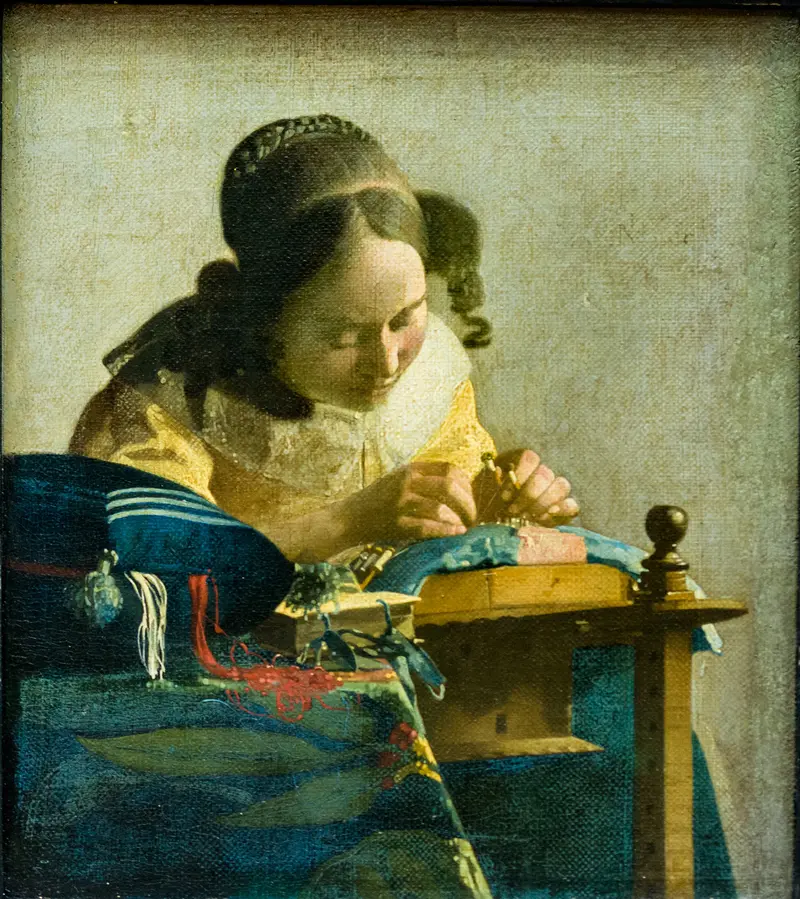
The Lacemaker
Johannes Vermeer





