
The Love Letter — History & Facts
A heavy curtain is drawn back to reveal a sunlit interior, where a woman in a golden skirt sits at the center, holding a cittern in one hand and a letter in the other. Standing just behind her, a maid in a blue skirt and white cap leans forward, her gaze directed toward her seated mistress, as if sharing in the intimacy of the moment. The checkerboard floor recedes in sharp diagonals, its black and white tiles leading the eye into the room and accentuating the space’s depth.
At the woman's feet, a pair of black slippers lies abandoned, while a broom rests nearby, suggesting a pause in daily routines. The composition is carefully arranged, with the curtain in the foreground creating the sense of a private scene glimpsed by chance, and the detailed brushwork capturing the textures of fabric, wood, and tile. The Love Letter is a genre painting by Johannes Vermeer, created around 1669–1670 during the Dutch Golden Age of painting. The subject is a woman receiving a love letter, as indicated by the letter in her hand and the cittern, a string instrument often associated with love, which she holds across her lap.
The Rijksmuseum notes that the painting belonged to the collection of Pieter van Lennep in Amsterdam before passing to his daughter and then to J.F. van Lennep, and was acquired for the museum in 1893 after a sale in Amsterdam. The work is notable within Vermeer’s oeuvre as the only one to include a seascape, visible in the lower of the two paintings on the wall.
Sources: Rijksmuseum, record SK-A-1595 · Wikidata Q735061 · Wikipedia: The Love Letter (Vermeer)
More Artworks by Johannes Vermeer

View of Delft
Johannes Vermeer

Girl with a Pearl Earring
Johannes Vermeer
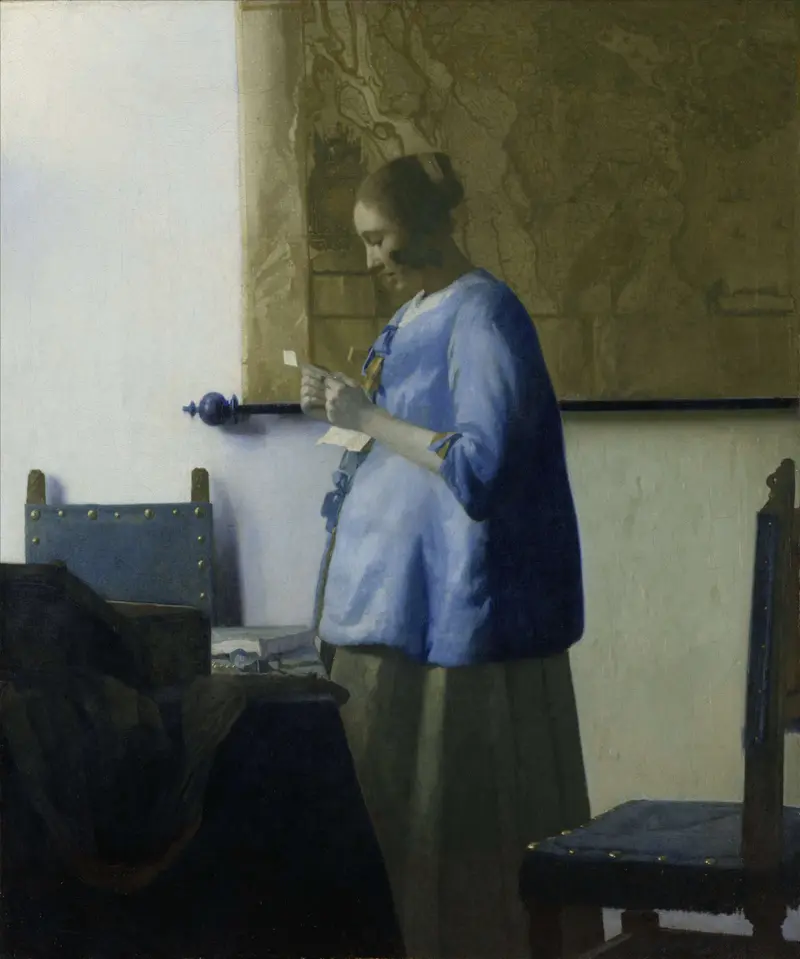
Woman in Blue Reading a Letter
Johannes Vermeer
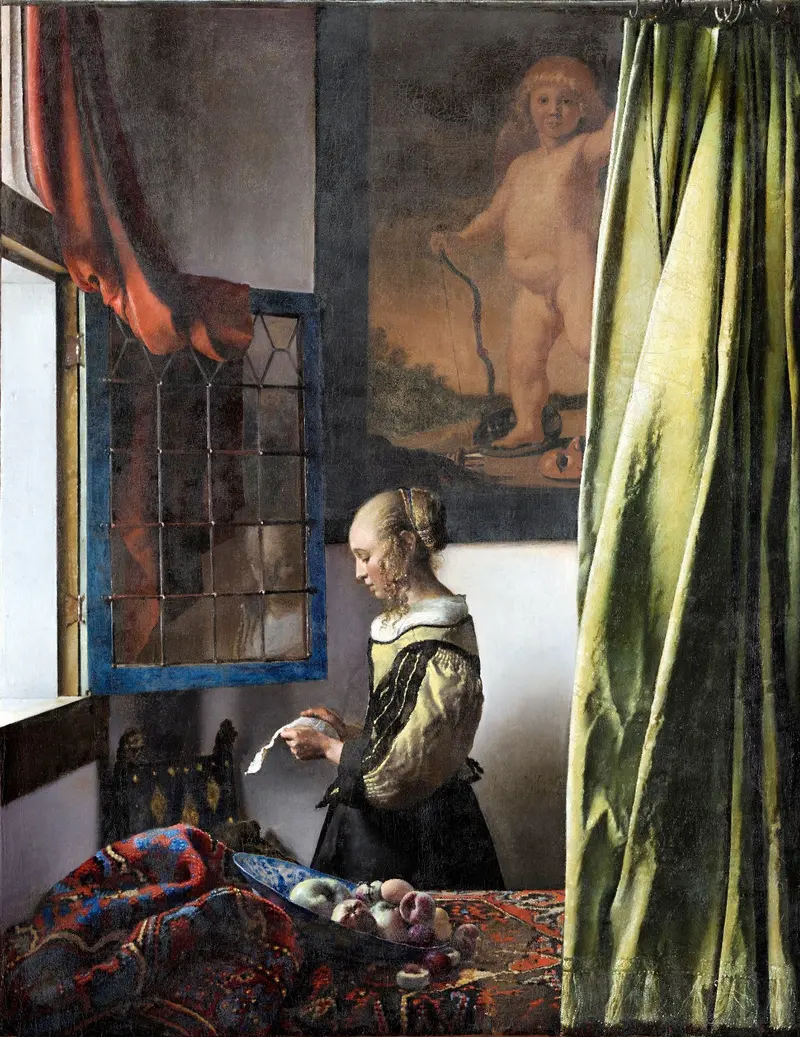
Girl Reading a Letter at an Open Window
Johannes Vermeer

The Music Lesson
Johannes Vermeer

A Girl Asleep
Johannes Vermeer
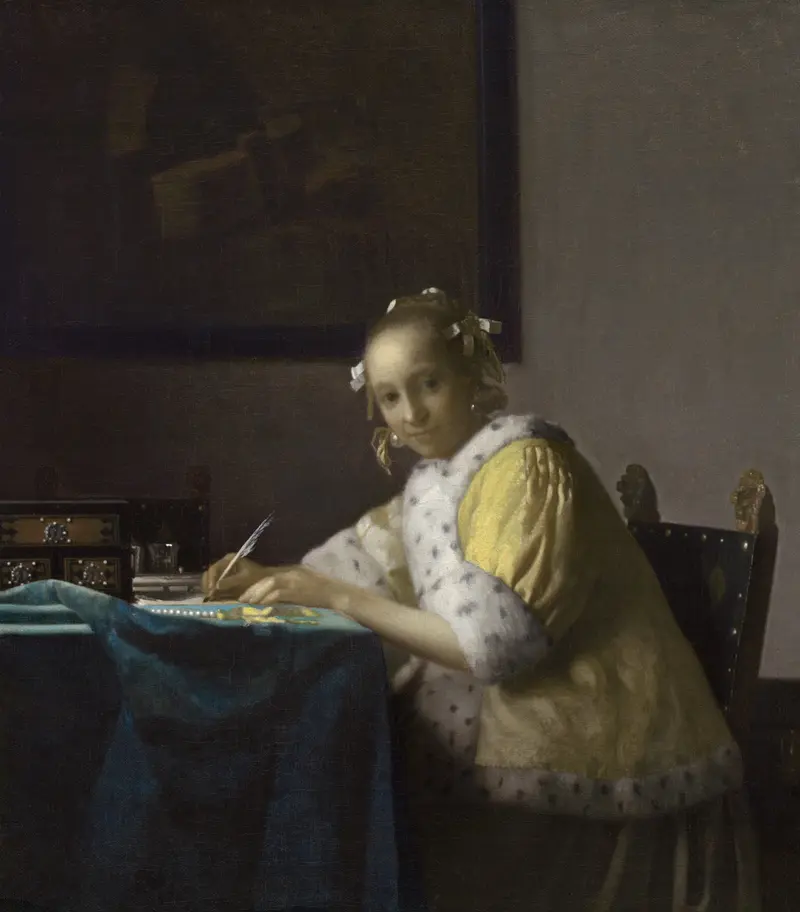
A Lady Writing a Letter
Johannes Vermeer
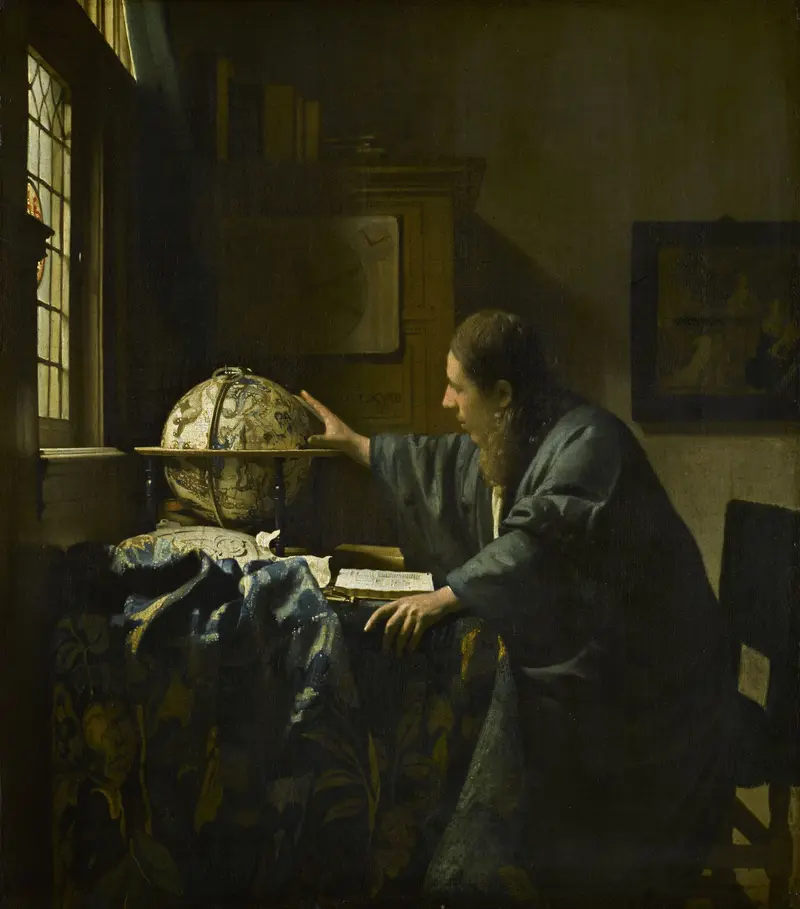
The Astronomer
Johannes Vermeer
The Lacemaker
Johannes Vermeer
The Guitar Player
Johannes Vermeer
More Genre Scene Art

Banquet of the Officers of the St George Civic Guard
Frans Hals

Rembrandt and Saskia in the Scene of the Prodigal Son
Rembrandt van Rijn

Bal du moulin de la Galette
Pierre-Auguste Renoir

Quadrille at the Moulin Rouge
Henri de Toulouse-Lautrec

A Burial at Ornans
Gustave Courbet

When Will You Marry?
Paul Gauguin