
Die Große Seestrasse in Wannsee mit Spaziergängern — History & Facts
In Die Große Seestrasse in Wannsee mit Spaziergängern, the canvas pulses with a delicate obsession for the fleeting moments of life. It captures not just a scene, but a timeless reverie, inviting the viewer to linger in its embrace of leisure and silent conversations. Focus on the gentle curve of the path in the foreground, where figures meander, lost in their thoughts. Notice how the dappled sunlight filters through the trees, casting playful patterns that dance upon the ground.
The palette is rich yet muted, with greens and blues weaving together to evoke the tranquility of the lakeside. Each brushstroke seems deliberate, drawing you deeper into the serene atmosphere, where every detail—the soft rustle of leaves, the slight tilt of a hat—invites contemplation. Yet, beneath this surface beauty lies a tension, a subtle yearning. The figures, though engaging in leisure, convey a sense of isolation, perhaps reflecting a post-war introspection that lingered in the air.
The juxtaposition of public space and private thoughts illustrates a collective yet individualized experience, revealing an obsession with both nature and the human condition. The hidden dialogues between figures suggest relationships that may be as temporary as the light that illuminates the scene. In 1920, Max Liebermann was deeply entrenched in his career, navigating the complexities of a world changed by war. He painted this piece in Berlin, a city grappling with the aftermath of conflict, where artists like him sought solace and inspiration from nature.
This painting not only illustrates a moment of leisure but also encapsulates a broader cultural longing for peace and normalcy in a society still reeling from upheaval.
More Artworks by Max Liebermann
Browse all →
Die Blumenterrasse in Wannsee mit Blick auf den Fischotterbrunnen
Max Liebermann
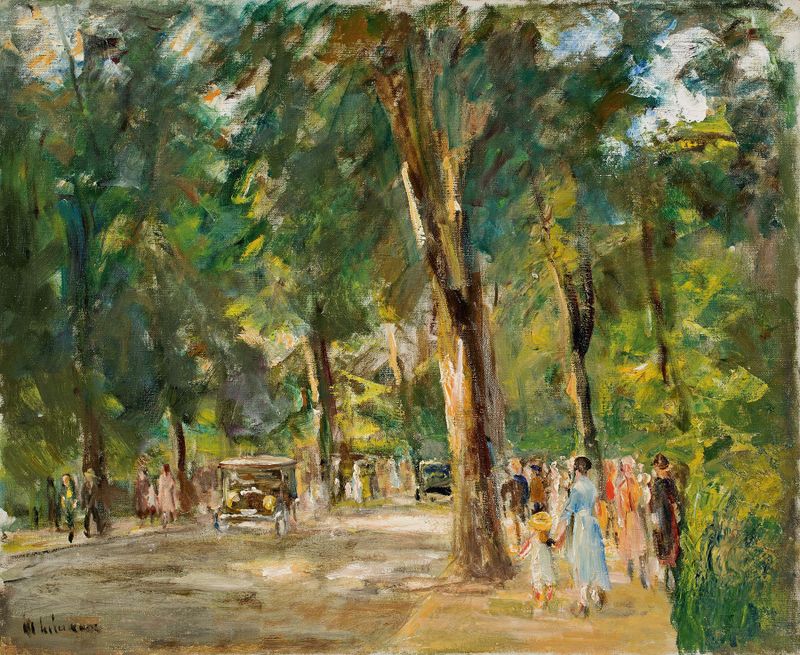
Die Große Seestraße in Wannsee mit Spaziergängern
Max Liebermann

Seitlicher Blick in den Wannseegarten
Max Liebermann

Der Rosengarten in Wannsee
Max Liebermann

Allee mit Spaziergängern und Automobilen
Max Liebermann

Blick in meinen Garten
Max Liebermann
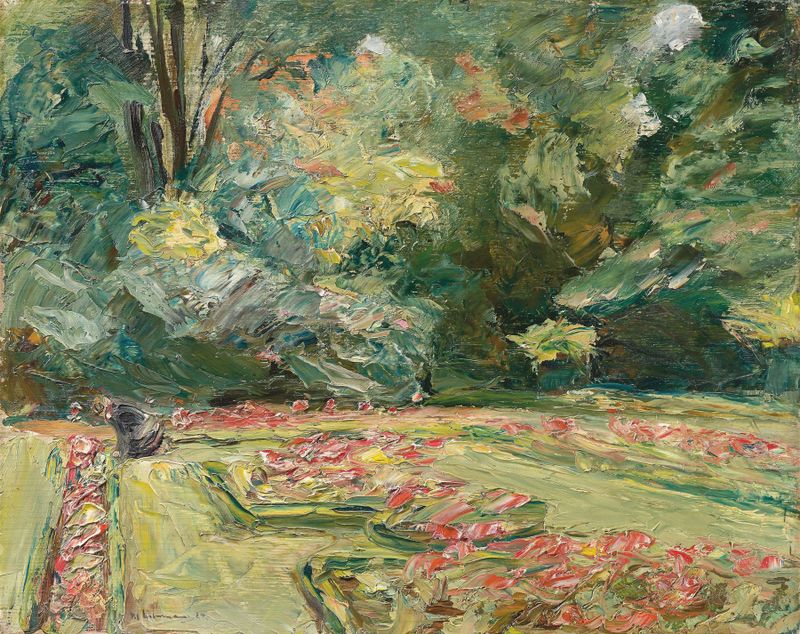
Die Blumenterrasse im Wannseegarten nach Norden
Max Liebermann

Spielende Kinder am Strand
Max Liebermann
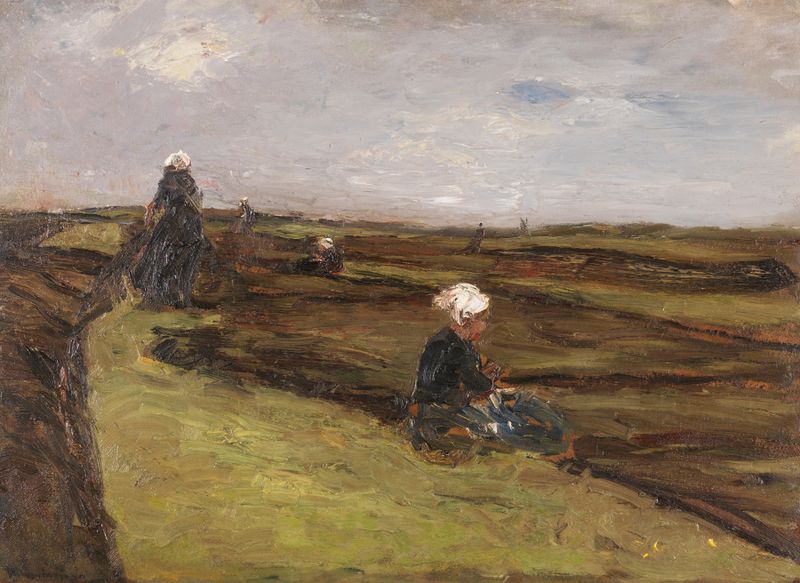
Die Netzflickerinnen
Max Liebermann

Am Strand von Noordwijk
Max Liebermann





