
Distant View of Niagara Falls — History & Facts
Could beauty survive in a century of chaos? The question lingers as we gaze upon a breathtaking expanse, where nature's raw power meets serene aesthetics. In Distant View of Niagara Falls, the viewer is invited to contemplate the delicate balance between obsession and tranquility, as the majestic falls cascade into a world that feels both untouched and vulnerable. Focus your attention on the vibrant greens and blues that envelop the scene. Look to the left, where rolling hills cradle the roaring falls, their frothy waters illuminated by the gentle embrace of sunlight.
Notice how Cole masterfully employs light and shadow to create depth, drawing your eye toward the tumultuous waters that symbolize nature's unstoppable force. The careful brushstrokes create a sense of movement, while the distant mountains stand as silent witnesses, grounding the composition with their steadfast presence. At first glance, the painting speaks of beauty and grandeur, but delve deeper, and you uncover an underlying tension. The lush foliage contrasts with the violent cascade, evoking a sense of the sublime—where awe coexists with fear.
The idyllic setting is simultaneously a reminder of nature's fragility in the face of human obsession with conquest and exploration. Here, Cole captures the paradox of a landscape both breathtaking and intimidating, inviting reflection on humanity's relationship with its environment. Created in 1830, this work reflects a period in which Thomas Cole was exploring themes of nature and civilization. Working in the Hudson River School tradition, he became a pivotal figure in American landscape painting.
At this time, the nation was experiencing rapid industrialization and expansion, leading to significant environmental concerns. Cole's art challenged viewers to appreciate the beauty of untouched landscapes while contemplating the consequences of progress.
More Artworks by Thomas Cole
Browse all →
View from Mount Holyoke, Northampton, Massachusetts, after a Thunderstorm—The Oxbow
Thomas Cole
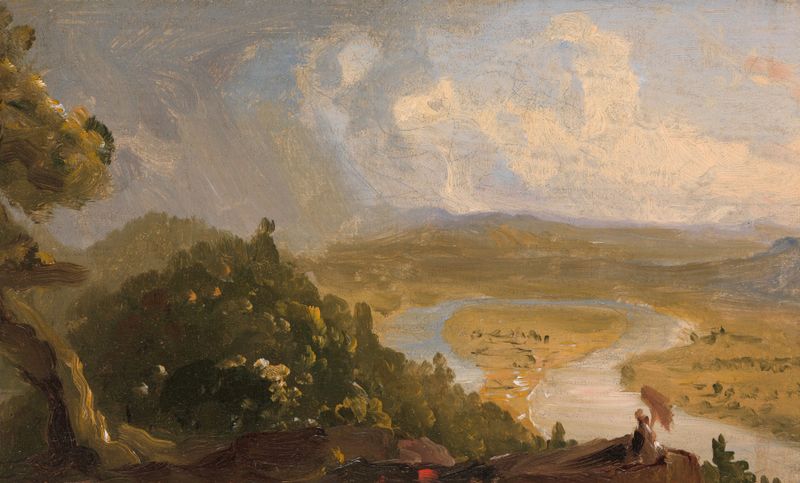
Sketch for View from Mount Holyoke, Northampton, Massachusetts, after a Thunderstorm (The Oxbow)
Thomas Cole
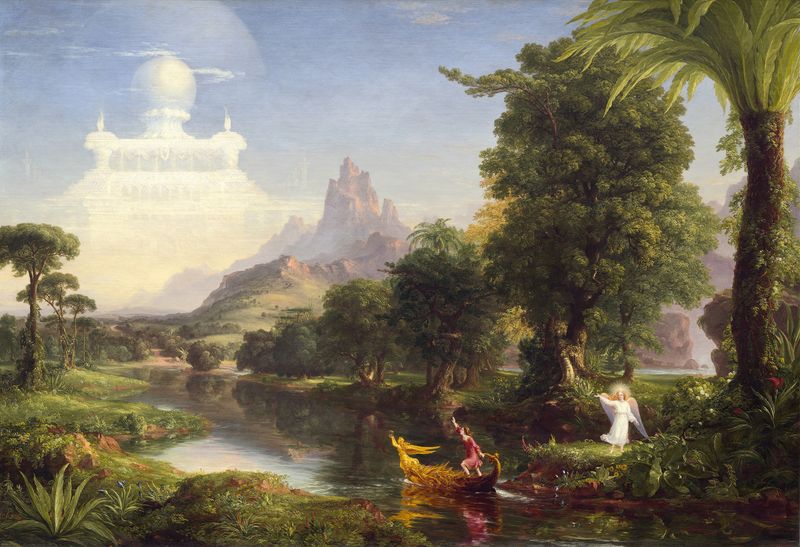
The Voyage of Life – Youth
Thomas Cole
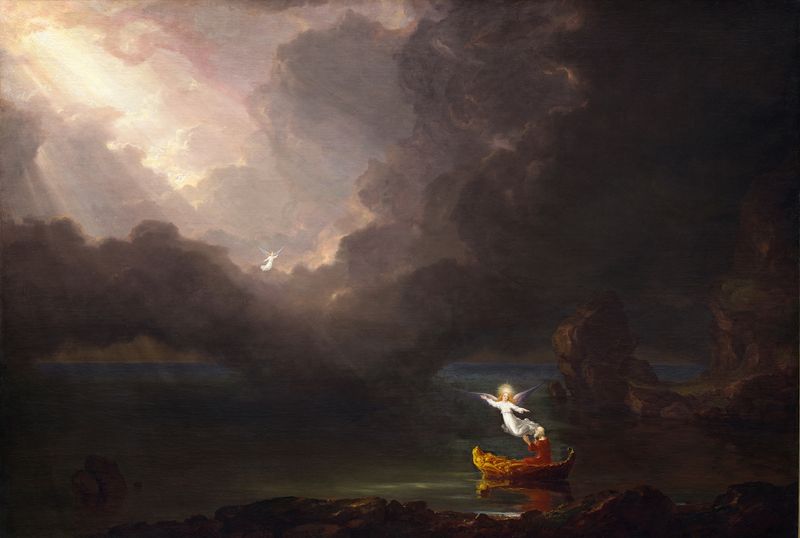
The Voyage of Life – Old Age
Thomas Cole
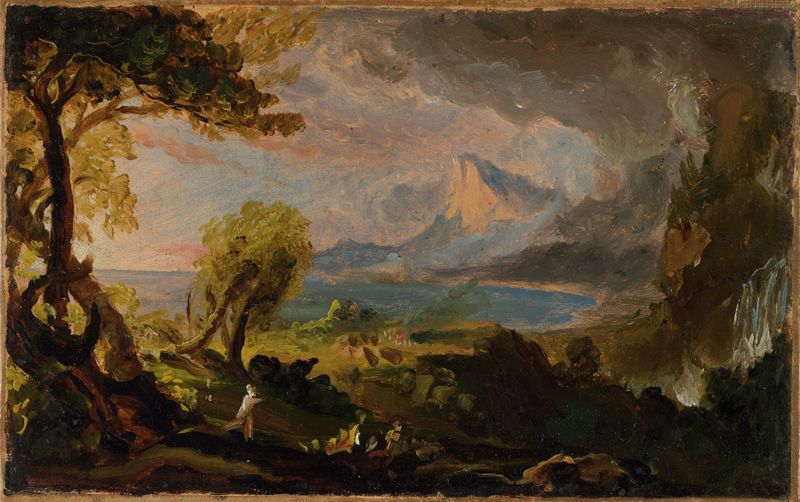
The Course of Empire–The Savage State
Thomas Cole

Landscape
Thomas Cole

New England Scenery
Thomas Cole

Sunrise in the Catskills
Thomas Cole
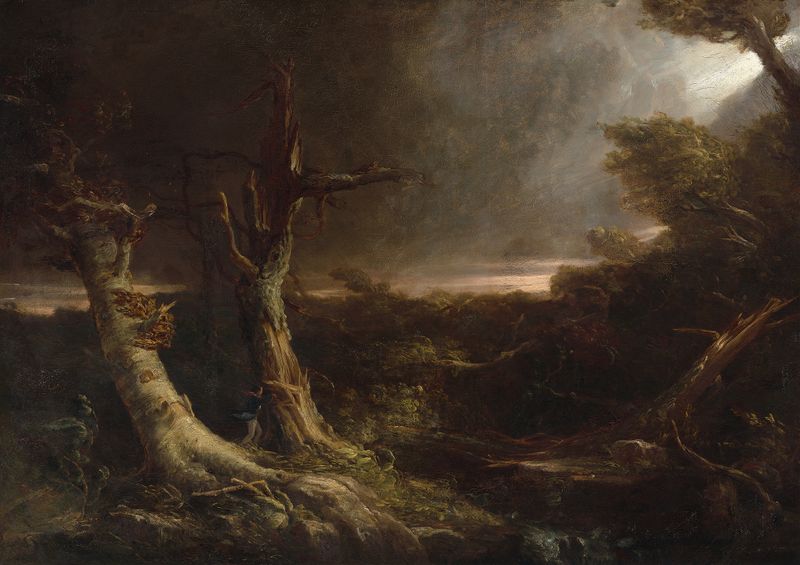
Tornado in an American Forest
Thomas Cole
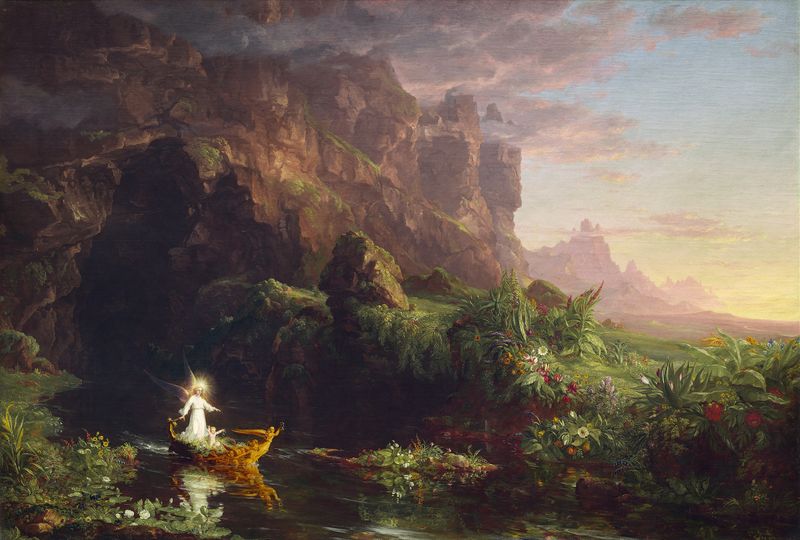
The Voyage of Life – Childhood
Thomas Cole





