
Démolition du Pont Saint Michel. — History & Facts
In Démolition du Pont Saint Michel, shadows weave through the remnants of a bridge, mirroring the echoes of a world transforming. The viewer is invited to reflect on the passage of time, a haunting reminder of what once stood proud against the Parisian skyline. Look to the left at the crumbling stonework, where light plays softly on the jagged edges. The muted palette of grays and browns draws the eye, evoking the somber mood of a city in flux.
Notice how the silhouette of the bridge looms above the workers below, their figures dwarfed yet resolute, embodying the human struggle against relentless change. The composition skillfully contrasts the solidity of the ruins with the fragility of the figures, capturing the tension of destruction and progress. The hidden meanings in this work resonate deeply. The shadows cast by the dilapidated structure evoke a sense of nostalgia for an era passed, while simultaneously hinting at the inevitable march of modernization.
The workers, absorbed in their task, symbolize resilience; they are the custodians of history, tasked with both dismantling and rebuilding. This duality of destruction and creation infuses the piece with emotional depth, prompting viewers to consider their own relationship to the past. Auguste-Sébastien Bénard painted Démolition du Pont Saint Michel between 1852 and 1862, a period marked by significant urban transformation in Paris. As Haussmann’s renovation of the city was underway, Bénard captured a moment of upheaval, reflecting the tension between history and the future.
This work stands as a testament to the artist's engagement with contemporary issues, allowing us to glimpse the complexities of a rapidly evolving society.
More Artworks by Auguste-Sébastien Bénard
Browse all →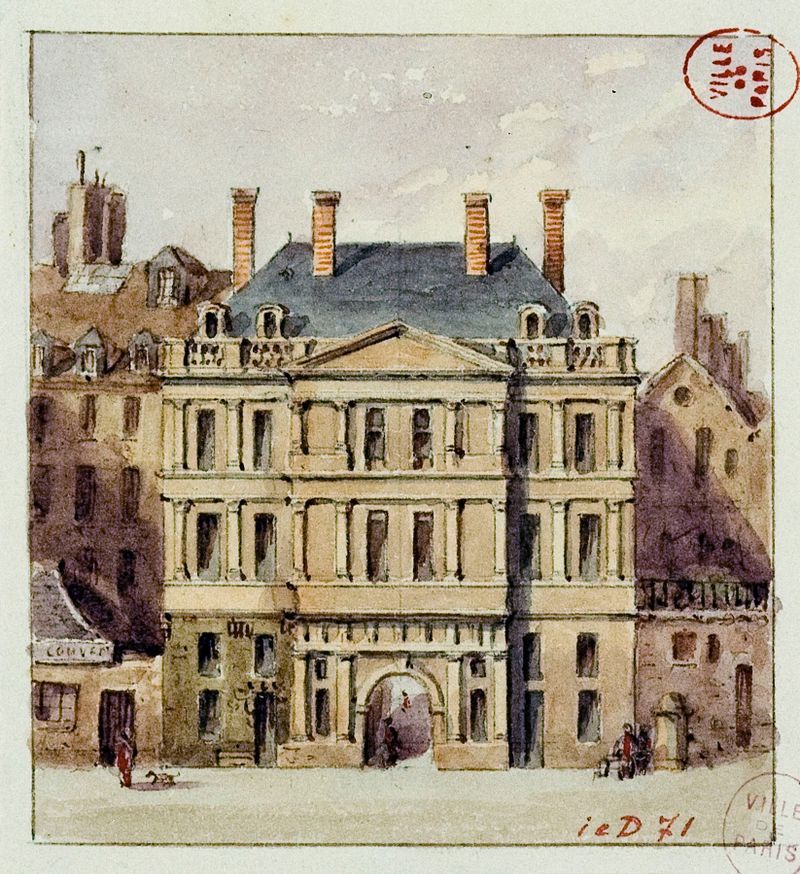
Cour de la Sainte Chapelle.
Auguste-Sébastien Bénard
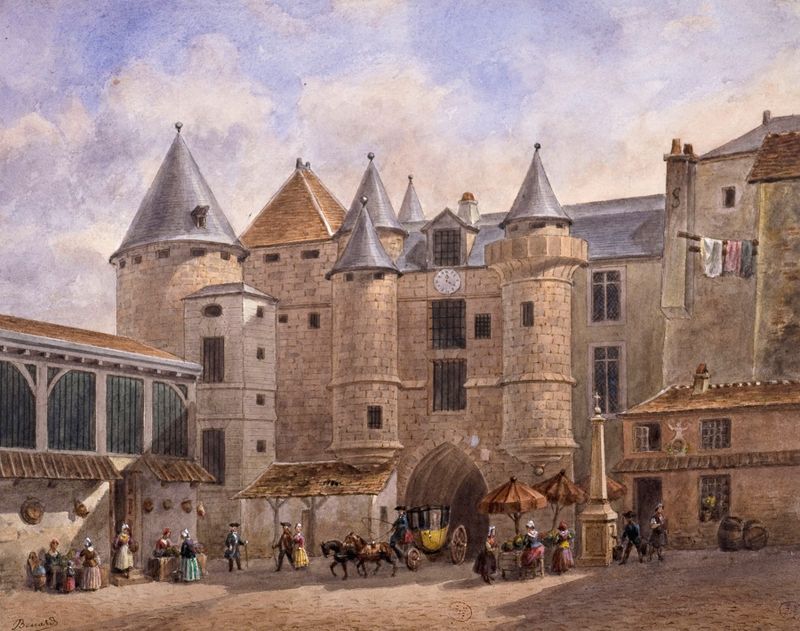
Le Grand Châtelet du XVIIIème siècle.
Auguste-Sébastien Bénard

Place de l’Hôtel de Ville.
Auguste-Sébastien Bénard

Salle souterraine du Palais de Justice.
Auguste-Sébastien Bénard

Voûtes du quai de Gesvres
Auguste-Sébastien Bénard

Monument expiatoire élevé à la mémoire du duc de Berry, à l’emplacement de l’ancien Opéra
Auguste-Sébastien Bénard
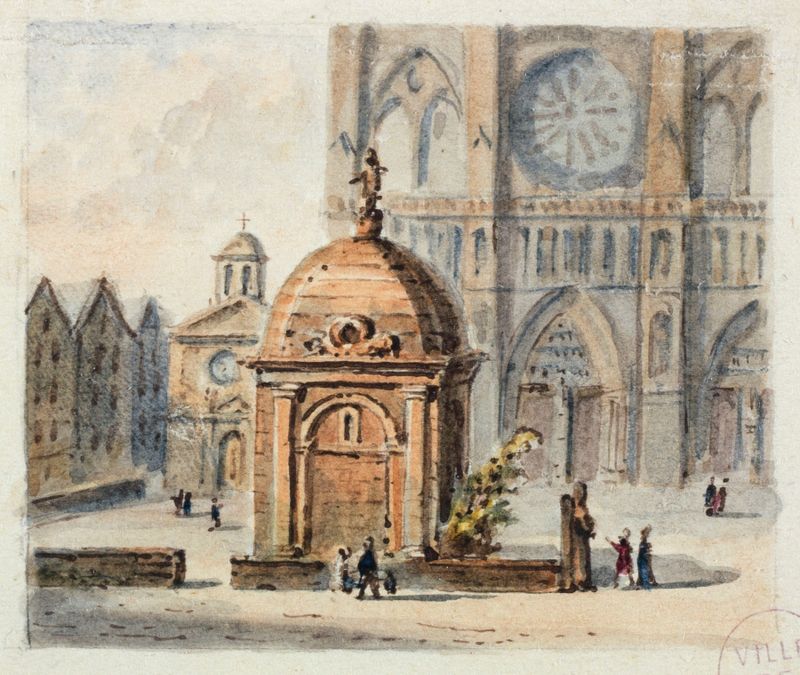
Le parvis de Notre-Dame de Paris
Auguste-Sébastien Bénard

Rue des chantres (entre le quai aux fleurs et la rue Chanoinesse).
Auguste-Sébastien Bénard

L’entrée de l’ancienne forteresse du Grand Châtelet, un jour de Carnaval
Auguste-Sébastien Bénard
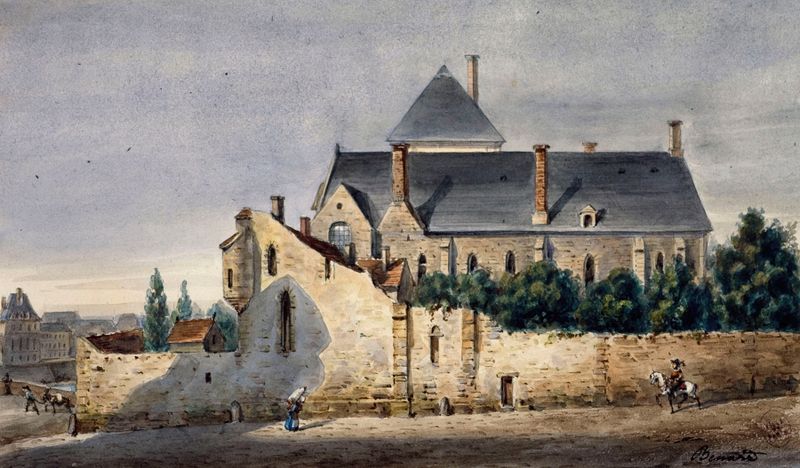
Les restes des bâtiments de l’hôtel du Petit Bourbon.
Auguste-Sébastien Bénard
More Architecture Art
Browse all →
The statue of Liberty
Frédéric Auguste Bartholdi

View of Houses in Delft, Known as ‘The Little Street’
Johannes Vermeer

View of Houses in Delft, Known as ‘The Little Street’
Johannes Vermeer

The Cathedral in Rouen. The portal, Grey Weather
Claude Monet

The yellow house
Vincent van Gogh

The Church in Auvers-sur-Oise, View from the Chevet
Vincent van Gogh