
Dorfstrasse im Winter mit Tränke — History & Facts
Who listens when art speaks of silence? In Dorfstrasse im Winter mit Tränke, an unassuming village scene captures the essence of desire amid a quiet winter landscape. Look to the left at the frost-kissed trees, their branches heavy with snow, creating a nearly monochromatic palette of whites and grays. The winding road, paved with cobblestones, draws the eye towards a distant horizon, hinting at the warmth of a village that lies beyond. Notice how the cool light of the winter sun bathes the scene, illuminating the surface textures of the snow and casting long shadows that evoke a sense of stillness and solitude. Within this tranquil tableau, emotional tensions pulse beneath its serene surface.
The figures, dressed in muted colors, appear absorbed in their tasks, yet their postures convey an undercurrent of yearning—a desire for comfort amidst the harshness of winter. The frozen trough, a focal point in the scene, serves as a reminder of the necessities of life, hinting at the struggle for survival in a season that demands resilience. Each detail—from the subtle trail of footprints in the snow to the distant rooftops—invites contemplation of the villagers' longing for warmth and connection. Created in 1842 in Germany, this piece emerged during a period of significant social change and romanticism in art.
Bürkel, known for his depictions of rural life, painted this work during a time when the art world was increasingly focused on capturing the essence of everyday experiences. The tranquil yet poignant atmosphere reflects not only his personal artistic journey but also the collective desire for simplicity and solace in a rapidly evolving society.
More Artworks by Heinrich Bürkel
Browse all →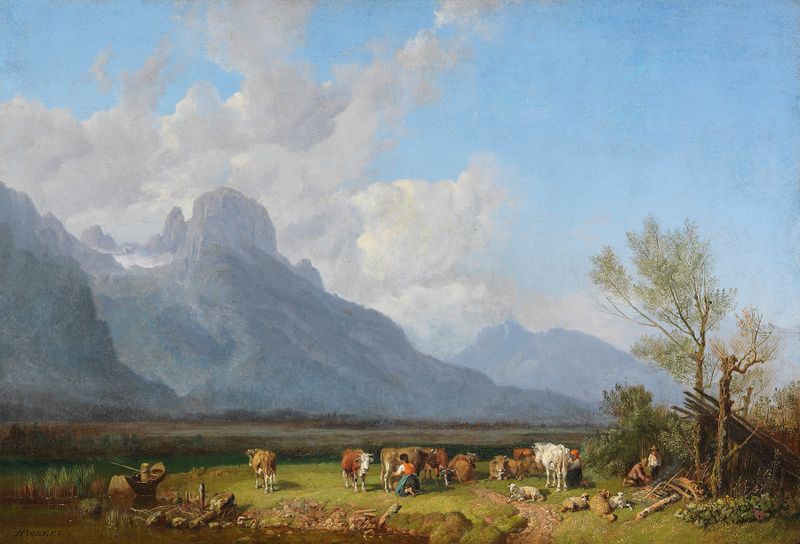
Viehhirten am Seeufer
Heinrich Bürkel
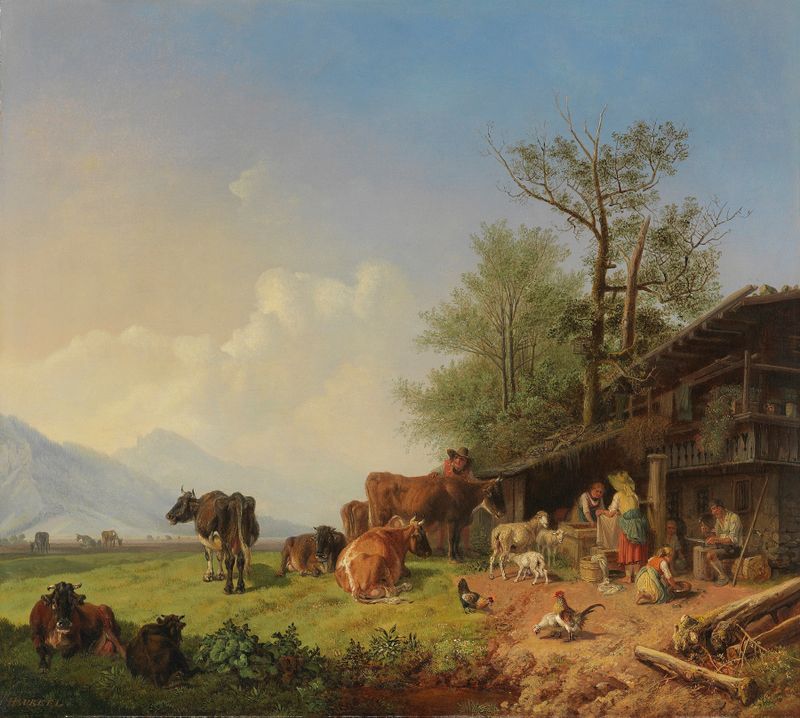
Bauernhof mit Brunnen
Heinrich Bürkel
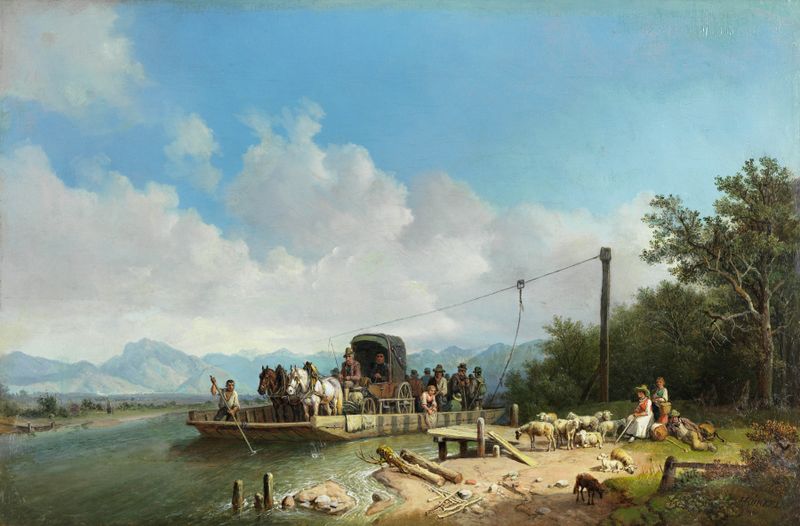
Fähre am Inn
Heinrich Bürkel

Am Dorfbrunnen in den italienischen Bergen
Heinrich Bürkel

Italienische Hirtenfamilie in der Felsenhöhle
Heinrich Bürkel
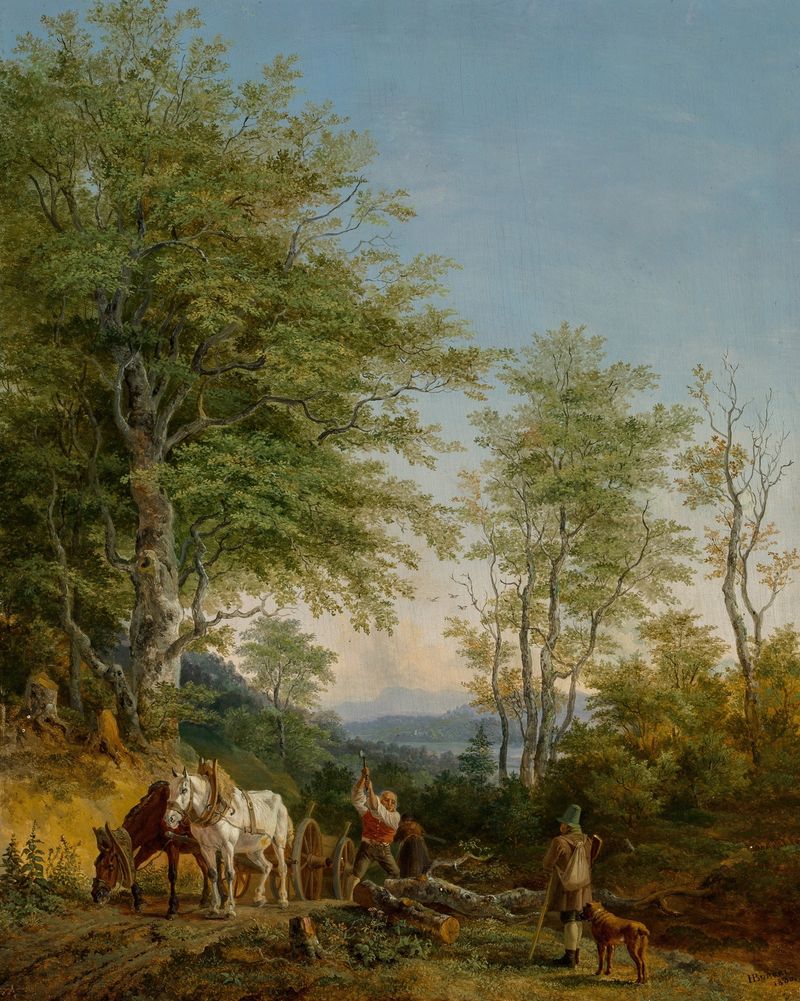
An Italianate wooded landscape with a woodcutter and his team of horses and a passerby with his dog
Heinrich Bürkel
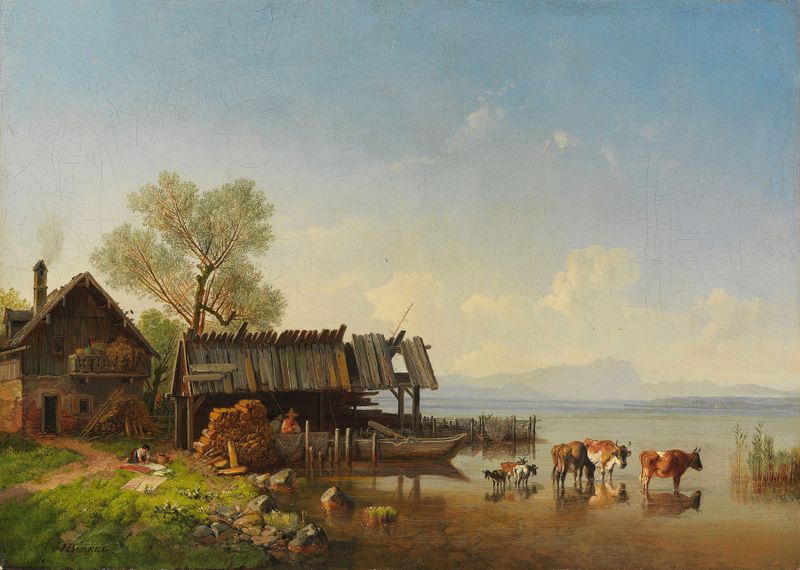
Der Starnberger See mit Blick auf das Wettersteingebirge
Heinrich Bürkel
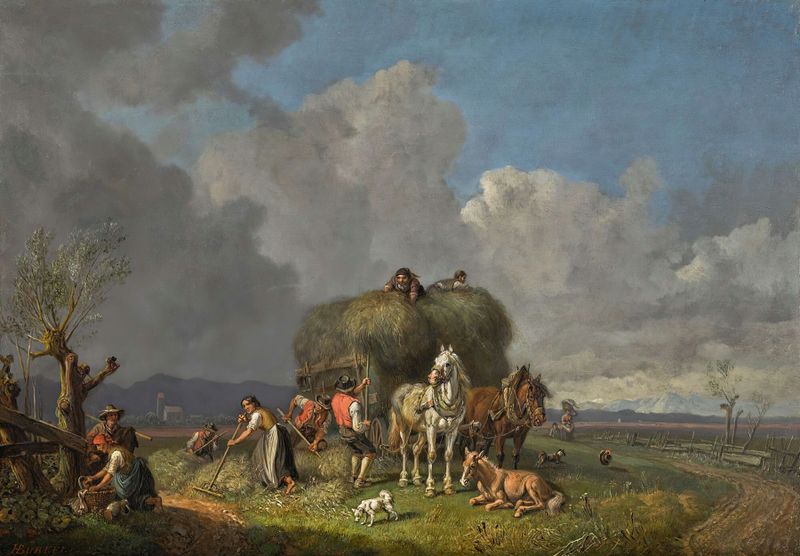
The Hay Harvest
Heinrich Bürkel
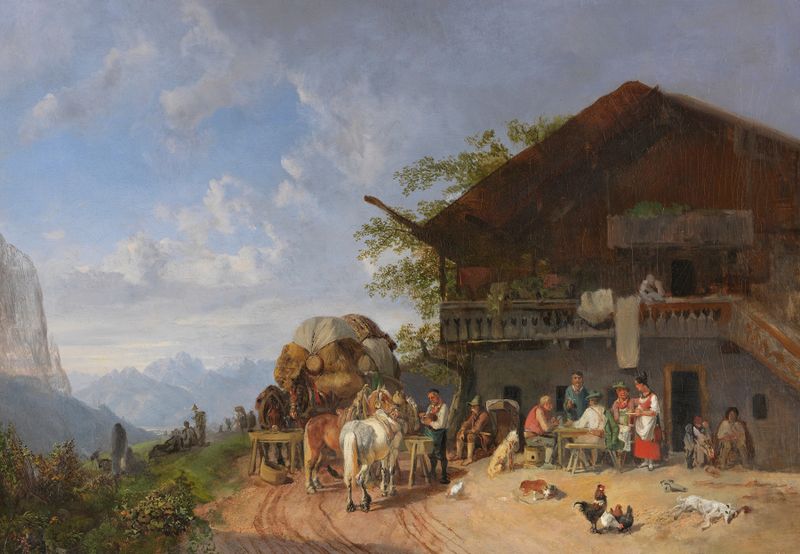
Rast vor einem Gasthof in den Bergen
Heinrich Bürkel

Blick auf den Monte Circeo
Heinrich Bürkel





