
Dr. Johnson’s House in 8 Bolt Court, Fleet Street — History & Facts
The canvas doesn’t lie — it simply waits. In the quietude of a moment caught in time, history stands still, inviting us to ponder the stories held within its walls and the lives that played out beneath its roof. Look closely at the architectural details on the left, where the soft, muted colors breathe life into the brick façades. The delicate interplay between shadow and light enhances the texture of the structures, drawing your gaze along the uneven cobblestones that lead the eye into the heart of a bygone era.
Notice how the artist captures the essence of the scene with a subtle palette, allowing the warm earth tones to evoke a feeling of nostalgia, yet simultaneously grounding it in a tangible reality. The tension in this composition lies in its juxtaposition of permanence and transience. The sturdy presence of Dr. Johnson’s house stands firm against the fleeting impressions of daily life that ripple through the streets.
Each window, a forgotten expression of the past; each detail, a whisper of the laughter, debate, and contemplation that once filled the air. The viewer is left to reflect on the passage of time, the layers of history, and how they shape our understanding of the present. John Thomas Smith painted this work during a period of significant change in early 19th-century England, when the Romantic movement was gaining momentum. Living in London, Smith was deeply influenced by the culture surrounding him, capturing urban life and its intricacies.
His works often served as a commentary on the rapidly evolving world, and this particular piece reflects both his admiration for historical architecture and the nostalgia for a fading past.
More Artworks by John Thomas Smith
Browse all →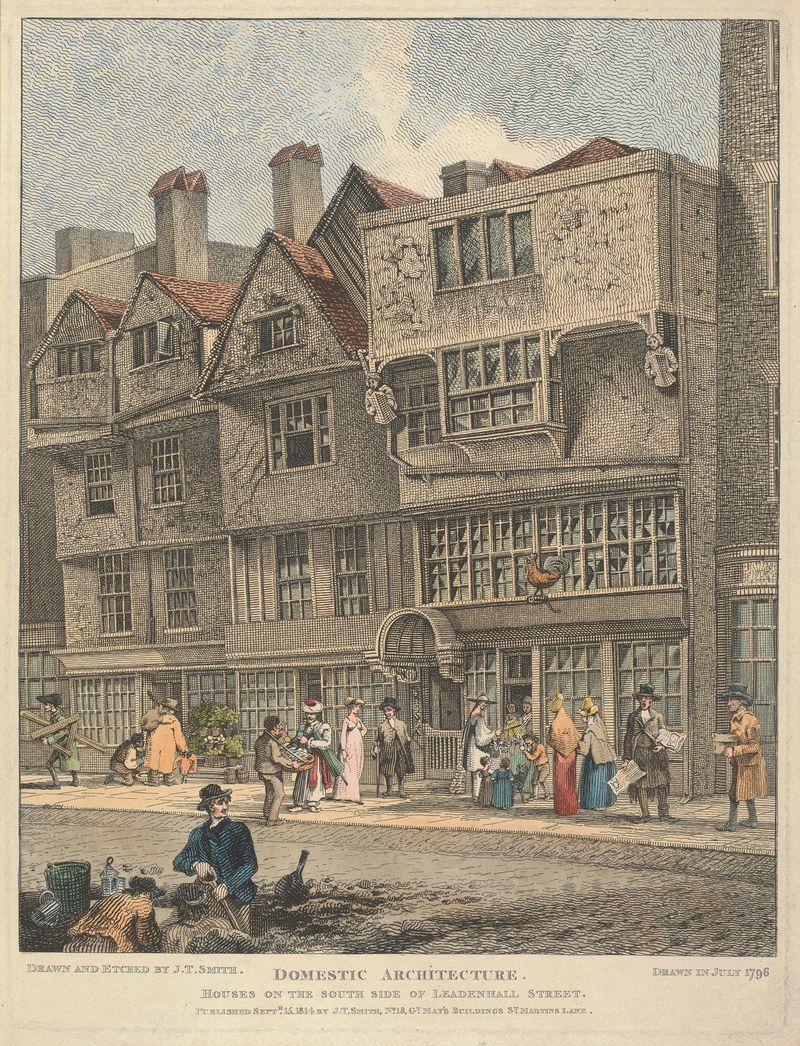
Houses on the South Side of Leadenhall Street
John Thomas Smith
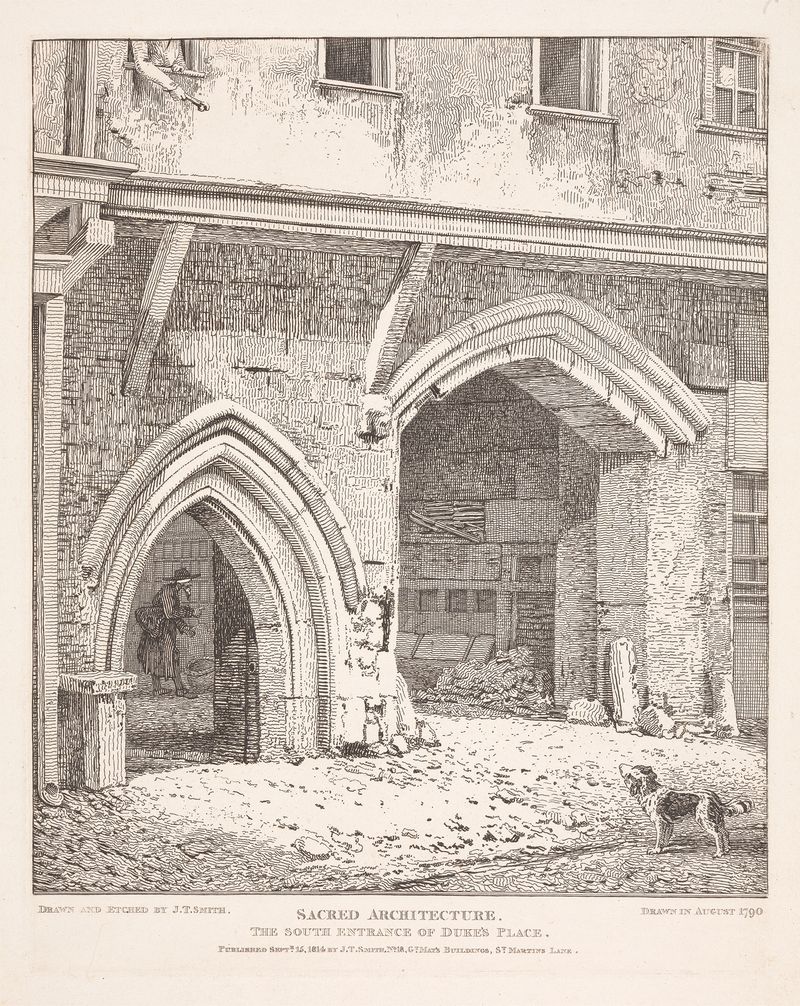
Sacred Architecture; the South Entrance of Dukes Place
John Thomas Smith
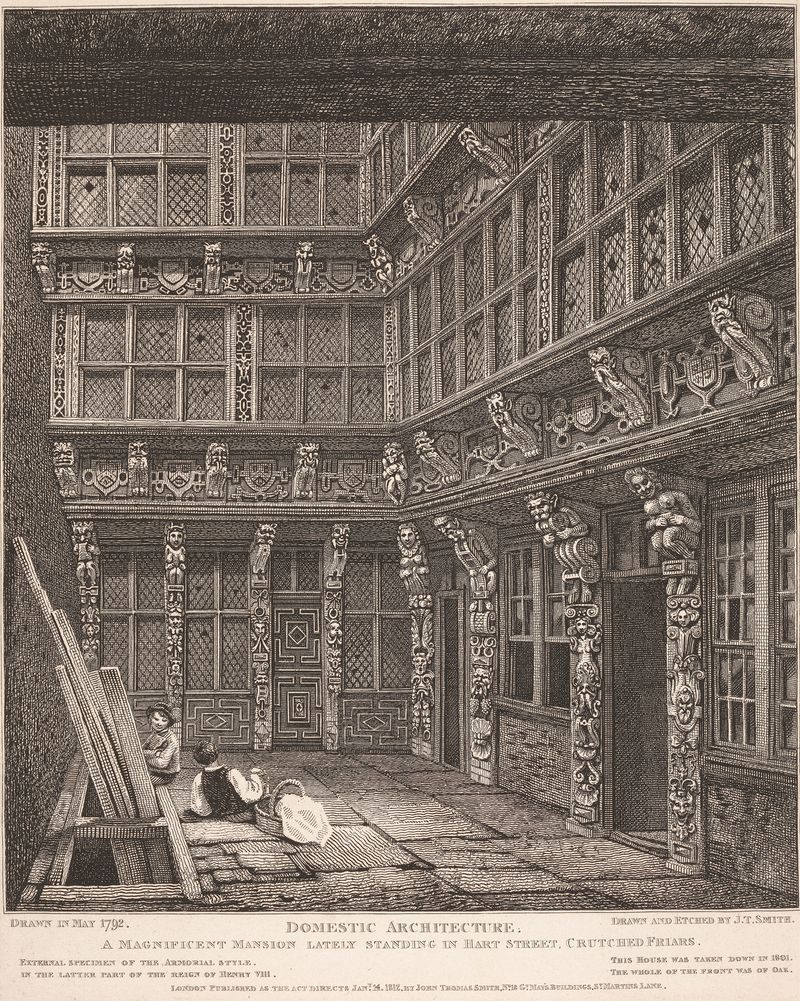
Domestic Architecture, A Magnificent Mansion Lately Standing in Hart Street, Crutched Friars
John Thomas Smith
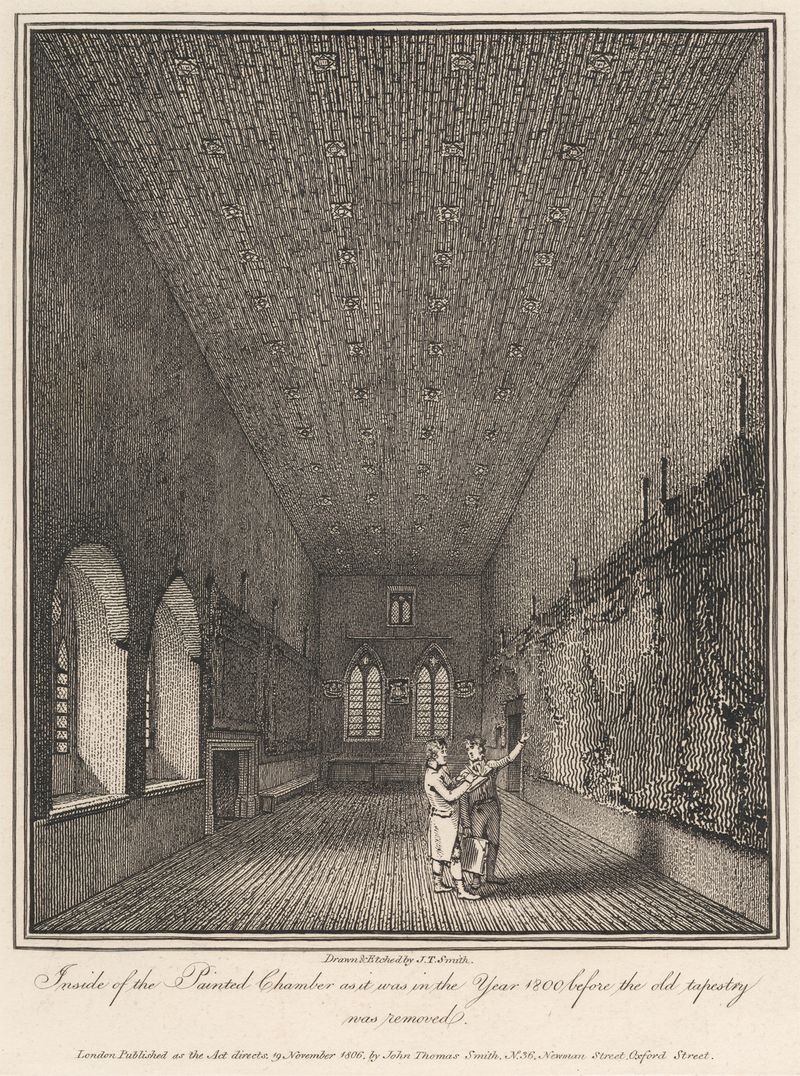
Inside the Painted Chamber as it was in the year 1800 before the old tapestry was removed
John Thomas Smith
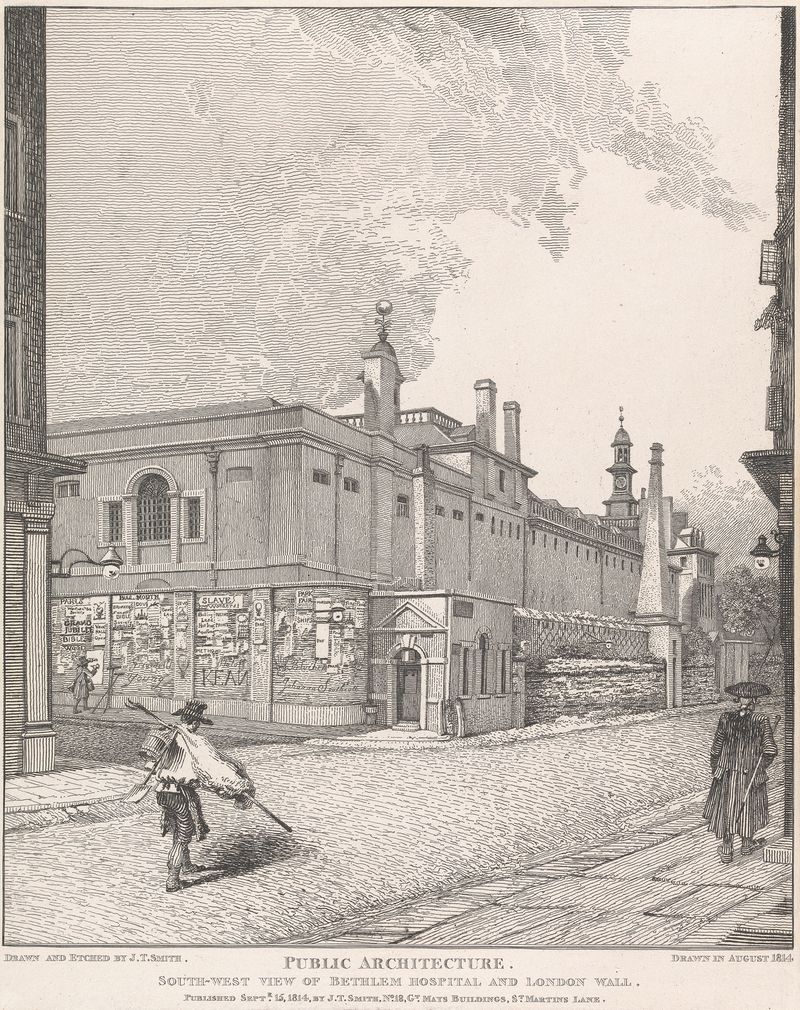
South West View of Bethlem Hospital and London Wall
John Thomas Smith

Winchester Street, London Wall
John Thomas Smith
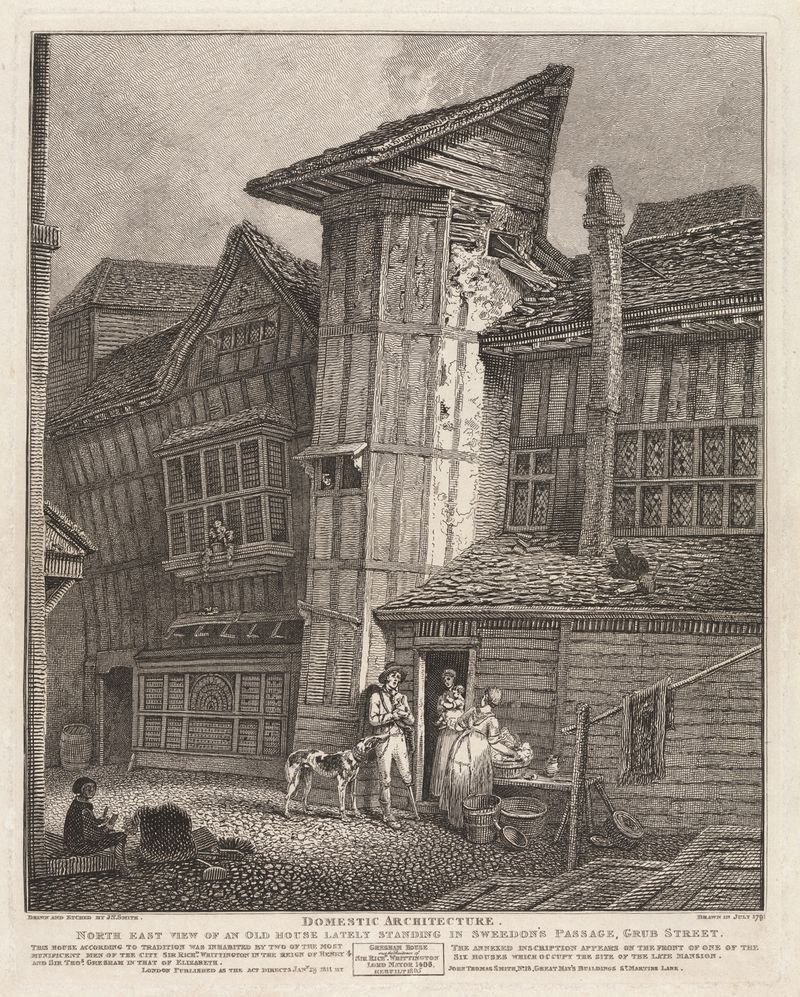
Domestic Architecture – N. E. View of an Old House lately Standing in Sweedon’s Passage, Grub Street
John Thomas Smith

Houses on the South SIde of a Street called London Wall
John Thomas Smith
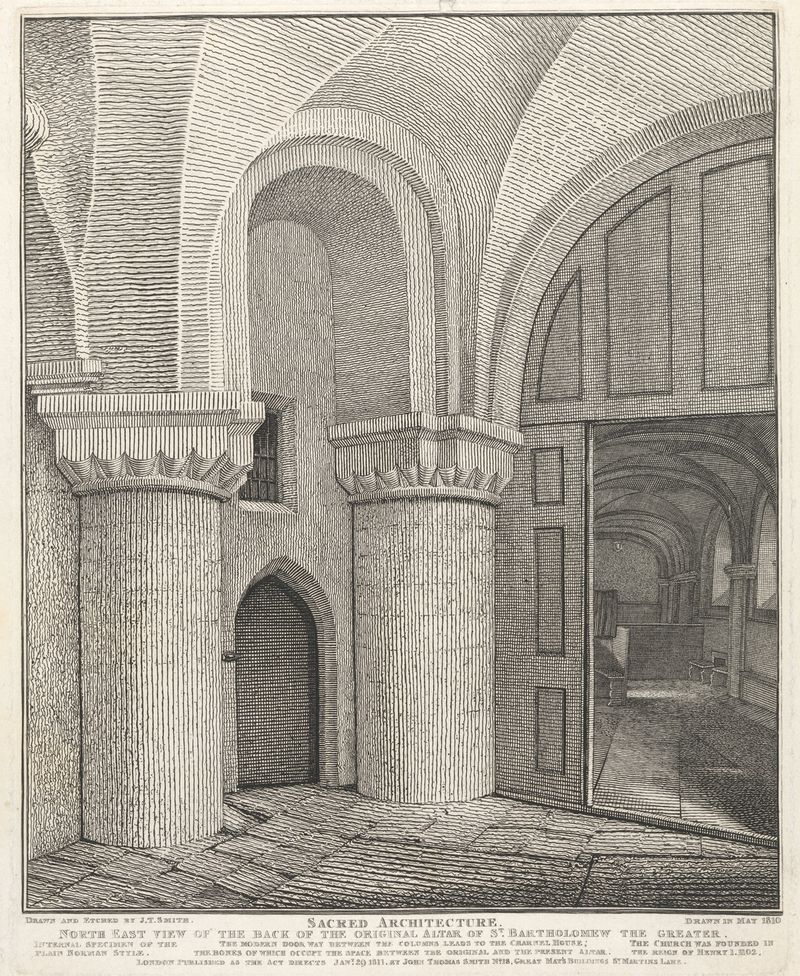
Northeast View of the Back of the Original Altar of St. Barts the Great
John Thomas Smith
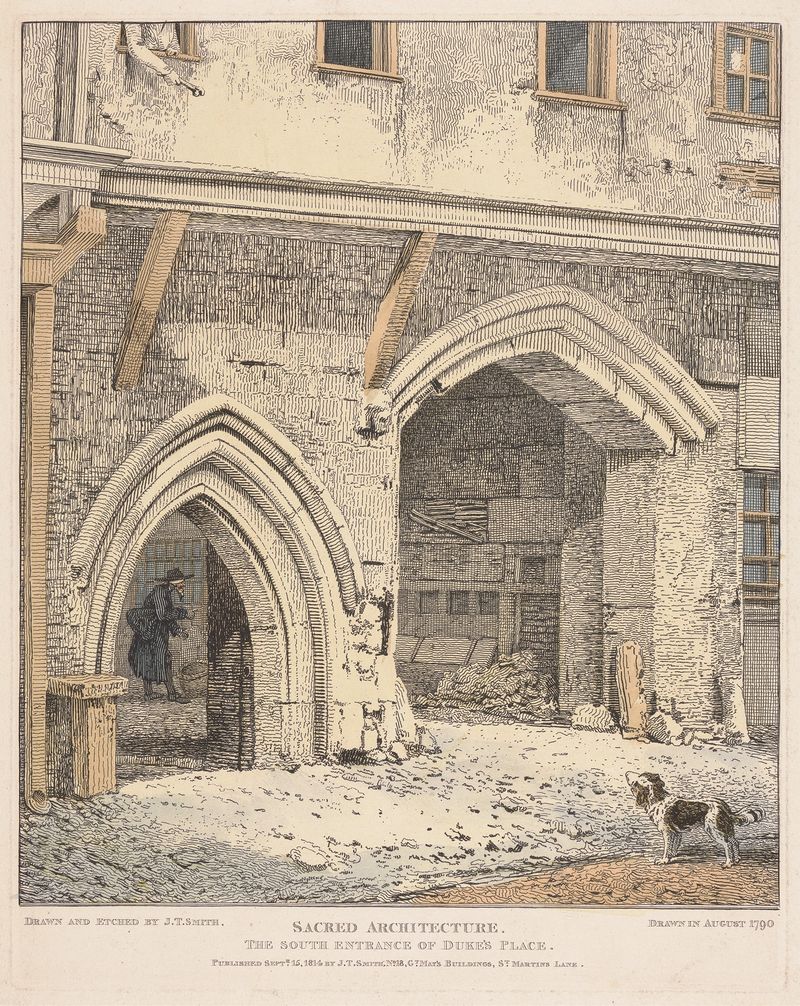
The South Entrance of Duke’s Place
John Thomas Smith
More Architecture Art
Browse all →
The statue of Liberty
Frédéric Auguste Bartholdi

View of Houses in Delft, Known as ‘The Little Street’
Johannes Vermeer

View of Houses in Delft, Known as ‘The Little Street’
Johannes Vermeer

The Cathedral in Rouen. The portal, Grey Weather
Claude Monet

The yellow house
Vincent van Gogh

The Church in Auvers-sur-Oise, View from the Chevet
Vincent van Gogh