
Winchester Street, London Wall — History & Facts
What if beauty was never meant to be finished? In the unfinished allure of urban landscapes, a lingering fear clings to the heart of human ambition. Focus first on the lower left corner, where cobblestones glisten with a soft sheen, suggesting the recent passage of rain. The artist employs delicate brushstrokes to convey the textures of both the pavement and the surrounding architecture. Notice how the light dances upon the buildings, illuminating their facades while casting deeper shadows in the corners — a delicate play of light that evokes both warmth and isolation. Delve deeper into the scene and consider the juxtaposition of the bustling street against the stillness of the figures scattered throughout.
These figures, rendered with a spectral lightness, appear almost as ghosts of the city, their presence both transient and eternal. The contrast between their hurried gestures and the enduring structures conveys a sense of fleeting beauty amidst the permanence of the urban environment, alluding to the fear that life’s vibrancy can dissolve into obscurity. Created in 1804, this work captures a pivotal moment for John Thomas Smith, who was deeply immersed in the artistic milieu of early 19th-century London. This era was marked by rapid urbanization, and the artist sought to document both its vibrancy and fragility.
As a prominent figure in the British art scene, Smith's observations reflect not just a love for the city, but also a deeper apprehension about the loss of its historical essence amidst unchecked development.
More Artworks by John Thomas Smith
Browse all →
Dr. Johnson’s House in 8 Bolt Court, Fleet Street
John Thomas Smith
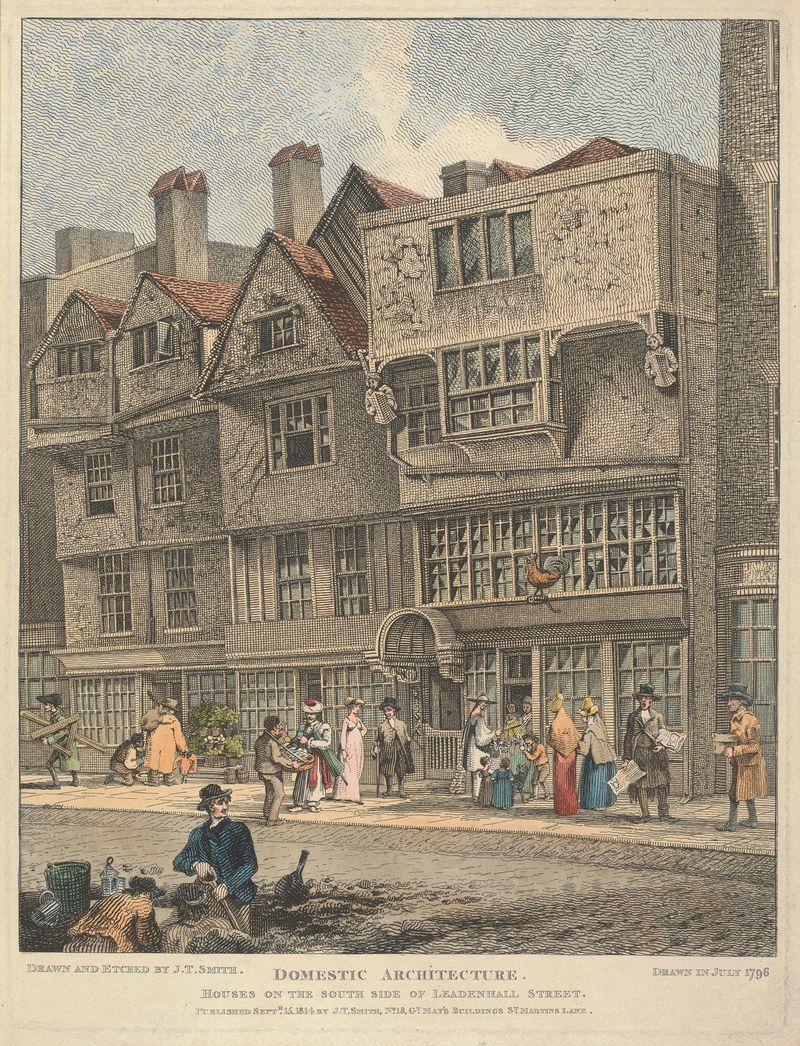
Houses on the South Side of Leadenhall Street
John Thomas Smith
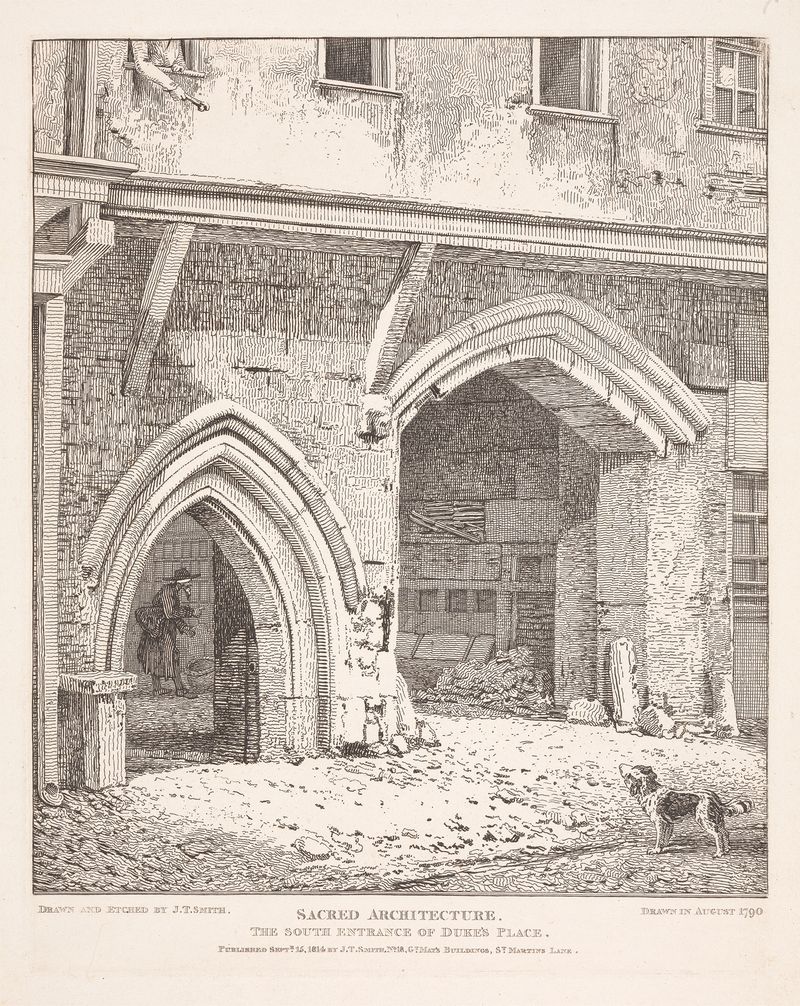
Sacred Architecture; the South Entrance of Dukes Place
John Thomas Smith
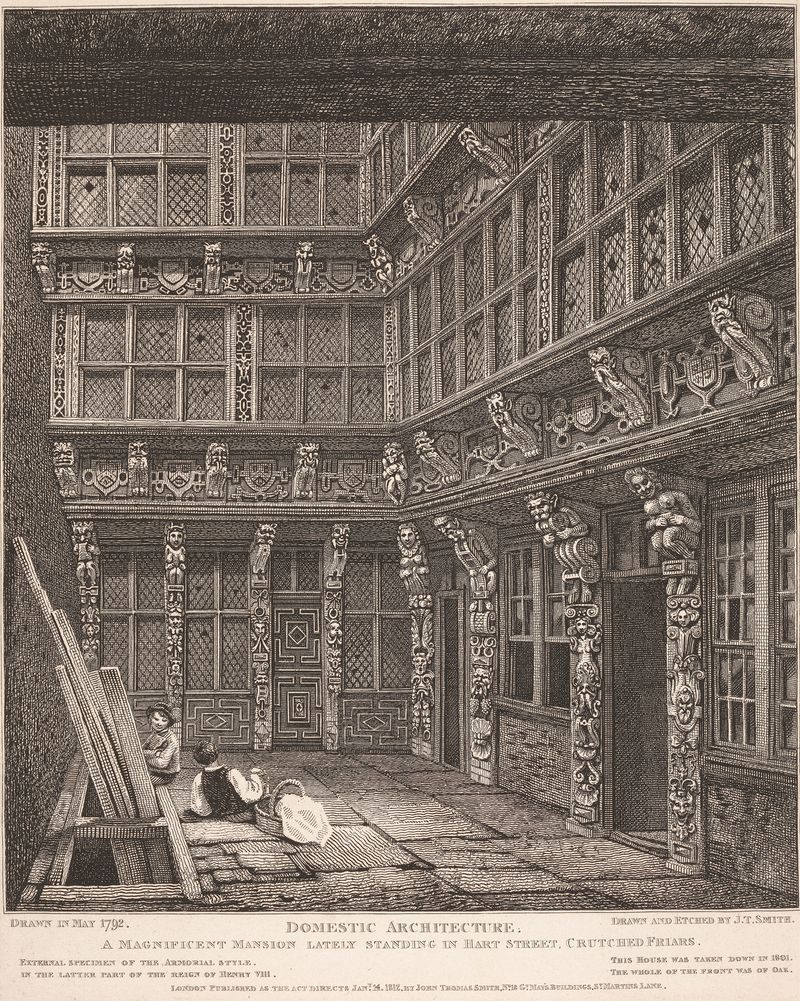
Domestic Architecture, A Magnificent Mansion Lately Standing in Hart Street, Crutched Friars
John Thomas Smith
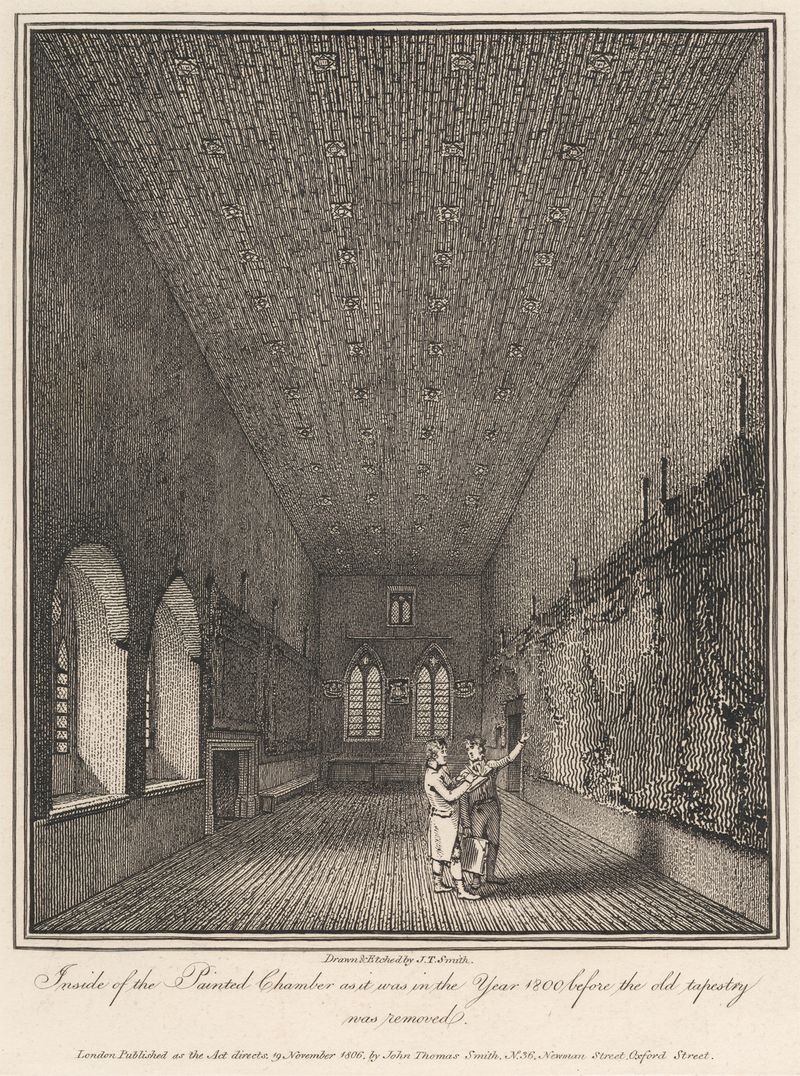
Inside the Painted Chamber as it was in the year 1800 before the old tapestry was removed
John Thomas Smith
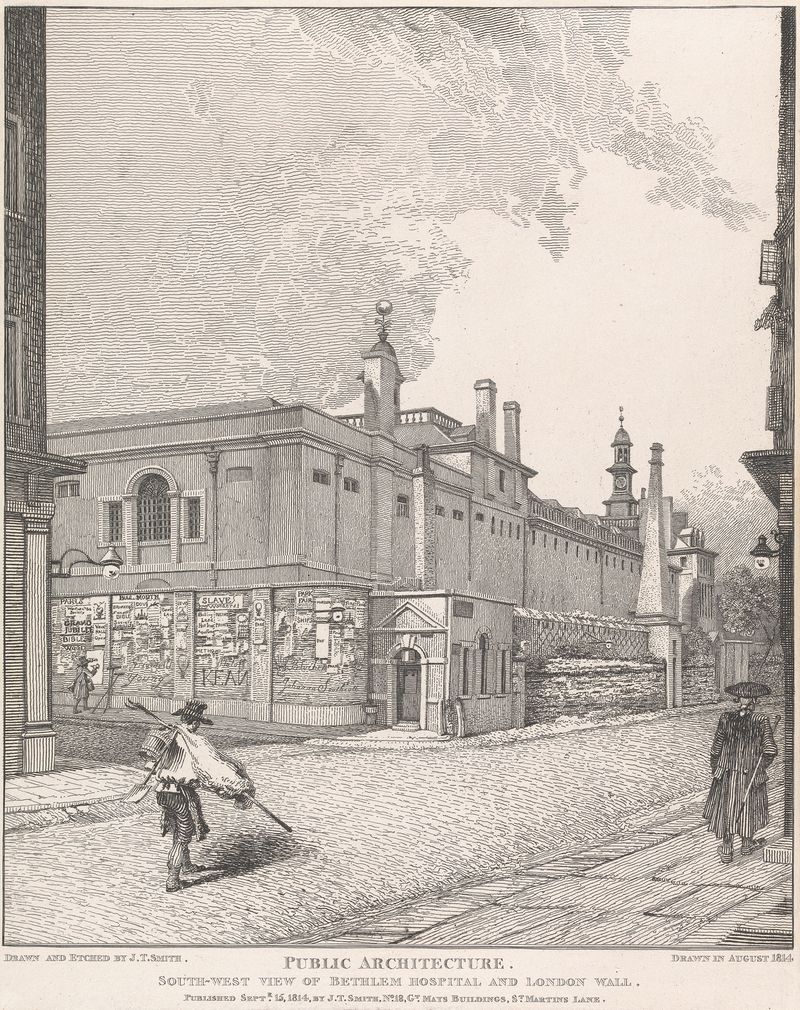
South West View of Bethlem Hospital and London Wall
John Thomas Smith
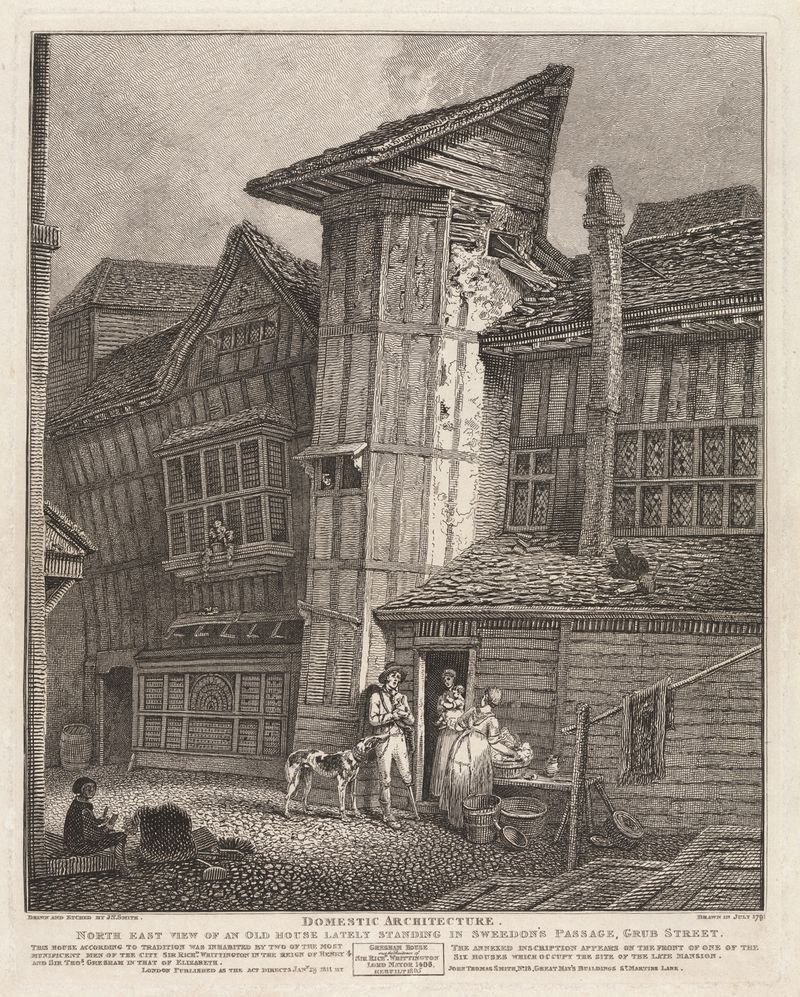
Domestic Architecture – N. E. View of an Old House lately Standing in Sweedon’s Passage, Grub Street
John Thomas Smith

Houses on the South SIde of a Street called London Wall
John Thomas Smith
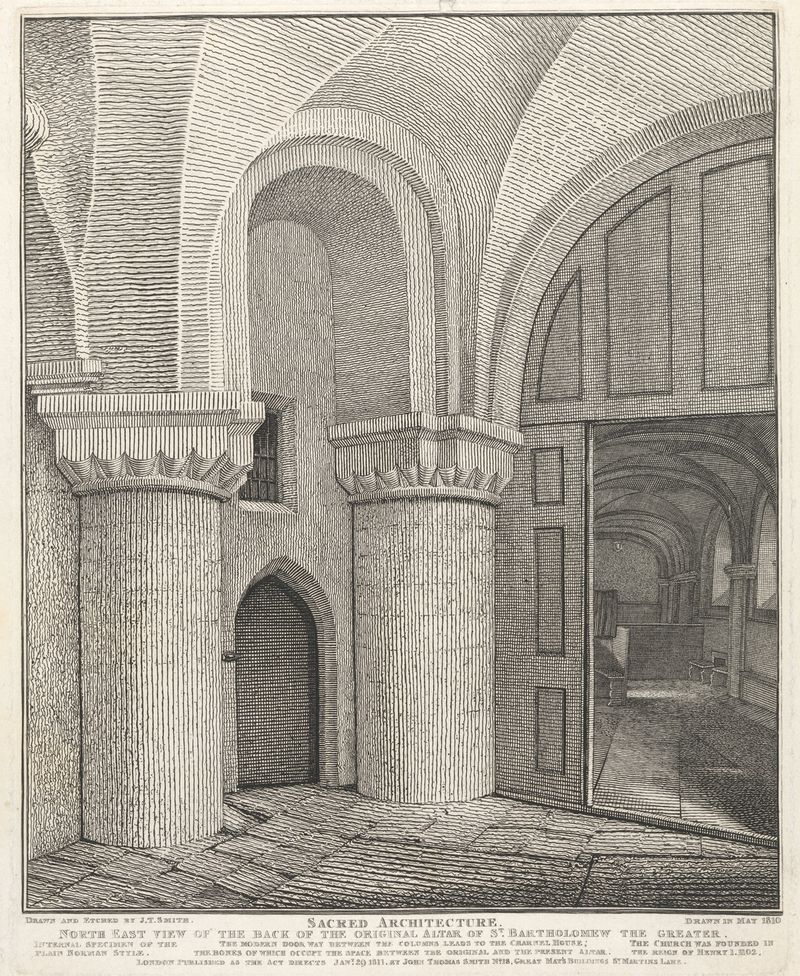
Northeast View of the Back of the Original Altar of St. Barts the Great
John Thomas Smith
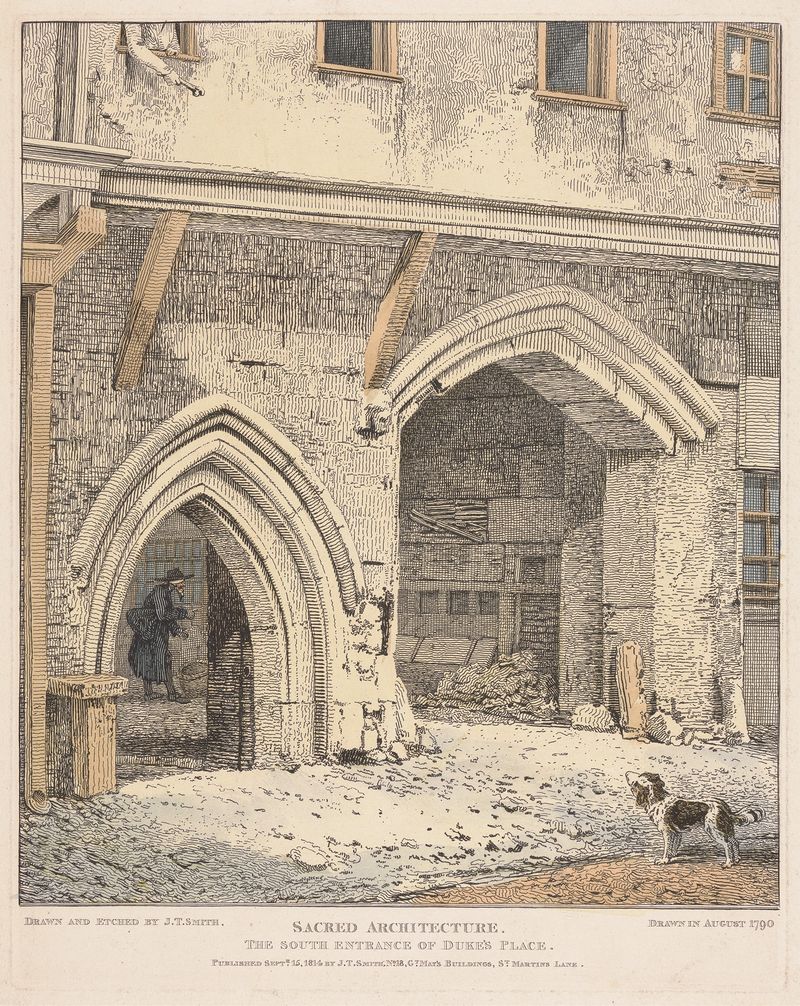
The South Entrance of Duke’s Place
John Thomas Smith





