
Northeast View of the Back of the Original Altar of St. Barts the Great — History & Facts
When did color learn to lie? In the interplay of light and shadow, truth and illusion blend, inviting a deeper transcendence. Focus on the intricate details of the altar as the eye is drawn to the delicate carvings that seem to breathe with life. The soft, muted tones of the woodwork contrast with the vivid luminosity of the surrounding light, creating an aura of reverence. Notice how the light cascades across the surface, illuminating the intricate patterns that whisper the stories of faith and time, drawing viewers into a moment suspended between the earthly and the divine. Upon closer inspection, the emotional tension arises from the juxtaposition of the altar’s ornate embellishments against the weight of its spiritual significance.
Each shadow holds the weight of history, while the radiant highlights suggest moments of divine inspiration. The serene stillness envelops the viewer, inviting reflection on the passage of time and the enduring quest for transcendence in the face of mortality. John Thomas Smith painted this work in 1811, during a period of significant artistic transition in Britain. Known for his topographical views and historical representations, he sought to blend precision with emotion, capturing the essence of both the physical and spiritual realms.
This era was marked by a growing appreciation for the sublime in nature, as artists began to explore how architecture could convey a sense of the eternal.
More Artworks by John Thomas Smith
Browse all →
Dr. Johnson’s House in 8 Bolt Court, Fleet Street
John Thomas Smith
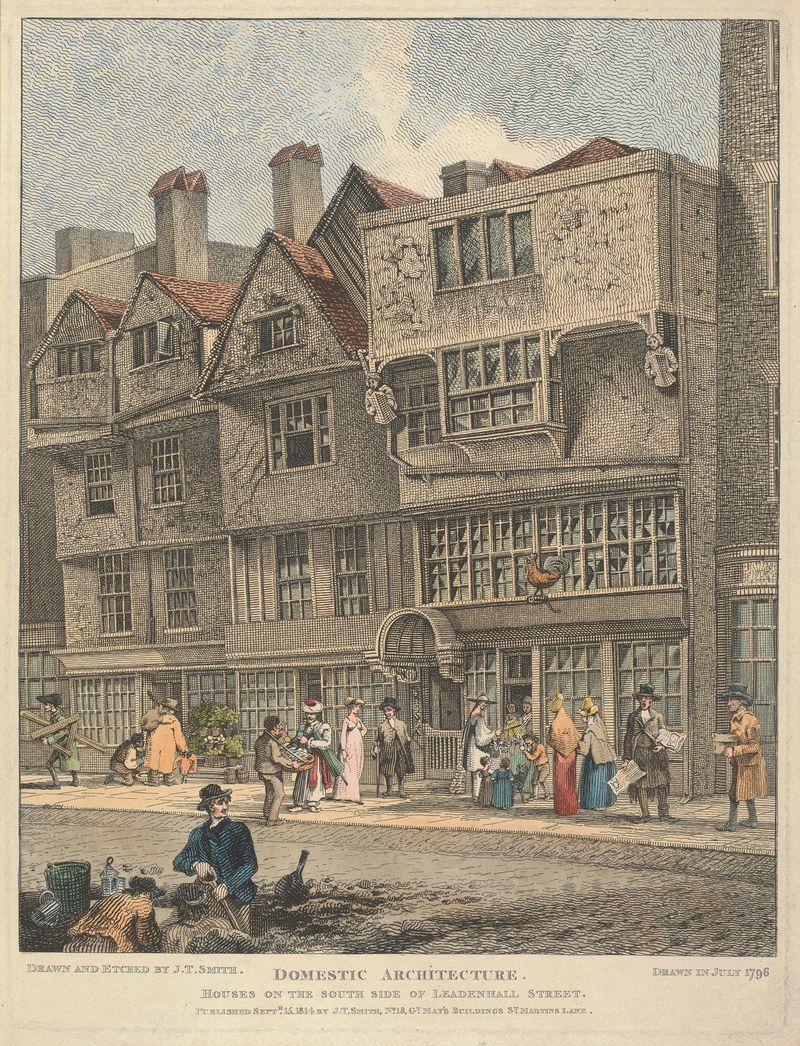
Houses on the South Side of Leadenhall Street
John Thomas Smith
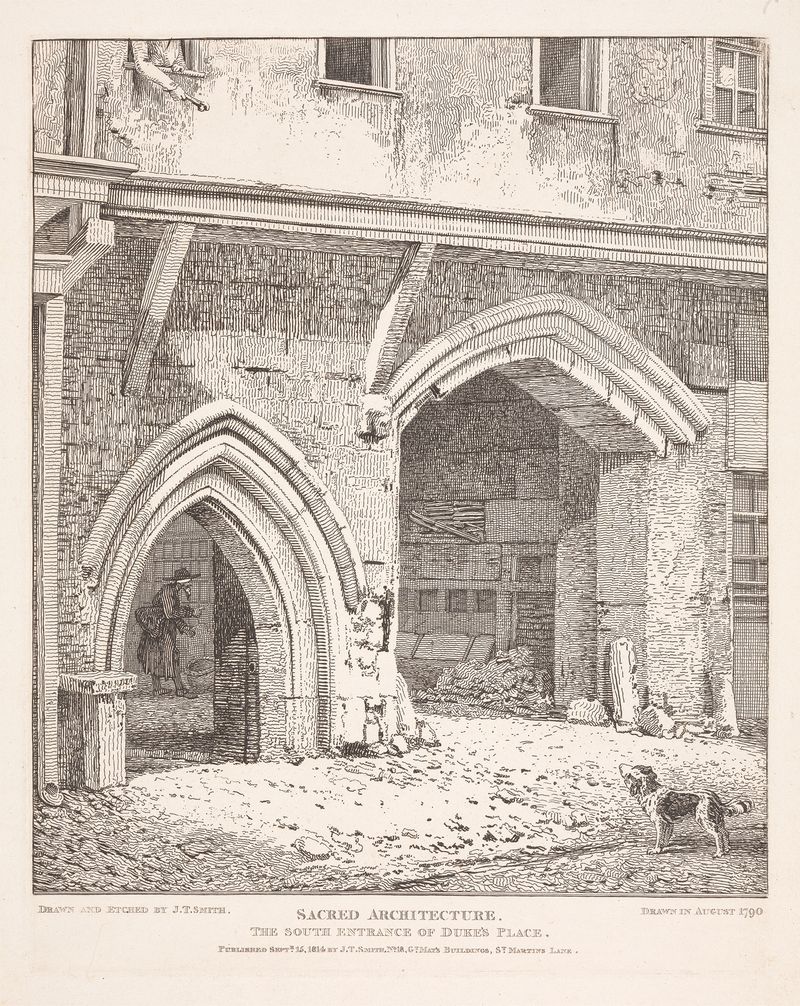
Sacred Architecture; the South Entrance of Dukes Place
John Thomas Smith
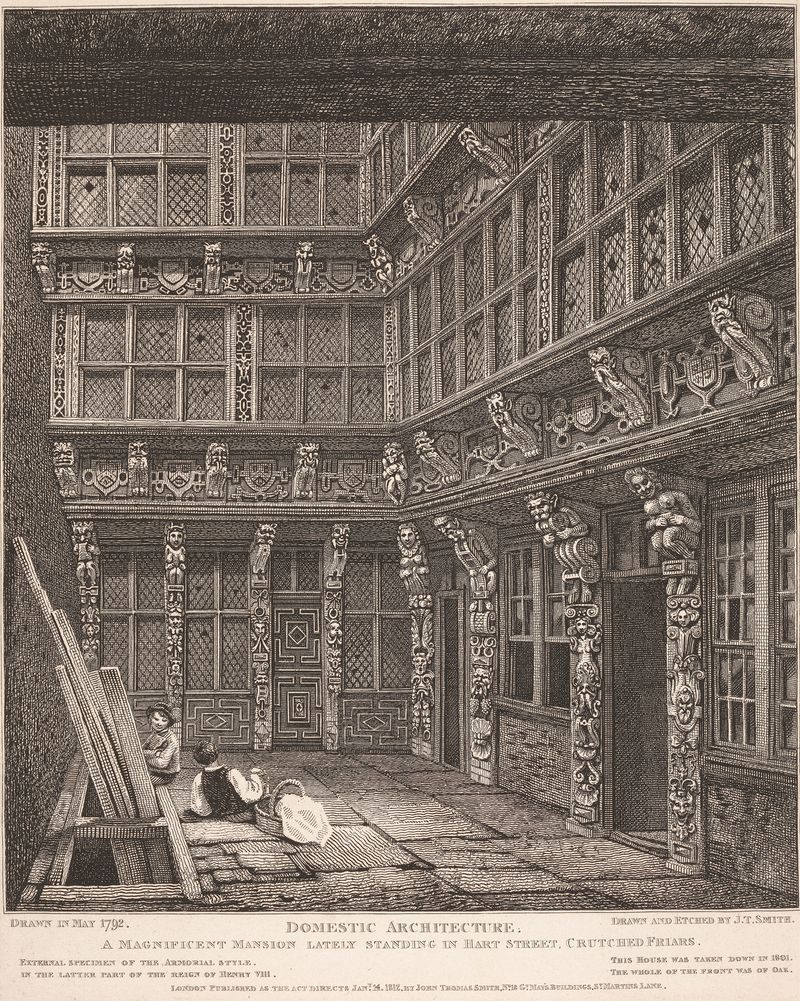
Domestic Architecture, A Magnificent Mansion Lately Standing in Hart Street, Crutched Friars
John Thomas Smith
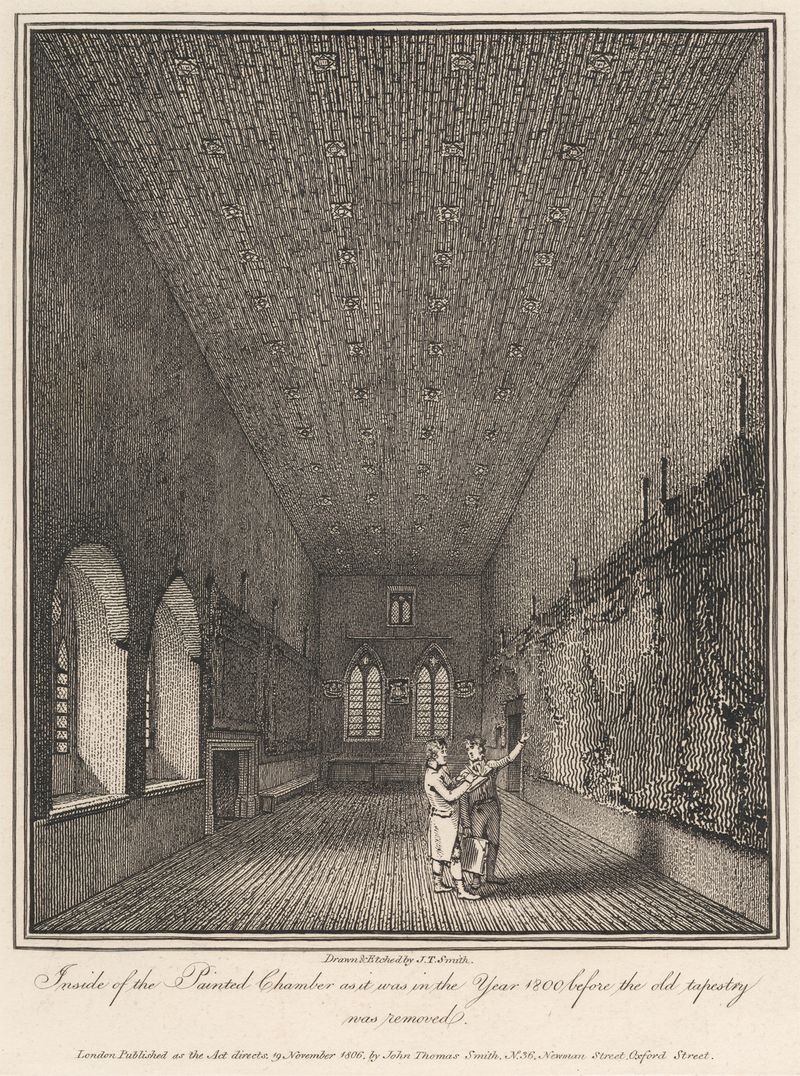
Inside the Painted Chamber as it was in the year 1800 before the old tapestry was removed
John Thomas Smith
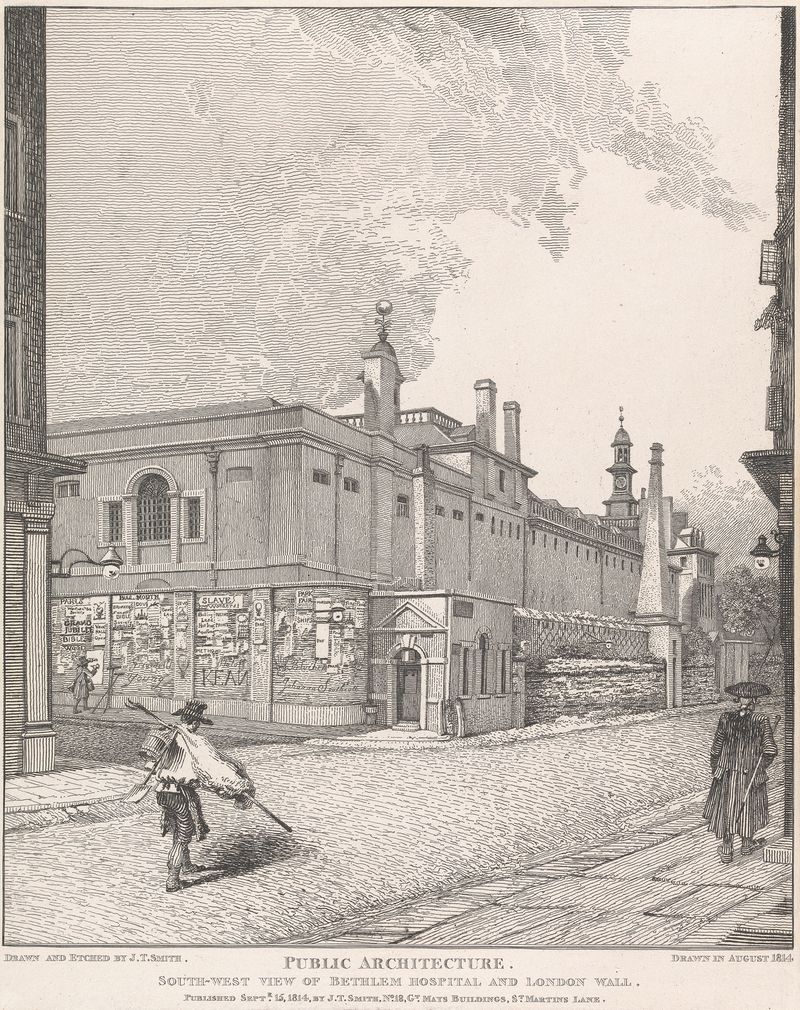
South West View of Bethlem Hospital and London Wall
John Thomas Smith

Winchester Street, London Wall
John Thomas Smith
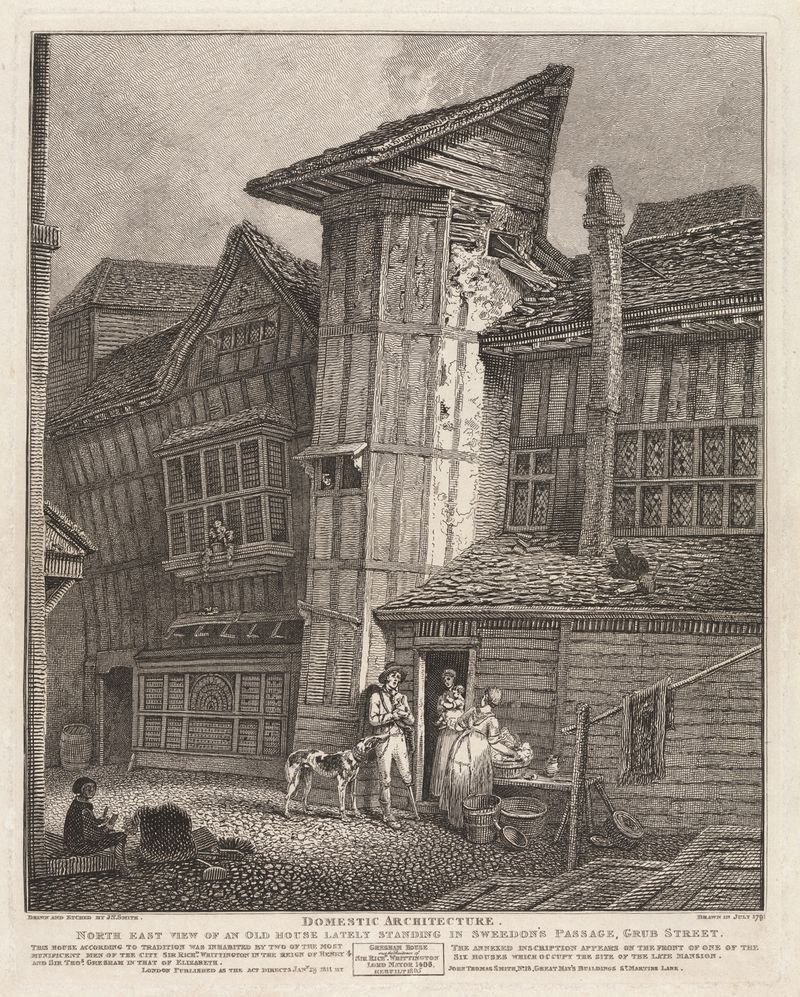
Domestic Architecture – N. E. View of an Old House lately Standing in Sweedon’s Passage, Grub Street
John Thomas Smith

Houses on the South SIde of a Street called London Wall
John Thomas Smith
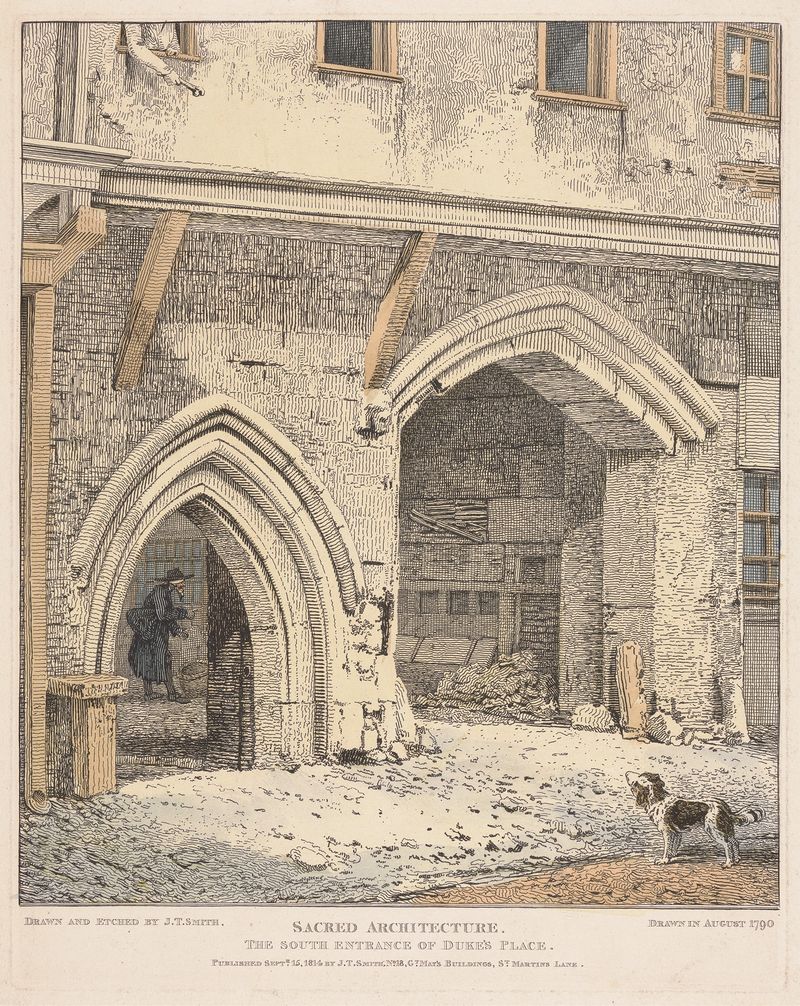
The South Entrance of Duke’s Place
John Thomas Smith
More Architecture Art
Browse all →
The statue of Liberty
Frédéric Auguste Bartholdi

View of Houses in Delft, Known as ‘The Little Street’
Johannes Vermeer

View of Houses in Delft, Known as ‘The Little Street’
Johannes Vermeer

The Cathedral in Rouen. The portal, Grey Weather
Claude Monet

The yellow house
Vincent van Gogh

The Church in Auvers-sur-Oise, View from the Chevet
Vincent van Gogh