
The South Entrance of Duke’s Place — History & Facts
Could beauty survive in a century of chaos? This question hangs in the air, echoing through the streets of London as the past and present collide in a delicate dance of memory and loss. Look to the center of the composition, where the grand entrance of Duke’s Place stands resolute, framed by a bustling atmosphere of daily life. The meticulous attention to architectural detail draws the eye to the sturdy columns and ornate carvings, while the interplay of light and shadow adds depth, suggesting a moment frozen in time. The soft hues of the sky, painted in gentle pastels, imbue the scene with a sense of hope, contrasting with the animated figures below, their hurried forms creating a palpable tension against the stillness of the facade. Beneath the surface, the painting reveals a deeper narrative: the juxtaposition of permanence and transience.
The grandeur of the entrance symbolizes the resilience of beauty amidst the chaos of urban life, while the passing pedestrians embody the fleeting nature of existence. Each figure carries their own story, yet their anonymity speaks to a collective experience of loss and longing, inviting viewers to ponder their place within this historical tapestry. John Thomas Smith painted this work in 1814, during a time when the world was grappling with the aftermath of the Napoleonic Wars. Living in London, he was influenced by the burgeoning Romantic movement and the rise of urbanization.
This period marked a dramatic shift in artistic expression, as artists sought to capture the complexities of modern life—a pursuit that Smith elegantly encapsulates in this striking portrayal of the South Entrance of Duke’s Place.
More Artworks by John Thomas Smith
Browse all →
Dr. Johnson’s House in 8 Bolt Court, Fleet Street
John Thomas Smith
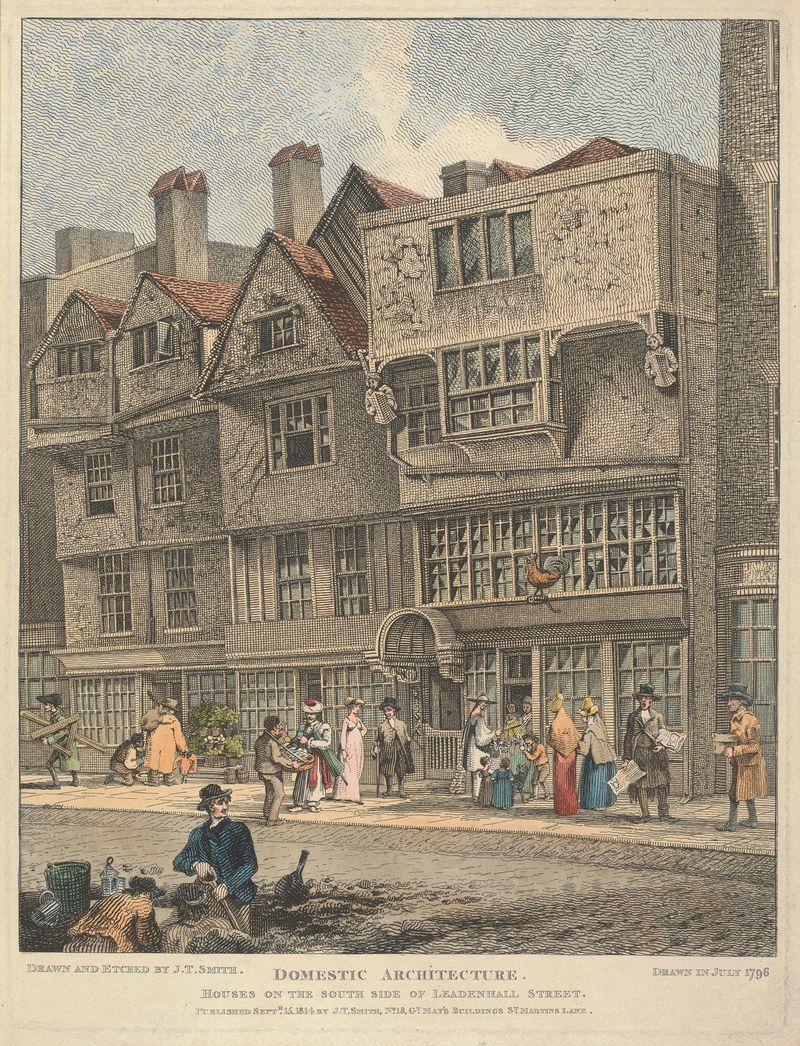
Houses on the South Side of Leadenhall Street
John Thomas Smith
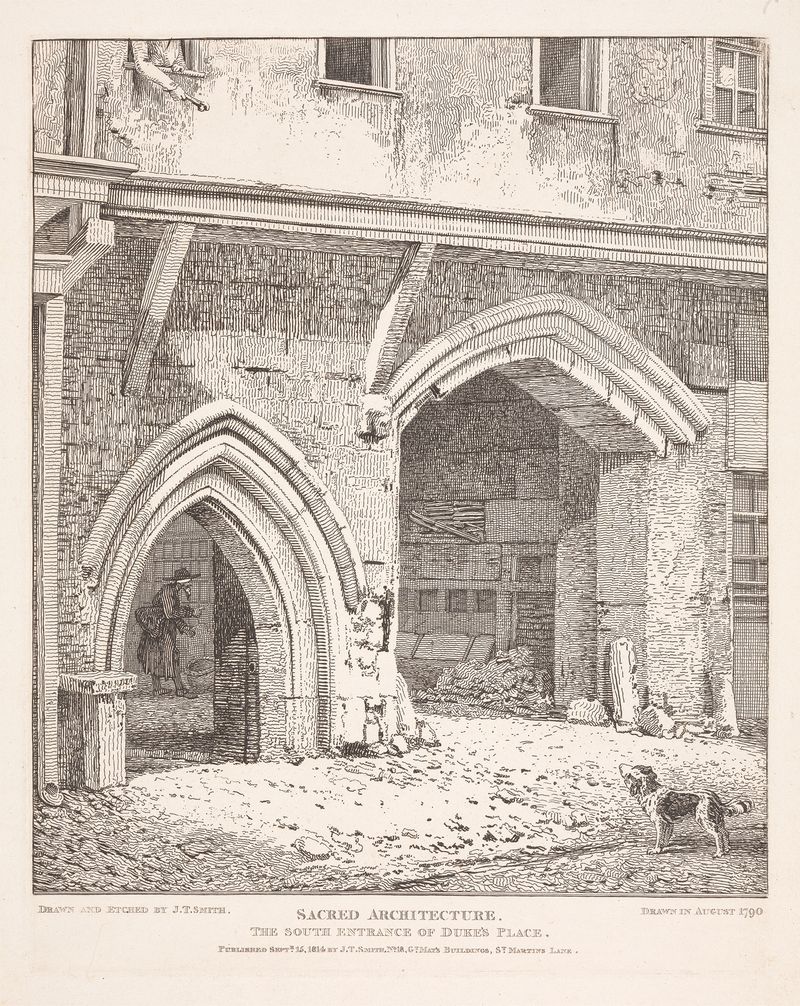
Sacred Architecture; the South Entrance of Dukes Place
John Thomas Smith
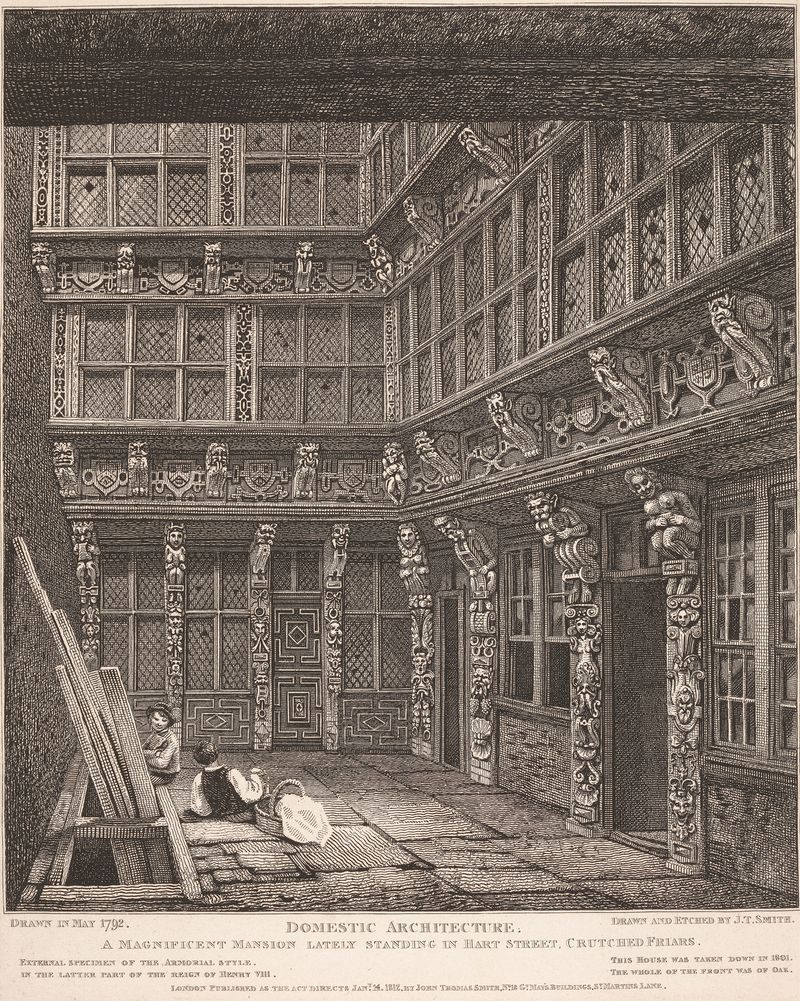
Domestic Architecture, A Magnificent Mansion Lately Standing in Hart Street, Crutched Friars
John Thomas Smith
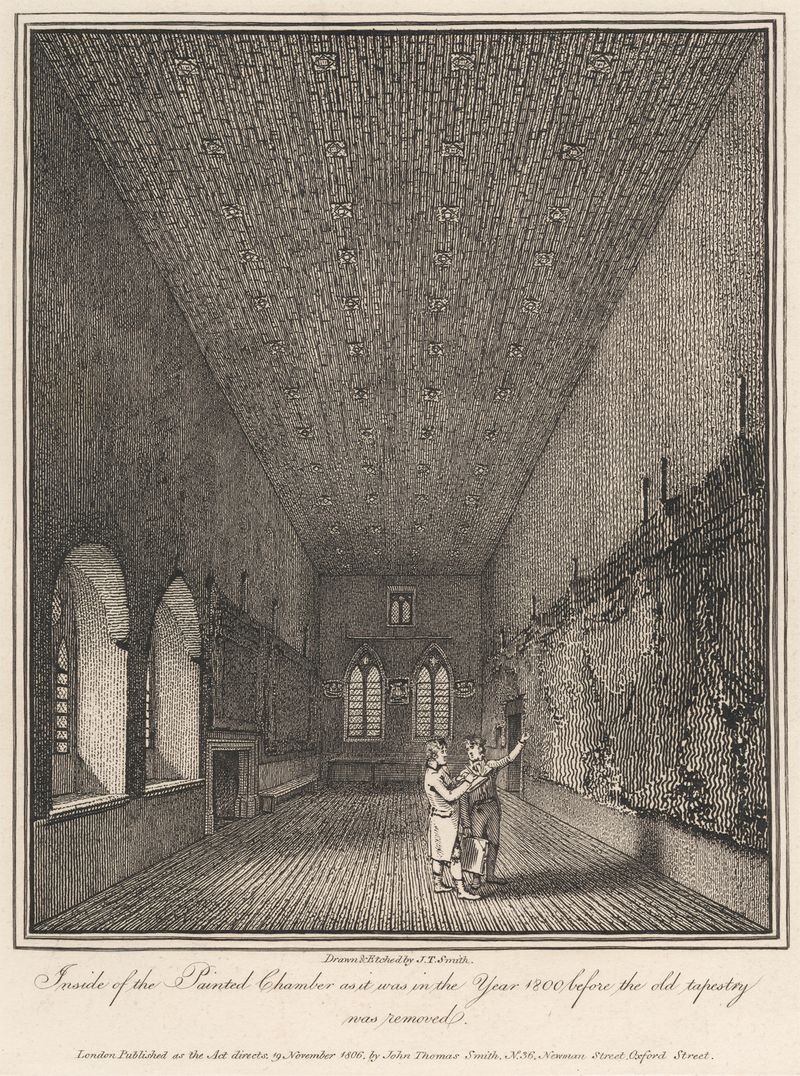
Inside the Painted Chamber as it was in the year 1800 before the old tapestry was removed
John Thomas Smith
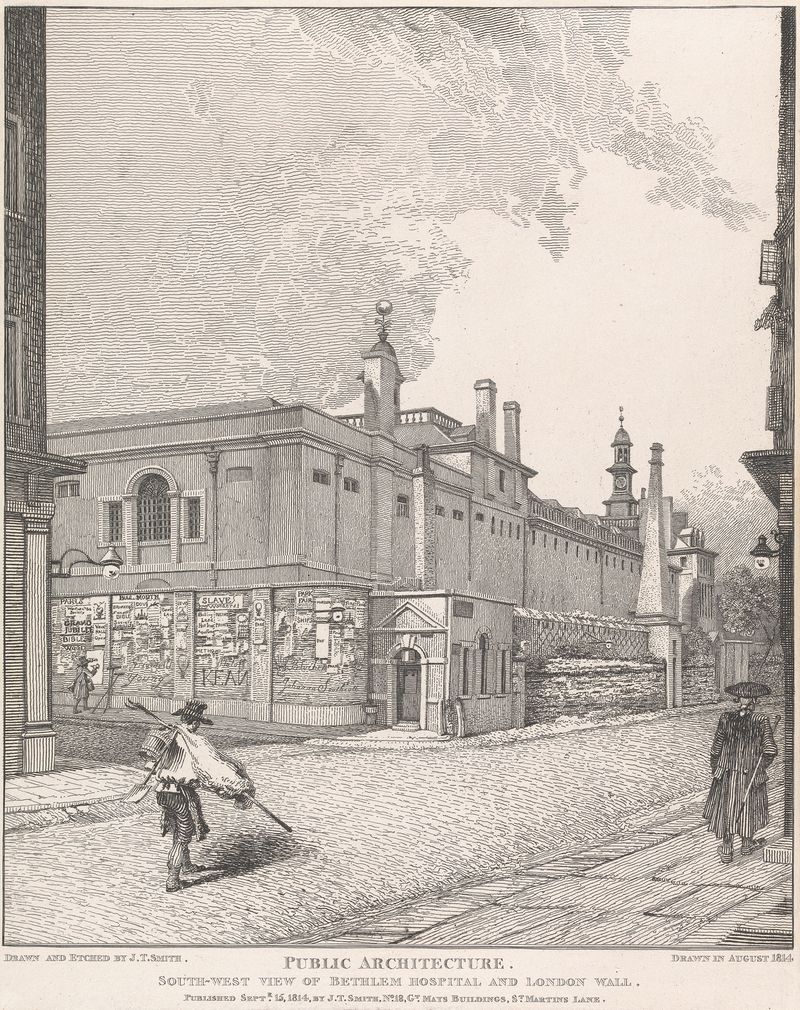
South West View of Bethlem Hospital and London Wall
John Thomas Smith

Winchester Street, London Wall
John Thomas Smith
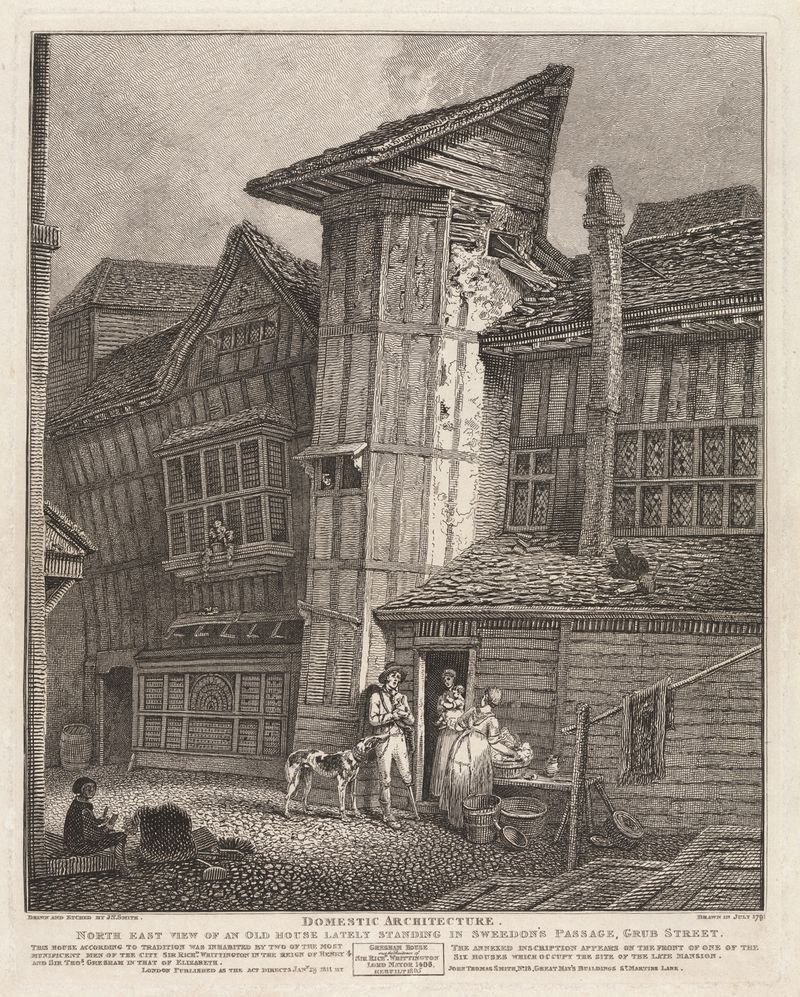
Domestic Architecture – N. E. View of an Old House lately Standing in Sweedon’s Passage, Grub Street
John Thomas Smith

Houses on the South SIde of a Street called London Wall
John Thomas Smith
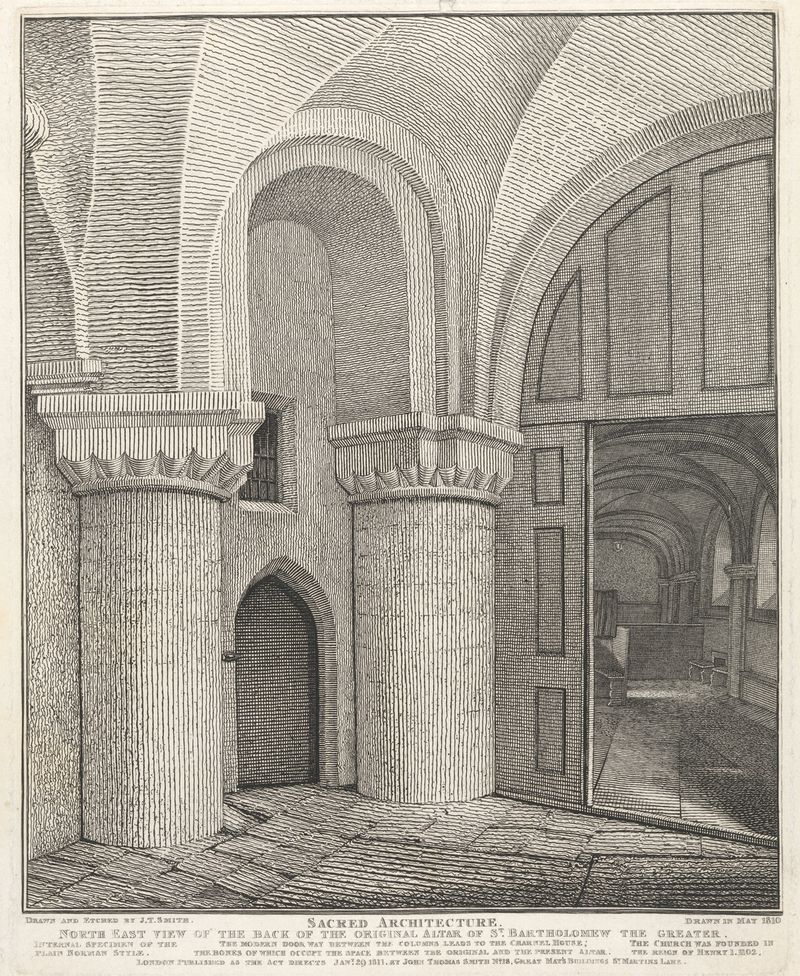
Northeast View of the Back of the Original Altar of St. Barts the Great
John Thomas Smith
More Architecture Art
Browse all →
The statue of Liberty
Frédéric Auguste Bartholdi

View of Houses in Delft, Known as ‘The Little Street’
Johannes Vermeer

View of Houses in Delft, Known as ‘The Little Street’
Johannes Vermeer

The Cathedral in Rouen. The portal, Grey Weather
Claude Monet

The yellow house
Vincent van Gogh

The Church in Auvers-sur-Oise, View from the Chevet
Vincent van Gogh