
Houses on the South Side of Leadenhall Street — History & Facts
In the quiet embrace of a city, where the mundane meets the divine, layers of history linger in the air, waiting to be discovered within the canvas. Look to the left at the delicate architecture framed by the sky, where the rhythmic alignment of the buildings draws you in. Notice how the soft, muted palette reflects the morning light, casting gentle shadows that hug the structures closely. The artist meticulously details each edge and corner, emphasizing the harmony between humanity and its environment, inviting the viewer to explore the juxtaposition of urban life and serene beauty. Beneath the surface, the artwork whispers of transformation and change, capturing a moment when the rise of industry began to alter the urban landscape.
The juxtaposition of the sturdy, steadfast houses against the ephemeral quality of the light elicits a sense of nostalgia, recalling a time when the streets were filled with life and possibility. The meticulous attention to the natural setting suggests an underlying reverence for the divine presence within the constructed world, hinting at the interconnectedness of both. In 1796, the artist stood at a pivotal crossroads of his career, capturing the essence of an era that teetered between tradition and modernity. Living in London as an engraver and painter, he was deeply influenced by the burgeoning dialogue surrounding urbanization and its aesthetic implications.
This period saw a growing appreciation for detailed topographical views, marking a significant evolution in the portrayal of cityscapes, where each stroke not only documented but celebrated the very heartbeat of life itself.
More Artworks by John Thomas Smith
Browse all →
Dr. Johnson’s House in 8 Bolt Court, Fleet Street
John Thomas Smith
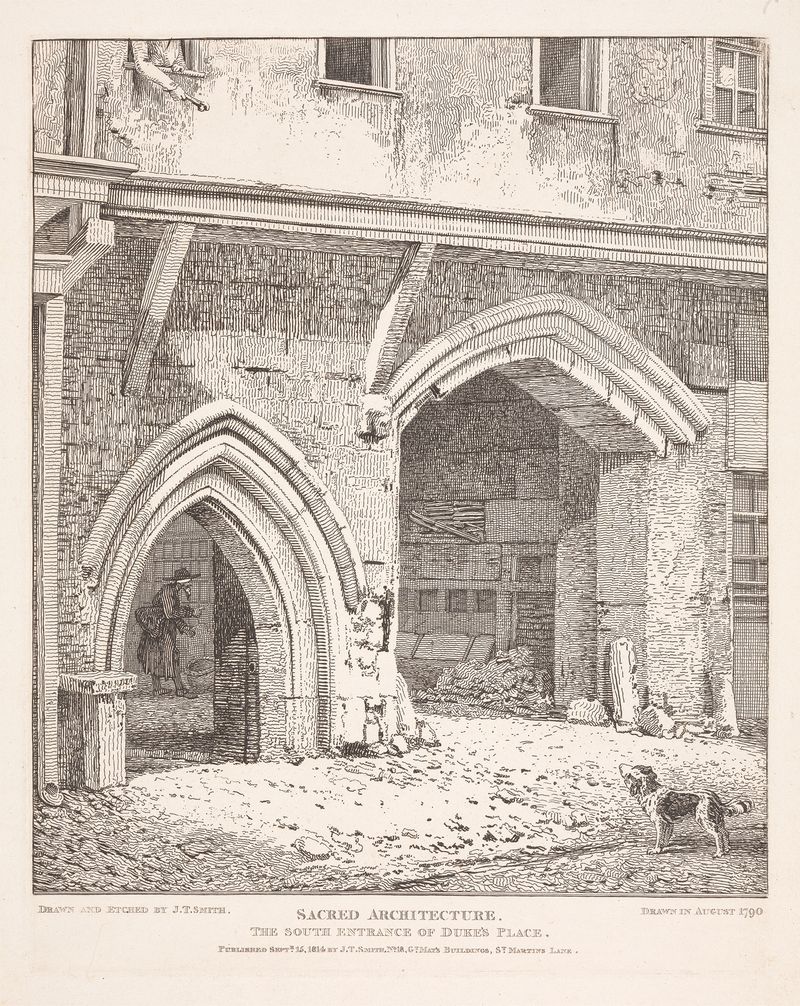
Sacred Architecture; the South Entrance of Dukes Place
John Thomas Smith
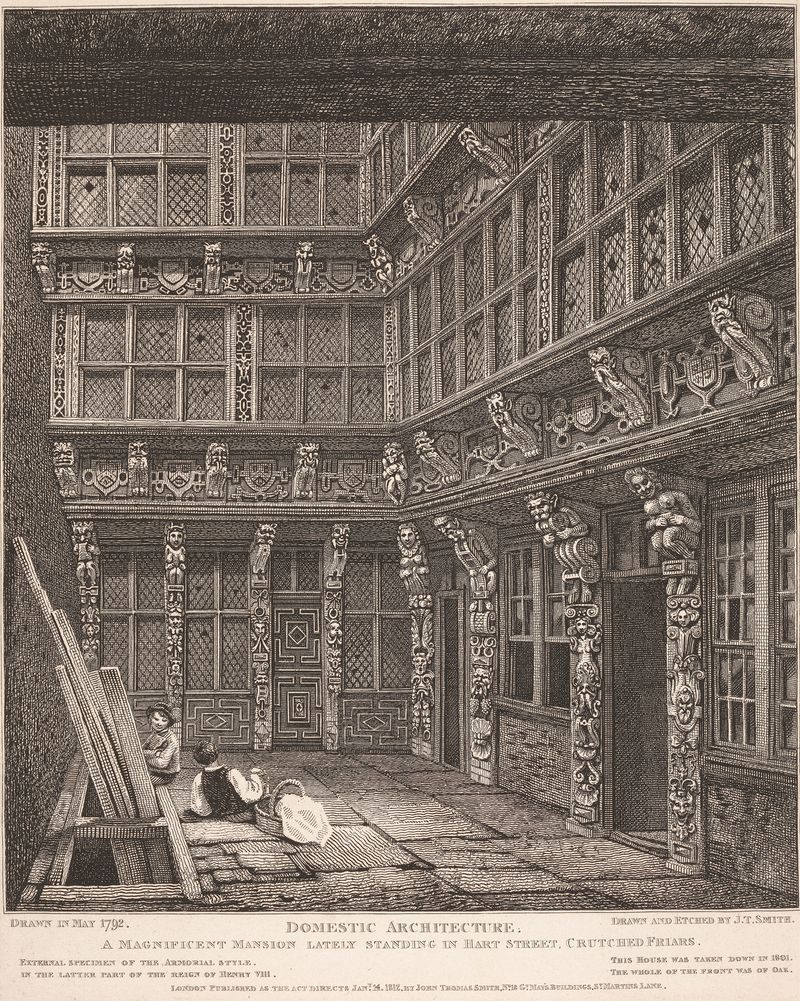
Domestic Architecture, A Magnificent Mansion Lately Standing in Hart Street, Crutched Friars
John Thomas Smith
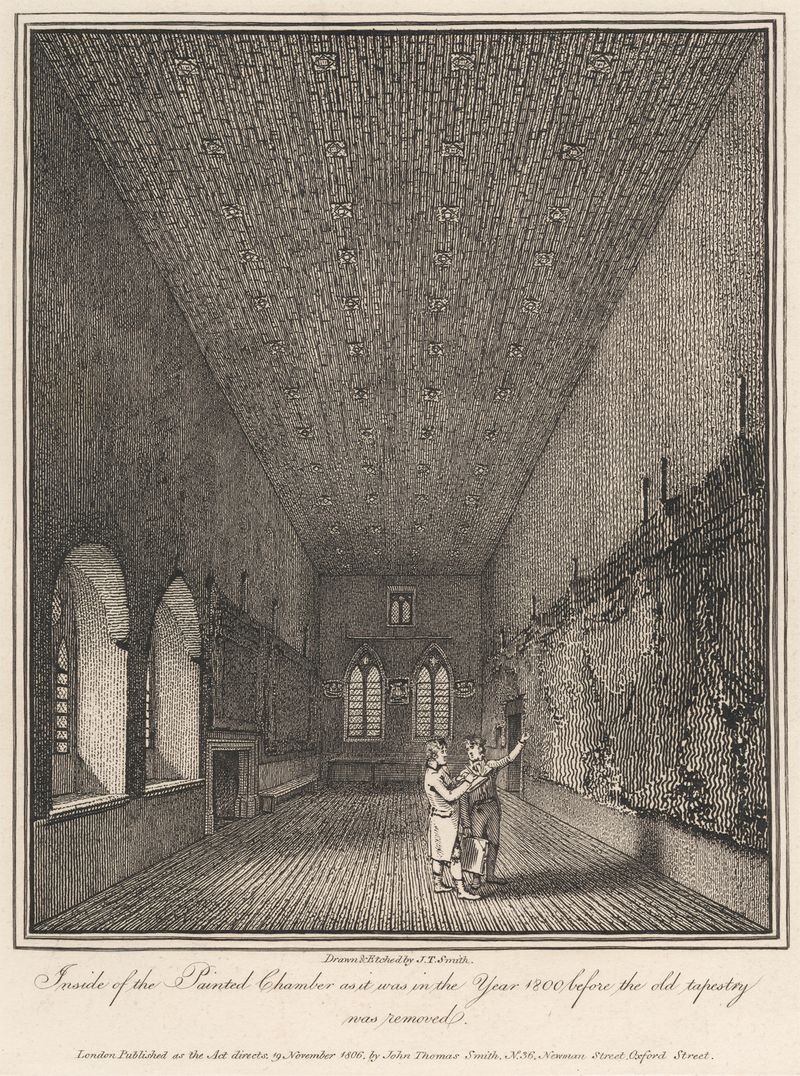
Inside the Painted Chamber as it was in the year 1800 before the old tapestry was removed
John Thomas Smith
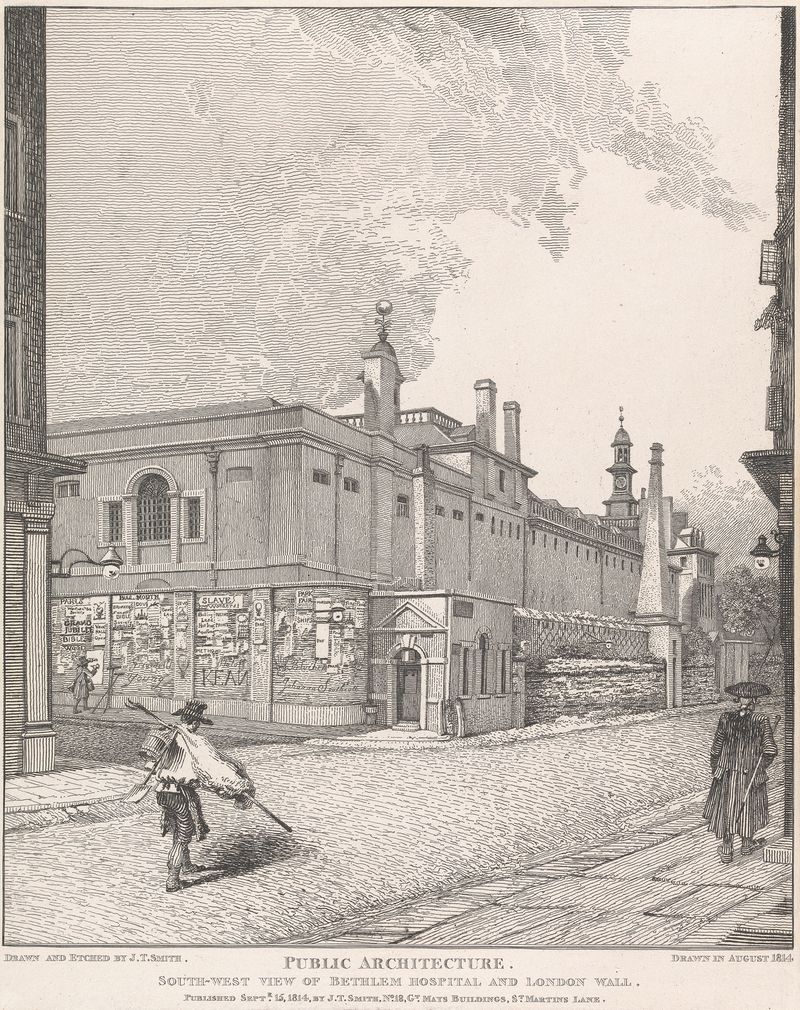
South West View of Bethlem Hospital and London Wall
John Thomas Smith

Winchester Street, London Wall
John Thomas Smith
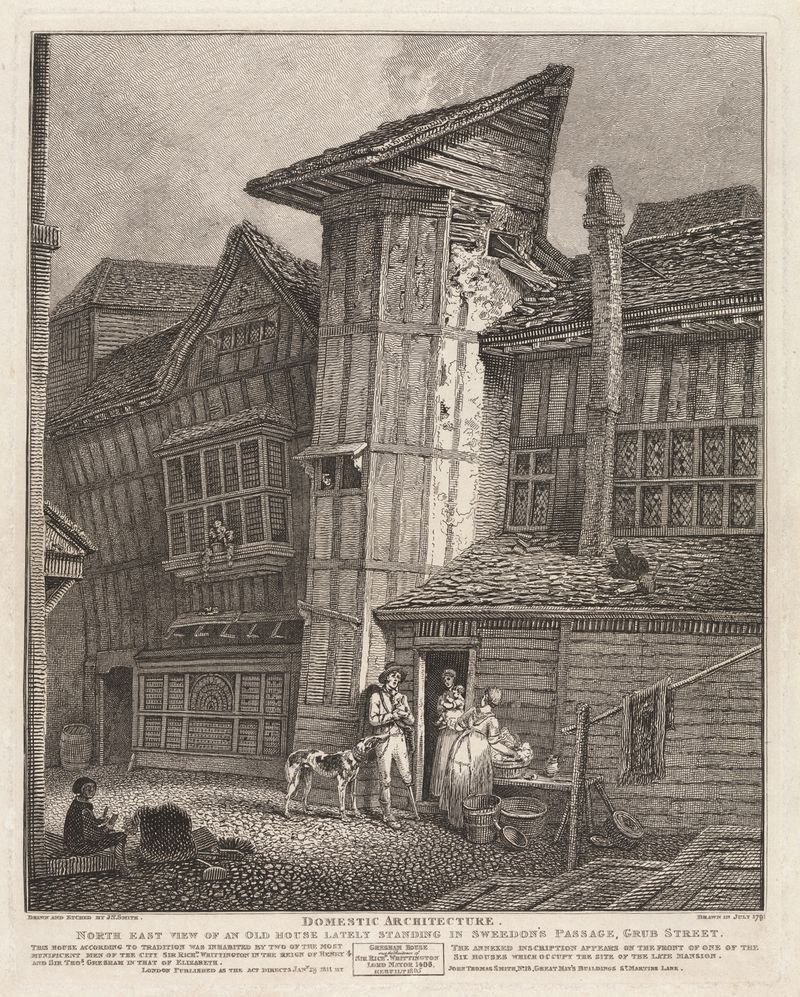
Domestic Architecture – N. E. View of an Old House lately Standing in Sweedon’s Passage, Grub Street
John Thomas Smith

Houses on the South SIde of a Street called London Wall
John Thomas Smith
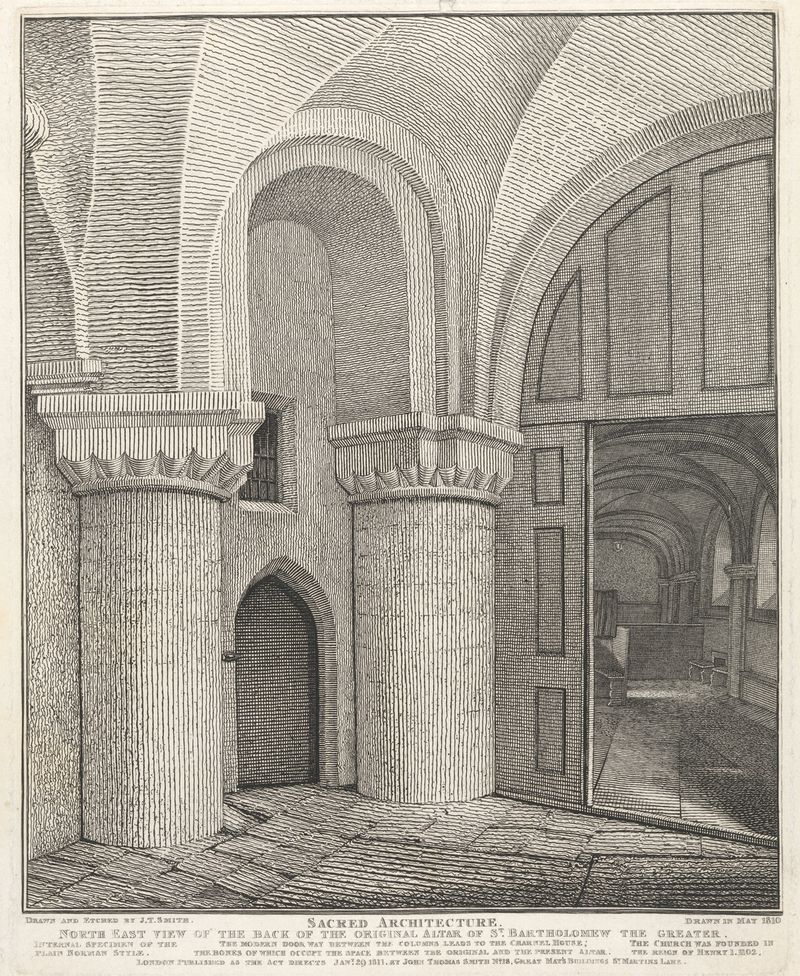
Northeast View of the Back of the Original Altar of St. Barts the Great
John Thomas Smith
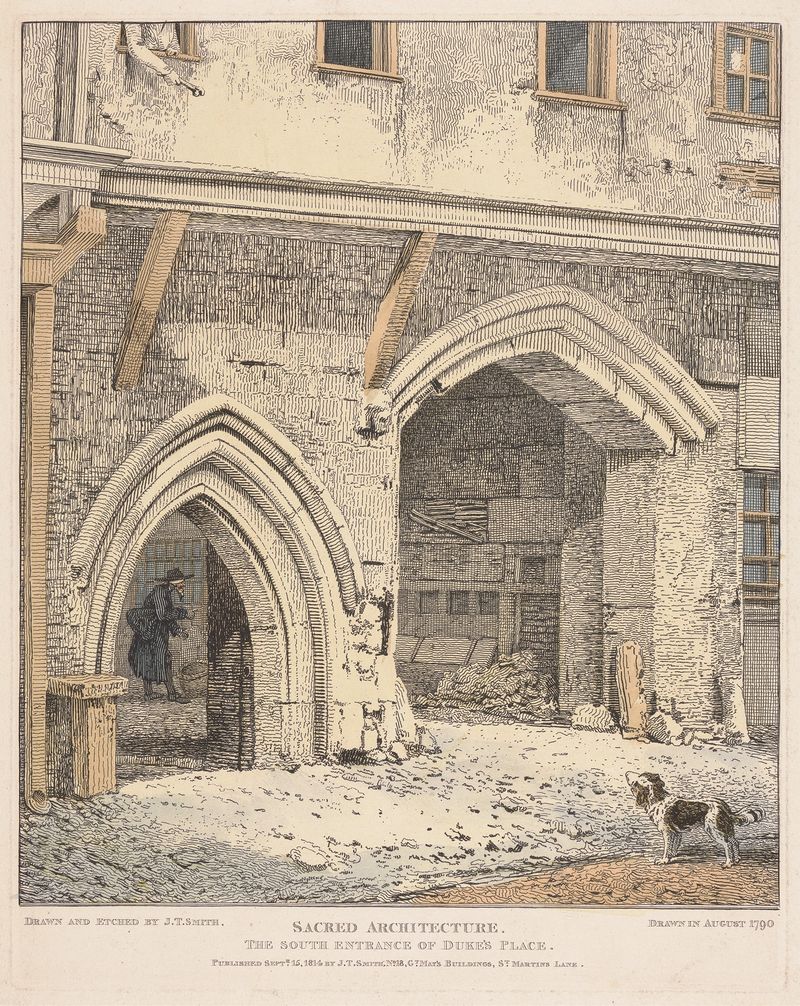
The South Entrance of Duke’s Place
John Thomas Smith
More Architecture Art
Browse all →
The statue of Liberty
Frédéric Auguste Bartholdi

View of Houses in Delft, Known as ‘The Little Street’
Johannes Vermeer

View of Houses in Delft, Known as ‘The Little Street’
Johannes Vermeer

The Cathedral in Rouen. The portal, Grey Weather
Claude Monet

The yellow house
Vincent van Gogh

The Church in Auvers-sur-Oise, View from the Chevet
Vincent van Gogh