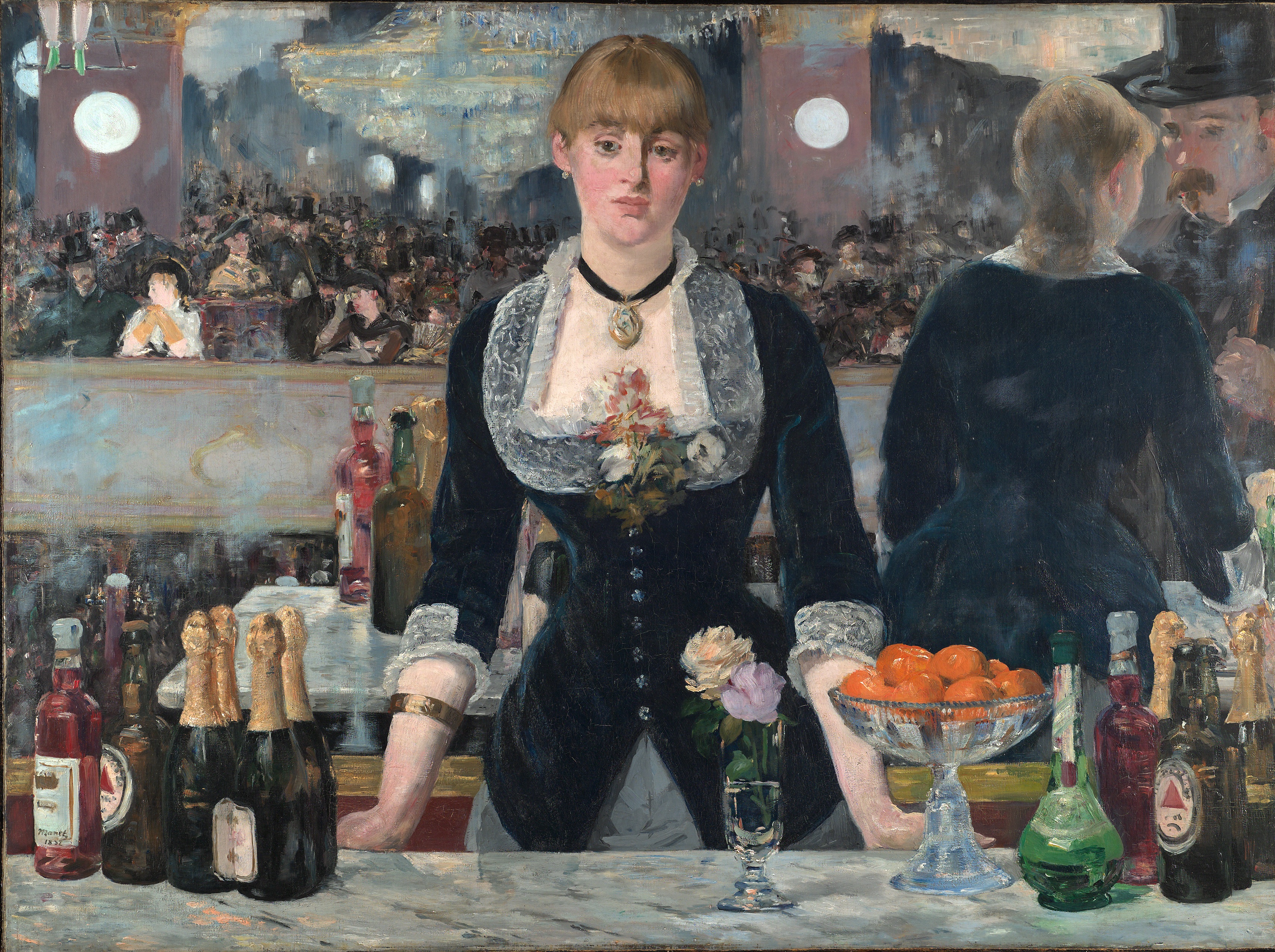
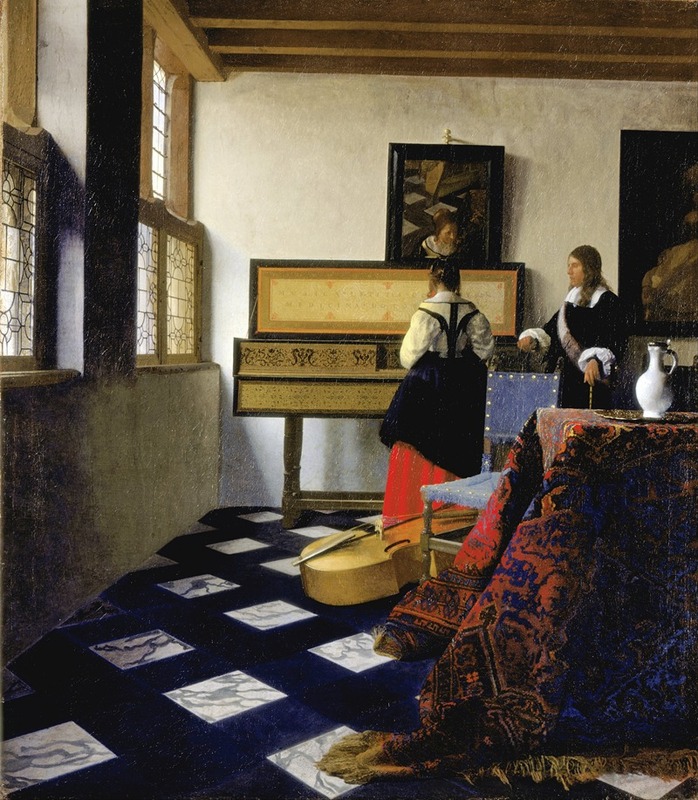
Inside the Painted Chamber as it was in the year 1800 before the old tapestry was removed — History & Facts
The stillness of a room can whisper truths, revealing the weight of time and memory. In this work, the delicate interplay of light and shadow invites us to awaken to the stories embedded in its walls. Look to the right at the ornate details of the wooden paneling, where the soft glow of sunlight filters through a window, casting a warm hue upon the floor. Notice how the artist masterfully captures the texture of the fabric, as though you can feel the fibers of the old tapestry still lingering, even after its removal.
The colors are muted yet rich, evoking a sense of nostalgia that envelops the viewer. Each brushstroke is intentional, leading the eye through the room’s quiet elegance. In this composition, the absence of the tapestry speaks volumes, creating a poignant contrast between the echoes of the past and the starkness of the present. The unadorned walls carry an emotional weight, suggesting both loss and the potential for new beginnings.
The play of light not only illuminates the space but also symbolizes the awakening of consciousness, as if the room itself is poised to reveal secrets long hidden. John Thomas Smith painted this work in 1806 while living in London, a time when the art world was transitioning towards Romanticism, emphasizing emotion and individualism. Despite facing struggles in his own career, Smith sought to capture the essence of his surroundings, encapsulating a moment that reflects both personal and societal transformations during an era of profound change. His keen eye for detail and atmosphere allowed him to create a dialogue between history and memory, inviting viewers to consider the weight of what remains and what is lost.
More Artworks by John Thomas Smith
Browse all →
Dr. Johnson’s House in 8 Bolt Court, Fleet Street
John Thomas Smith
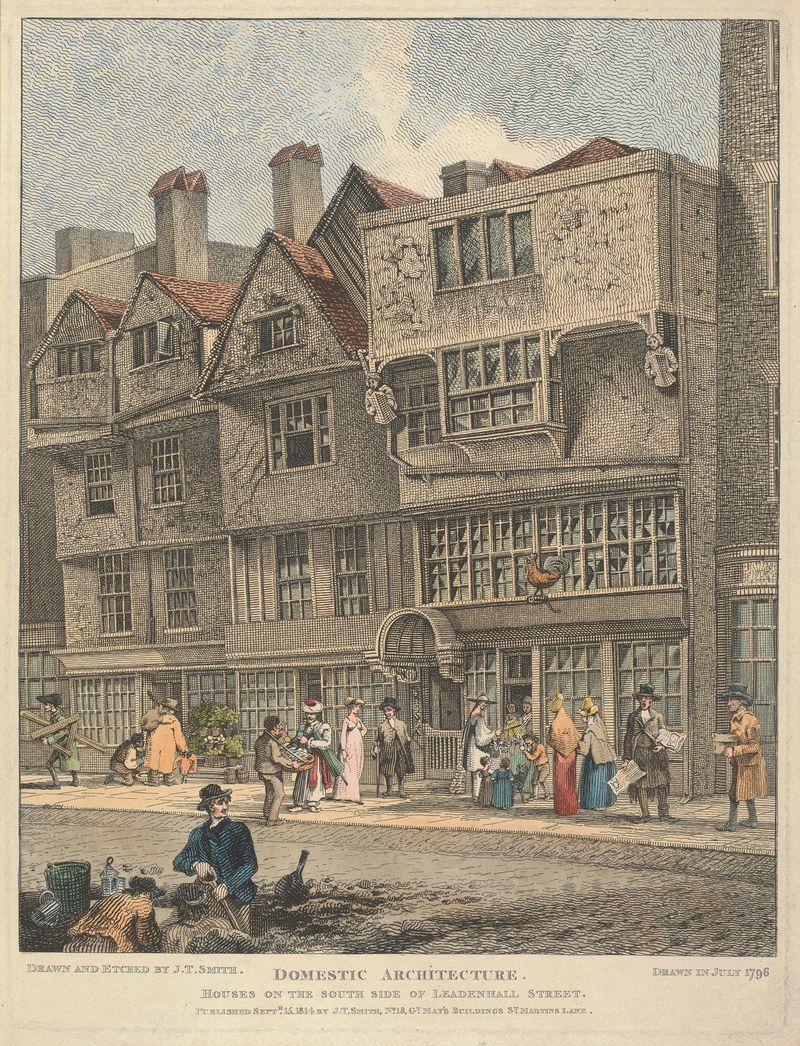
Houses on the South Side of Leadenhall Street
John Thomas Smith
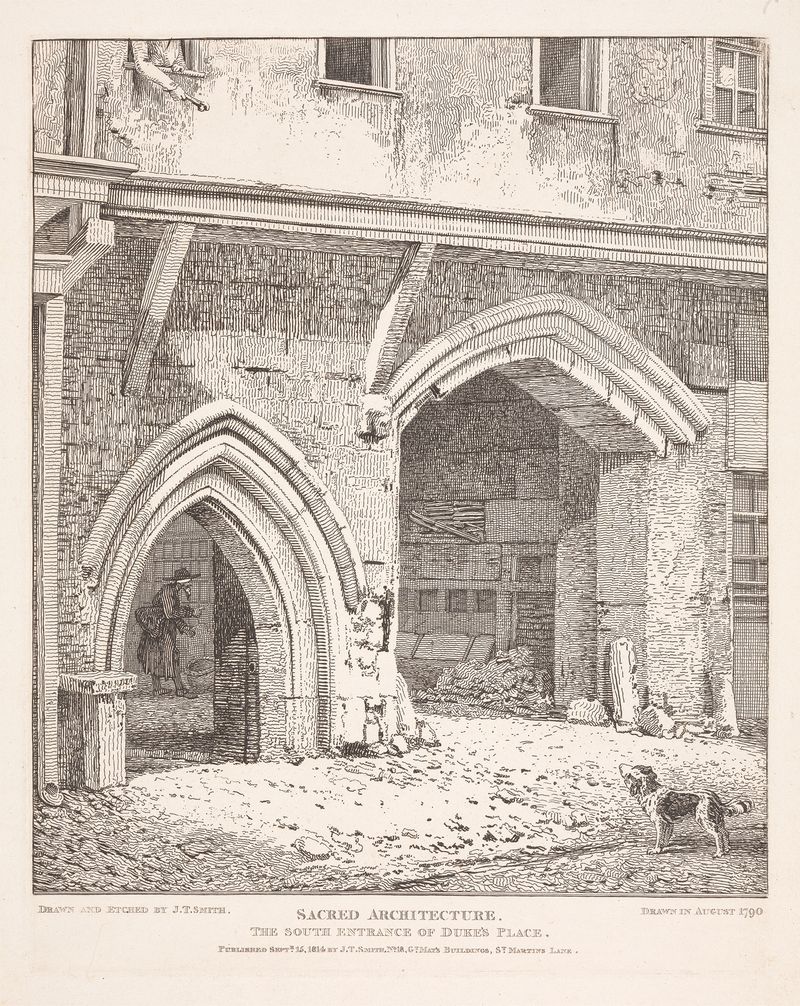
Sacred Architecture; the South Entrance of Dukes Place
John Thomas Smith
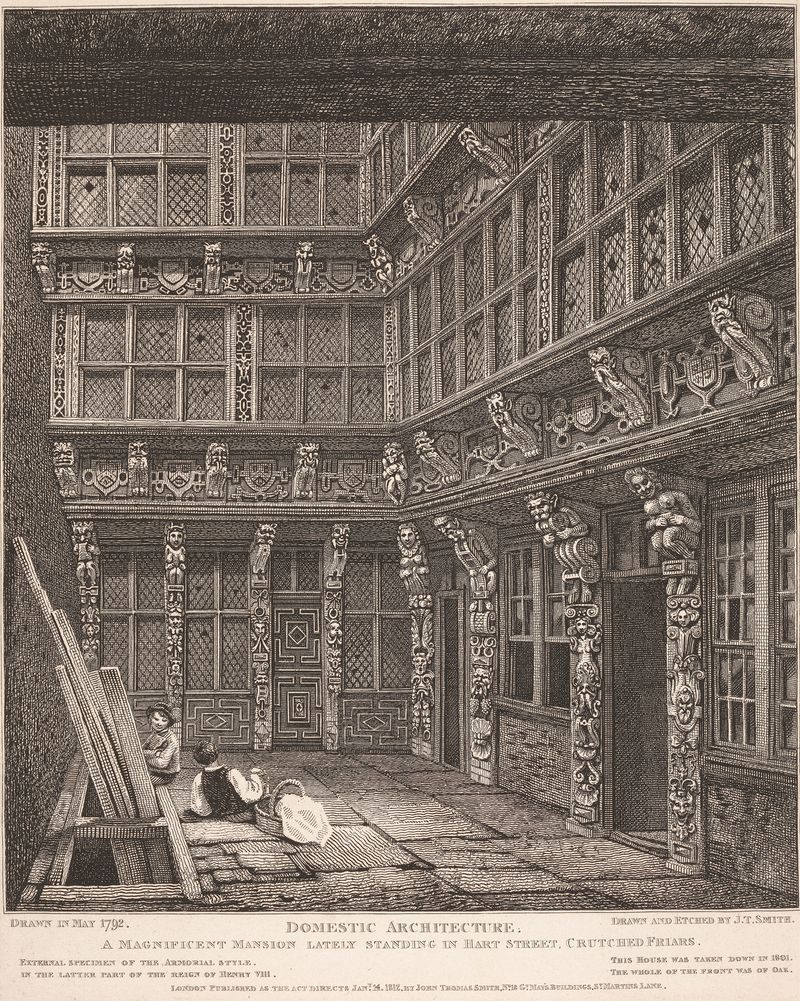
Domestic Architecture, A Magnificent Mansion Lately Standing in Hart Street, Crutched Friars
John Thomas Smith
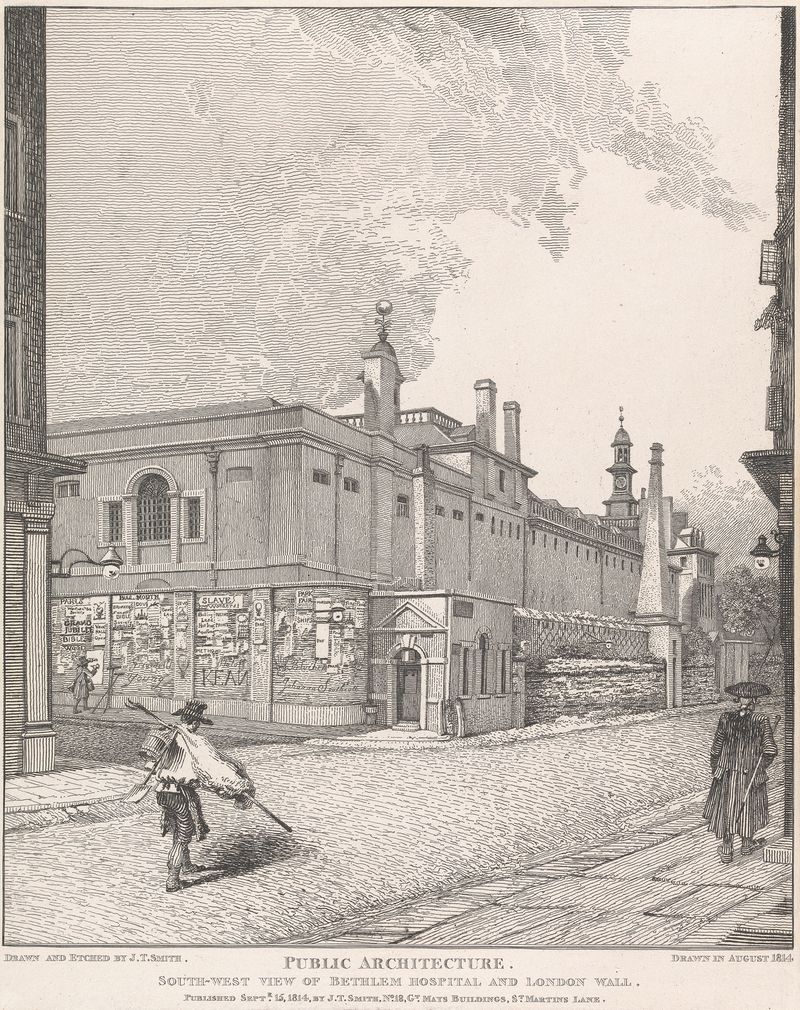
South West View of Bethlem Hospital and London Wall
John Thomas Smith

Winchester Street, London Wall
John Thomas Smith
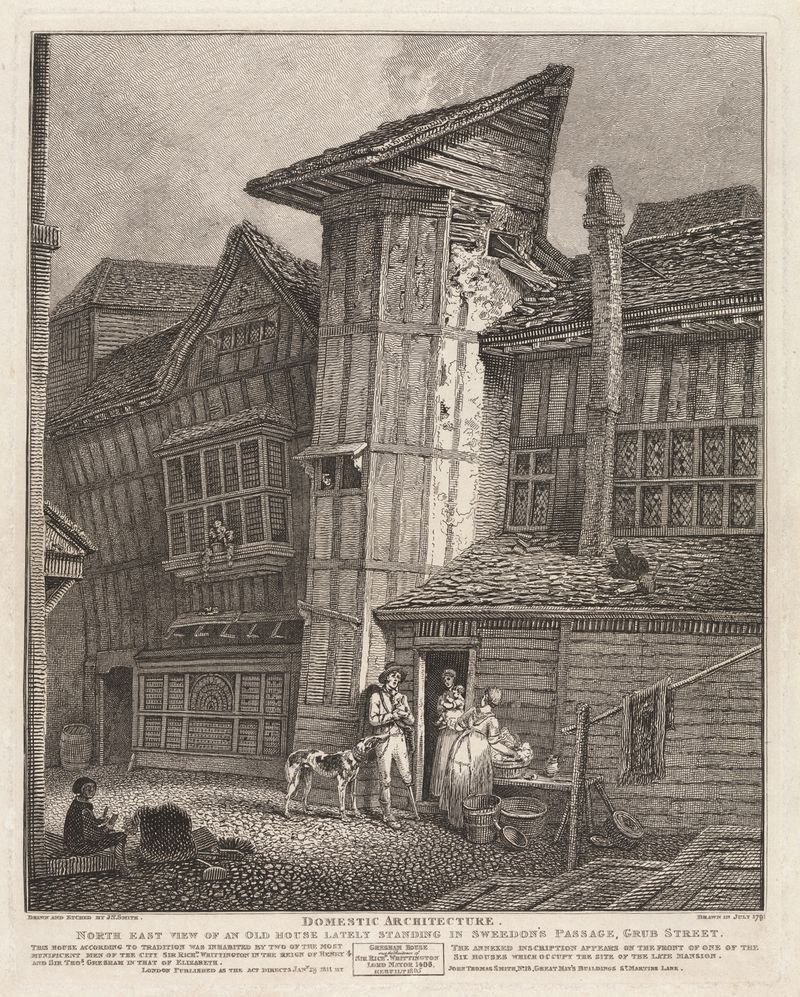
Domestic Architecture – N. E. View of an Old House lately Standing in Sweedon’s Passage, Grub Street
John Thomas Smith

Houses on the South SIde of a Street called London Wall
John Thomas Smith
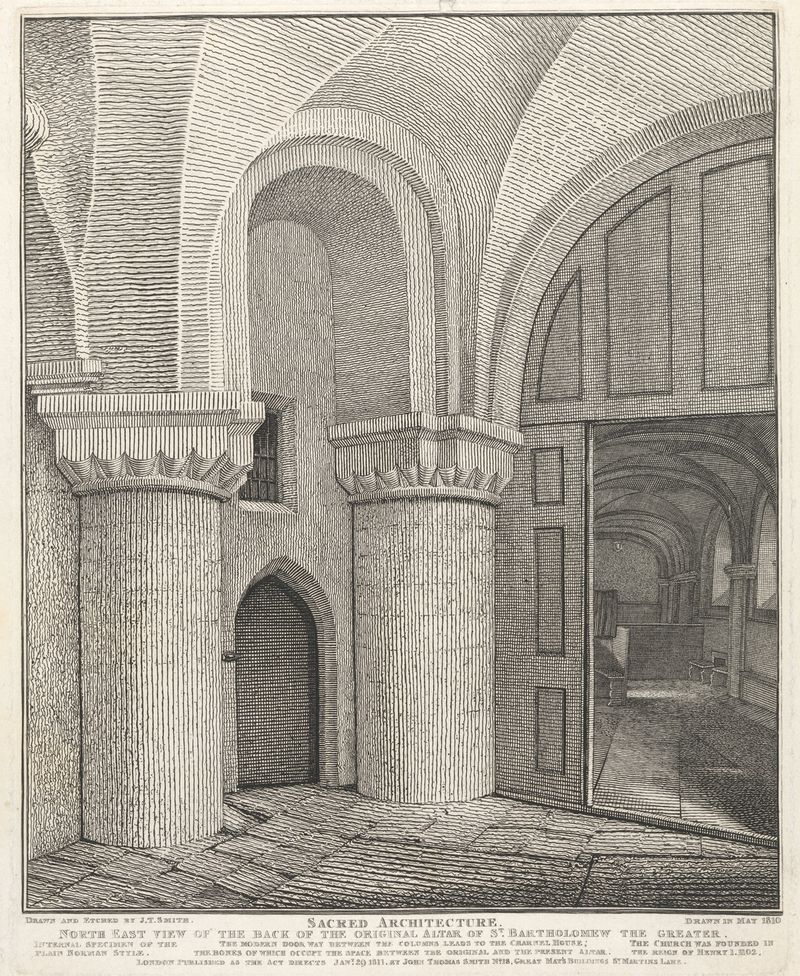
Northeast View of the Back of the Original Altar of St. Barts the Great
John Thomas Smith
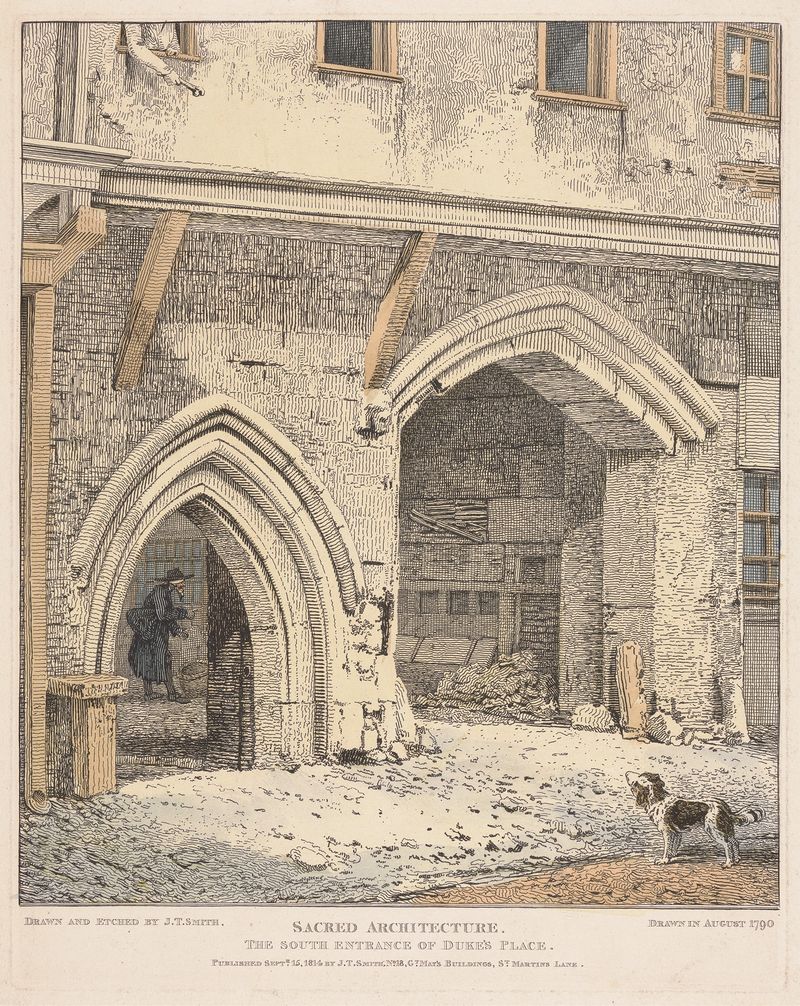
The South Entrance of Duke’s Place
John Thomas Smith