
Drake’s Island, Plymouth — History & Facts
When did color learn to lie? In a world where hues paint emotions, the vibrant palette of a bygone era calls us into a wistful embrace, inviting us to ponder what is lost in nostalgia. Look to the foreground, where the dramatic contrast of deep blues and earthy browns pulls you toward the rocky shore. Notice how the soft light dances upon the water, creating shimmering reflections that blur the boundary between reality and dream. The sky, alive with pastel pinks and yellows, envelops the scene in a gentle glow, suggesting both dawn and dusk—an ambiguous time that heightens the sense of longing within the composition. As you explore further, consider the tiny figures scattered along the shore.
They seem dwarfed by the expansive landscape, each a solitary beacon of human presence against nature's vast canvas. This juxtaposition of man and environment evokes a bittersweet tension, a reminder of both our connection to and isolation from the world around us. The strategic placement of boats, gently bobbing in the water, hints at journeys taken and adventures sought, capturing the essence of wanderlust and the ache for exploration. This piece emerged from the brush of Samuel Prout during a dynamic period in the mid-19th century, as he painted in Plymouth, England.
At a time when the Romantic movement flourished, emphasizing emotion and nature's power, Prout was deeply influenced by the coastal scenery of his surroundings. His focus on light and atmosphere marked his transition into watercolors, paving the way for a new appreciation of landscape art in an ever-changing world.
More Artworks by Samuel Prout
Browse all →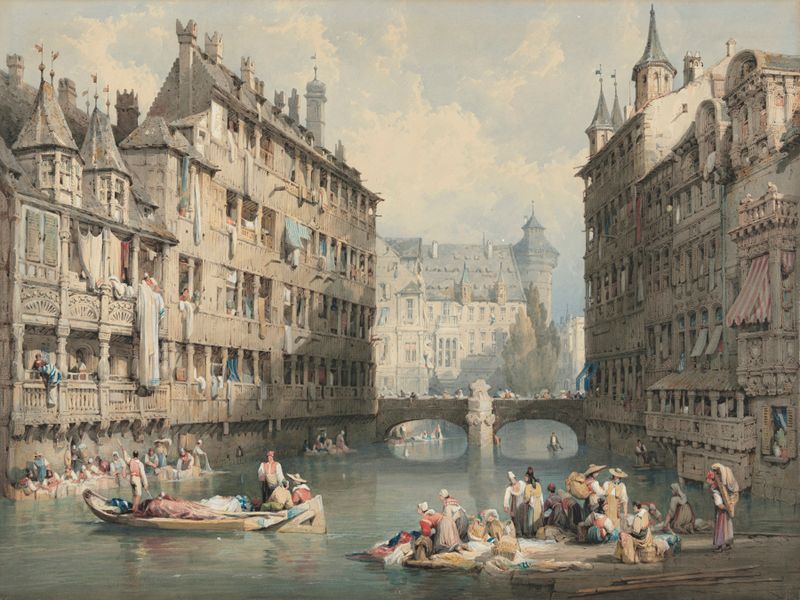
View of Nuremberg
Samuel Prout

The Doge’s Palace and the Grand Canal, Venice, looking west
Samuel Prout
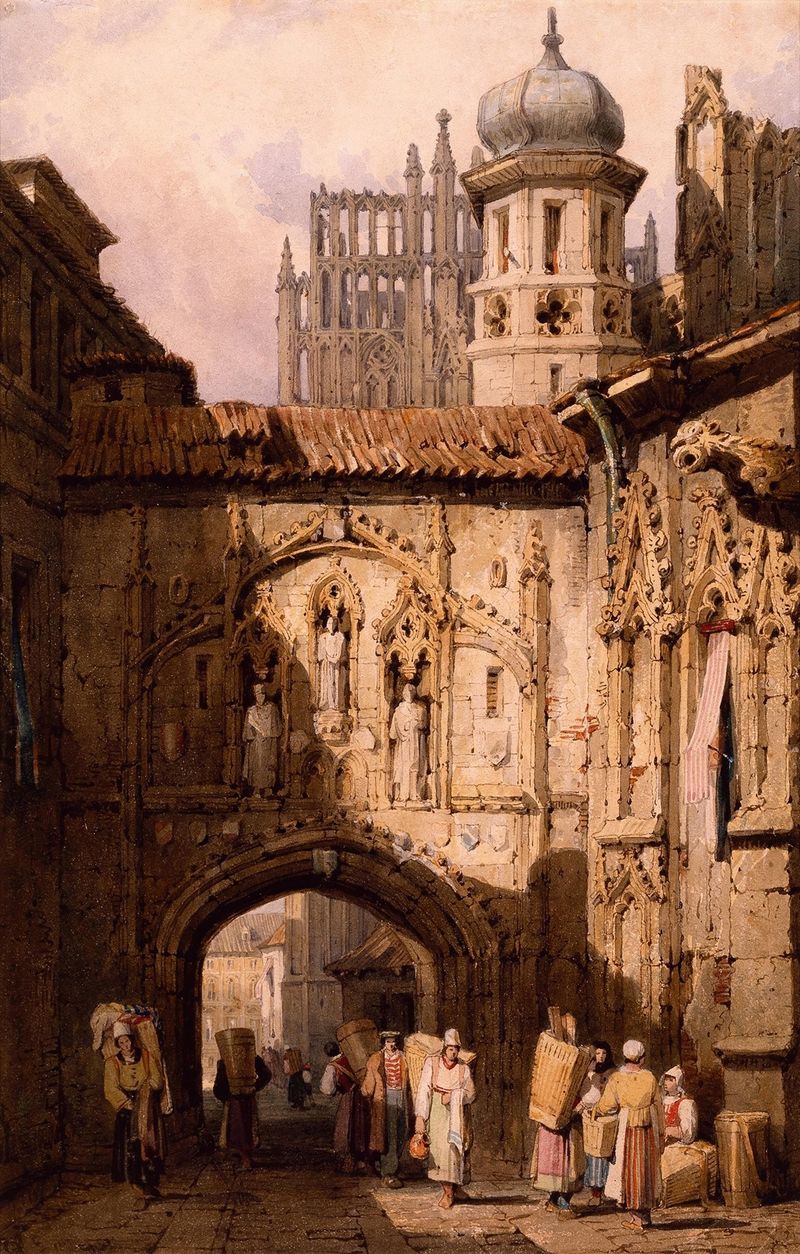
A View in Nuremberg.
Samuel Prout
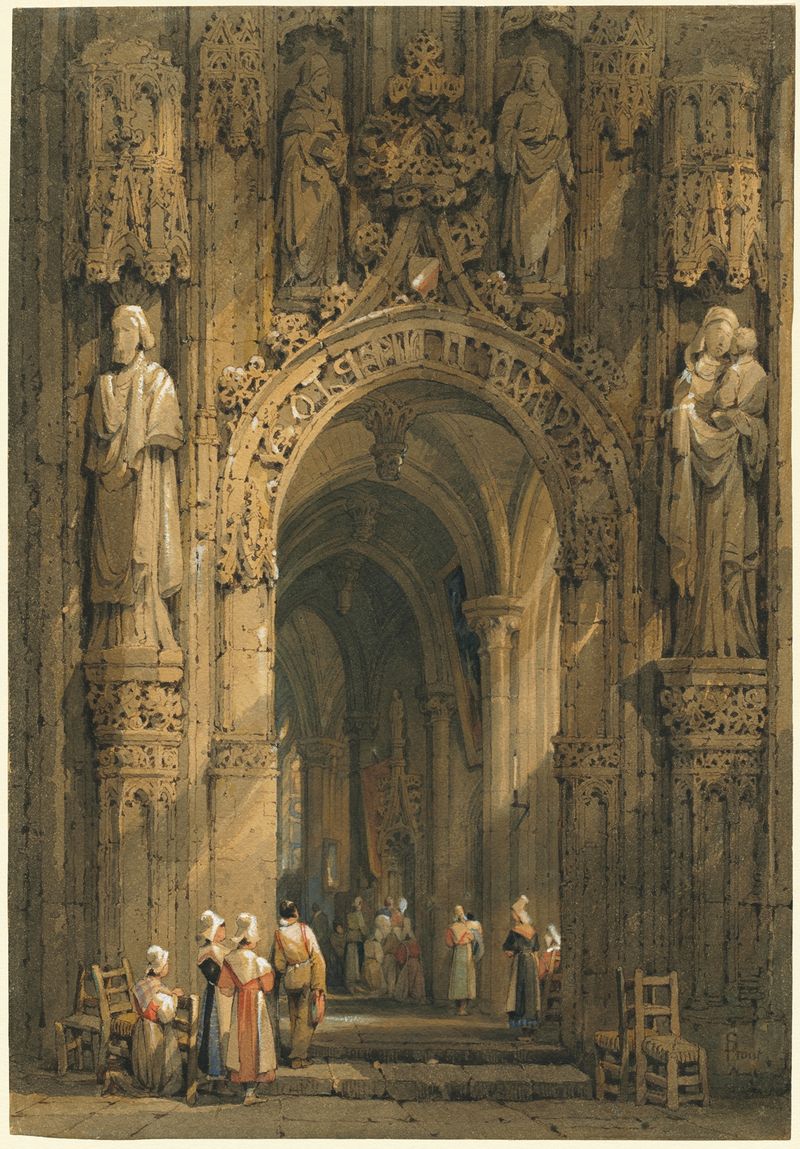
Interior of a Cathedral
Samuel Prout

San Giorgio dei Greci, Seen from an Arcade
Samuel Prout
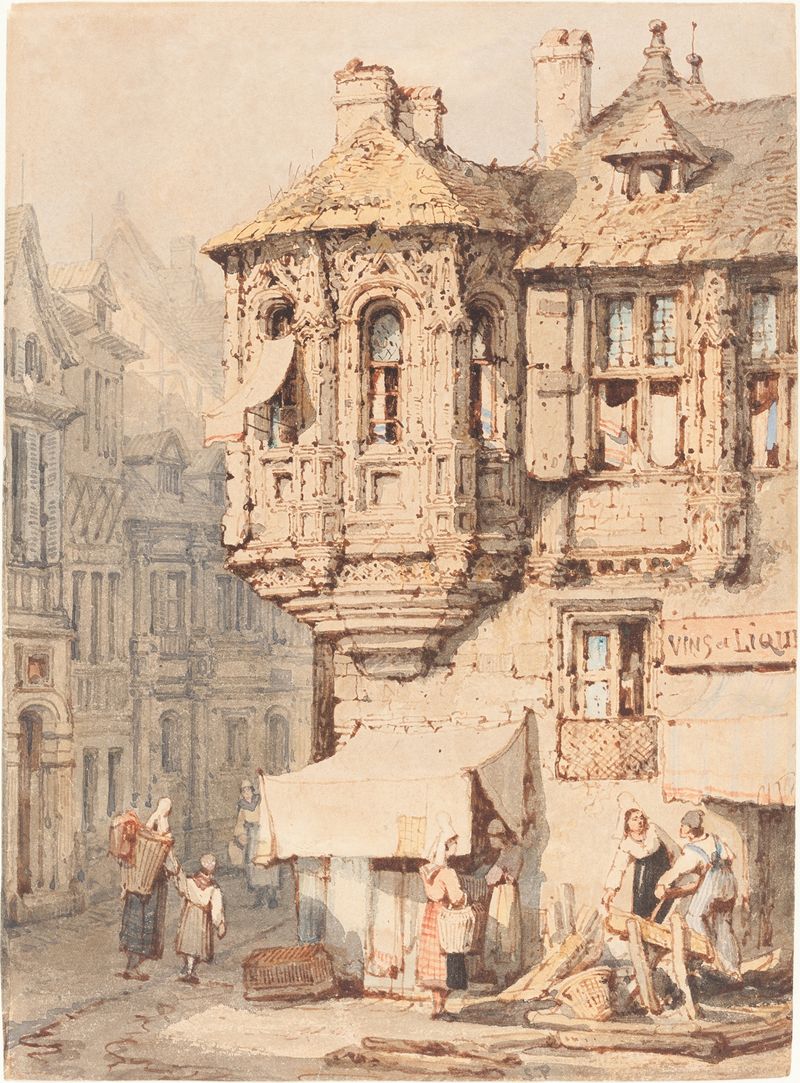
French Street Scene with a Medieval Turret
Samuel Prout
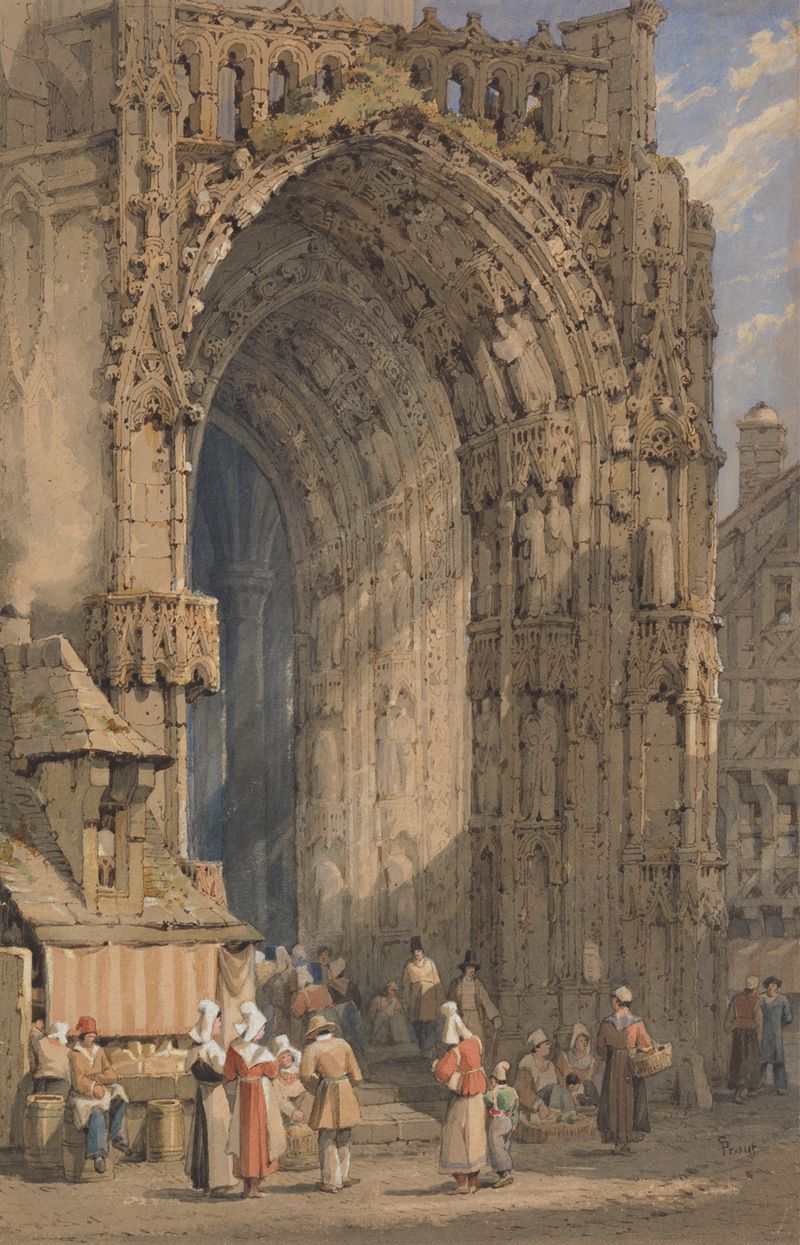
The Porch, Reims Cathedral
Samuel Prout
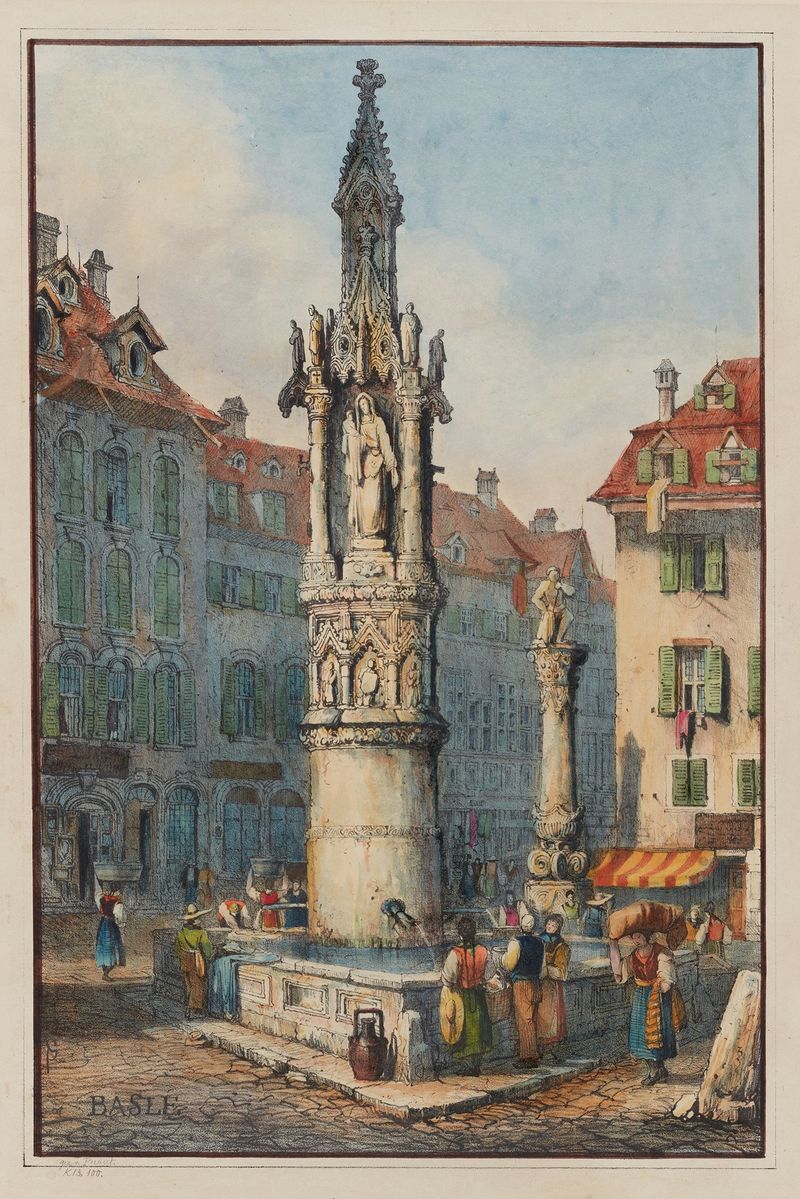
Basle
Samuel Prout

Marketplace at Bruges
Samuel Prout

Coastal Scene with Beached Boats in Foreground
Samuel Prout





