Drie putti met trompetten, schild en helm — History & Facts
In the stillness of a moment, a yearning for connection breathes life into this ethereal composition. Look to the center of the canvas, where the three putti, cherubic figures intertwined in harmonious play, draw your gaze. Each angel holds a distinct instrument: a trumpet, a shield, and a helmet, their playful gestures contrasting the serious symbolism of their attributes. The soft, muted colors blend seamlessly, with delicate touches of gold illuminating the contours of their forms, while intricate details, such as the feathers on the helmet, invite closer examination. Beneath their joyful expressions lies an undercurrent of longing — for peace, for protection, or perhaps for the fleeting innocence of youth.
The juxtaposition of the instruments suggests a call to action, a summons toward the divine, while the shield implies defense against the chaos of life. Each element holds significance, woven together by a narrative that speaks of the human experience, echoing with vulnerabilities that transcend the centuries. Created during a period of intense innovation in the early Renaissance, this work reflects Albrecht Dürer’s engagement with both classical ideals and spiritual themes. Painted between 1498 and 1502, it emerged as he grappled with his identity as an artist in a transforming Europe.
Amidst this creative evolution, he sought to capture the essence of humanity, imbuing his subjects with a depth that resonates to this day.
More Artworks by Albrecht Dürer
Browse all →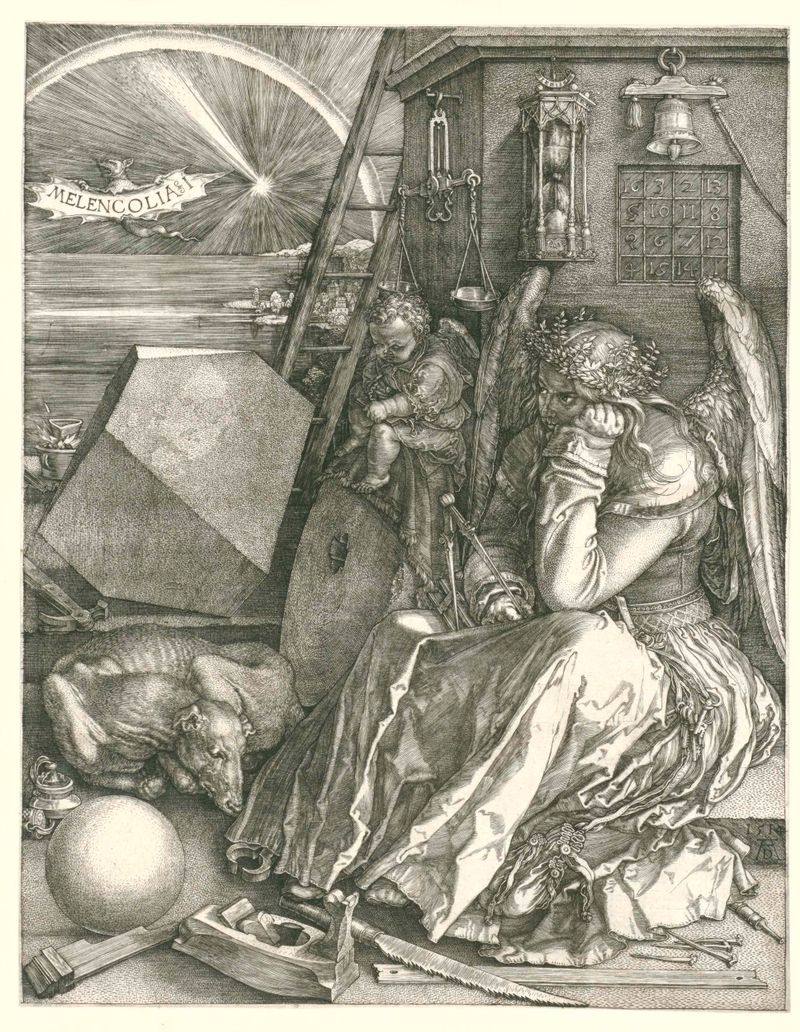
Melancholia
Albrecht Dürer
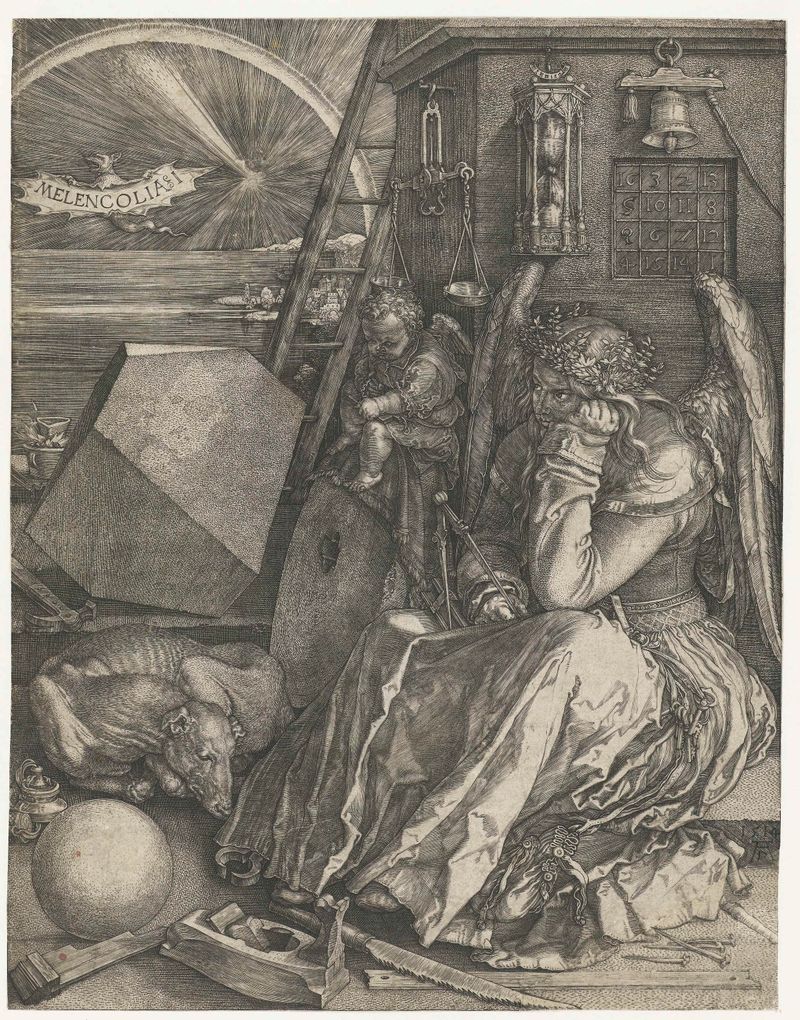
Melancholie
Albrecht Dürer
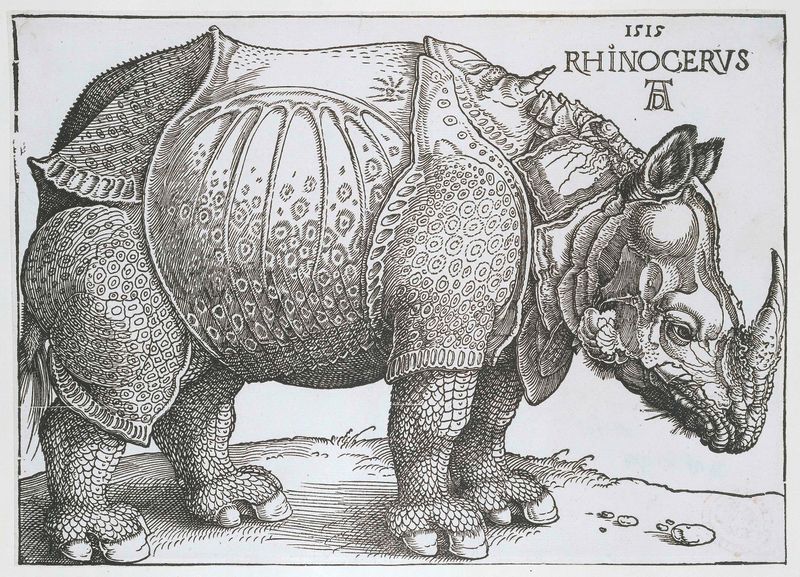
Neushoorn
Albrecht Dürer
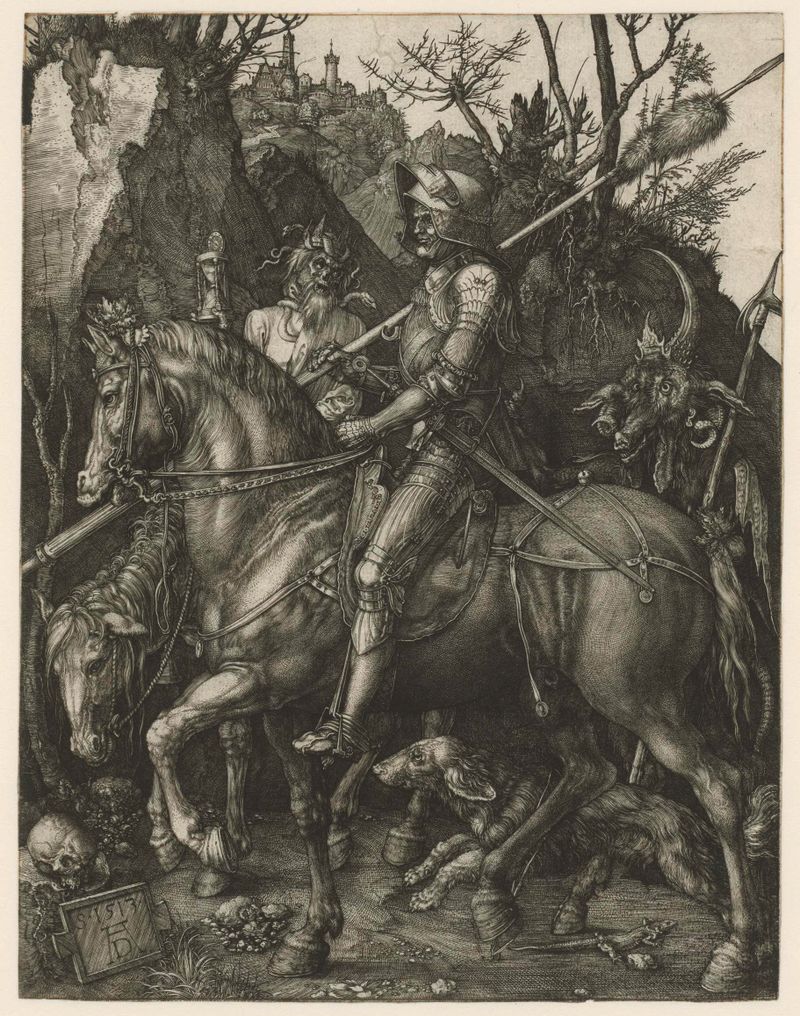
Knight, Death, and the Devil
Albrecht Dürer

De vier ruiters van de apocalyps
Albrecht Dürer
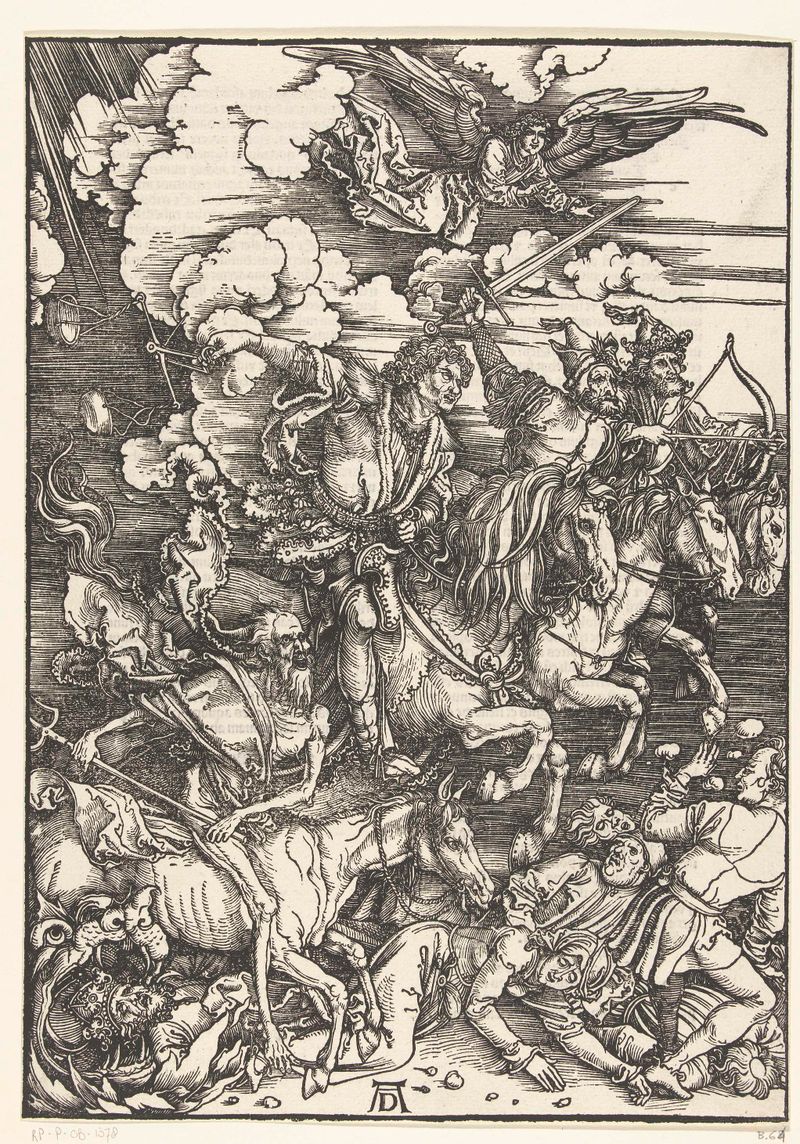
De vier ruiters van de apocalyps
Albrecht Dürer
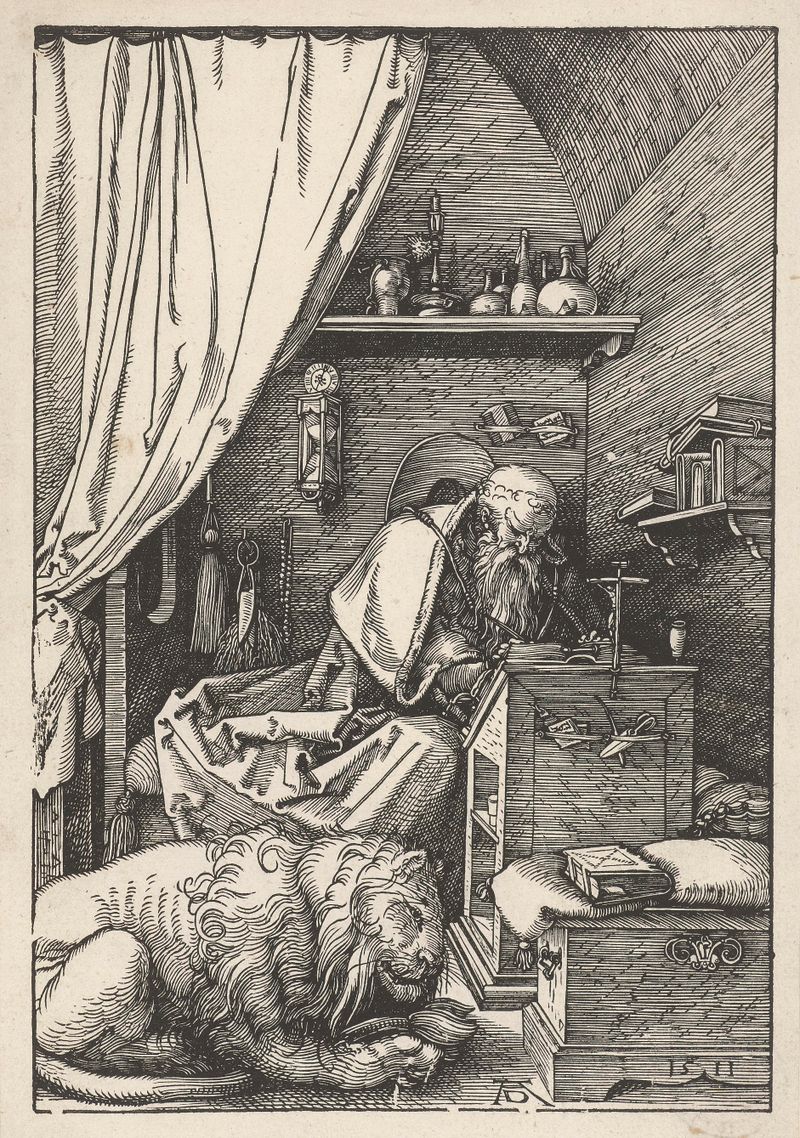
De Heilige Hiëronymus in zijn studeervertrek
Albrecht Dürer
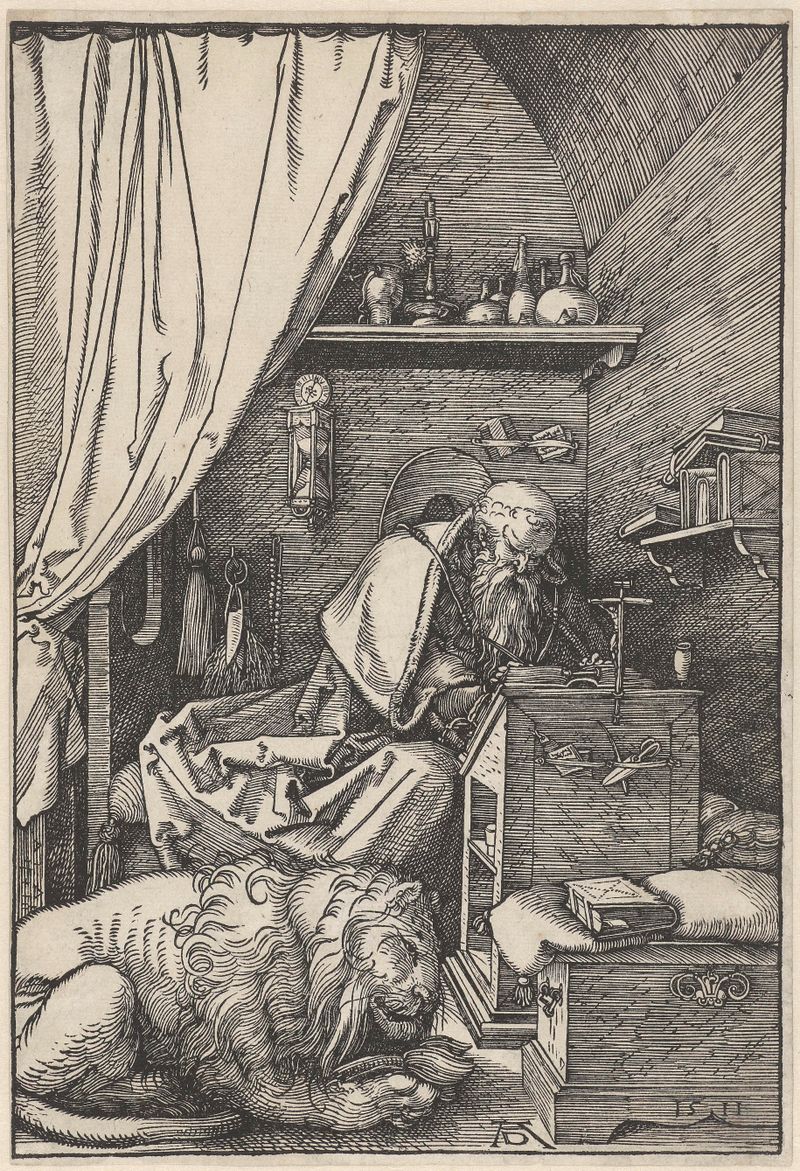
De Heilige Hiëronymus in zijn studeervertrek
Albrecht Dürer
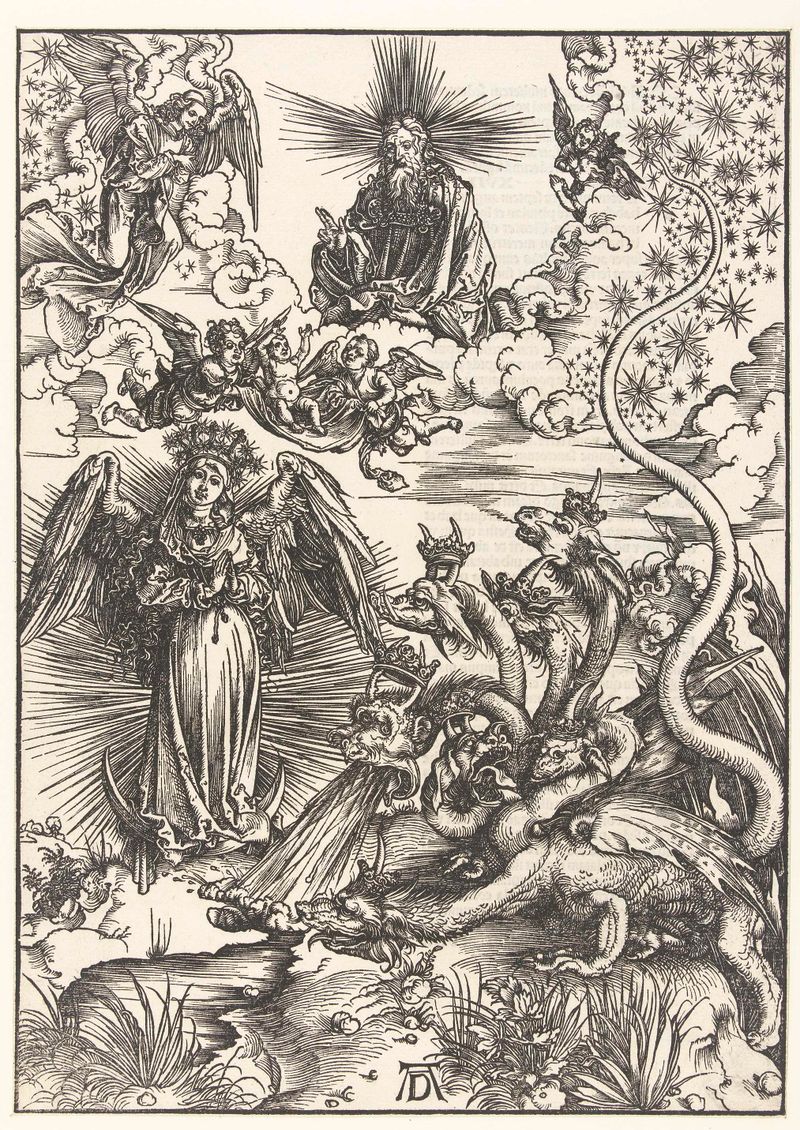
De apocalyptische vrouw en de zevenkoppige draak
Albrecht Dürer
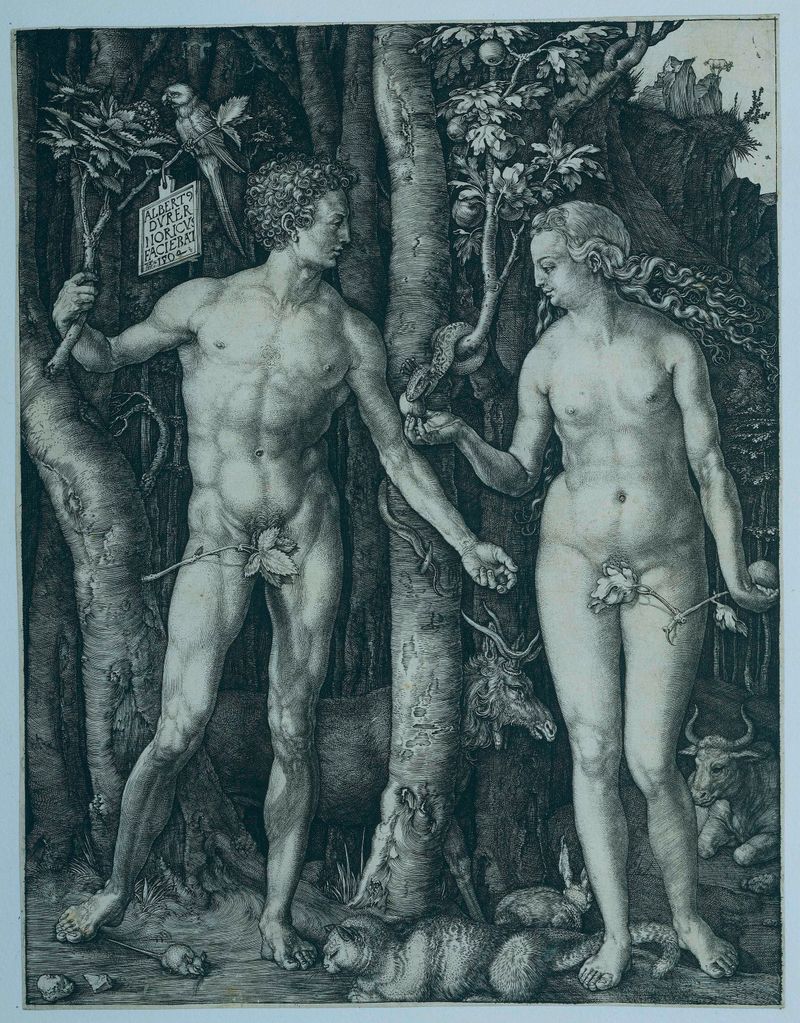
Adam en Eva
Albrecht Dürer