
Ducks on a Pond — History & Facts
Sunlight flickers across the pond, catching on the backs of the ducks and scattering in ripples that seem to move even as you look. The painter has chosen a moment of gentle congregation: a cluster of ducks, mostly white but with a pair of darker birds at the center, gather beneath the dappled shade of overhanging branches. The brushwork is swift and lively, especially in the water, where strokes of green, ochre, and violet suggest both movement and reflection.
The ducks’ bodies are rendered with creamy solidity, but their heads turn and dip in a choreography that feels both casual and quietly orchestrated. The light leads your eye from the shadowed foreground, across the glowing backs of the birds, and into the sunlit water beyond, creating a sense of depth and calm. Painted before 1932 by Alexander Koester, this work belongs to a tradition that flourished in late 19th- and early 20th-century Germany, when scenes of rural life and animal subjects found eager collectors among the rising middle class. Koester became particularly known for his studies of ducks, which he painted with both affection and acute observation—turning an everyday subject into a kind of private spectacle.
The Dorotheum collection now holds this painting, a reminder of a period when such images offered city dwellers a window onto the pleasures of the countryside. History has kept few traces of the individual stories behind works like this, but the play of light and the quiet gathering of birds invite us to linger, letting the scene unfold at its own unhurried pace.
More Artworks by Alexander Koester

Ducks on the Lakeside
Alexander Koester
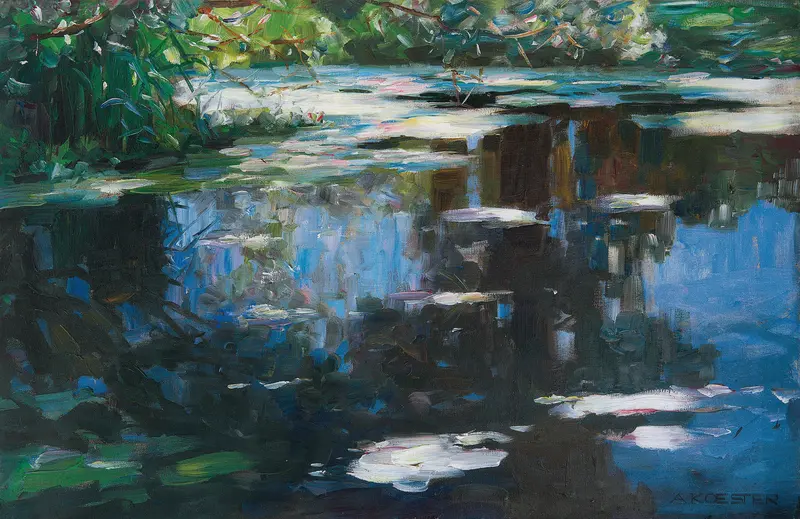
Teichblüten – Altwasser bei Brixen
Alexander Koester
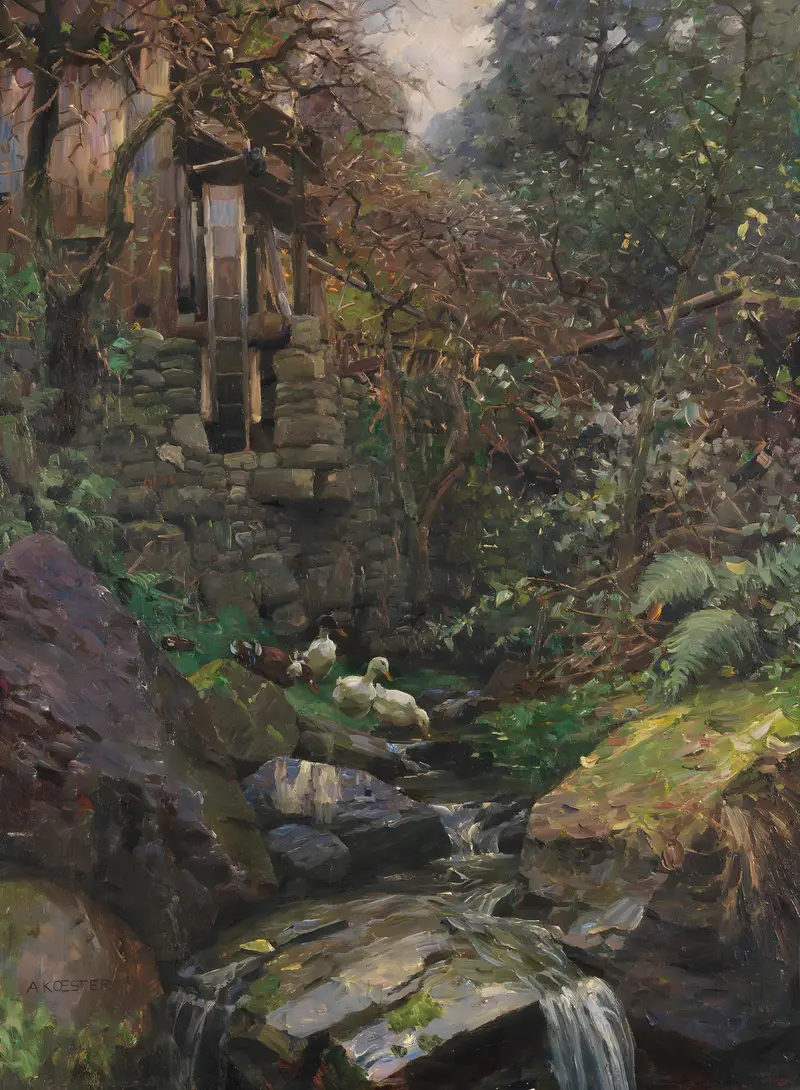
Im Mühlengrund
Alexander Koester
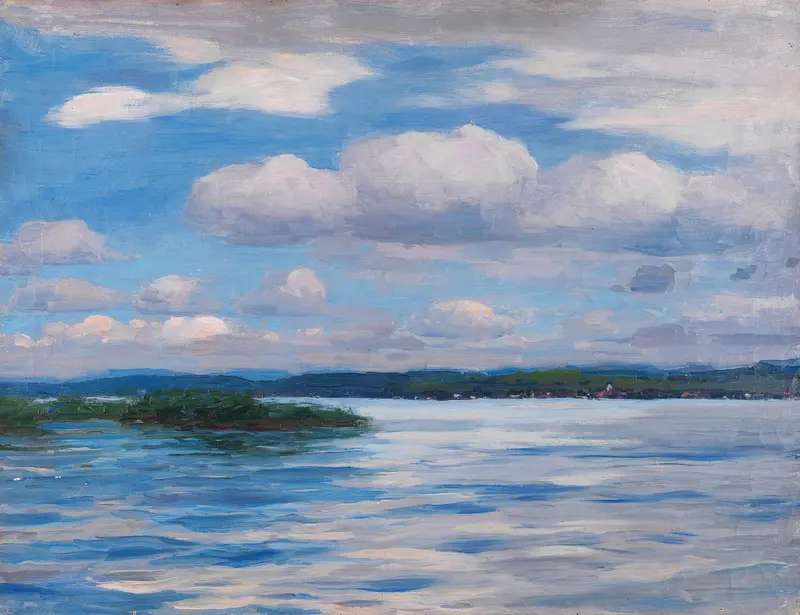
See mit Wetterwolken
Alexander Koester
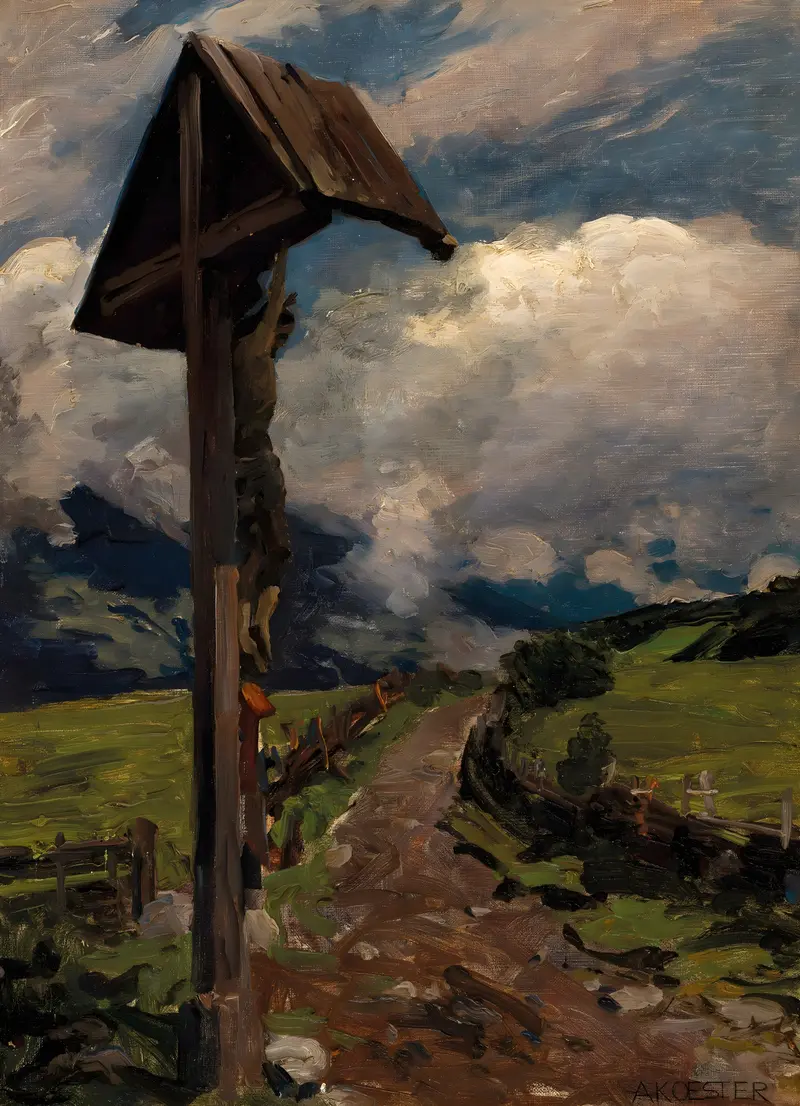
A Wayside Shrine
Alexander Koester
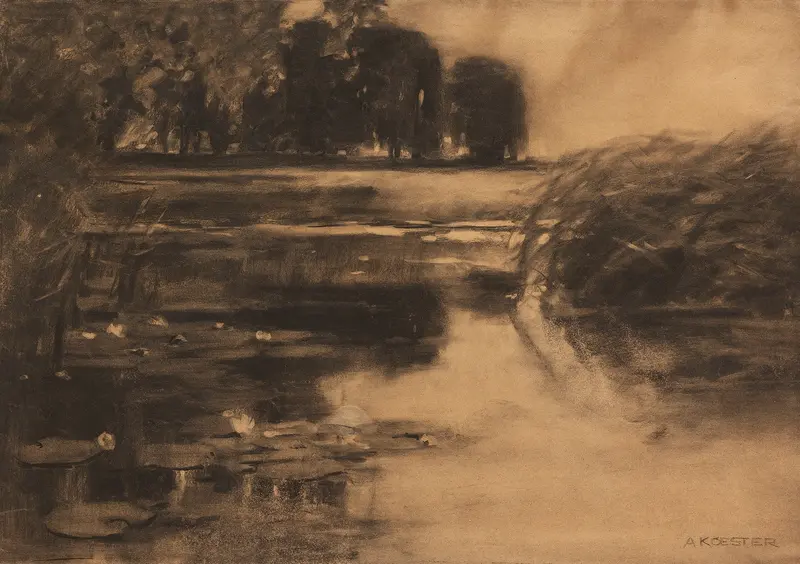
Wasserlandschaft
Alexander Koester
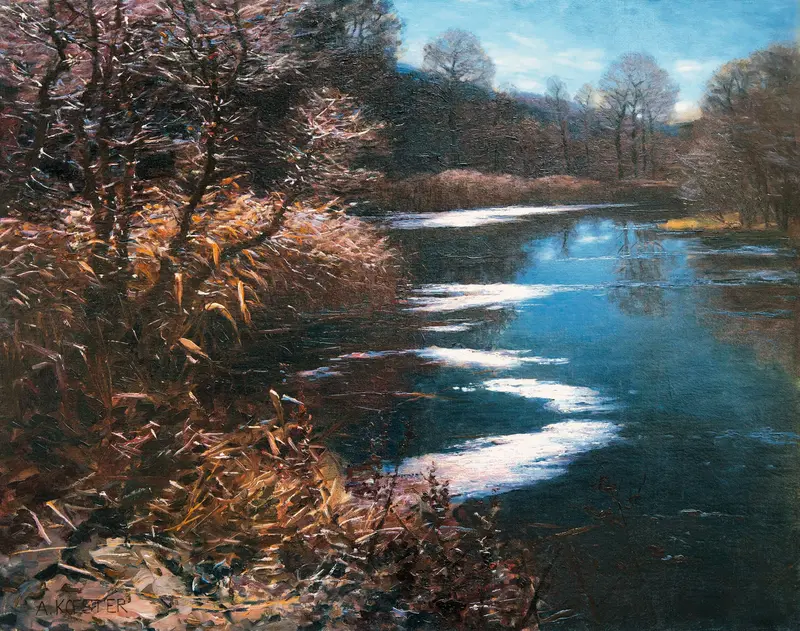
Altwasser bei Brixen
Alexander Koester
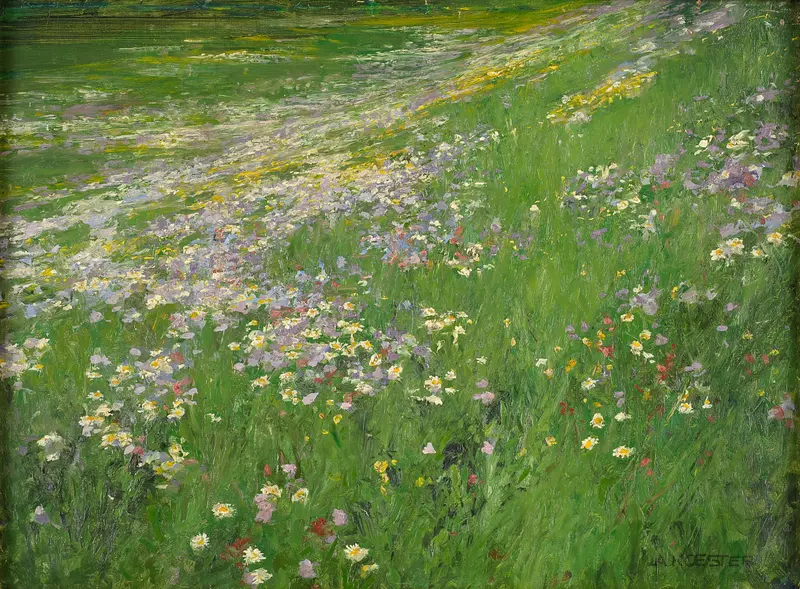
Blumenwiese bei Weßling
Alexander Koester
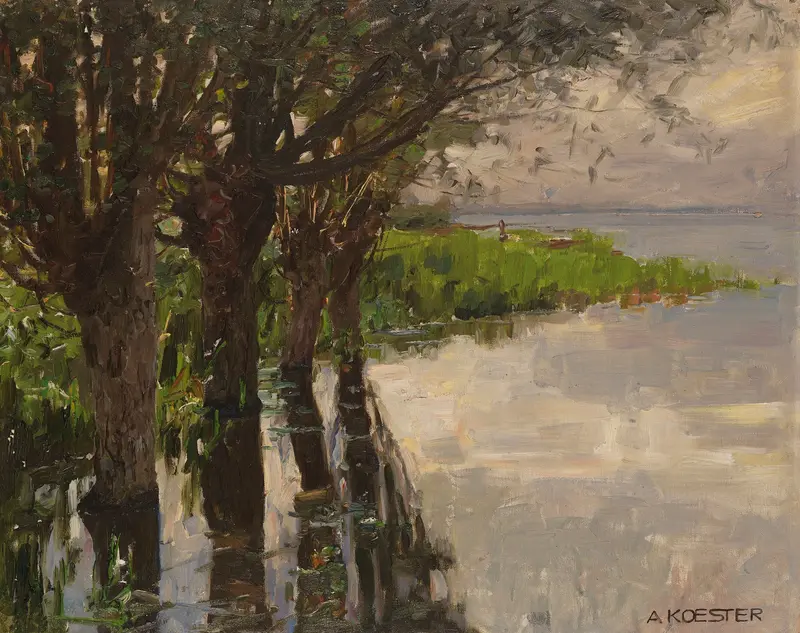
Reichenau, Weiden am See, Sonne
Alexander Koester
Segelboot, Holland
Alexander Koester





