The Immingham — History & Facts
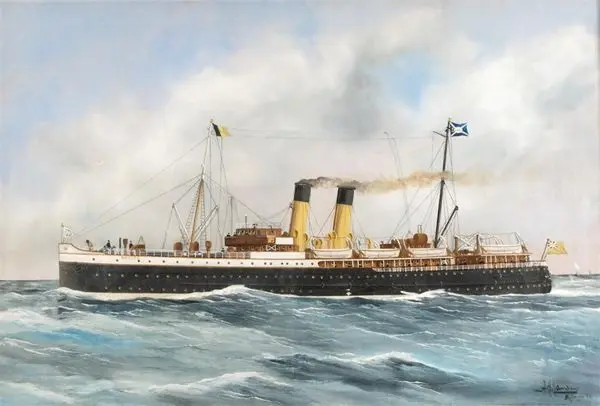
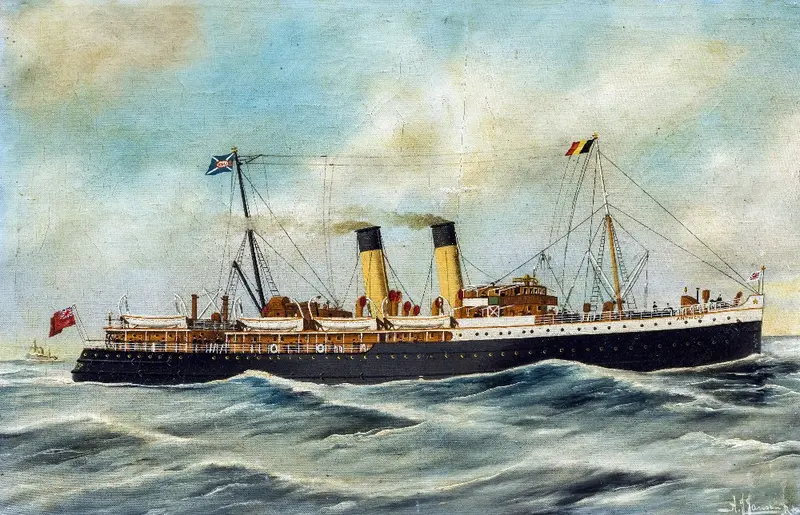
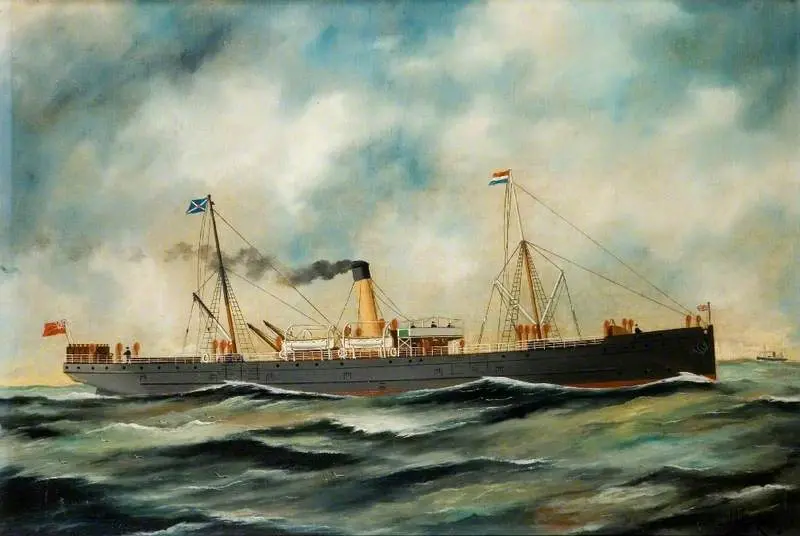
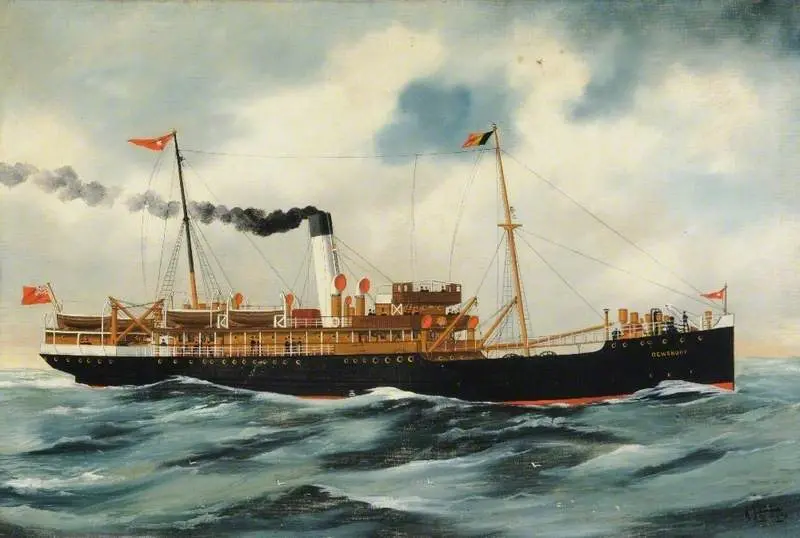
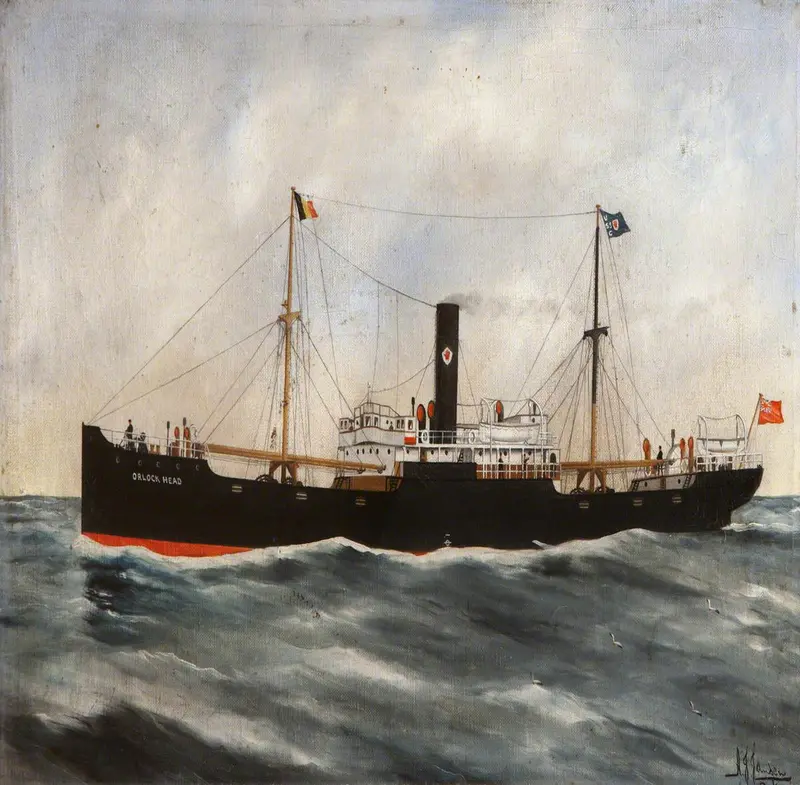
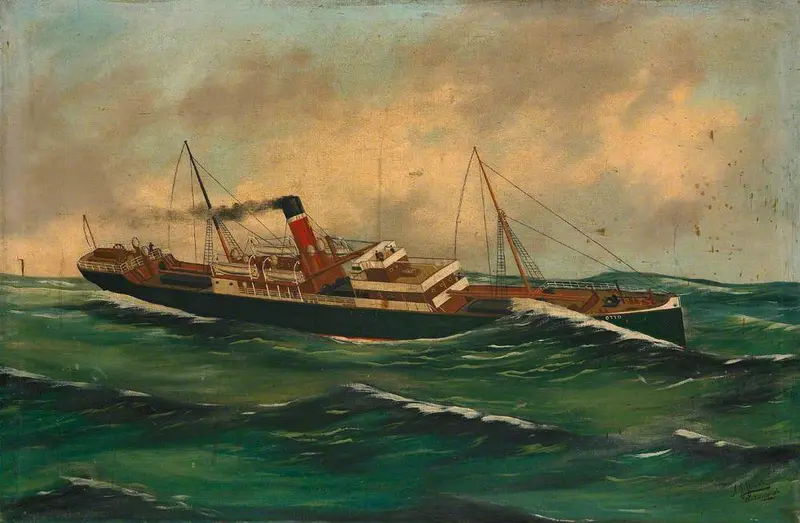
The eye is drawn first to the crisp silhouette of The Immingham, its black hull slicing cleanly through a restless blue-grey sea. Steam pours from the funnel in a bold, dark plume, a sign of the ship’s living engine and the age of steam at its height. Flags snap at the masts, their bright reds and golds a coded language of ownership and identity, while the careful symmetry of decks and rigging speaks to both pride and precision.
The artist, A. J. Jansen, gives the vessel a sense of dignity and purpose: this is not just a ship, but a portrait of modernity itself, isolated against a wide, pale sky.
The low horizon line grants the ship command of the scene, letting the viewer imagine the unseen coastlines and cargoes that defined its working life. Painted in 1916, during the height of the First World War, this image belongs to a tradition of marine portraiture that flourished in Britain’s port cities. Such paintings were often commissioned by shipping lines or captains to commemorate new vessels or mark proud moments in their service. The style is direct and documentary, yet not without artistry: every detail, from the lifeboats to the painted portholes, is rendered with care, reflecting both the industrial confidence and the anxieties of a world at war.
Little is recorded about A. J. Jansen or the specific history of this painting, now held in a public collection, but its presence invites us to consider the countless journeys and ambitions carried by ships like The Immingham.
Stand before it and listen for the pulse of engines and the promise of distant harbors.