
Dutch Village Scene with Hanging Laundry — History & Facts
Could beauty survive in a century of chaos? In Dutch Village Scene with Hanging Laundry, the answer emerges as a gentle reminder of life's simple yet poignant moments, a testament to the enduring spirit of daily existence amidst the tumult of change. Look closely at the vibrant colors that dance across the canvas, particularly the soft blues and crisp whites of the laundry that sways in the breeze. Notice how the sunlight filters through the fabric, casting delicate shadows on the cobblestone path. The composition draws your eye toward the center, where a cluster of houses stands, their thatched roofs and warm hues inviting you into a world seemingly untouched by time.
The meticulous brushwork and attention to detail convey a peaceful rhythm, capturing the essence of a tranquil village life. Yet, beneath this idyllic surface lies an undercurrent of obsession. The seemingly mundane act of hanging laundry becomes a ritual, a search for beauty and order in a rapidly changing society. The juxtaposition of the serene village scene and the practicality of domestic life speaks to a deeper longing for continuity in the face of modernity.
This tension invites reflections on the fragile balance between tradition and transformation, an echo of the artist's own struggles as he navigated the art world of his time. Max Liebermann painted this scene in 1890 while living in Berlin, a city undergoing rapid industrialization and urbanization. While he painted, Impressionism was gaining traction, and the artist sought to capture the essence of life around him through light and color. This work reflects his fascination with the ordinary, offering a glimpse into both the beauty of everyday life and the inevitable shifts that lay ahead, marking a pivotal moment in art history.
More Artworks by Max Liebermann
Browse all →
Die Blumenterrasse in Wannsee mit Blick auf den Fischotterbrunnen
Max Liebermann
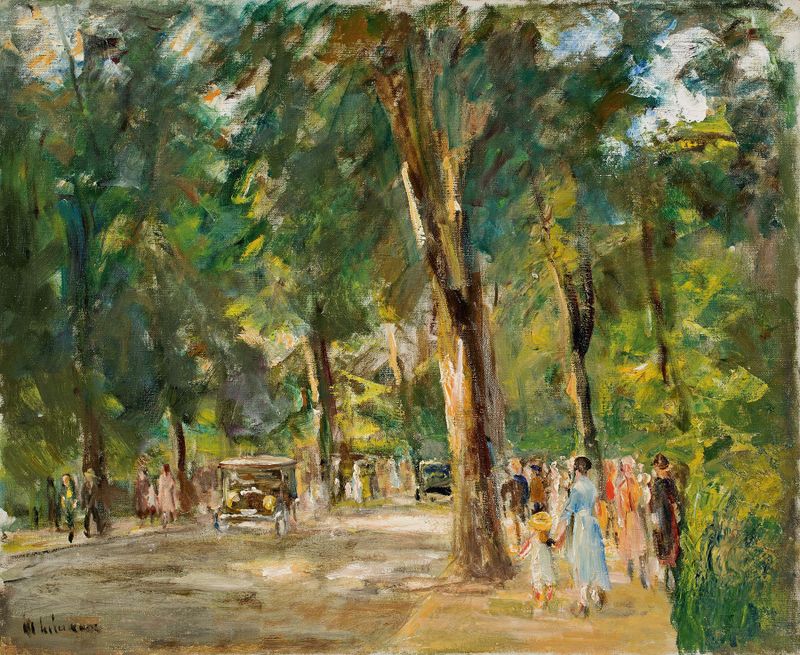
Die Große Seestraße in Wannsee mit Spaziergängern
Max Liebermann

Seitlicher Blick in den Wannseegarten
Max Liebermann

Der Rosengarten in Wannsee
Max Liebermann

Allee mit Spaziergängern und Automobilen
Max Liebermann

Blick in meinen Garten
Max Liebermann
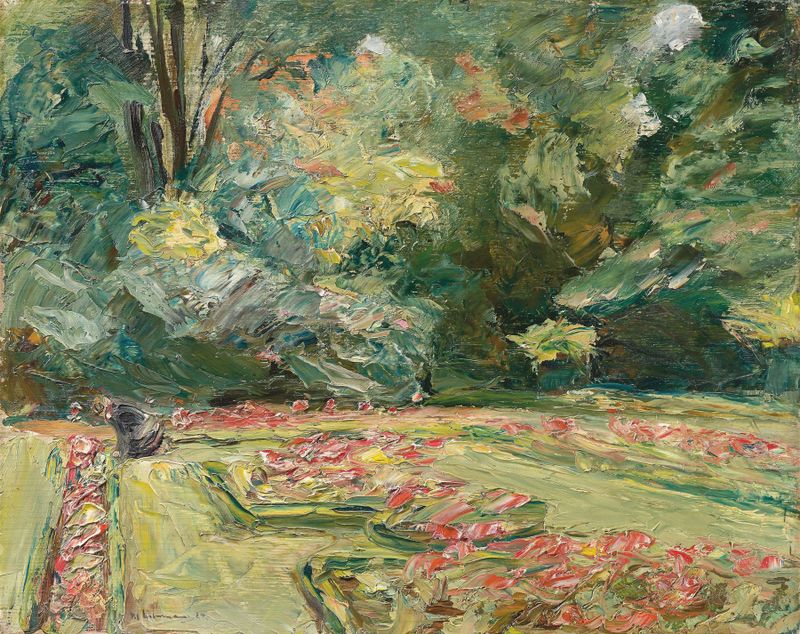
Die Blumenterrasse im Wannseegarten nach Norden
Max Liebermann

Spielende Kinder am Strand
Max Liebermann
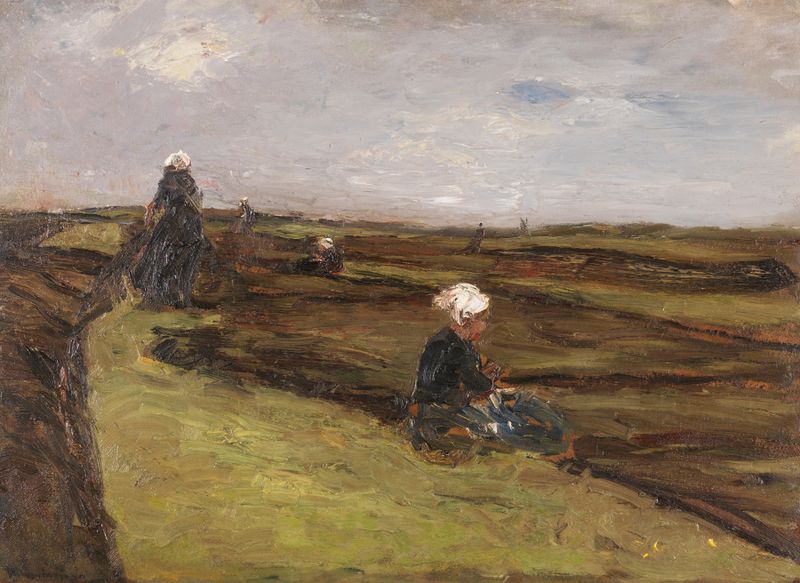
Die Netzflickerinnen
Max Liebermann

Am Strand von Noordwijk
Max Liebermann





