
Eastern horseman — History & Facts
When Tadeusz Ajdukiewicz painted Eastern horseman, he was already known for his fascination with the exotic and the military—a passion that took him far from his native Poland. The most intriguing aspect of this work is that it stands as a testament to the artist’s travels through the Ottoman Empire, where he immersed himself in the cultures and landscapes of the East. Ajdukiewicz was one of the few Polish painters of his era to gain access to the courts and camps of Ottoman leaders, and his paintings from this period were eagerly sought by collectors in both Eastern and Western Europe.
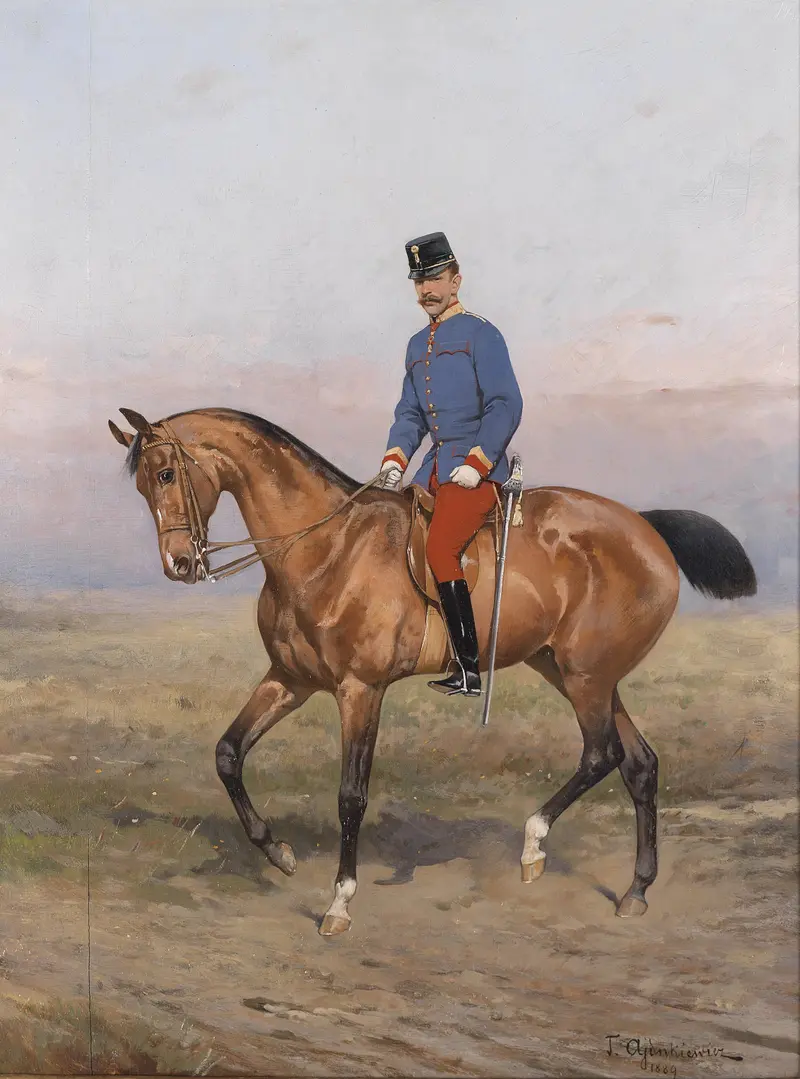
The precise date and circumstances of Eastern horseman remain uncertain, adding to its allure and the ongoing discussion among art historians about its place in his oeuvre. A lone rider dominates the center of the canvas, his posture upright and alert atop a spirited steed. The man’s elaborate attire—embroidered kaftan, fur-trimmed cap, and curved sabre—signals his status as a warrior of the East, perhaps a Circassian or Ottoman cavalryman. Ajdukiewicz’s attention to the glint of metal and the play of sunlight on silk and leather transforms the scene into a vivid encounter with a world both foreign and immediate.
The horse’s prancing stance, nostrils flared and hooves poised, captures a moment of anticipation, as if the rider is about to set off or has just arrived. Unlike the romanticized Easterners of Eugène Delacroix, Ajdukiewicz’s horseman is rendered with documentary precision, the result of direct observation rather than imagination. The journey of Eastern horseman as an object is as enigmatic as its subject. While many of Ajdukiewicz’s works from his Eastern travels were commissioned by aristocratic patrons or military officers, the provenance of this particular painting is not fully documented.
It has appeared in several exhibition catalogues and private collections, reflecting the enduring fascination with Orientalist themes in 19th-century European art. Today, it stands as a representative example of Ajdukiewicz’s skill in capturing both the likeness and spirit of his subjects, bridging his Polish roots with the wider world he explored. The painting’s uncertain date and medium only add to its mystique, inviting viewers to imagine the stories behind both the artist and his enigmatic rider.
More Artworks by Tadeusz Ajdukiewicz
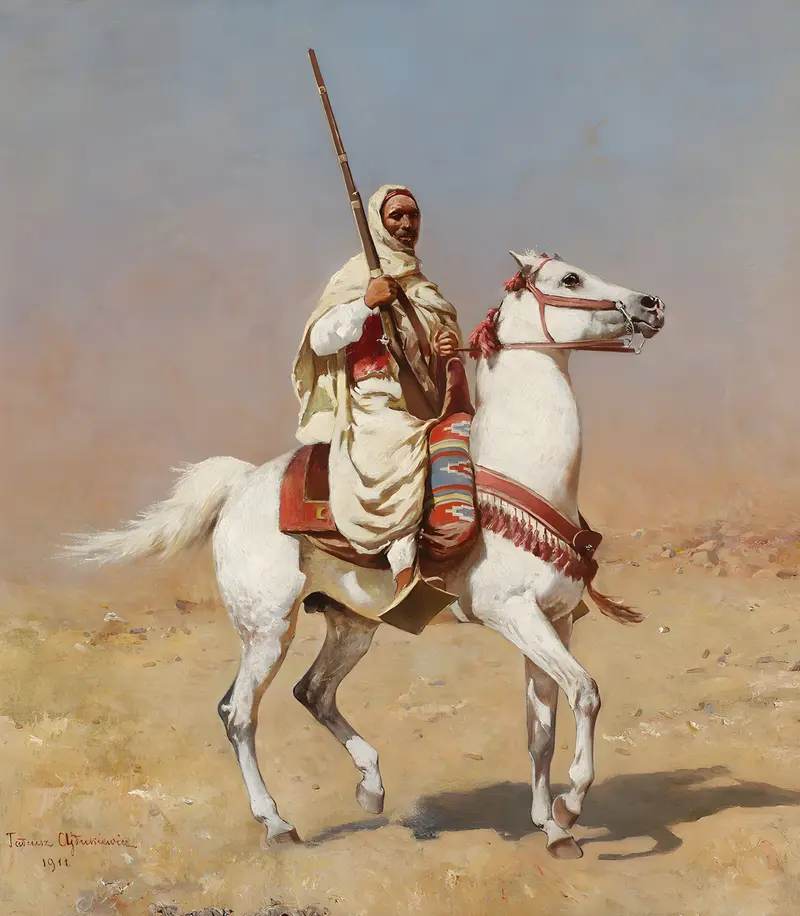
Arab on a grey horse
Tadeusz Ajdukiewicz
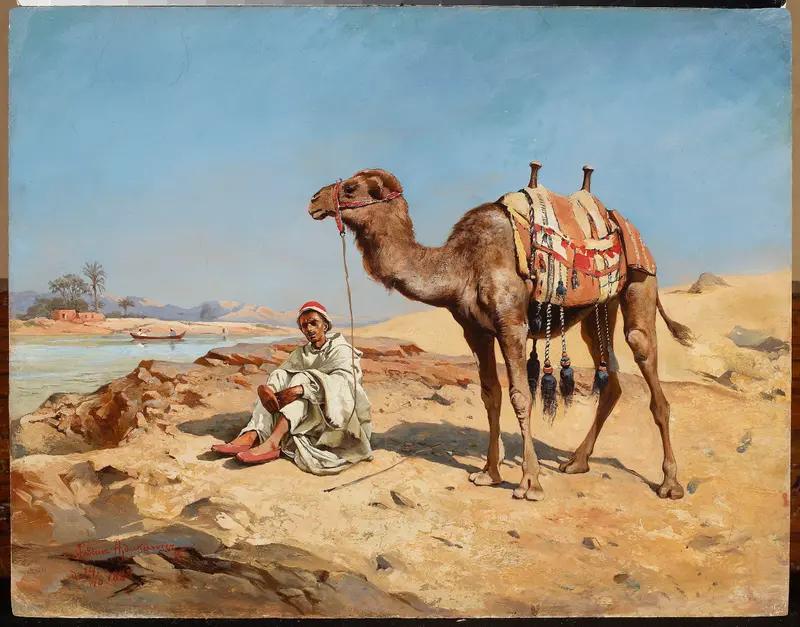
Arab in the desert
Tadeusz Ajdukiewicz
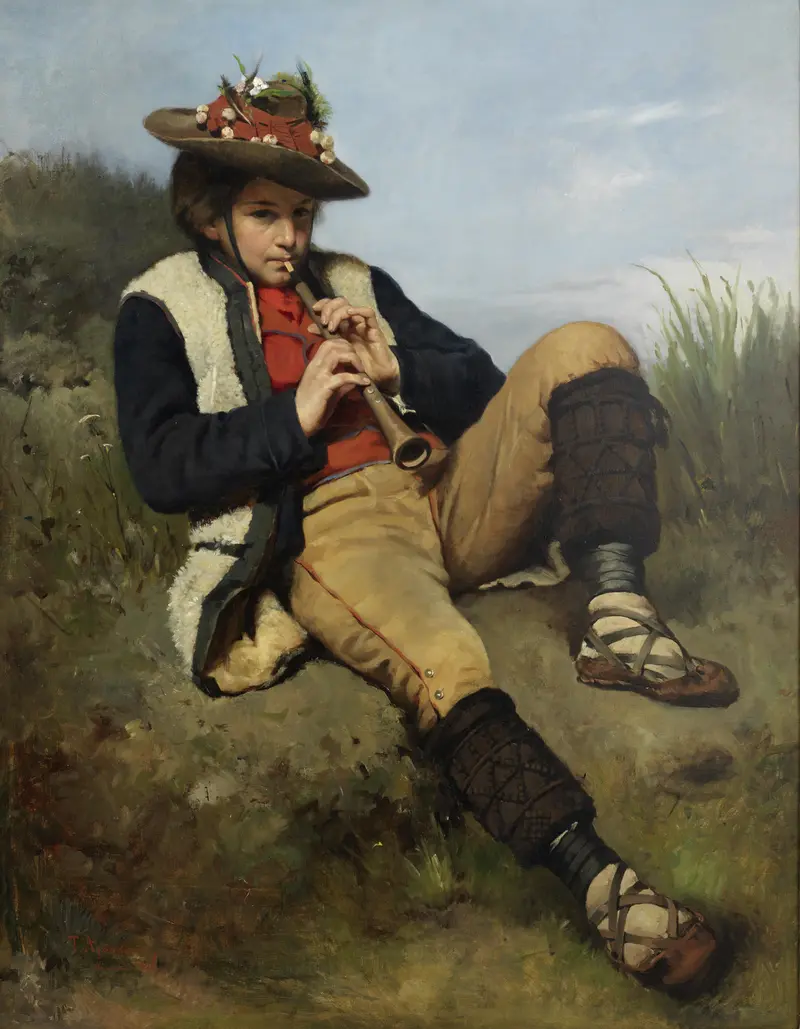
The shepherd boy
Tadeusz Ajdukiewicz

A Parforce Rider in the Forest
Tadeusz Ajdukiewicz
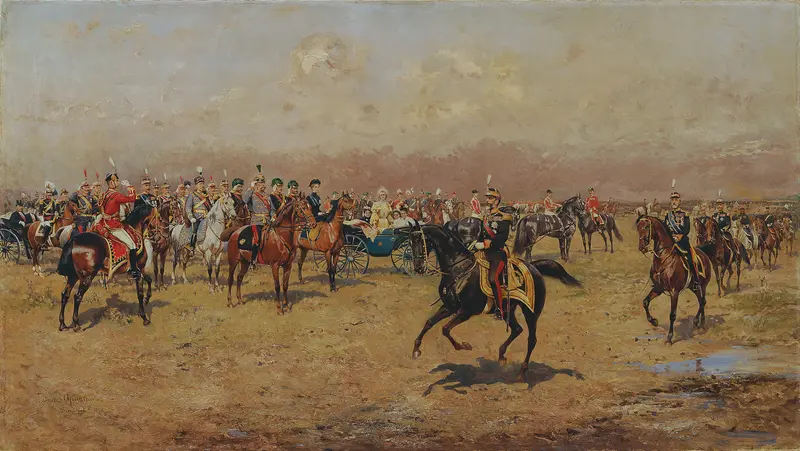
Militärparade vor Kaiser Franz Joseph I.
Tadeusz Ajdukiewicz
Eastern scene against a landscape
Tadeusz Ajdukiewicz
A turkish courtyard
Tadeusz Ajdukiewicz
After hunting for a deer
Tadeusz Ajdukiewicz
Arab and a donkey at the wall of a house
Tadeusz Ajdukiewicz
Kronprinz Rudolf zu Pferd
Tadeusz Ajdukiewicz



