
Edelman en de Dood — History & Facts
In a world where betrayal lingers in the shadows, there lies an eternal struggle between truth and deceit, a theme that resonates across generations. Focus first on the central figure, the solemn Edelman, whose gaze draws you in with an unsettling intensity. The intricate details of his attire, rich in texture and color, command attention. Notice how the dark and muted palette envelops him, suggesting an inner turmoil that contrasts with the ornate elements surrounding him, including the lavish fabric and the fleeting presence of Death nearby, represented through an almost imperceptible skeletal figure.
This careful composition amplifies the weight of unspoken emotions, hinting at both despair and inevitability. Delve deeper into the subtle gestures: the tension in the Edelman’s clenched hands, the slight turn of his body, suggest a psychological struggle that transcends the canvas. The juxtaposition of his opulent garb against the specter of Death serves as a poignant reminder of the fragility of life and the looming specter of betrayal that accompanies wealth and power. Each element tells a story of personal conflict tinged with moral ambiguity, reflecting the artist's exploration of existential themes. In 1538, while residing in England, Holbein created this work amidst the political turbulence of the Tudor court.
His role as a court painter placed him in the midst of intrigue and power struggles, which likely influenced his depiction of human frailty and deception. The artist’s ability to capture psychological depth during this period solidified his reputation, allowing viewers to engage with the complex interplay of life and death on a profoundly intimate level.
More Artworks by Hans Holbein (II)
Browse all →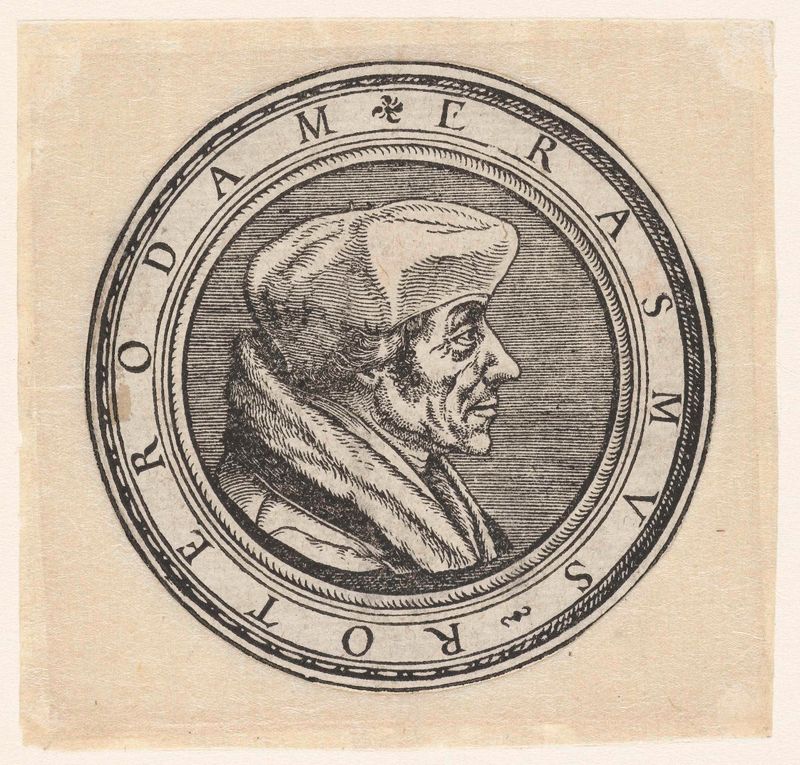
Portret van Erasmus
Hans Holbein (II)
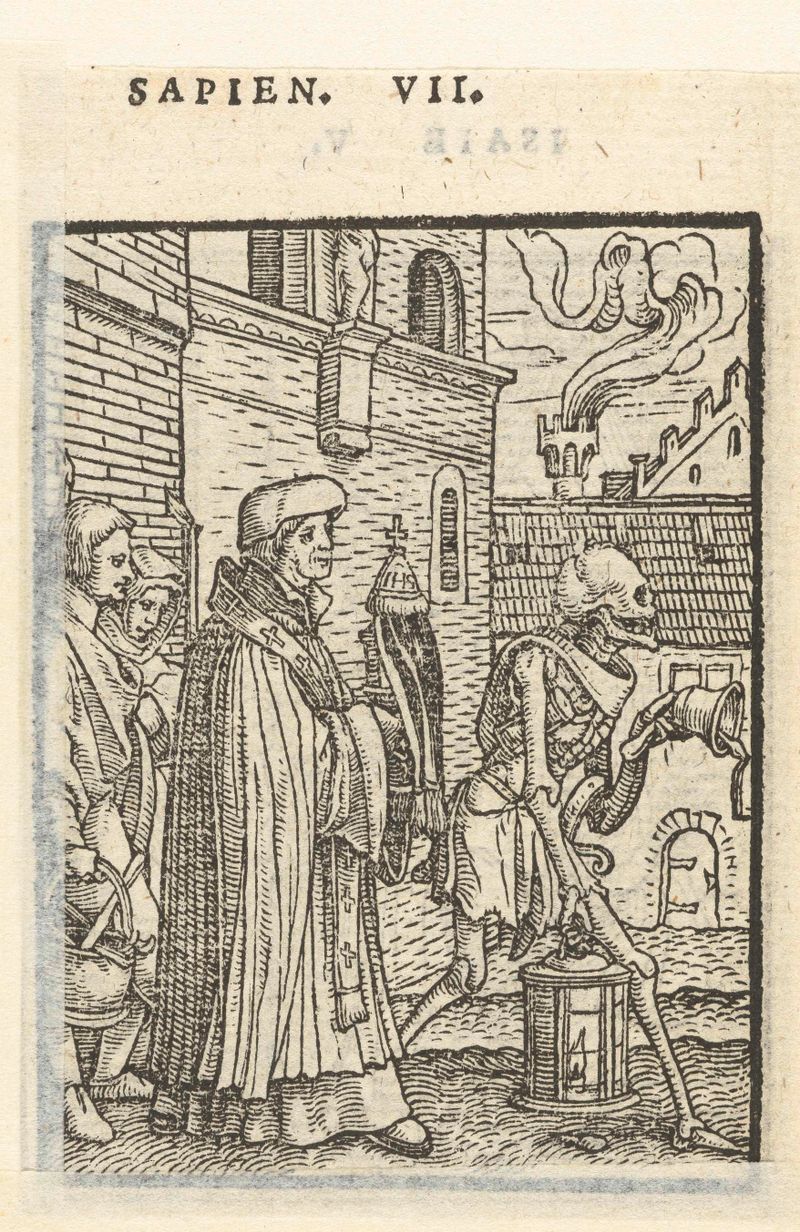
Priester en de Dood
Hans Holbein (II)
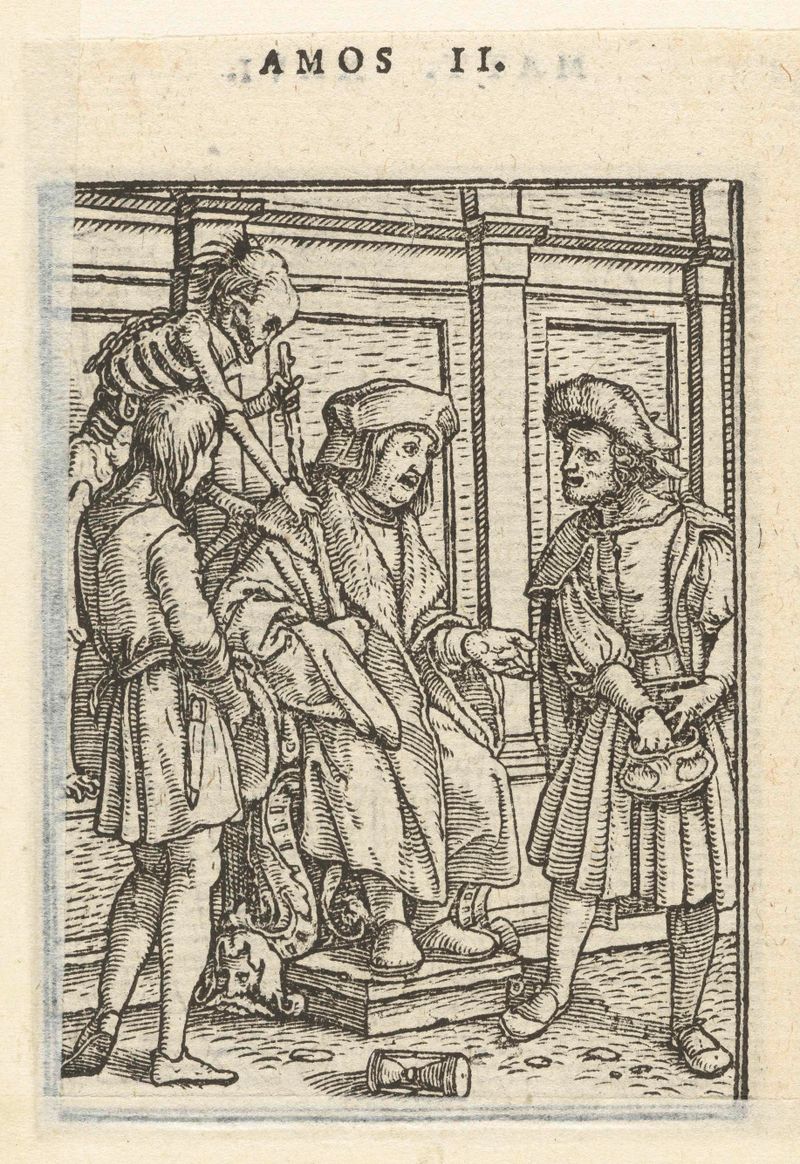
Rechter en de Dood
Hans Holbein (II)
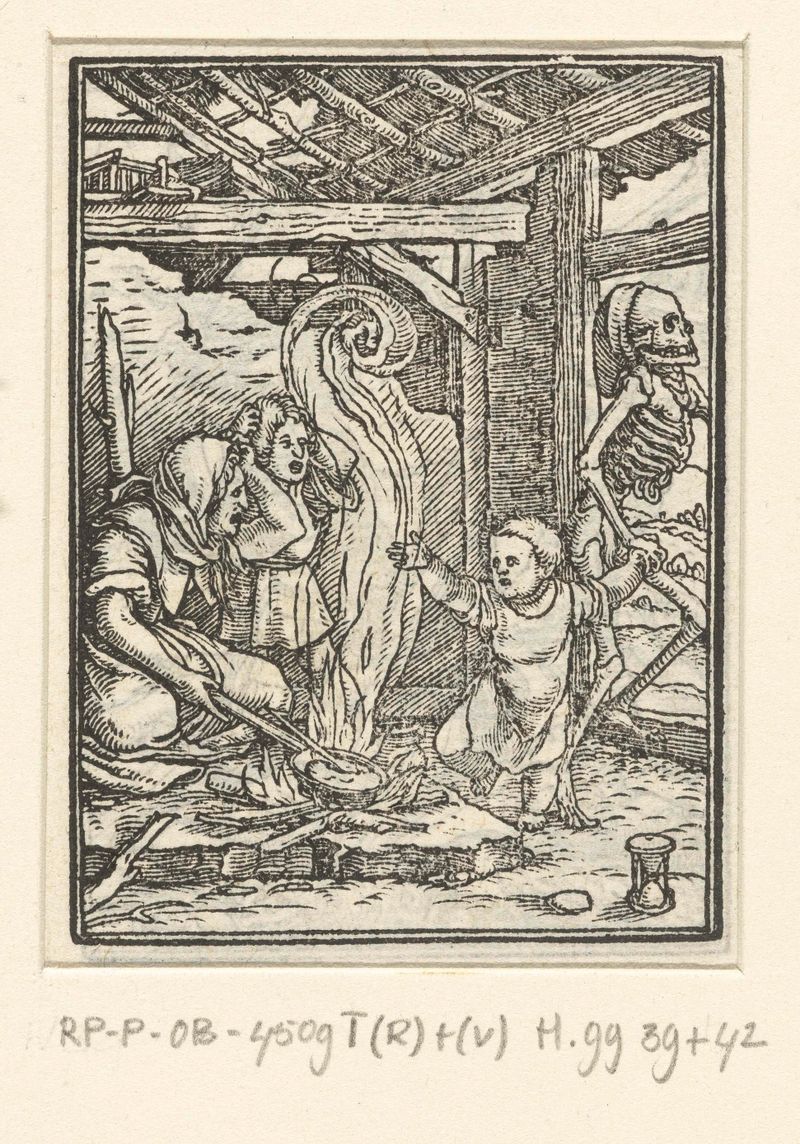
Kind en de Dood
Hans Holbein (II)
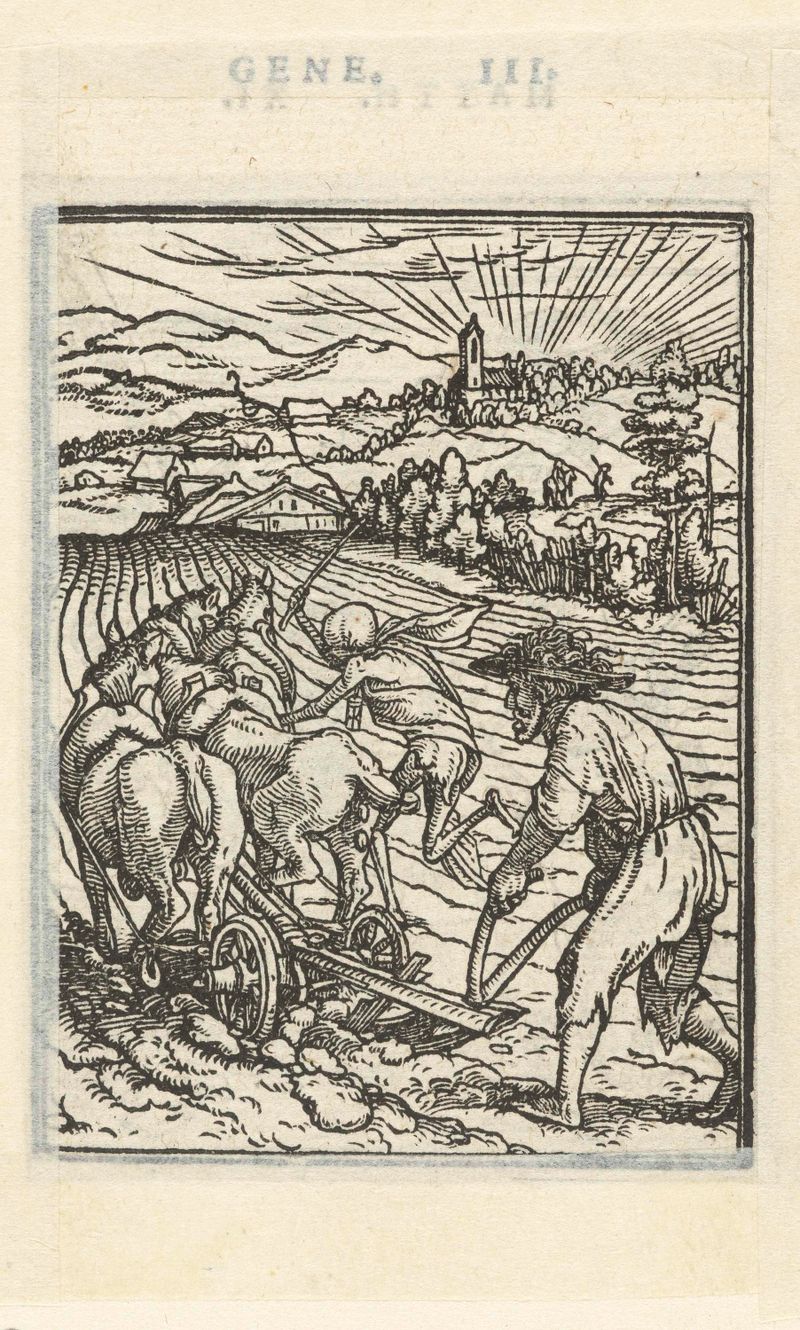
Boer en de Dood
Hans Holbein (II)
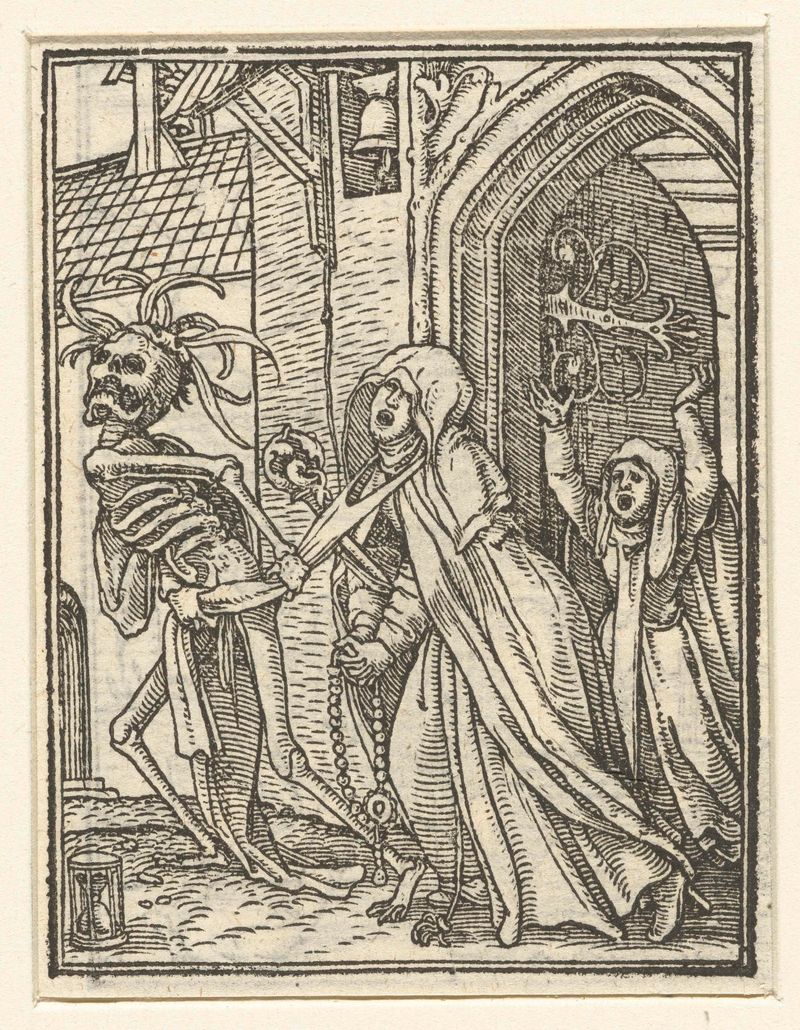
Abdis en de Dood
Hans Holbein (II)
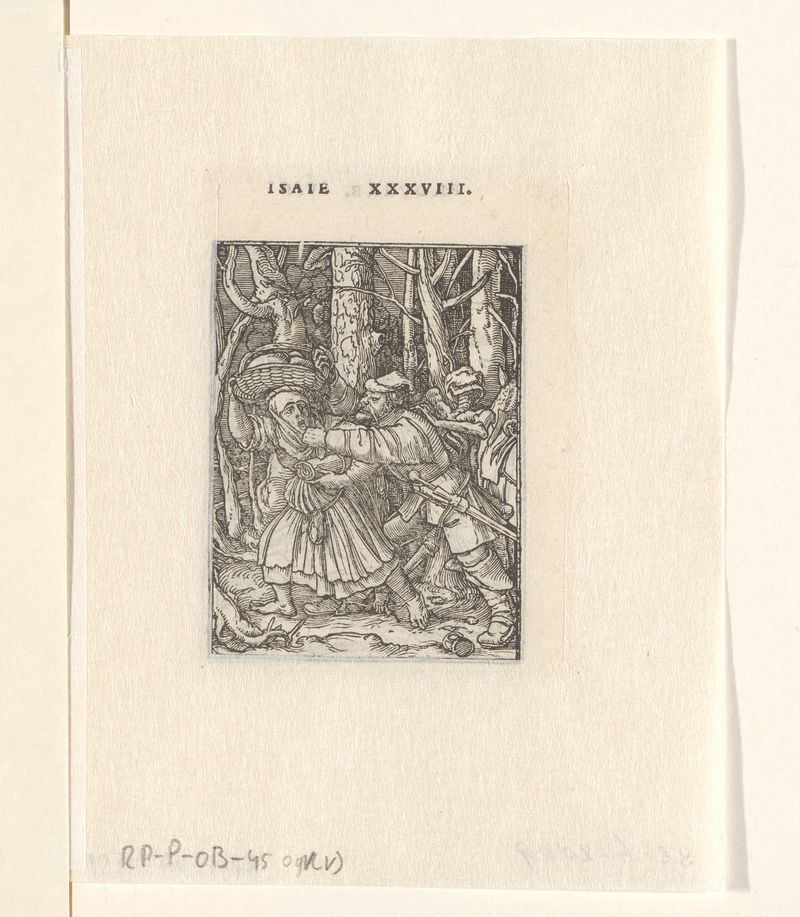
Dief en de Dood
Hans Holbein (II)
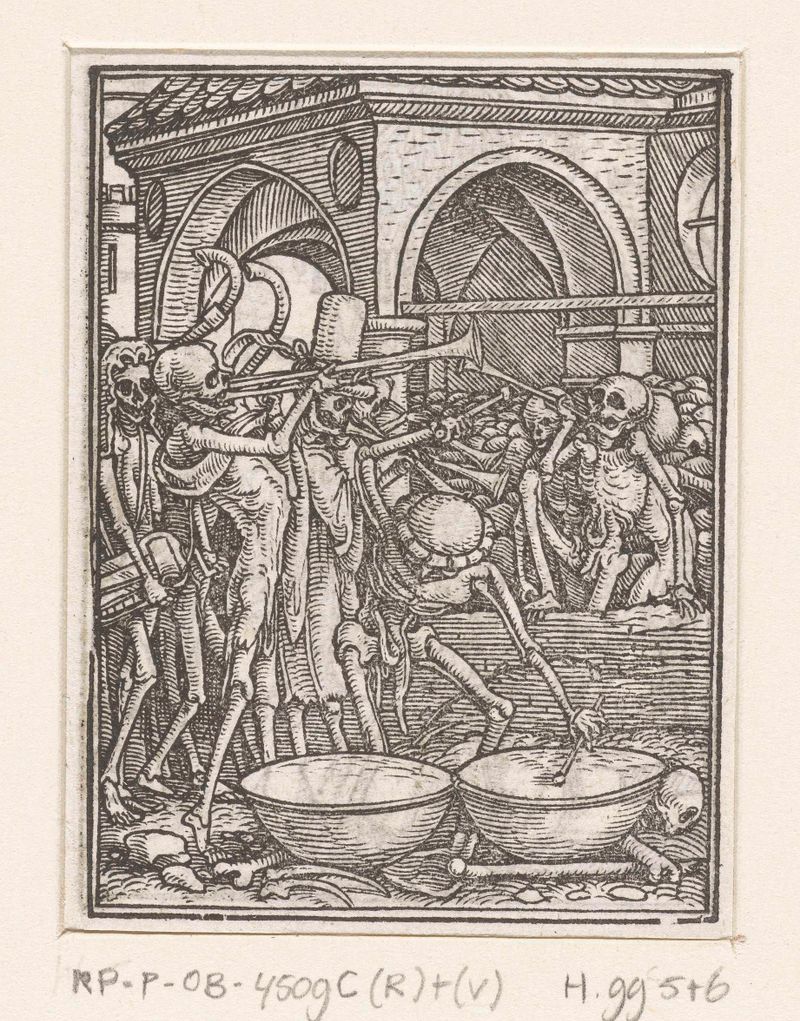
Skeletons Making Music from Dance of the Dead
Hans Holbein (II)
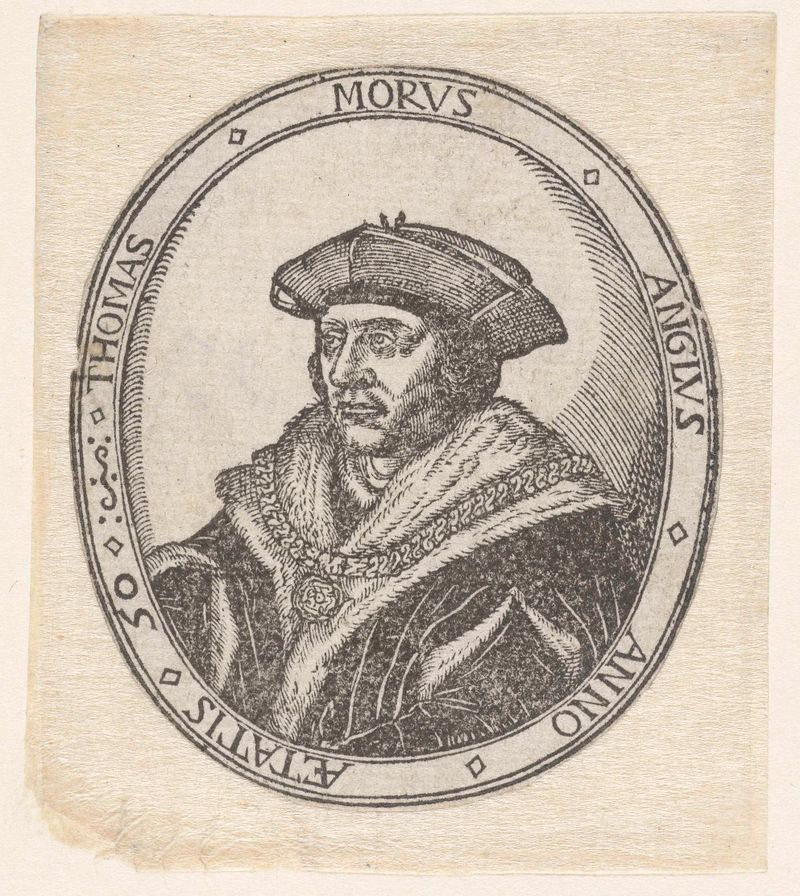
Portret van Thomas More
Hans Holbein (II)
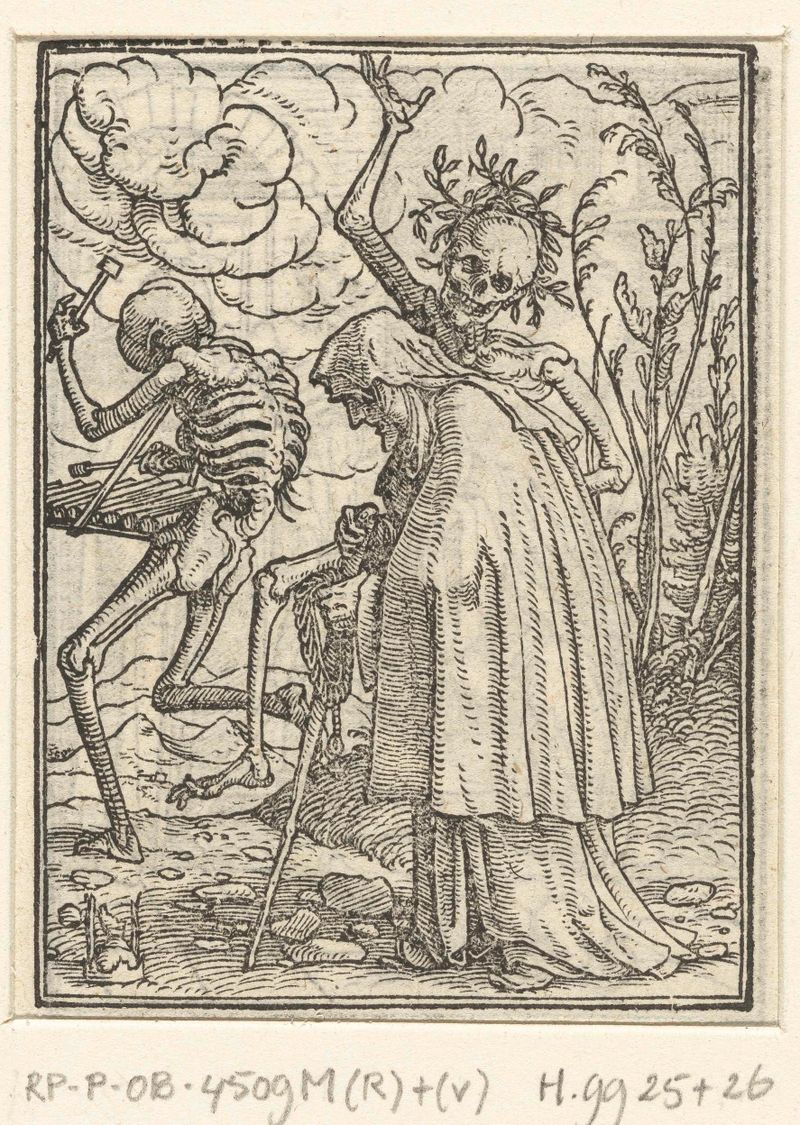
Oude vrouw en de Dood
Hans Holbein (II)
More Portrait Art
Browse all →
Las meninas
Diego Velázquez

Self-portrait with a Bandaged Ear and Pipe
Unidentified artist

Girl with a Pearl Earring
Johannes Vermeer

The Sampling Officials of the Amsterdam Drapers’ Guild, Known as ‘The Syndics’
Rembrandt van Rijn

The Hundred Guilder Print: the man seen on the back in the lower left corner
Rembrandt van Rijn

Portrait of Dr Gachet
Vincent van Gogh