Edge of the Woods — History & Facts
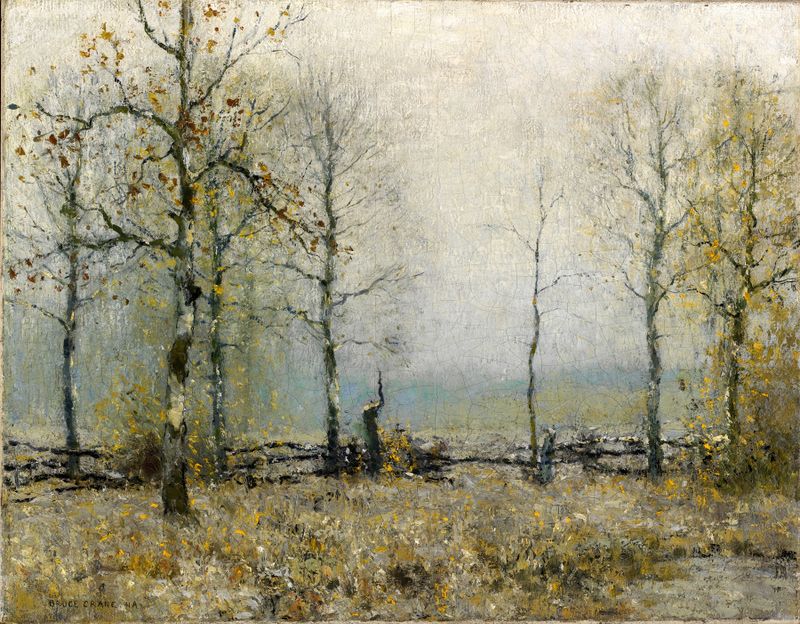
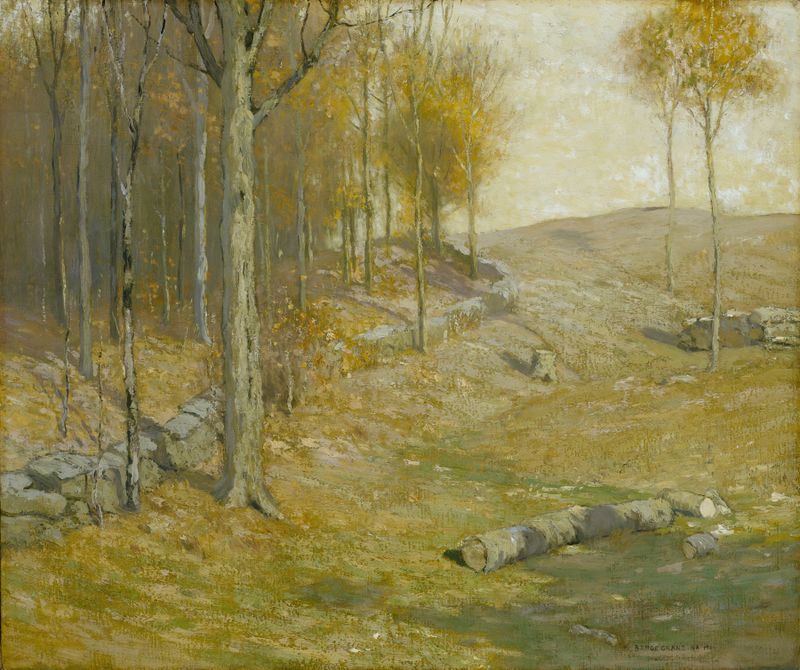
The shadows that dance at the edge of the woods whisper this secret truth, evoking a bittersweet essence woven into nature’s fabric. Look to the left of the canvas, where the interplay of light and shadow creates a stunning contrast. The sunlit patches break through the dense foliage, painting the ground with dappled gold, while deeper shadows loom just beyond. Notice how the brushstrokes vary—gentle strokes in the highlighted areas evoke warmth, while bolder, darker strokes hint at the unknown lurking within the woods.
This deliberate composition draws the viewer’s eye towards the threshold of light and dark, as if inviting them to step into the heart of the forest. Beneath this serene surface lies an emotional turmoil. The warm gold suggests hope and beauty, yet the encompassing shadows signify fears and uncertainties. This duality reflects the artist’s understanding of nature’s complexity, where the promise of tranquility often resides beside the unease of the unseen.
The trees stand tall, yet their looming presence hints at the isolation one can feel even in the midst of beauty, encapsulating a profound contrast between solace and solitude. In 1910, Bruce Crane was immersed in a period of prolific landscape painting in the United States, influenced by the tonal richness of Impressionism. This work emerged during a time when artists were increasingly exploring the interplay of light and shadow in nature. Crane’s ability to convey emotional depth through a scene of simplicity reflects his growth as an artist, navigating the intricate balance between beauty and melancholy in his surroundings.