Late Autumn — History & Facts
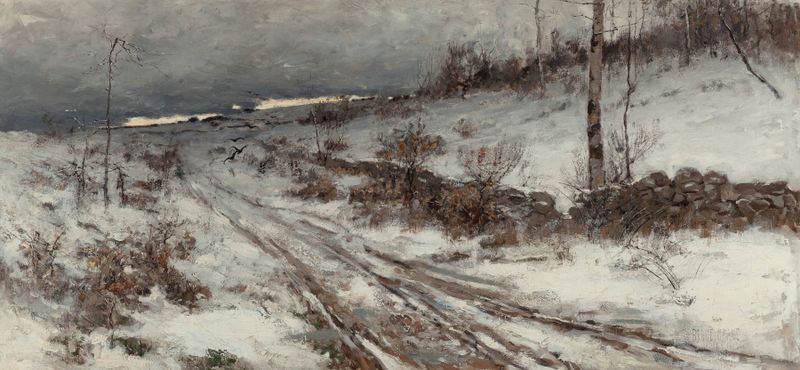
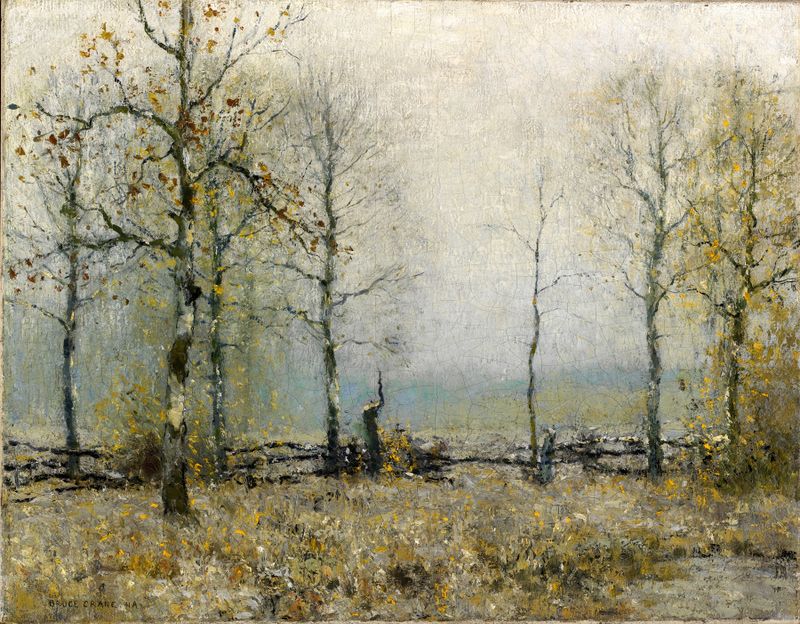
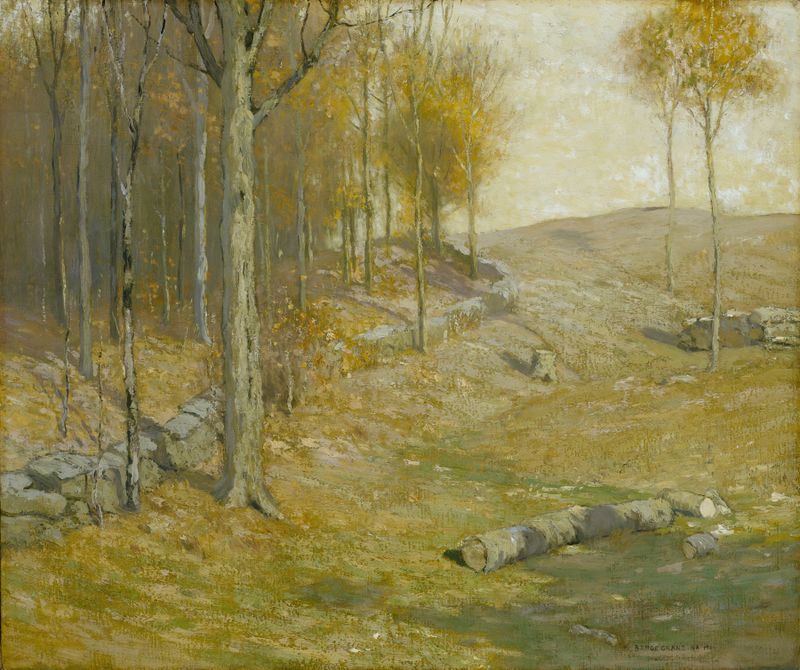
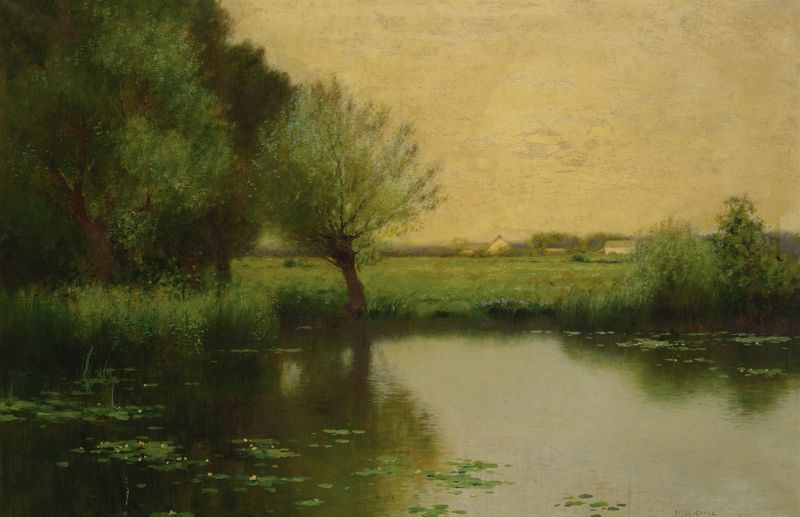
In the dying light of a waning autumn day, reflection possesses a quiet weight, inviting us to look deeper into our own experiences. Focus on the vibrant palette of burnt oranges and deep ochres that dominate the canvas, creating an emotional landscape that resonates with both warmth and melancholy. Notice how the sunlight filters through the skeletal branches, casting long shadows onto the ground, while the shimmering lake reflects the fiery colors above, drawing the viewer’s gaze towards an ethereal horizon where sky meets earth. Each brushstroke reveals Crane’s masterful technique, harmonizing impressionism with realism to evoke a sense of place that feels both familiar and haunting. Yet, amidst the beauty lies a tension that speaks to the impermanence of life.
The bare trees stand as solemn sentinels, their starkness contrasting with the rich foliage of decay, suggesting an inevitability of change. The stillness of the scene hints at a world on the cusp of winter, a moment caught between the vibrancy of life and the quiet despair of loss. This juxtaposition invites a contemplation of the fleeting nature of beauty, urging viewers to reflect on their own journeys through seasons of change. In 1901, Bruce Crane found himself in a world where impressionism was evolving rapidly, pushing boundaries while exploring new themes of nature and emotion.
Painted during his time in the serene landscapes of New England, Late Autumn encapsulates both personal and universal transitions, resonating with an artist who grappled with the duality of beauty and sorrow in a world poised for transformation.