Winter Landscape — History & Facts
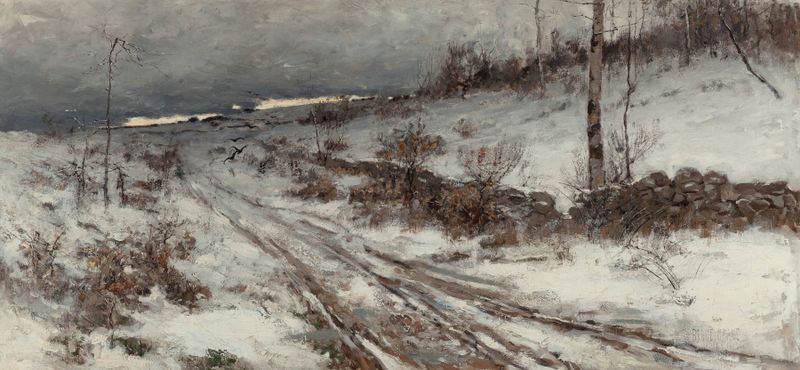
What if silence could speak through light? In Bruce Crane's Winter Landscape, that whisper of stillness resonates through the icy expanse, evoking a profound yearning for warmth and connection. Look to the foreground, where a gentle slope of snow invites your gaze. The cool blue and white hues blend seamlessly, creating a tranquil harmony that feels both serene and desolate. Notice how the light dances across the surface, casting soft shadows that suggest the weight of the cold air.
The sparse trees, silhouetted against the pale sky, appear like sentinels in a frozen world, their branches intricately detailed, hinting at life beneath the ice. The emotional tension lies in the delicate balance between beauty and isolation. The untouched blanket of snow speaks to the purity of the moment while invoking a sense of longing for the warmth of companionship. The muted colors convey a stillness that feels heavy with unsaid words, transforming the landscape into a canvas of introspection.
Each brushstroke breathes life into the scene, suggesting a narrative of solitude intertwined with the allure of quiet reflection. Crane painted this work in 1922, during a period when American art was embracing the beauty of nature while grappling with the aftermath of World War I. Living in New York, he sought to capture the essence of the changing seasons, revealing both the starkness and the tenderness present in the winter landscape. This painting reflects not only his mastery of light and form but also the emotional complexities that permeated the artistic consciousness of the time.