
Egham — History & Facts
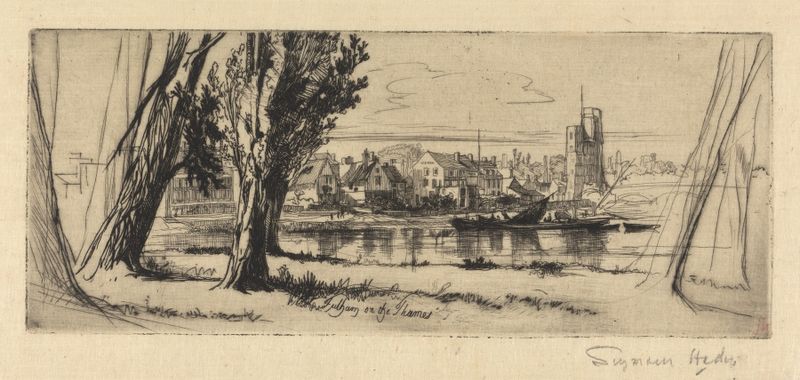
In the delicate interplay of hues, one finds not just beauty but the pulse of life itself, intertwined with the essence of ecstasy. Look to the left of the canvas where vibrant greens interlace with soft, muted browns, creating a lush landscape that invites the viewer’s gaze. The gentle curves of the rolling hills contrast sharply with the sharp lines of the trees, suggesting a harmony between the wild and the cultivated. Notice how the light dances across the surface, illuminating the texture of the earth and casting long shadows that evoke a sense of time suspended. Within this tranquil scene lies an undercurrent of emotion and tension; the juxtaposition of light and dark reflects the complexity of human experience.
The play of colors hints at the joy of nature while simultaneously invoking a sense of solitude. Each stroke serves as a reminder of ecstasy found in moments of stillness, where one can confront their innermost thoughts amidst the beauty of the world. Created in 1859, this piece emerged from Francis Seymour Haden's life during a time of exploration within the realm of printmaking and landscape art. Living in England, he was influenced by the Impressionist movement, seeking to capture the transient effects of light and atmosphere.
This period marked a pivotal shift in his artistic journey, as he honed his skills in etching, revealing a new language to express his connection to nature.
More Artworks by Francis Seymour Haden
Browse all →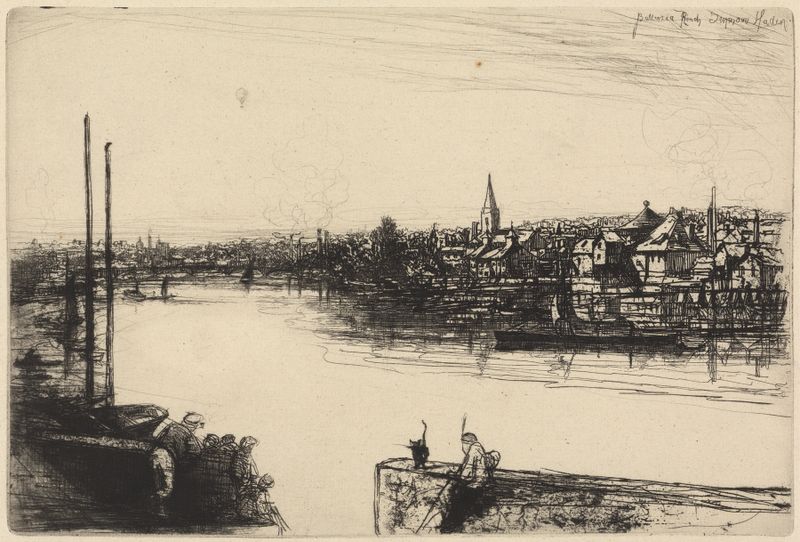
Battersea Reach
Francis Seymour Haden

Nine Barrow Down
Francis Seymour Haden
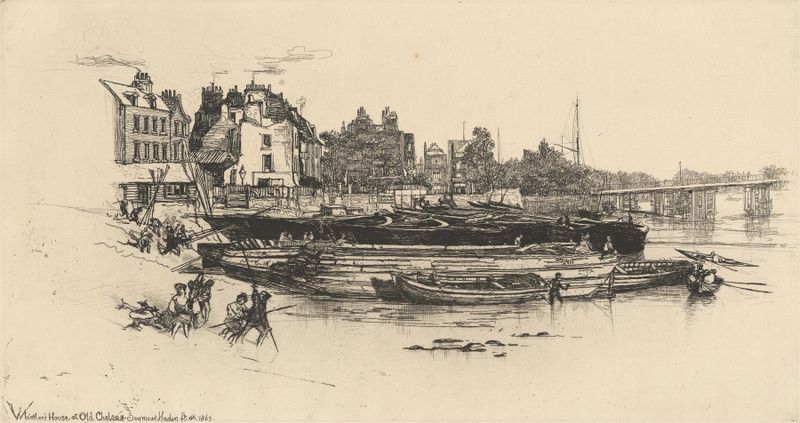
Whistler’s House at Old Chelsea
Francis Seymour Haden

The Mill-Wheel
Francis Seymour Haden
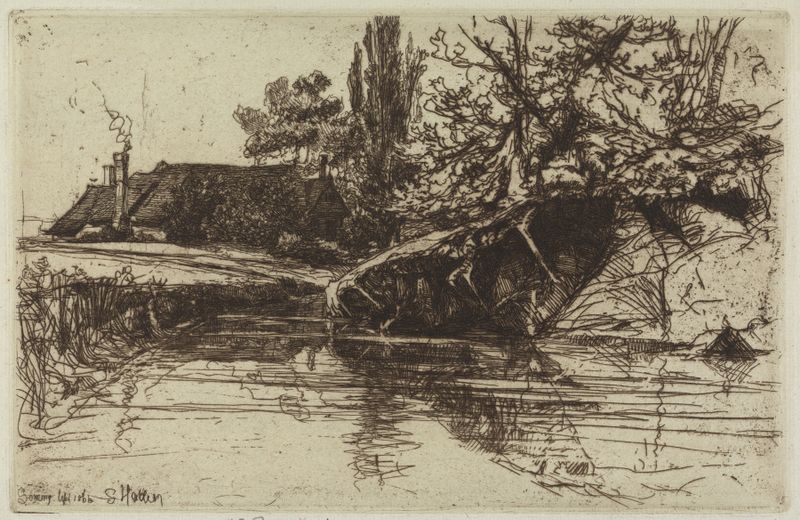
The Moat House
Francis Seymour Haden

By Twickenham
Francis Seymour Haden

Newcastle Emlyn
Francis Seymour Haden
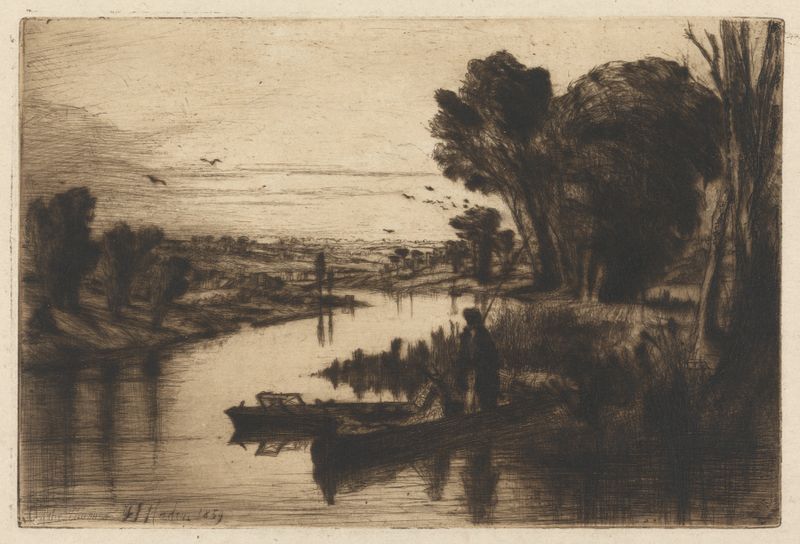
On the Thames
Francis Seymour Haden

Kidwelly Castle
Francis Seymour Haden
Fulham on the Thames
Francis Seymour Haden





