
Eingang zur Schauflergasse Wien — History & Facts
Can paint confess what words never could? This work evokes a palpable sense of melancholy, inviting viewers into a silent dialogue with the artist's emotional landscape. Look to the left at the narrow alley, where muted colors converge within the confines of architectural lines. The cool tones of blue-gray embrace the cobblestones, while soft, diffused light filters through the overhanging structures, creating an ethereal atmosphere. Each stroke captures the weight of history in the facades, the subtle textures whispering tales of lives once lived, urging the observer to contemplate the passage of time. Notice the play of light and shadow, reflecting the contrasts between hope and despair.
The tension between the rigid, unyielding walls and the gentle illumination hints at the struggle of existence in an ever-evolving world. There’s a solitude that permeates, evoking a longing for connection amidst the urban backdrop. The absence of figures amplifies this feeling, transforming the scene into a poignant meditation on isolation and nostalgia. Richard Moser painted this piece in Vienna around 1900, a time when the city was a throbbing heart of artistic innovation and introspection.
The turn of the century brought with it a mix of optimism for the future and an undercurrent of uncertainty. Moser, influenced by the burgeoning Art Nouveau movement, sought to capture the spirit of a changing Vienna, reflecting both its beauty and the lurking shadows of a shifting society.
More Artworks by Richard Moser
Browse all →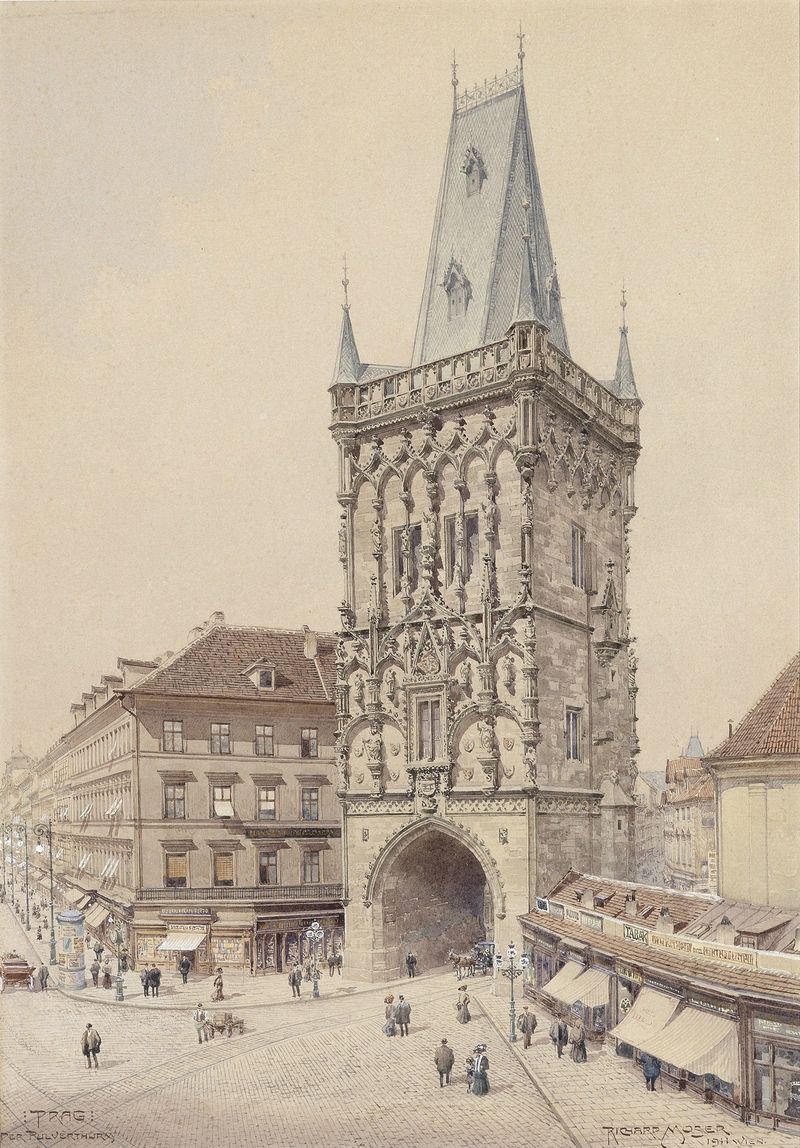
Prag Pulverturm
Richard Moser
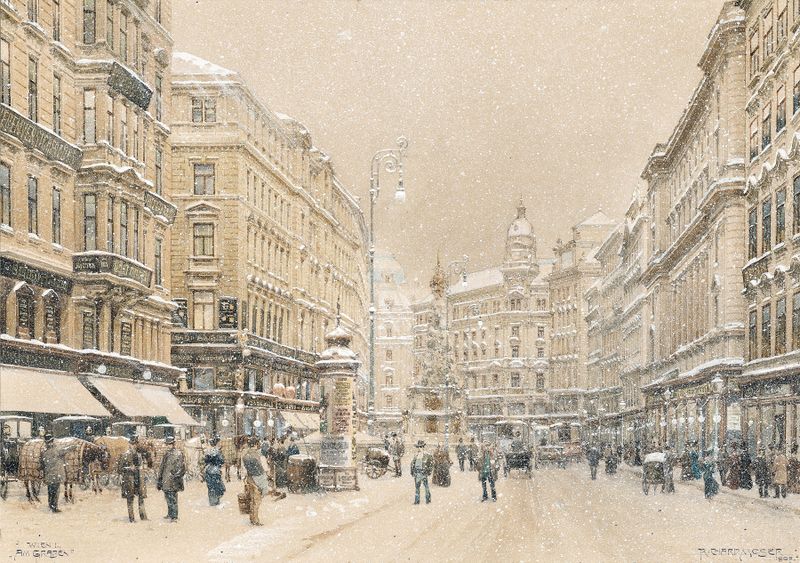
Graben in Vienna at snow flurry
Richard Moser

Wien Am Hof
Richard Moser

Stephansdom Pilgramkanzel
Richard Moser

A view of the church and monastery of the Visitation of the Virgin (church of the Salesian sisters) a gardener in the foreground
Richard Moser

Die Jubiläumsausstellung in Wien 1898; Pavillion der Stadt Wien
Richard Moser
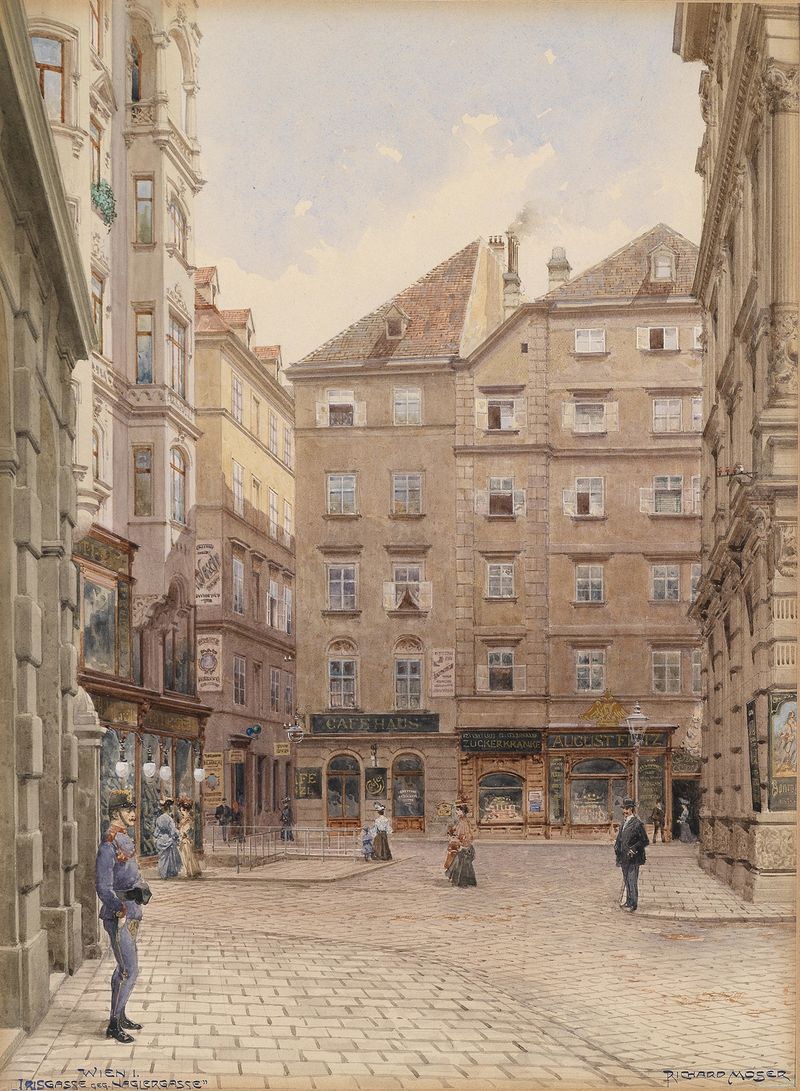
Wien Irisgasse gegen Naglergasse
Richard Moser
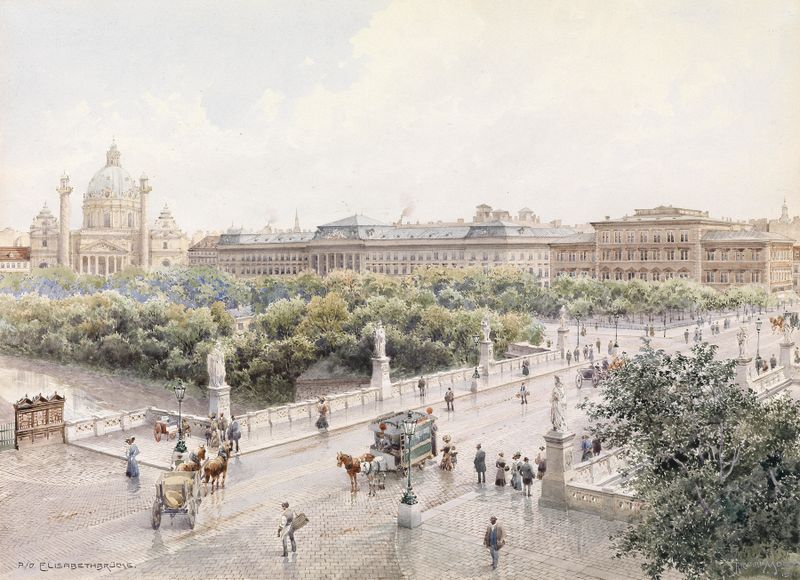
Wien Elisabethbrücke
Richard Moser
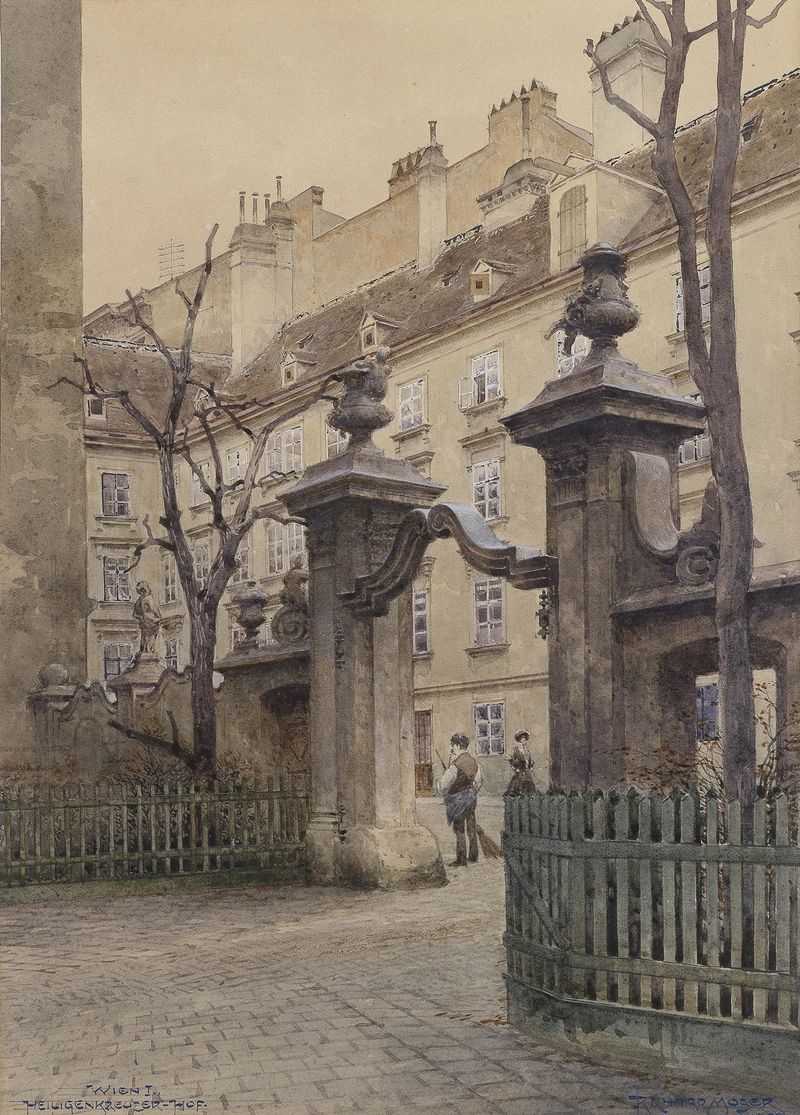
Heiligenkreuzerhof in Wien
Richard Moser
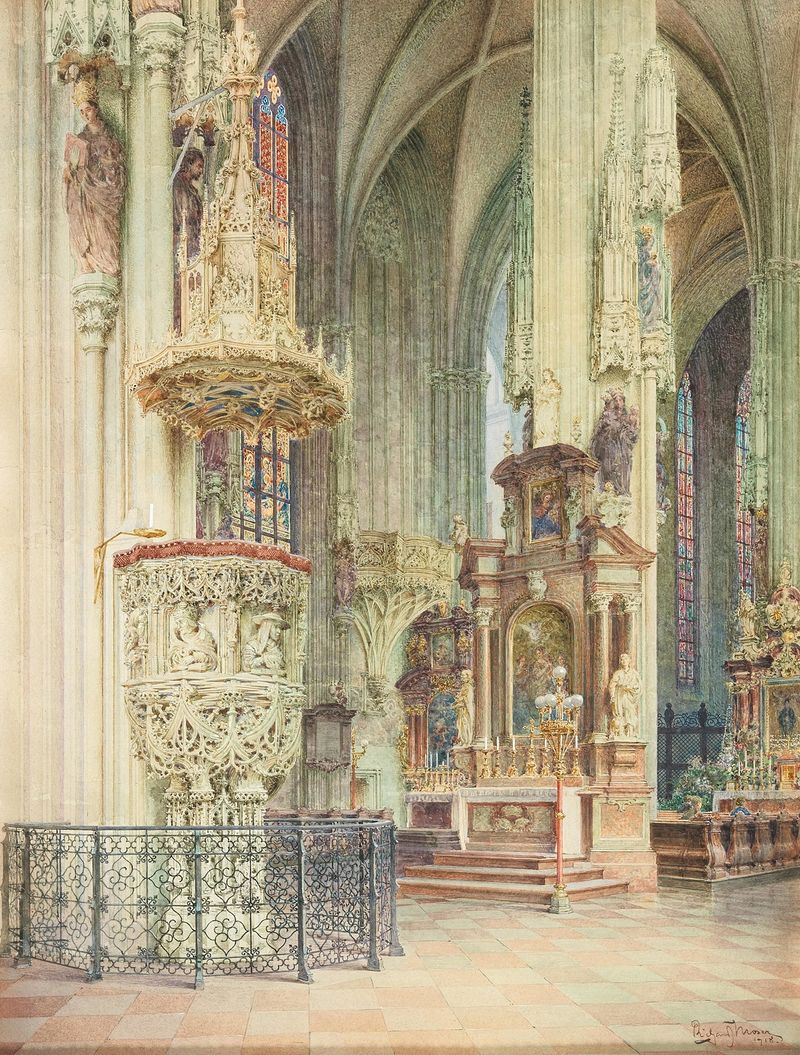
Inneres des Stephansdoms mit Pilgramkanzel
Richard Moser
More Architecture Art
Browse all →
The statue of Liberty
Frédéric Auguste Bartholdi

View of Houses in Delft, Known as ‘The Little Street’
Johannes Vermeer

View of Houses in Delft, Known as ‘The Little Street’
Johannes Vermeer

The Cathedral in Rouen. The portal, Grey Weather
Claude Monet

The yellow house
Vincent van Gogh

The Church in Auvers-sur-Oise, View from the Chevet
Vincent van Gogh