
Eisvergnügen — History & Facts
Where does light end, and longing begin? In Eisvergnügen, Carl Hilgers masterfully blurs the boundaries between joy and yearning, capturing a moment that invites the viewer to reflect on the interplay of light, shadow, and inner emotion. First, direct your gaze to the center of the canvas, where the brilliant sunlight bathes the figures on the frozen lake. The soft blues and whites of the ice contrast with the warm hues of the people's clothing, illustrating a delightful winter gathering. Notice the delicate brushstrokes that define movement—children skating with abandon, their laughter almost audible.
The composition leads your eye outward, revealing a distant landscape that illustrates both the beauty of nature and the fleeting nature of joy. Delve deeper into the scene, and you’ll uncover layers of meaning. The exuberance of the skaters juxtaposes the stillness of the surrounding trees, hinting at the ephemeral nature of happiness. Each figure's pose tells a story of connection, yet there’s a sense of solitude that lingers in the air, as if the characters are individually grappling with their own moments of reflection amidst the celebration.
The light serves as a metaphor for revelation—a reminder that within our brightest moments, shadows of longing often accompany us. In 1843, Hilgers created this evocative piece during a time of personal and artistic exploration in Germany. Emerging from the Romantic movement, he was influenced by the changing landscapes of art, where emotions and nature intertwined. As he painted, Europe was undergoing social and political upheaval, yet the tranquility of winter scenes provided a respite, allowing Hilgers to capture the essence of fleeting joy against the backdrop of life’s complexities.
More Artworks by Carl Hilgers
Browse all →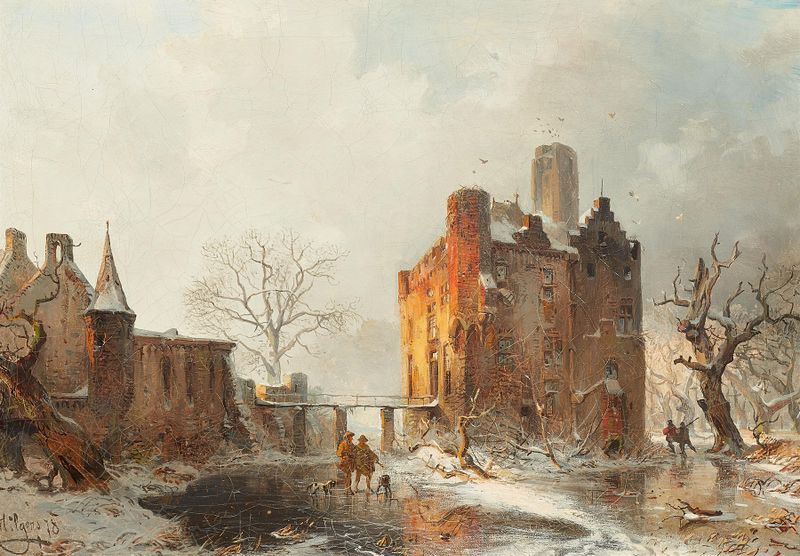
Burg Doornenburg im Winter
Carl Hilgers
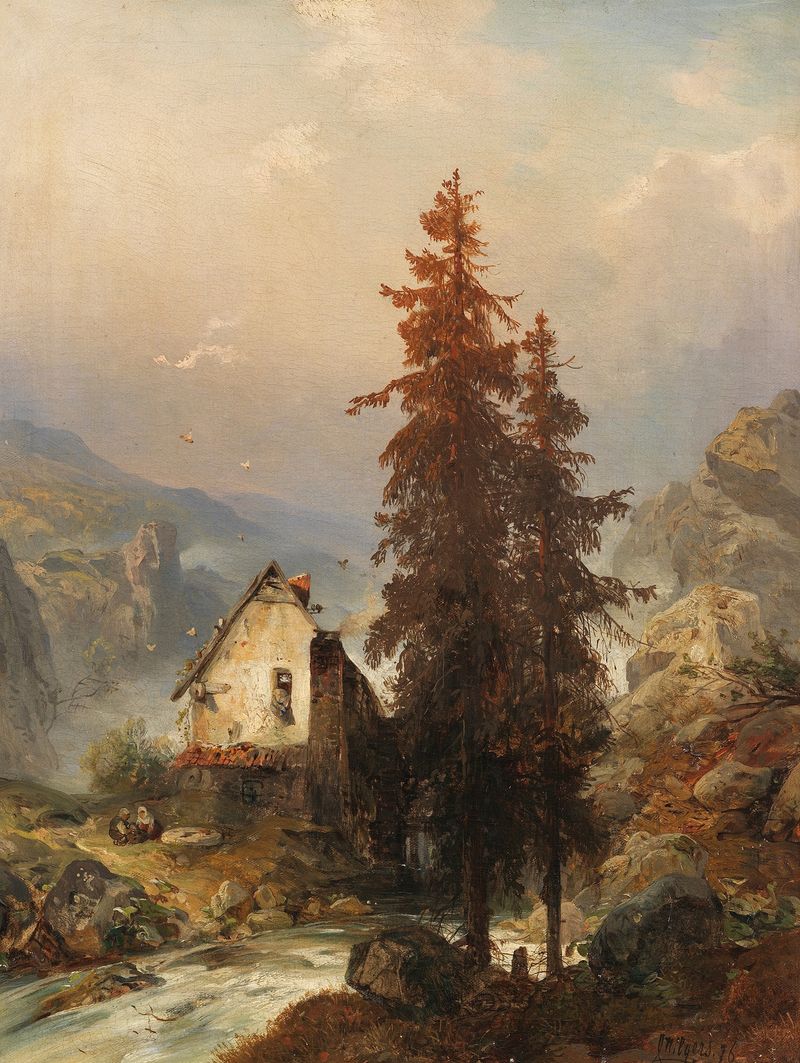
Mühle im Gebirgstal
Carl Hilgers
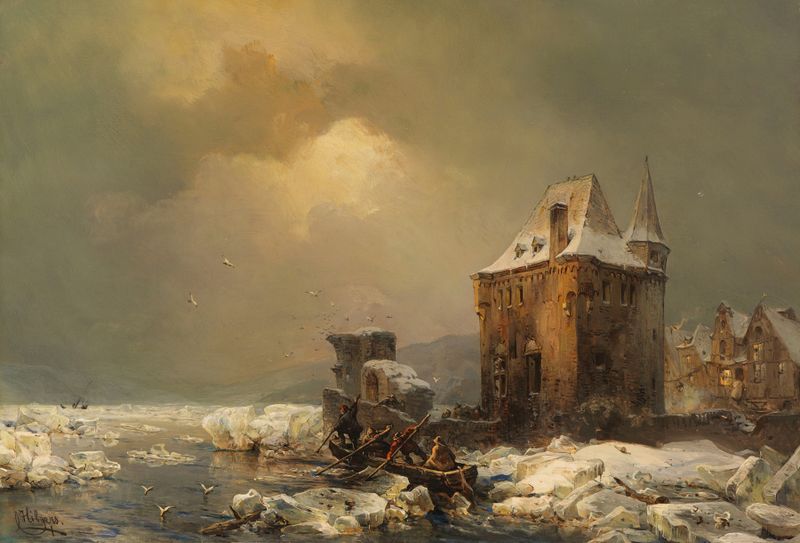
Eisfischer am Wasserschloss
Carl Hilgers
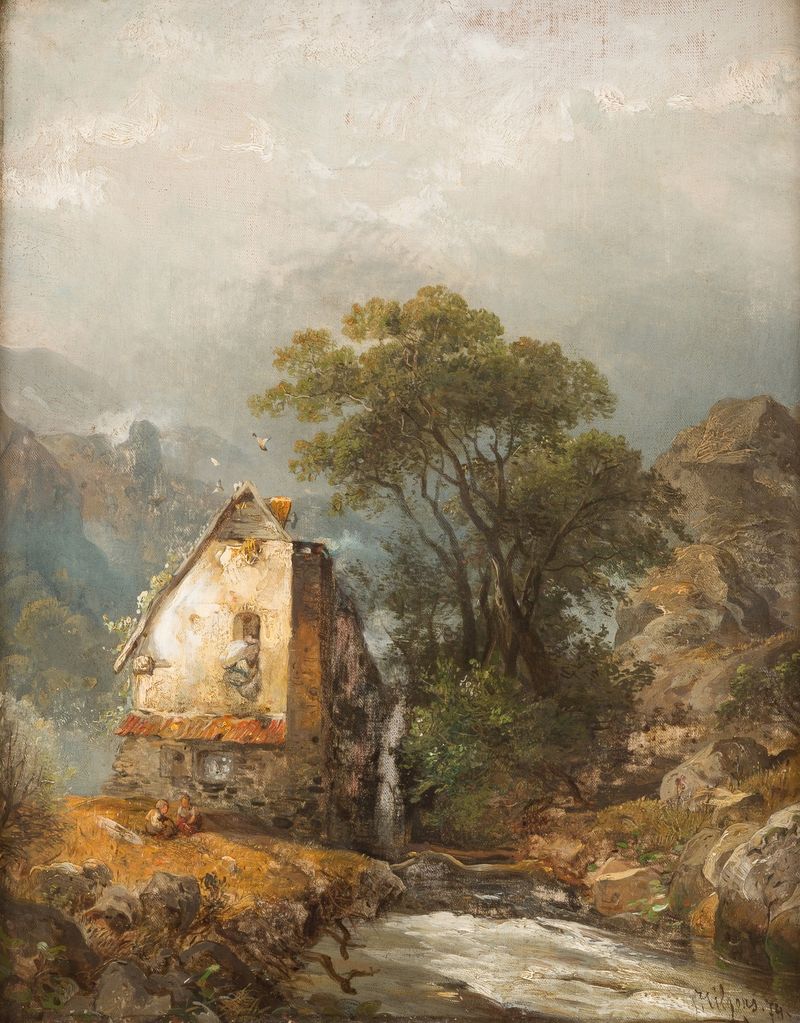
Mill by a stream
Carl Hilgers
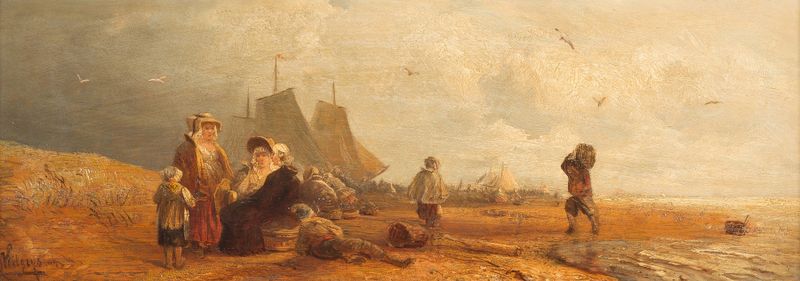
Dutch fishermen by the beach
Carl Hilgers
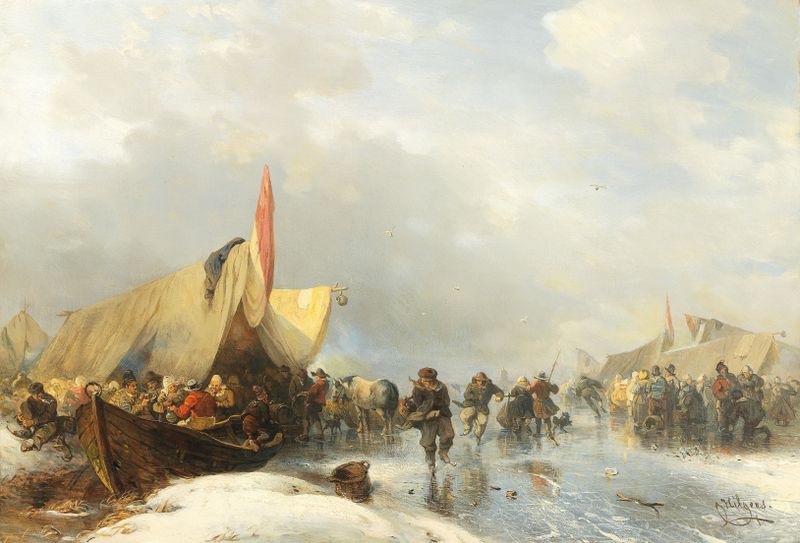
Winter Pleasures On The Ice
Carl Hilgers
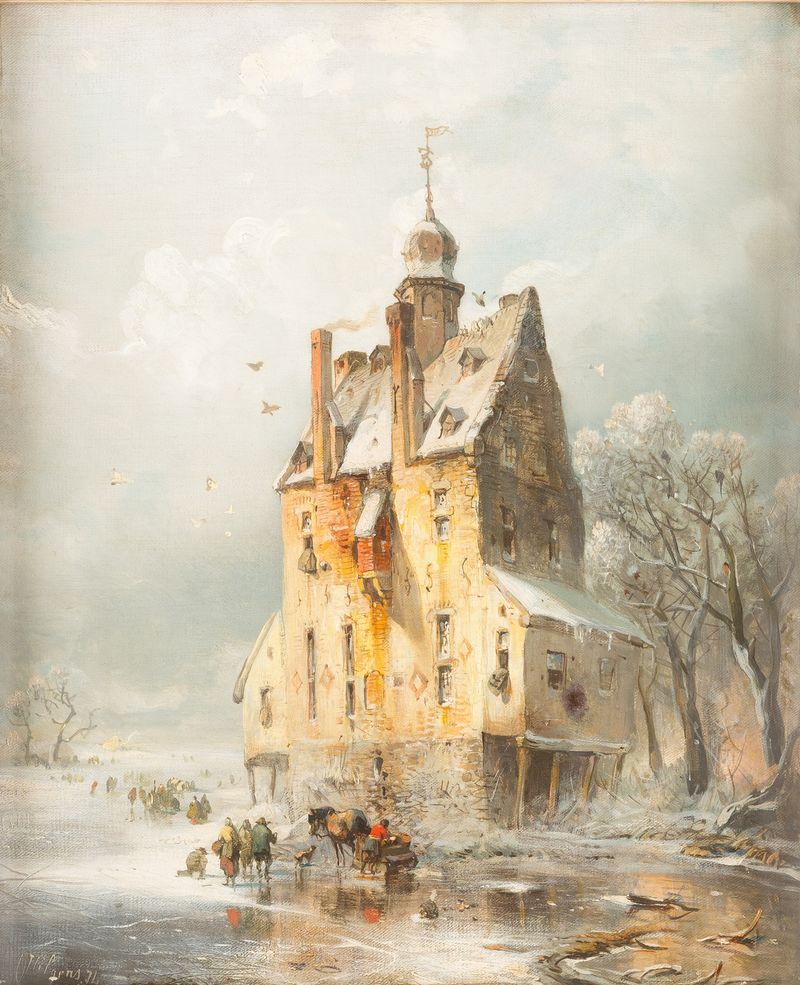
Mansion ‘Quadenhof’ at Gerresheim
Carl Hilgers
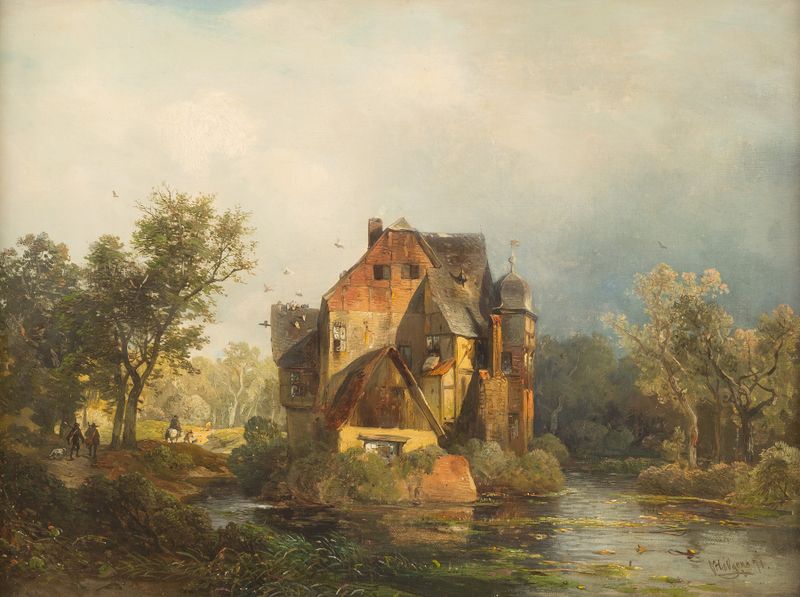
Water castle Caspersbroich
Carl Hilgers
Castle in stormy landscape
Carl Hilgers
Wintervergnügen
Carl Hilgers





