
Eisfischer am Wasserschloss — History & Facts
Where does light end, and longing begin? The question lingers in the serene atmosphere of winter, inviting us into a world suspended between stillness and hope. Focus on the delicate interplay of soft blues and whites that envelop the canvas, drawing your eye to the solitary figure at the center. Notice how the light falls upon the ice, casting iridescent reflections that shimmer like fleeting dreams. The gentle curve of the water castle in the background serves as an elegant frame, connecting the fisherman to a distant horizon, hinting at hidden possibilities beyond the immediate landscape. Amidst this quiet scene, a deeper narrative emerges.
The fisherman’s solitary presence evokes themes of isolation and determination, suggesting a longing not only for the catch beneath the frozen surface but for connection with nature and the world beyond. The intricate details of his attire contrast with the smooth ice, revealing the struggle between human endurance and the unforgiving environment. The stillness feels both tranquil and poignant, capturing a moment where hope flickers like the light on the ice. Created in 1886, during a period of significant transition in European art, the work reflects Carl Hilgers' exploration of atmospheric landscapes.
Painted in Germany, he was influenced by the Romantic movement, which sought to capture the sublime beauty of nature. This was a time when artists were beginning to embrace plein air techniques, allowing for a greater expression of emotional depth through natural settings. Hilgers’ work embodies both the challenges of the time and a quiet assertion of hope that resonates through the years.
More Artworks by Carl Hilgers
Browse all →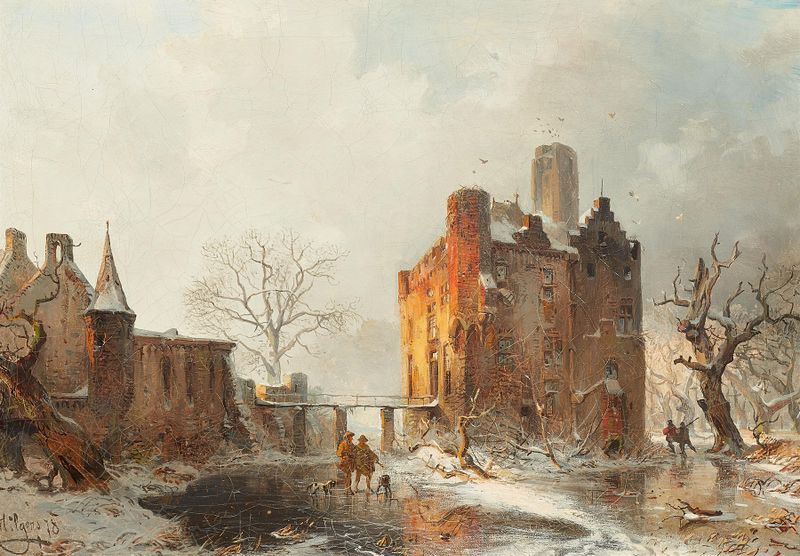
Burg Doornenburg im Winter
Carl Hilgers
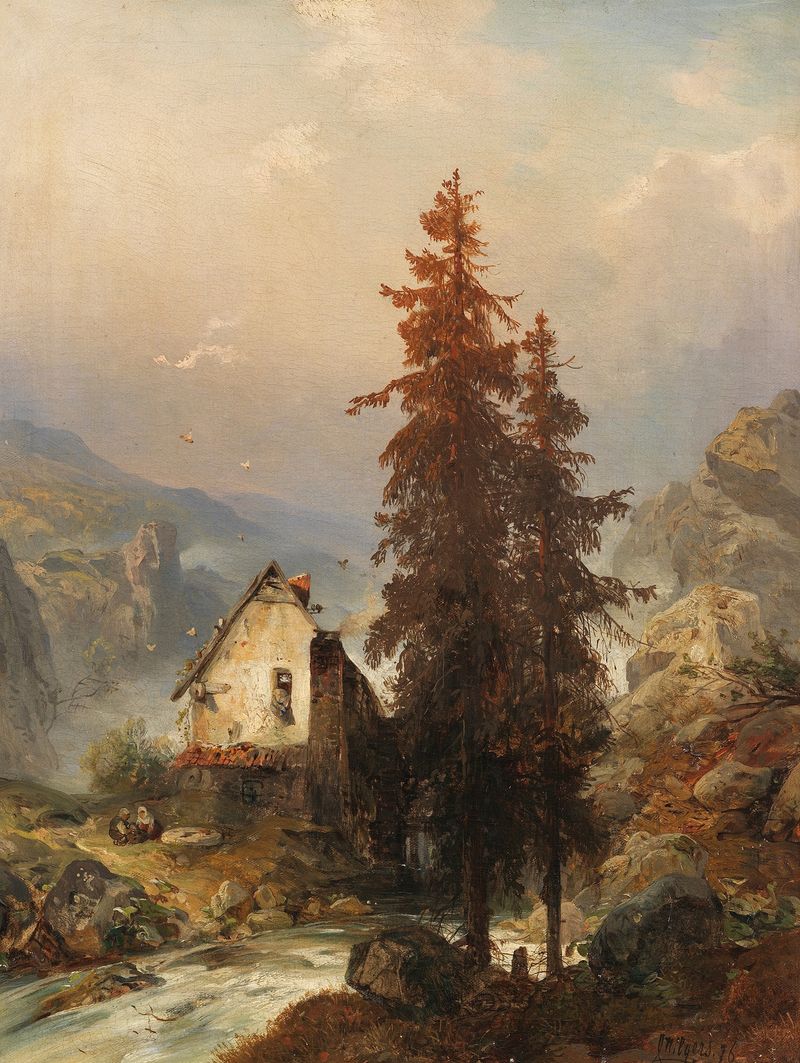
Mühle im Gebirgstal
Carl Hilgers
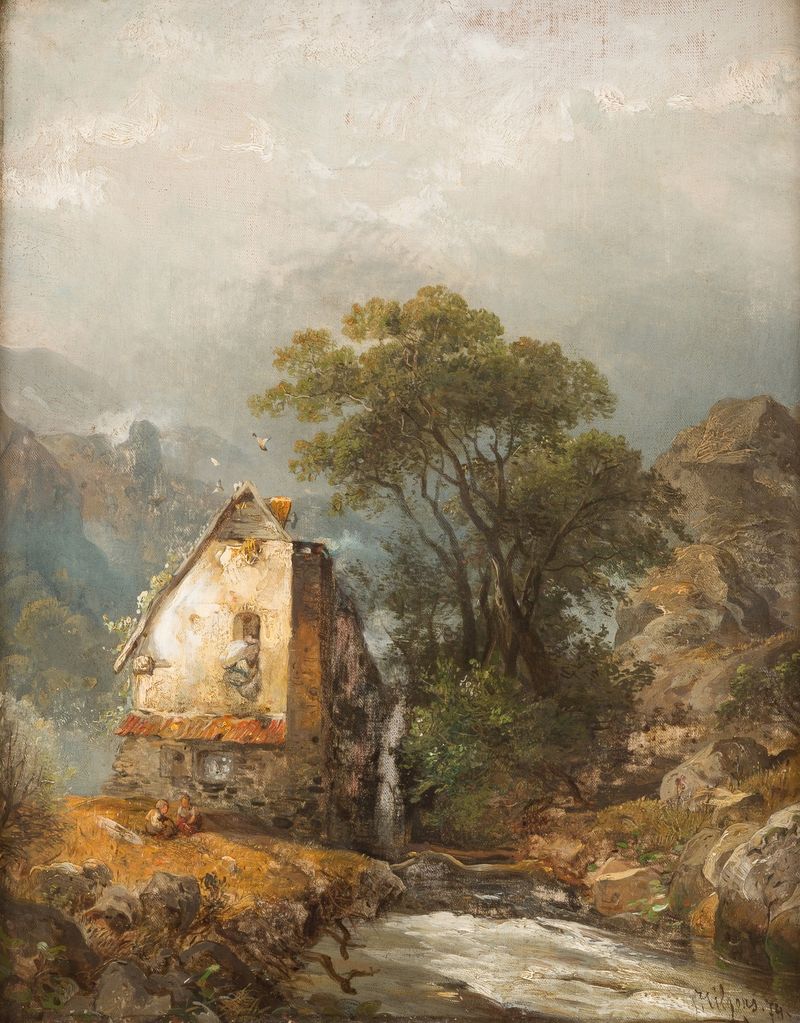
Mill by a stream
Carl Hilgers
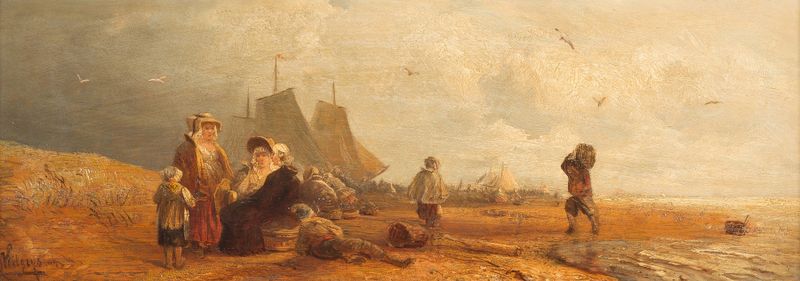
Dutch fishermen by the beach
Carl Hilgers
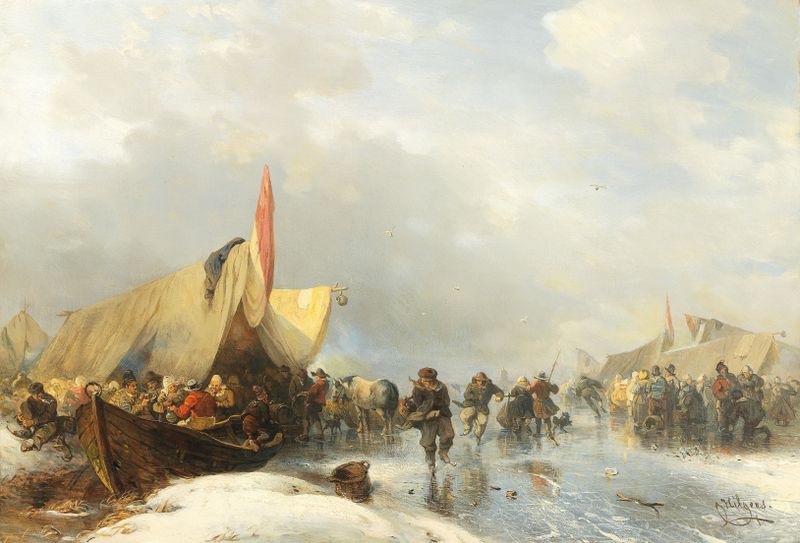
Winter Pleasures On The Ice
Carl Hilgers
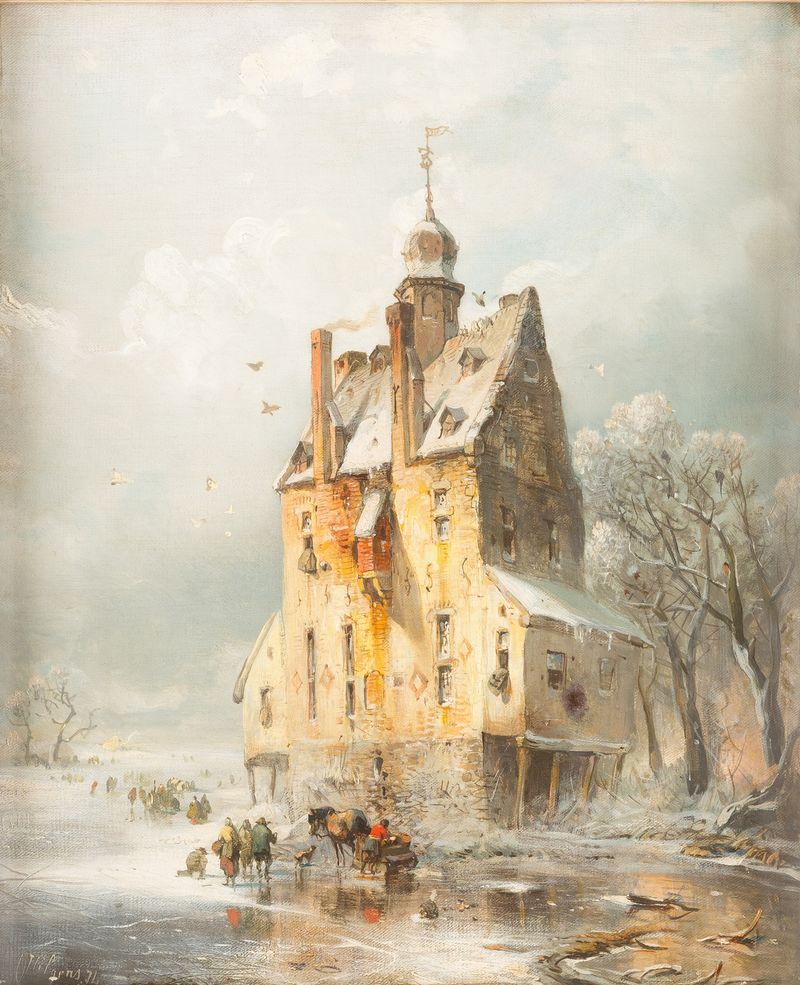
Mansion ‘Quadenhof’ at Gerresheim
Carl Hilgers
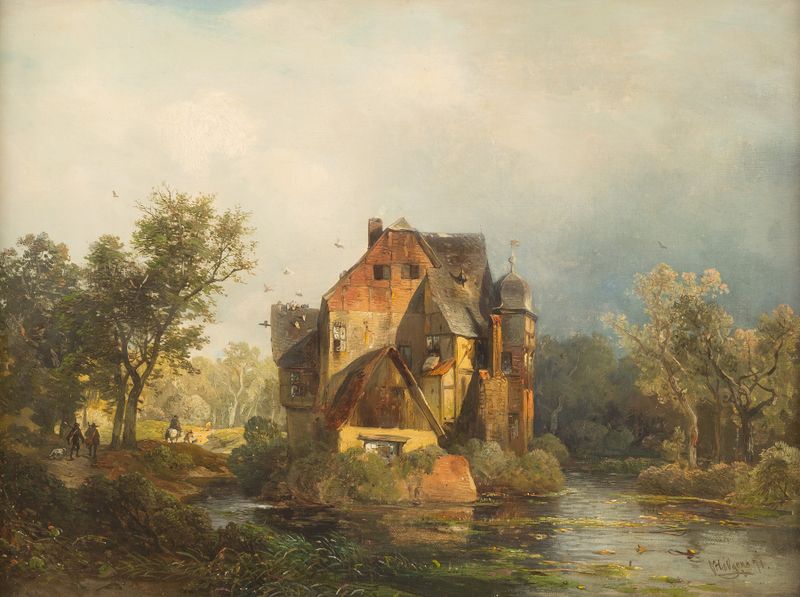
Water castle Caspersbroich
Carl Hilgers
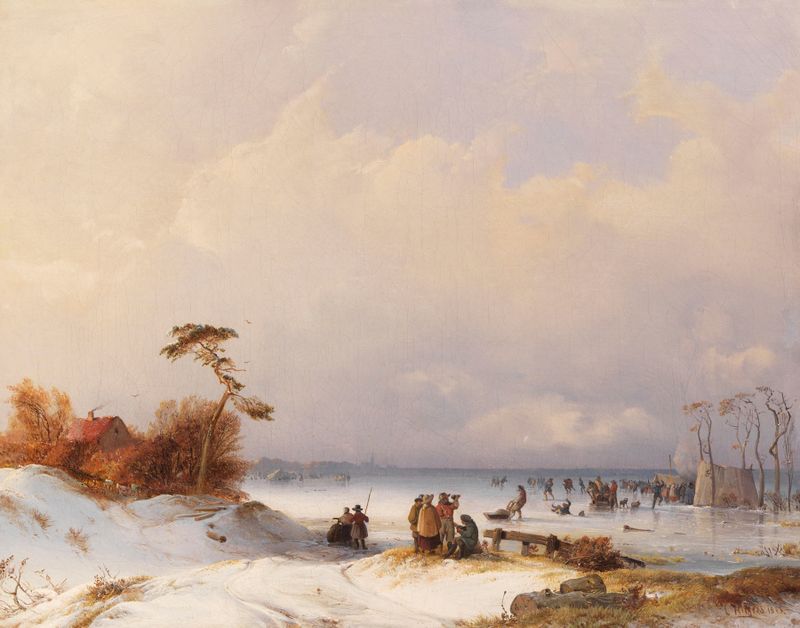
Eisvergnügen
Carl Hilgers
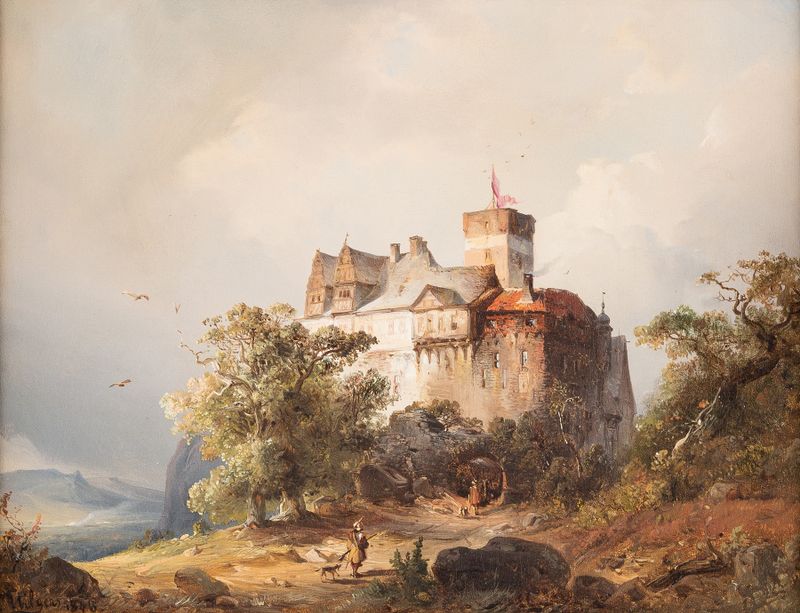
Castle in stormy landscape
Carl Hilgers
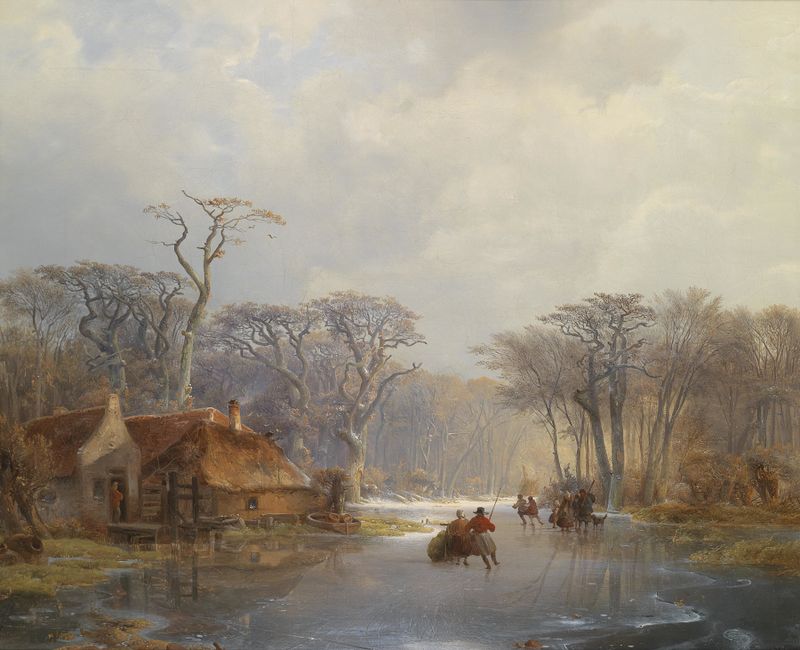
Wintervergnügen
Carl Hilgers





