
Elbeland — History & Facts
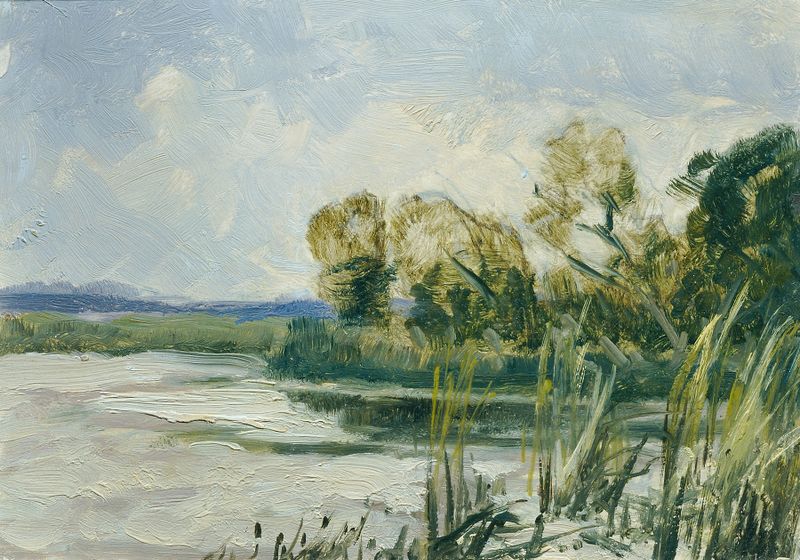
In the stillness of its surface, transformation breathes a quiet truth, revealing the depths of human experience. Look toward the vibrant strokes that compose the landscape, where deep greens and rich earth tones converge in a harmonious dance. Notice how the undulating hills rise and fall, inviting the eye to traverse their gentle slopes. The colors pulse with vitality, while the soft light bathes the scene, creating a serene atmosphere that lingers like a whispered promise. Beneath the surface beauty lies a tension between the familiar and the unknown.
The open expanse hints at journeys yet to unfold, stirring a sense of anticipation within the viewer. Small details, such as the fleeting shadows cast by clouds or the delicate interplay of light on the horizon, echo the theme of change, suggesting that transformation is not only inevitable but also a source of hope. In 1902, the artist created this work during a time of burgeoning modernism, where traditional boundaries were being challenged. Engelmüller, immersed in the artistic movements of early 20th-century Europe, sought to capture the essence of nature with a fresh perspective.
This piece reflects both his personal evolution as an artist and the broader shift in the art world towards embracing new ideas and forms.
More Artworks by Ferdinand Engelmüller
Browse all →
Moldau
Ferdinand Engelmüller
Böhmisch-Mährische Höhe
Ferdinand Engelmüller
Podřipsko
Ferdinand Engelmüller

Riesengebirge
Ferdinand Engelmüller

Prachauer Felsen
Ferdinand Engelmüller

Böhmerwald
Ferdinand Engelmüller
Wittingau
Ferdinand Engelmüller

Táborsko
Ferdinand Engelmüller

Böhmerwald
Ferdinand Engelmüller
Wittingau
Ferdinand Engelmüller





