
Embarcadére a Bercy — History & Facts
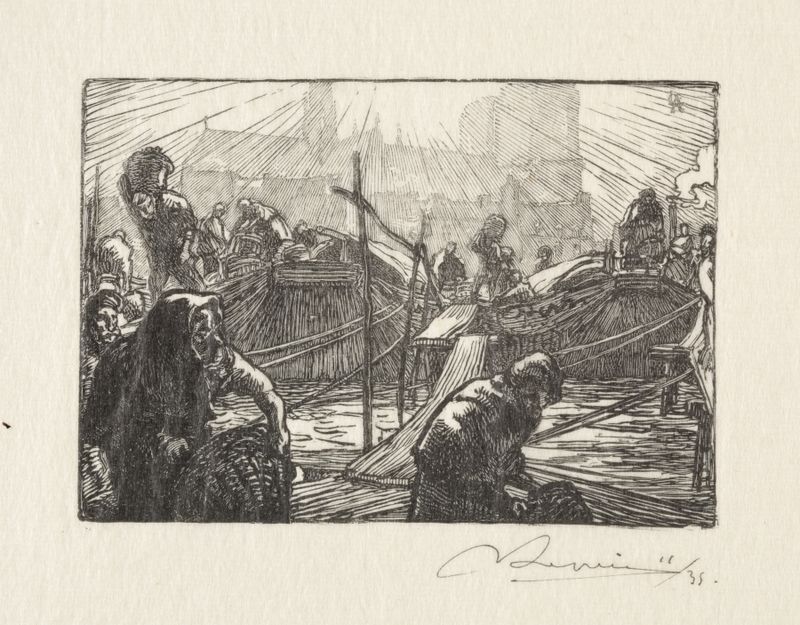
When did color learn to lie? In an age where beauty intertwines with deception, Embarcadére a Bercy captures the essence of urban life, where the allure of the moment can mask deeper truths. Look to the foreground, where figures bustle along the docks, their silhouettes a dance of movement against the shimmering water. Notice how Lepère employs a muted palette; the soft blues, grays, and browns blend seamlessly to evoke a sense of tranquility amidst the chaos. The gentle strokes convey the fluidity of the scene, guiding the viewer's eyes towards the intricate details of the boats and the reflections that shimmer on the surface, blurring the line between reality and imagination. Yet, beneath this captivating beauty, there exists a tension—the contrast between the industrious activity of the workers and the serene setting they inhabit.
The rigid structures of the dock juxtaposed with the fluidity of the water suggest a struggle between nature and human endeavor. The figures, while busy and animated, are mere shadows of the landscape, hinting at the fleeting nature of both time and toil in this urban tableau. In 1890, Auguste Louis Lepère painted this evocative scene during a period of artistic transition in France, where Impressionism was gaining traction. Living in Paris at the time, he was immersed in a city that pulsated with innovation and change, reflecting a burgeoning interest in capturing everyday life.
This was a moment of exploration and discovery in the world of art, as artists sought to express the complexities of modern existence through new perspectives and techniques.
More Artworks by Auguste Louis Lepère
Browse all →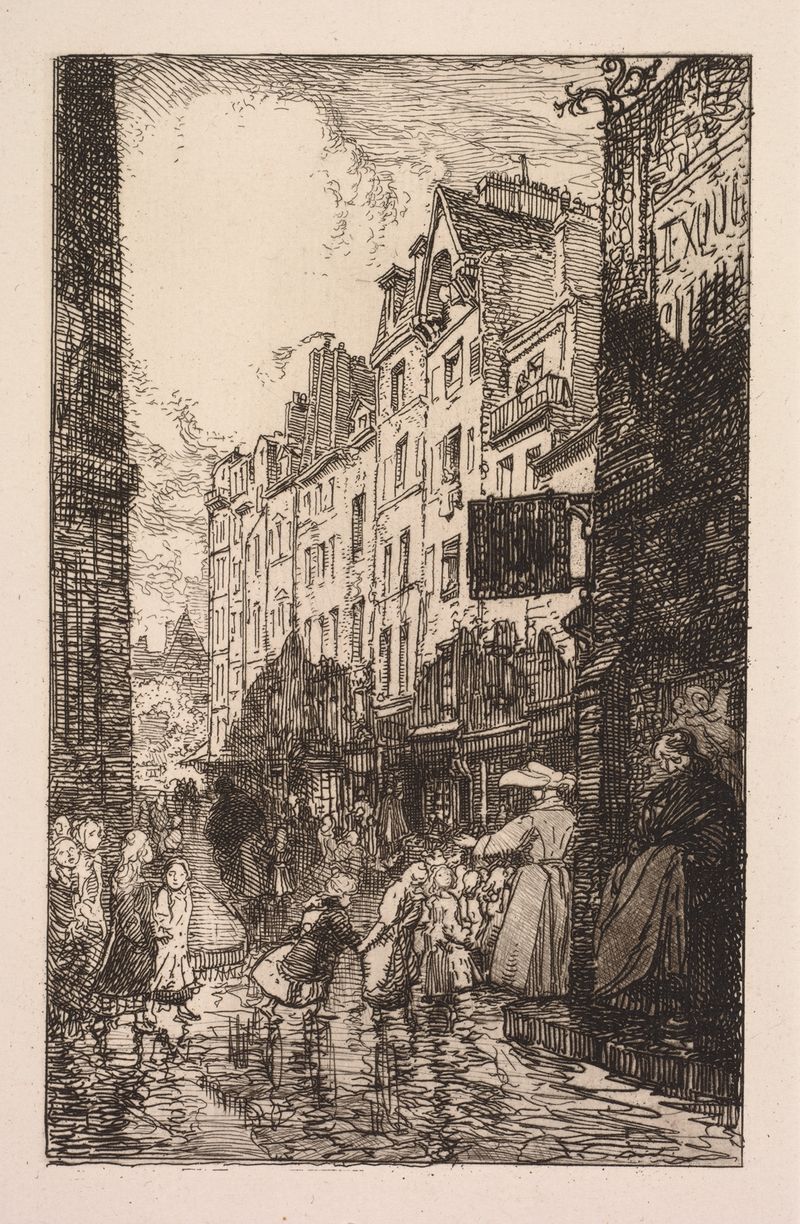
La Rue des Prêtres Saint-Séverin
Auguste Louis Lepère
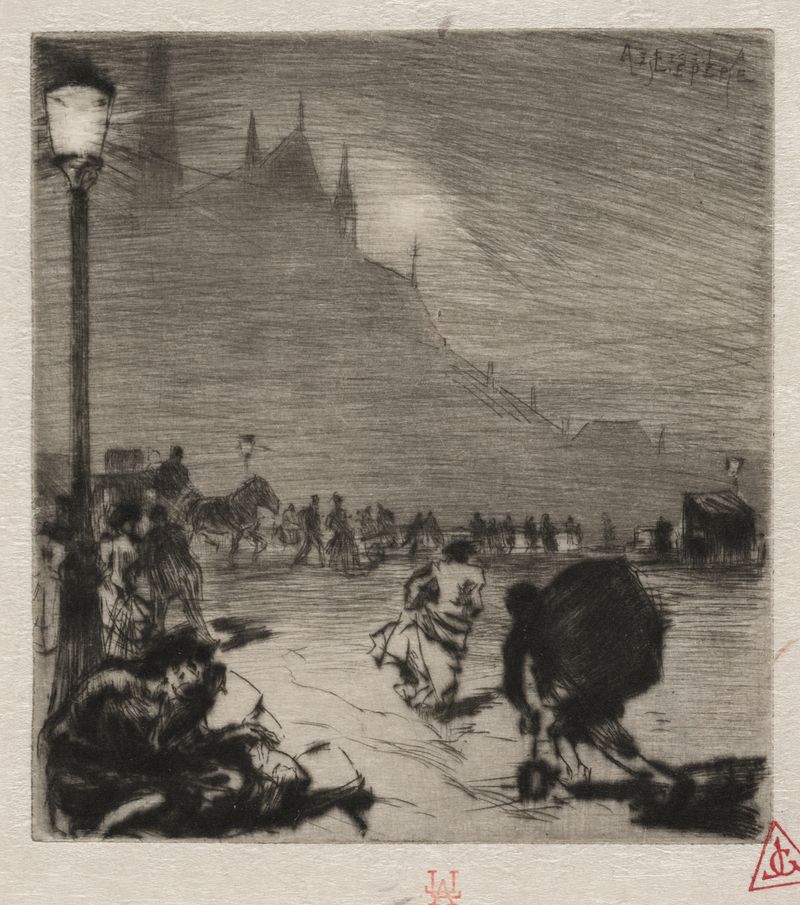
Au Coin du Pont-aux-Doubles
Auguste Louis Lepère
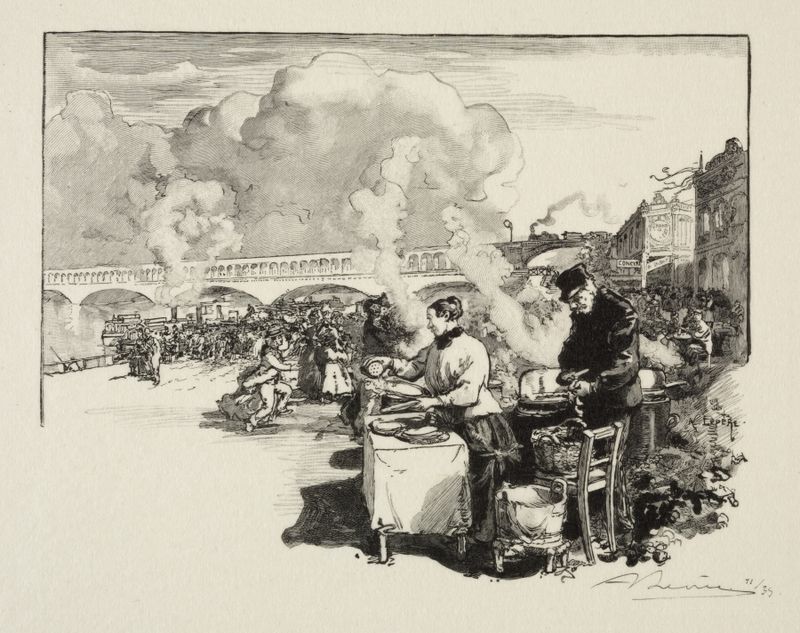
Debarcadère des bateaux-omnibus
Auguste Louis Lepère

La Seine, au quai de la Rapée
Auguste Louis Lepère
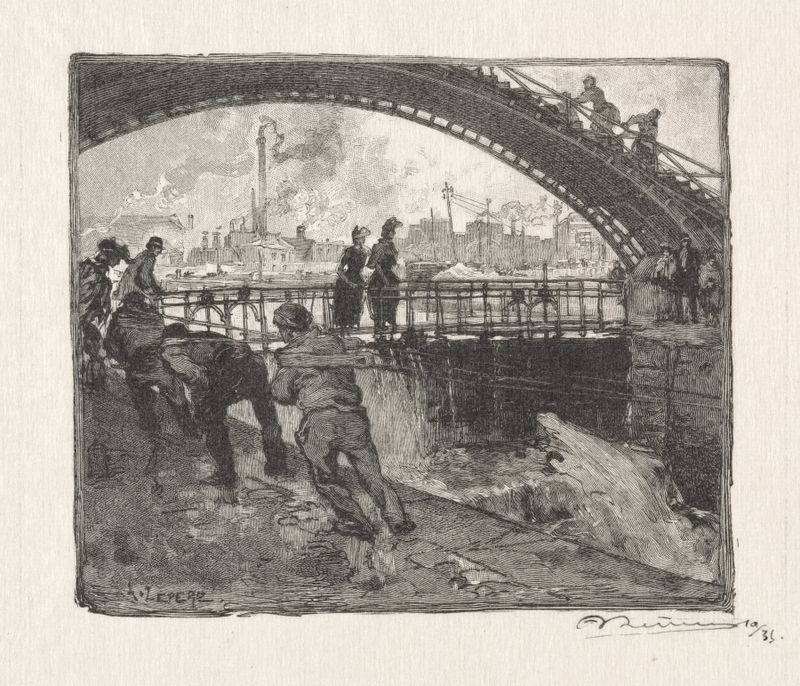
L’Ecluse du Canal St. Martin
Auguste Louis Lepère

Le Boulevard Montmartre, le Soir
Auguste Louis Lepère

Une Chasse au Mont Gérard
Auguste Louis Lepère
Les Charbonniere
Auguste Louis Lepère
Notre Dame vue du Marché aux pommes
Auguste Louis Lepère

Le Palais des Arts Liberaux, Intèrieur
Auguste Louis Lepère





