
Escalier du passage Radziwill — History & Facts
In the stillness of memory, we often long for the elegance of forgotten moments, where every detail holds the weight of nostalgia. Look closely at the sweeping staircase that dominates the canvas, its winding form drawing the eye upward into the gentle embrace of light. Notice how the soft shadows play on the intricate railings, accentuating the architectural curves and lines that suggest both movement and stillness. The warm palette imbues the scene with a sense of warmth, inviting viewers to imagine the hushed conversations and fleeting encounters that echo through the air. As the viewer observes the stairs, a sense of longing emerges, intertwining with serenity.
Each step seems to capture the essence of both ascension and descent, a metaphor for the passage of time. The balance between light and shadow creates a subtle tension; the familiarity of the scene evokes a yearning for the past while simultaneously suggesting an elusive future. The ornate details whisper stories of lives once lived, hinting at the richness of experience that permeates this quiet space. Léon-Auguste Ottin created Escalier du passage Radziwill in 1883, a time when he was deeply engaged in the Parisian art scene.
As an accomplished sculptor and painter, Ottin's focus on architectural subjects reflected the architectural revival of the period, a contrast to the more chaotic brushwork of contemporary Impressionists. Living in a vibrant city bustling with innovation, his work mirrored the intersection of nostalgia and progress, capturing the essence of a moment suspended in time.
More Artworks by Léon-Auguste Ottin
Browse all →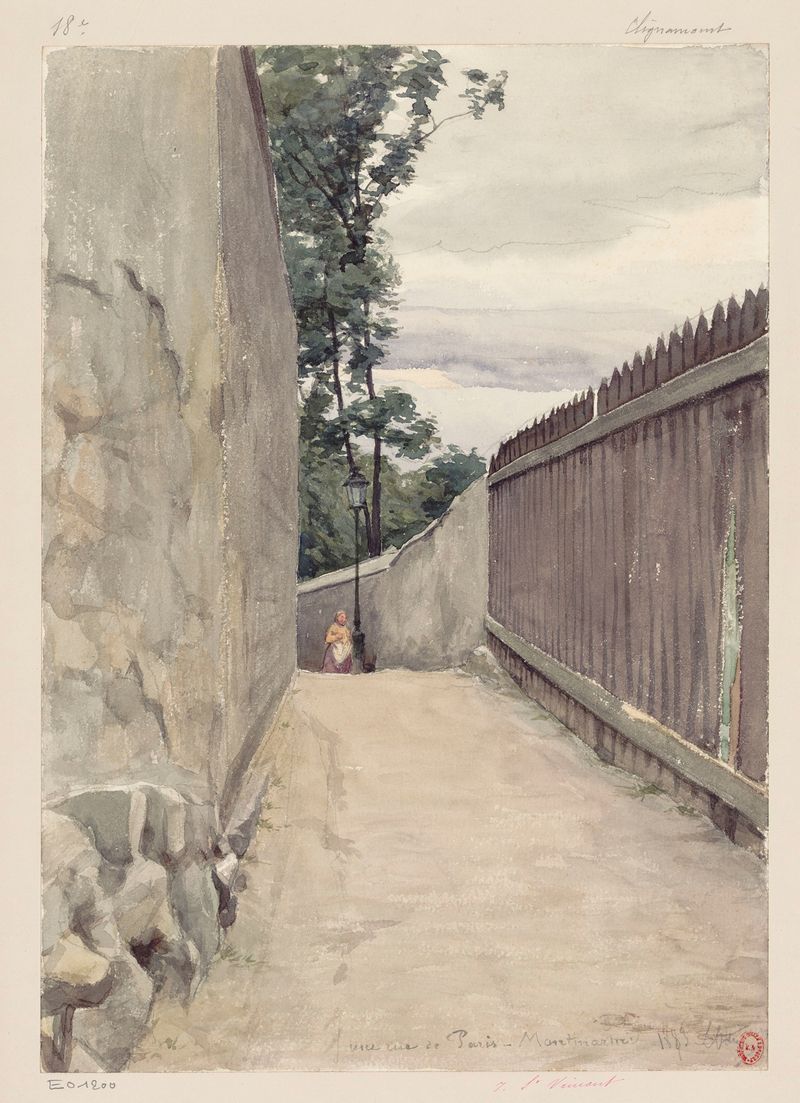
Une rue de Paris – Montmartre – 18è Clignancourt
Léon-Auguste Ottin

Ile St Louis – démoli vers 1840
Léon-Auguste Ottin
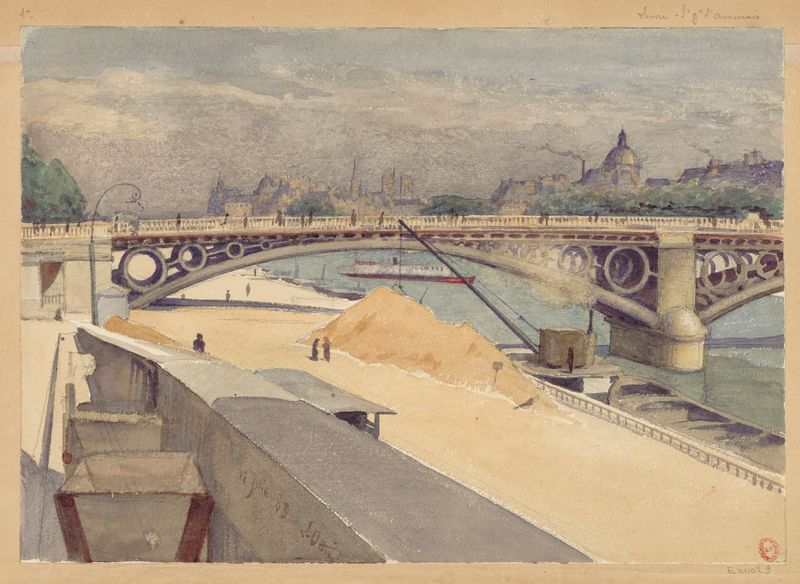
Sablière Port du Louvre, en arrière plan le Pont des Saints-Pères, l’Institut et la Cité
Léon-Auguste Ottin

Montmartre – 18è Montmartre Clignancourt
Léon-Auguste Ottin
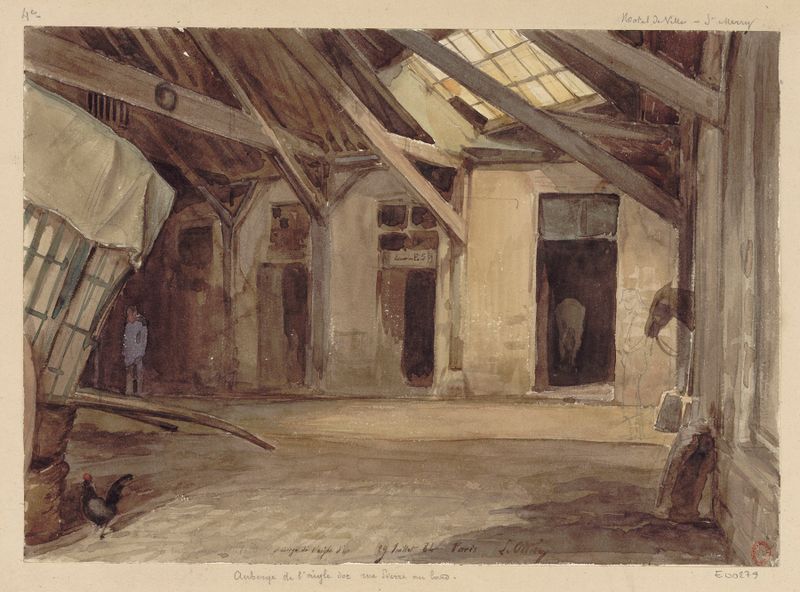
Auberge de l’aigle d’or – 3e Arrondissement
Léon-Auguste Ottin

Aux Tuilleries
Léon-Auguste Ottin
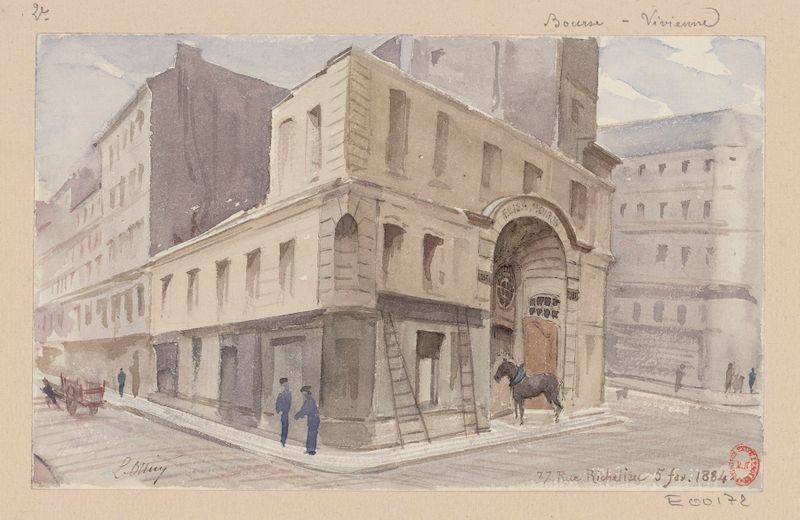
77 Rue Richelieu 5 fev. 1884
Léon-Auguste Ottin
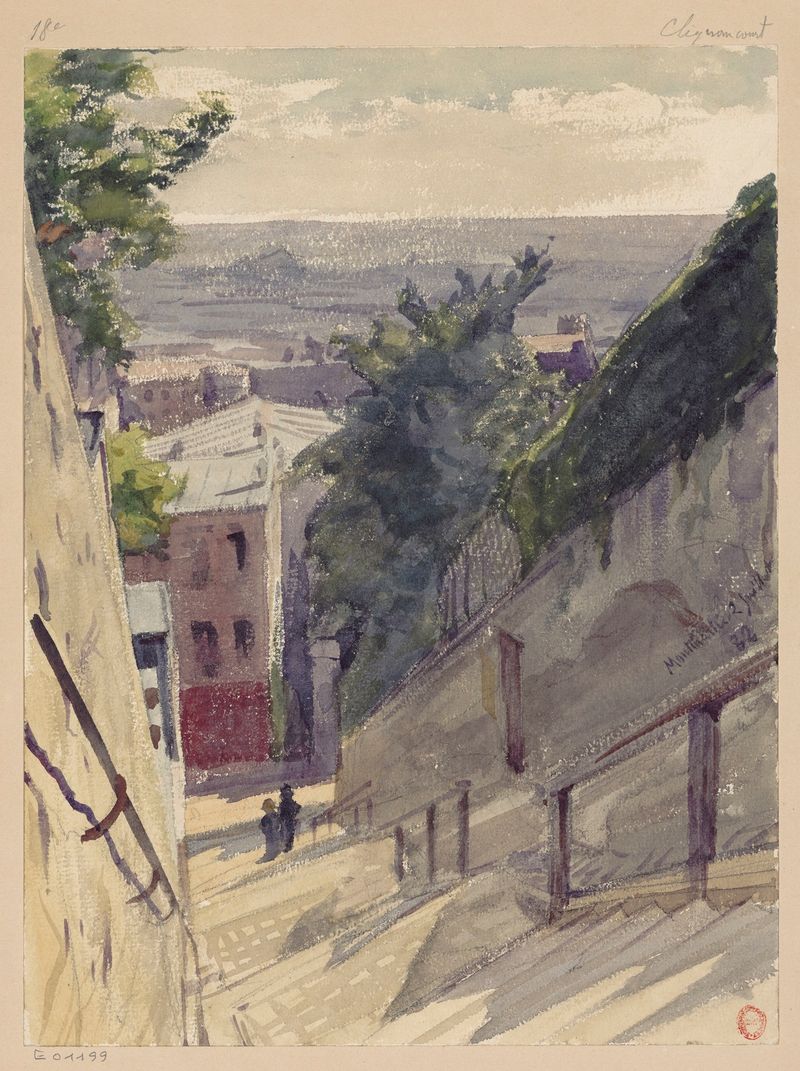
Escalier de la rue du Calvaire – 18è Clignancourt
Léon-Auguste Ottin

Fête des (Porcherons) aux Thuileries
Léon-Auguste Ottin
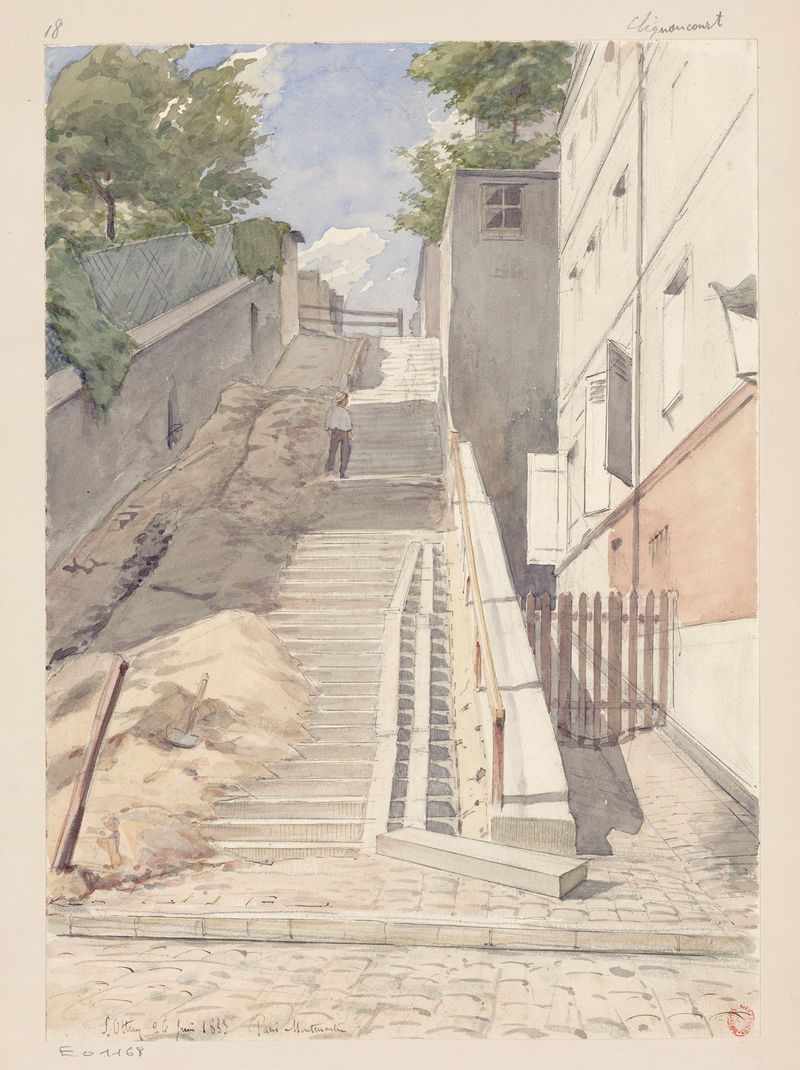
Paris Montmartre – 18è Clignancourt
Léon-Auguste Ottin
More Architecture Art
Browse all →
The statue of Liberty
Frédéric Auguste Bartholdi

View of Houses in Delft, Known as ‘The Little Street’
Johannes Vermeer

View of Houses in Delft, Known as ‘The Little Street’
Johannes Vermeer

The Cathedral in Rouen. The portal, Grey Weather
Claude Monet

The yellow house
Vincent van Gogh

The Church in Auvers-sur-Oise, View from the Chevet
Vincent van Gogh