
Une rue de Paris – Montmartre – 18è Clignancourt — History & Facts
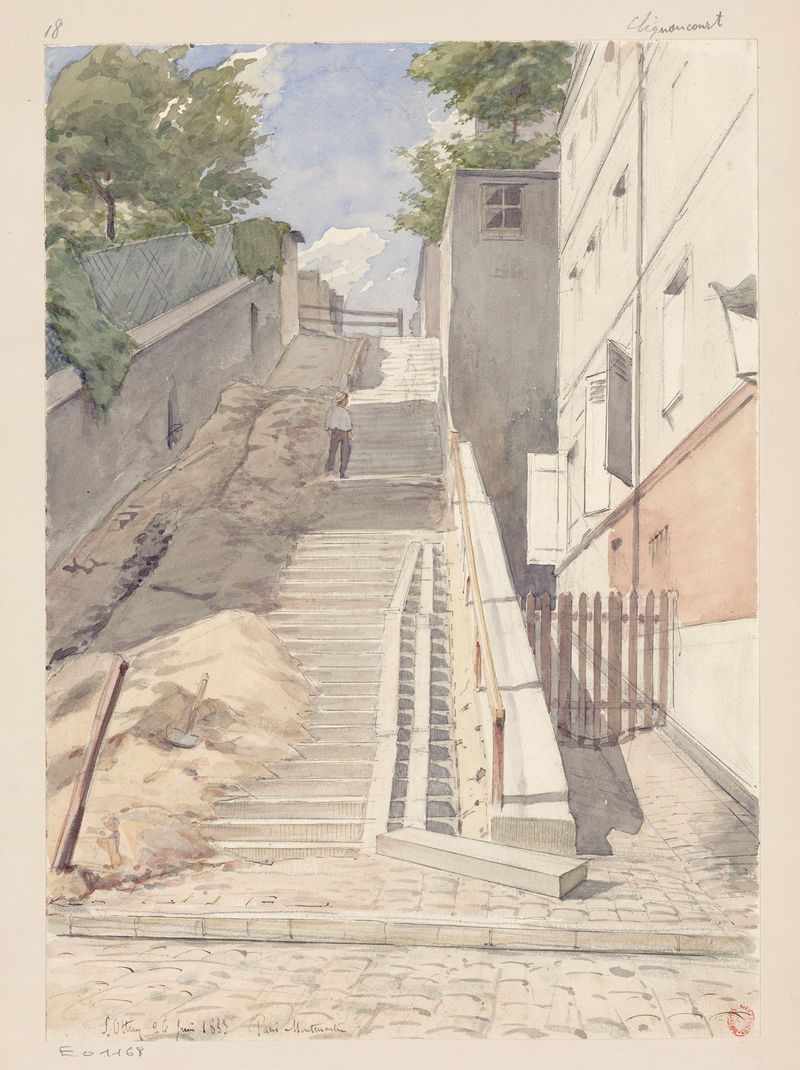
Where does light end, and longing begin? In Une rue de Paris – Montmartre – 18è Clignancourt, a delicate balance flickers between shadows and the warm embrace of daylight, inviting contemplation of what lies beyond the visible. Look to the left at the lively street market, where the bustle of Parisian life unfolds with spectral clarity. Notice the interplay of light and shadow on the cobblestones, the way the sun dapples the surfaces, revealing textures of life. The artist employs a palette rich in earth tones yet brightened by delicate hints of color—a soft blue sky, vibrant stalls brimming with wares.
Each brushstroke seems animated, capturing not just a moment but the very essence of a neighborhood breathing under the Paris sun. Yet within this vibrant scene, quiet emotions simmer beneath the surface. The figures—vendors, passersby, and children—are caught in their own private worlds, displaying a contrast of connection and solitude. The juxtaposition of the lively market against the stillness of the figures evokes a sense of yearning, perhaps for moments lost or connections yet to be made.
The careful balance of energy and introspection reveals a deeper narrative woven into the fabric of daily life. In 1883, at the height of the Impressionist movement, Léon-Auguste Ottin painted this work while immersed in the vibrant artistic community of Paris. The city was a melting pot of ideas and influences, and Ottin, like many artists of his time, was exploring the nuances of light and atmosphere. This period was characterized by a breaking away from traditional forms, embracing instead the fleeting beauty of everyday moments, a transition that would continue to shape the art world for decades to come.
More Artworks by Léon-Auguste Ottin
Browse all →
Ile St Louis – démoli vers 1840
Léon-Auguste Ottin
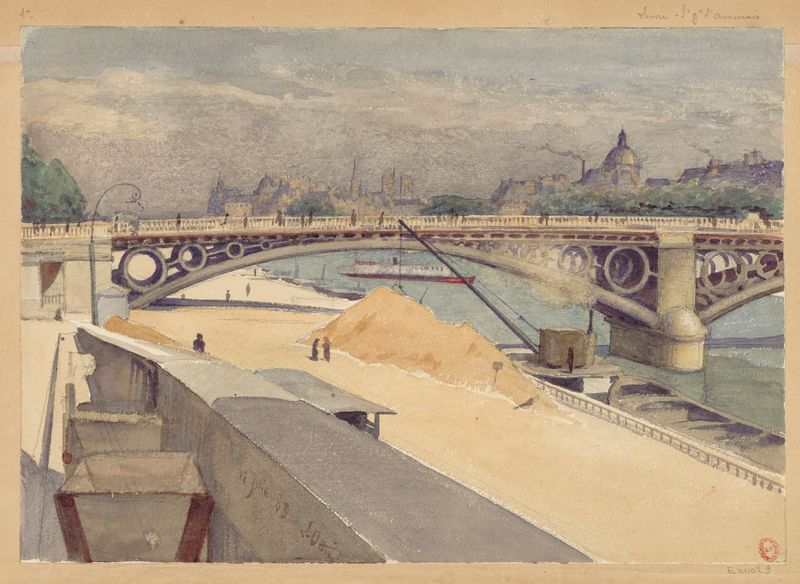
Sablière Port du Louvre, en arrière plan le Pont des Saints-Pères, l’Institut et la Cité
Léon-Auguste Ottin

Montmartre – 18è Montmartre Clignancourt
Léon-Auguste Ottin

Escalier du passage Radziwill
Léon-Auguste Ottin
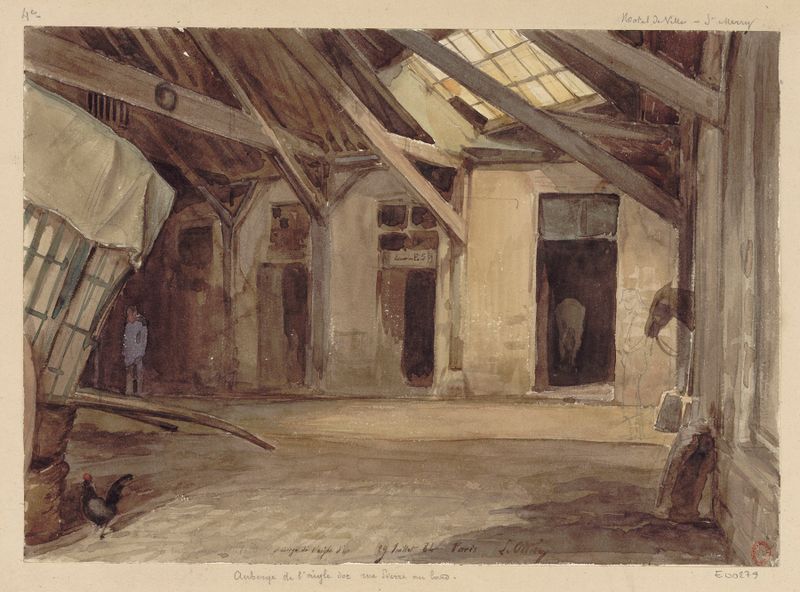
Auberge de l’aigle d’or – 3e Arrondissement
Léon-Auguste Ottin

Aux Tuilleries
Léon-Auguste Ottin
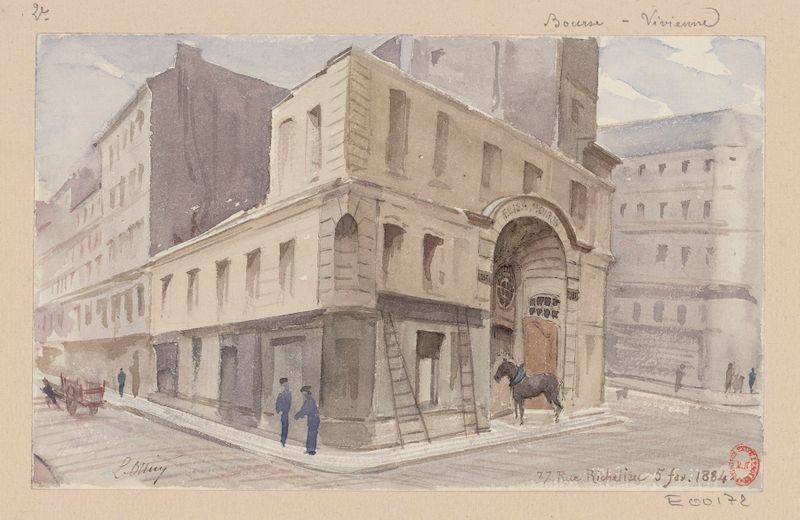
77 Rue Richelieu 5 fev. 1884
Léon-Auguste Ottin
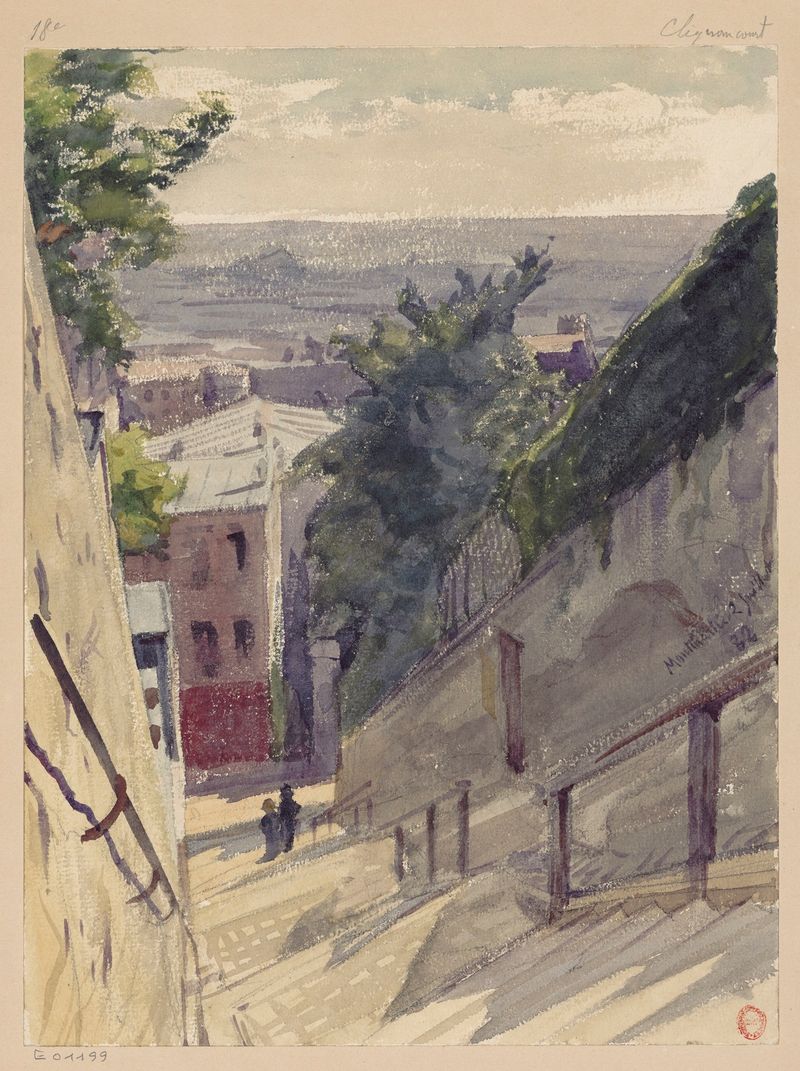
Escalier de la rue du Calvaire – 18è Clignancourt
Léon-Auguste Ottin

Fête des (Porcherons) aux Thuileries
Léon-Auguste Ottin
Paris Montmartre – 18è Clignancourt
Léon-Auguste Ottin





