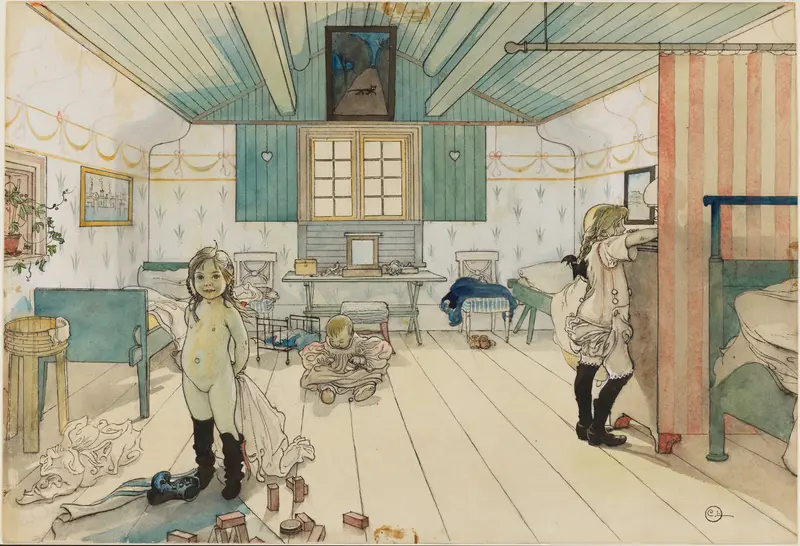
Escalier sculpte rue Boutebrie — History & Facts
A single flickering candle draws the eye, its glow slicing through the dense shadows that press in from every side. In Escalier sculpte rue Boutebrie, Auguste Lepère transforms a Parisian staircase into a stage of suspense and possibility. The ornate banister catches the scant light, its swirling patterns rendered with a craftsman’s care, while the rest of the stairwell dissolves into darkness.
At the top, a figure leans forward, candle held high, searching or perhaps beckoning—her gesture urgent, her face caught in a moment between fear and discovery. Below, a shadowy presence ascends, his form barely distinguishable, swallowed by the gloom. The composition pulls the viewer up the stairs, into the uncertainty that the candle’s flame cannot quite dispel. This image belongs to the world of turn-of-the-century Paris, when artists like Lepère—renowned for his wood engravings and prints—turned their gaze to the city’s hidden corners and everyday dramas.
Published in 1901, this work captures both the architectural detail of old Paris and the psychological tension of urban life at night. Such prints were often made for collectors or as illustrations, prized for their ability to conjure atmosphere with a few deft lines. History has kept few traces of this particular staircase or its inhabitants, but the print survives in the National Gallery of Art’s collection, a testament to the era’s fascination with both the beauty and the mysteries lurking in the city’s shadows.
Let your eye linger on the interplay of light and dark, and imagine what stories might unfold just beyond the candle’s reach.
More Artworks by Auguste Lepère

Le Pont-Neuf (Paris)
Auguste Lepère
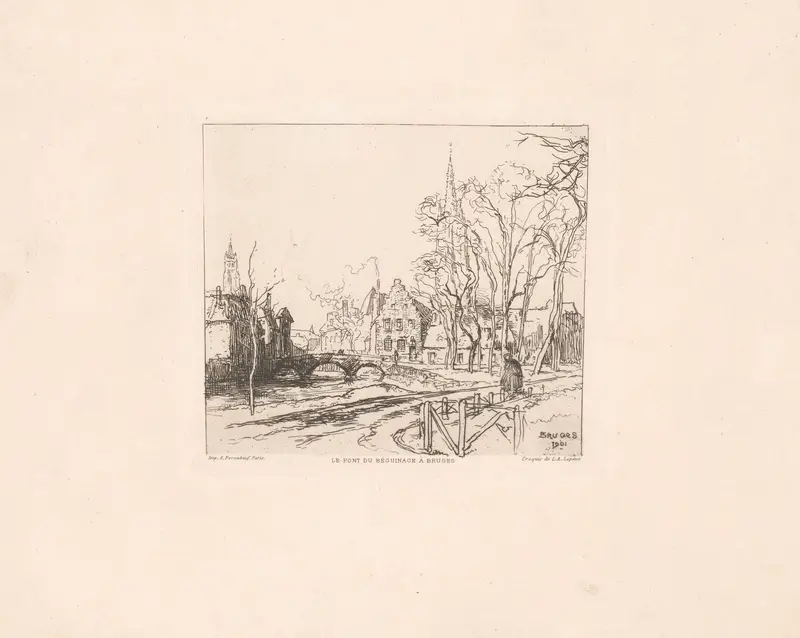
Le pont du Beguinage à Bruges
Auguste Lepère
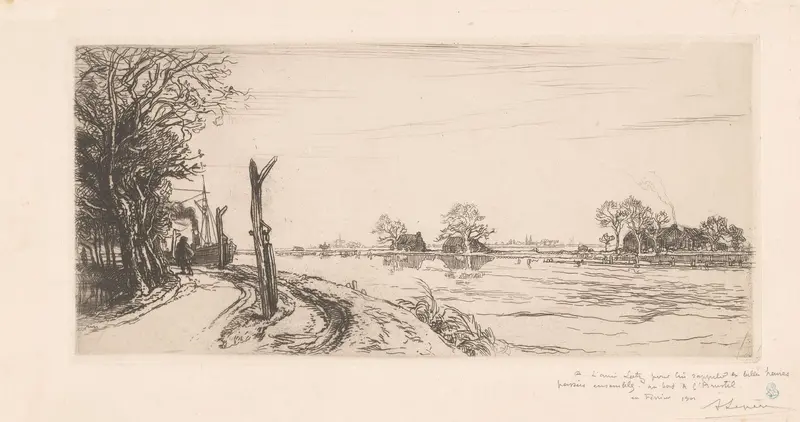
Au bord de l’Amstel
Auguste Lepère
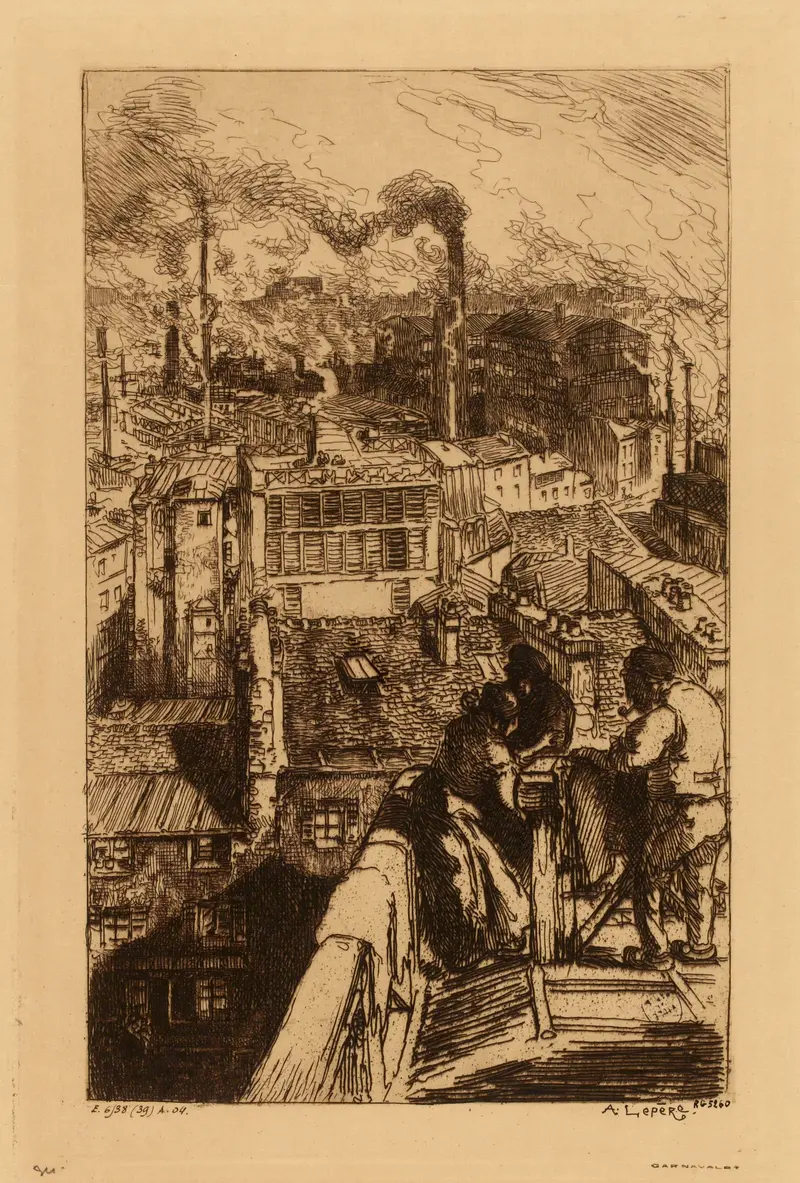
Le quartier des Gobelins
Auguste Lepère
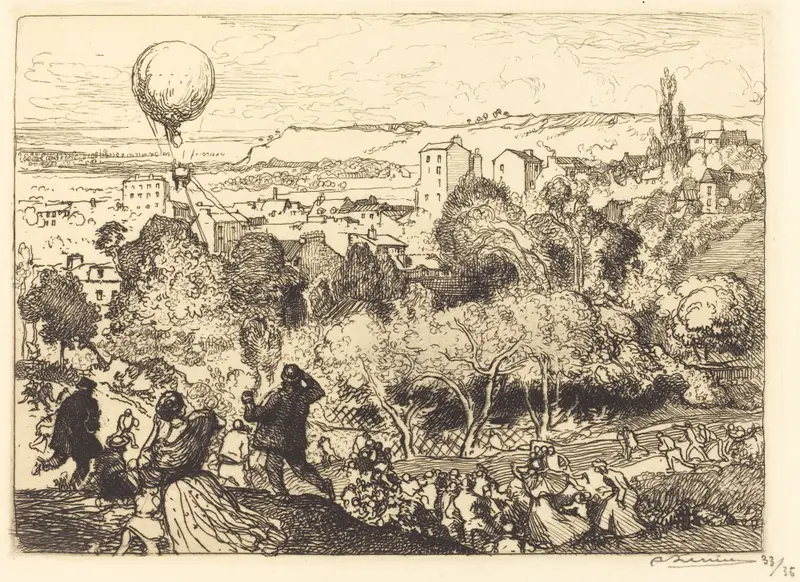
The Falling Balloon, in Pre-Saint-Gervais (Lebaloon qui tombe, au Pre-Saint-Gervais)
Auguste Lepère
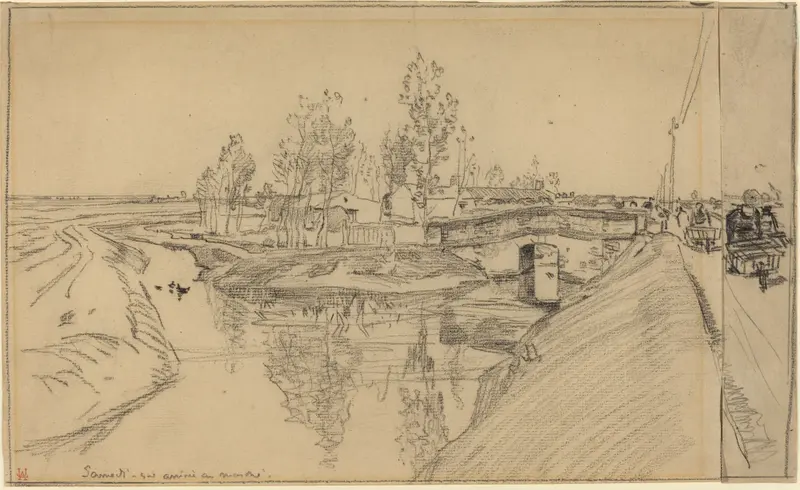
Arrivee au Marche
Auguste Lepère
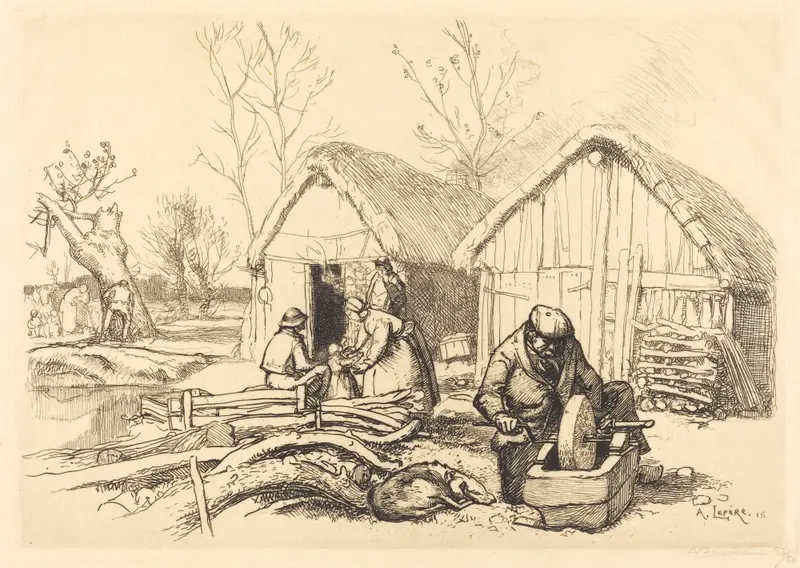
The House of the Woodcutter, Vendee (La maison du bucheron, Vendee)
Auguste Lepère
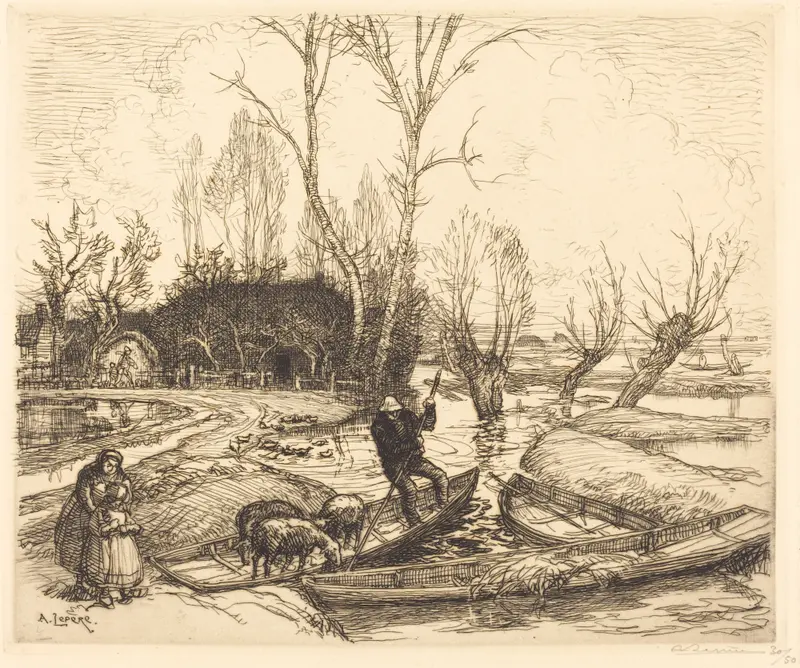
In the Deluged Marsh - The Shepherd (Au marais inonde - Le berger)
Auguste Lepère
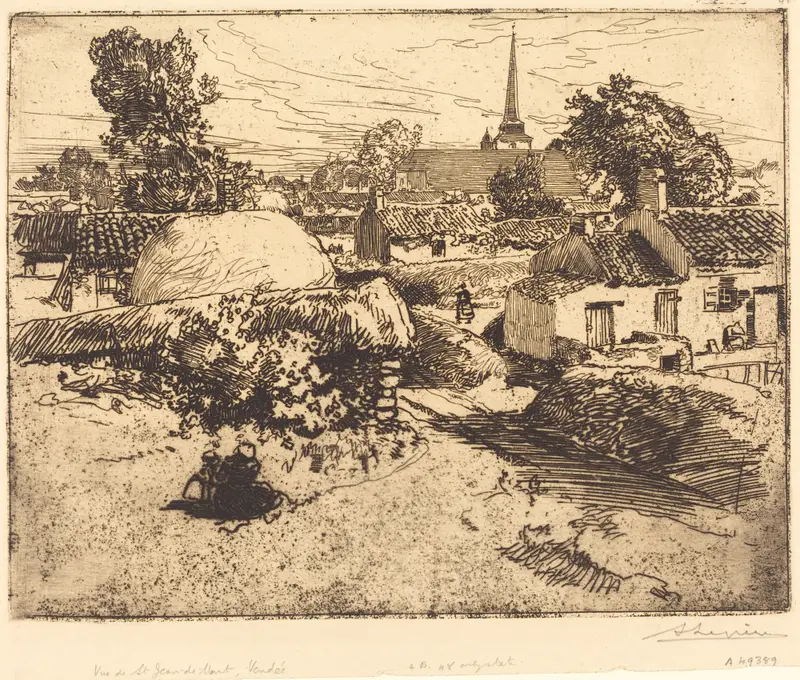
View of St.-Jean-de-Mont, Vendee (Vue de St.-Jean-de-Mont, Vendee)
Auguste Lepère
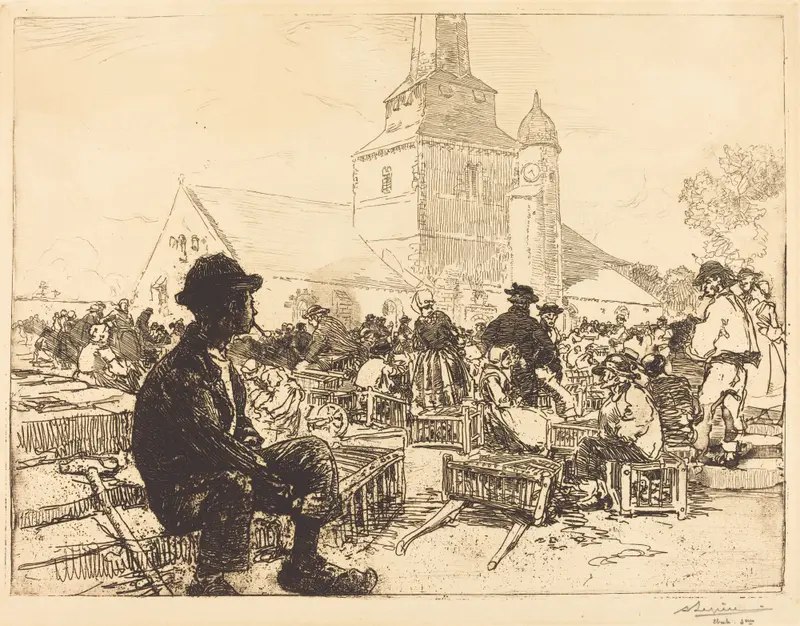
Poultry Market at St.-Jean-de-Mont (Marche a la volaille, a St.-Jean-de-Mont)
Auguste Lepère