
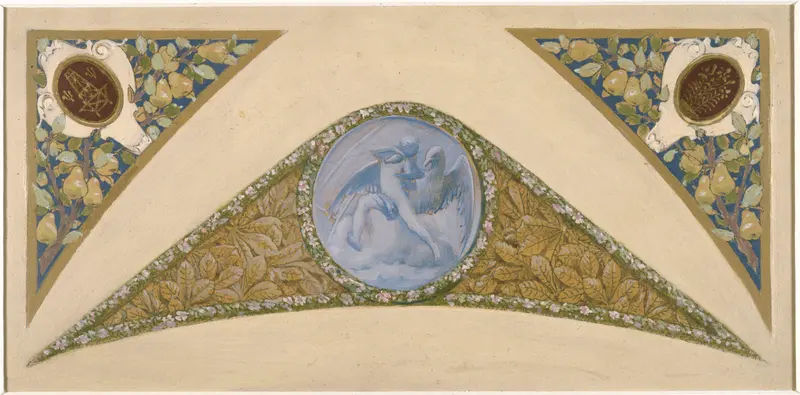
Esquisse pour l'escalier des Fêtes de l'Hôtel de Ville de Paris , Juillet — History & Facts
What first draws the eye in this design by Luc-Olivier Merson is its quiet orchestration of order and ornament—a vision meant not for a canvas on a wall, but for a ceiling overhead, where the viewer would be invited to look up and linger. The composition radiates from a pale, empty center, its arms stretching outward like beams of light, dividing the field into four quadrants. Each corner is alive with allegorical figures: blue-robed women stand sentinel beside inscribed tablets, while cherubic nudes recline among curling foliage and delicate flowers.
The palette is gentle, a harmony of soft pinks, blues, and greens, lending the scene a sense of both festivity and restraint. Every flourish of acanthus, every ribbon and garland, is placed with a decorator’s intent—to elevate the gaze and the spirit. Created between 1888 and 1898, this Esquisse pour l'escalier des Fêtes de l'Hôtel de Ville de Paris, Juillet belongs to a moment in French art when public buildings were being lavishly adorned to express civic pride and republican ideals. Decorative schemes like this, often commissioned for grand staircases and ceremonial halls, brought together painting, sculpture, and architecture in a unified spectacle.
Merson, known for his murals and public commissions, worked within this tradition, blending allegory with ornamental design to serve the ambitions of the Third Republic. Today, the work survives in the collection of Paris Musées—a fragment of a larger dream, inviting us to imagine the splendor of its intended setting and to trace, in every scroll and figure, the aspirations of its age.
More Artworks by Luc-Olivier Merson

Esquisse pour l'escalier des fêtes de l'Hôtel de Ville de Paris , Bélier
Luc-Olivier Merson
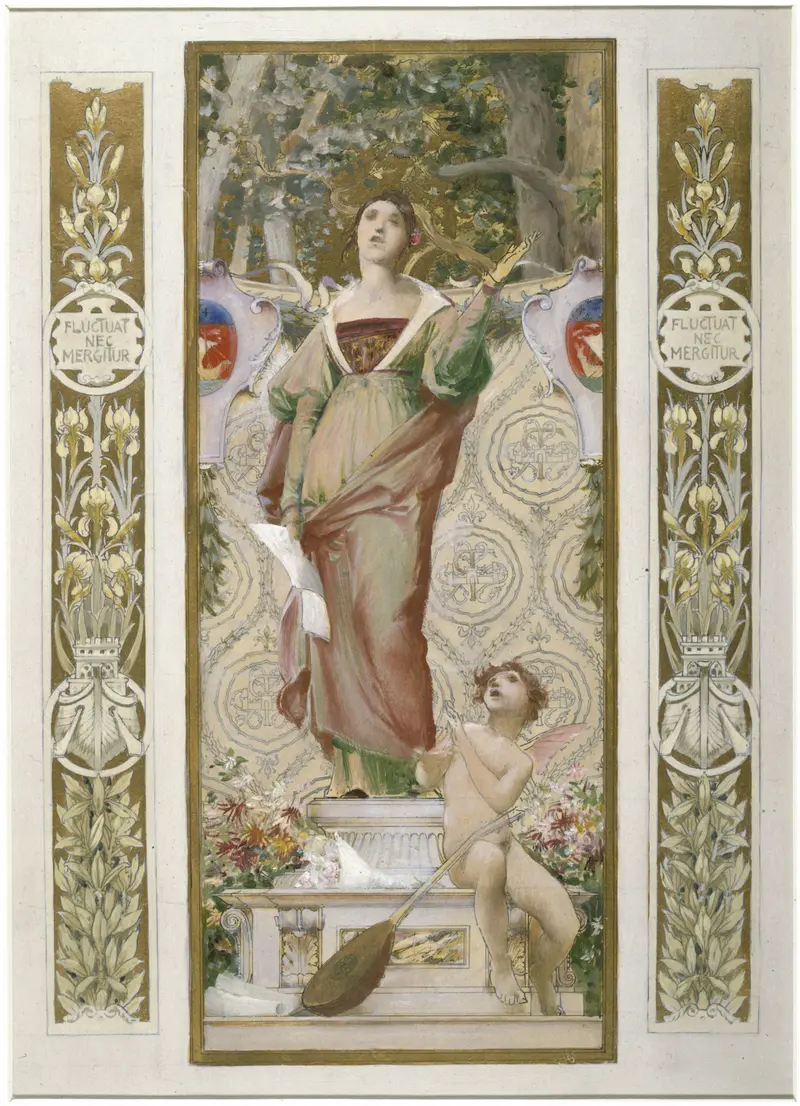
Esquisse pour l'escalier des Fêtes de l'Hôtel de Ville de Paris , Le Chant
Luc-Olivier Merson
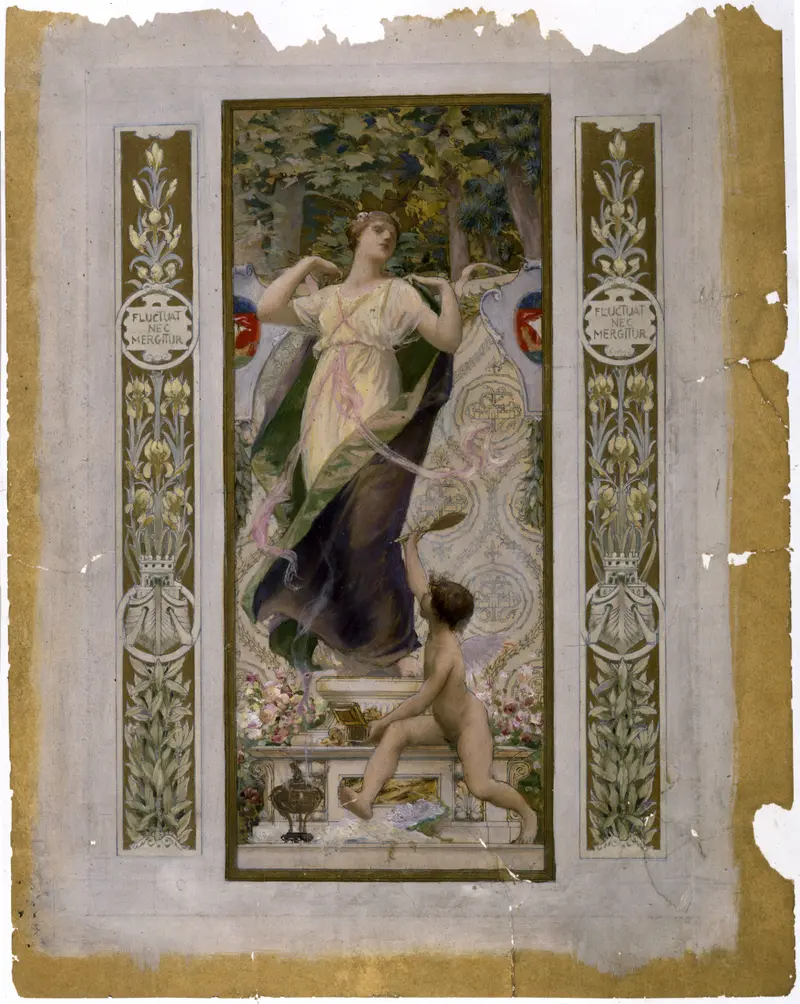
Esquisse pour l'escalier des Fêtes de l'Hôtel de ville de Paris , La Toilette féminine
Luc-Olivier Merson
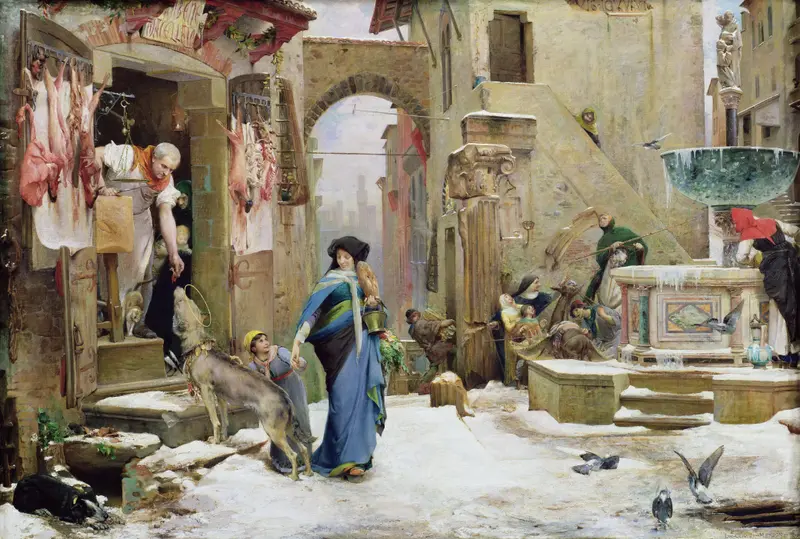
The Wolf of Gubbio
Luc-Olivier Merson
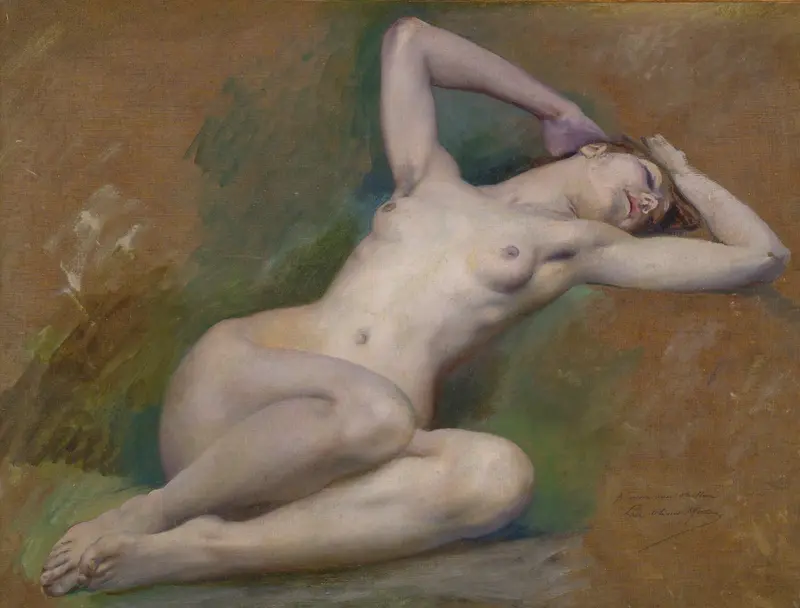
Luc Olivier Merson Study for the figure of Spring
Luc-Olivier Merson
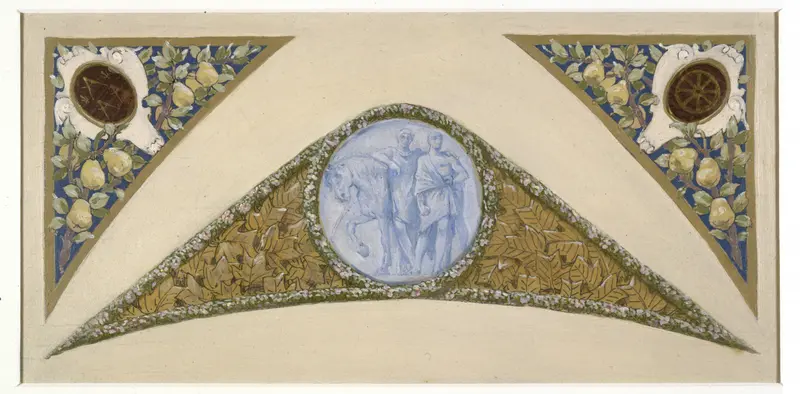
Esquisse pour l'escalier des Fêtes de l'Hôtel de Ville de Paris , Gémeaux
Luc-Olivier Merson
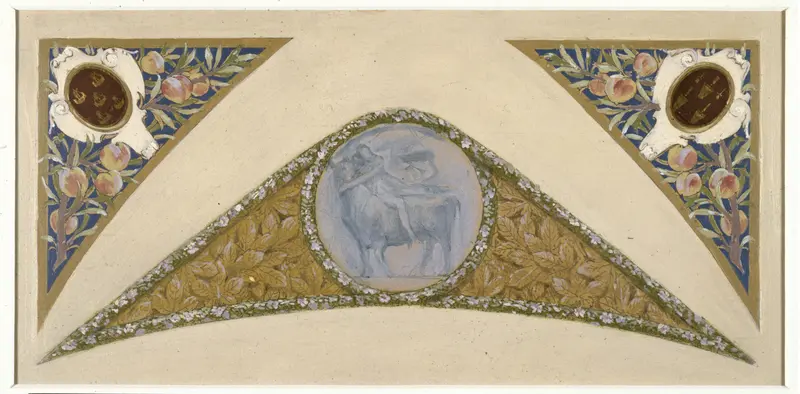
Esquisse pour l'escalier des Fêtes de l'Hôtel de Ville de Paris , Taureau
Luc-Olivier Merson
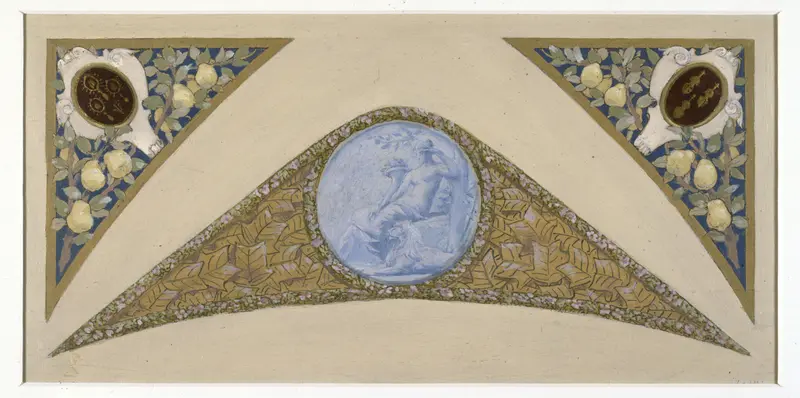
Esquisse pour l'escalier des Fêtes de l'Hôtel de Ville de Paris , Vierge
Luc-Olivier Merson
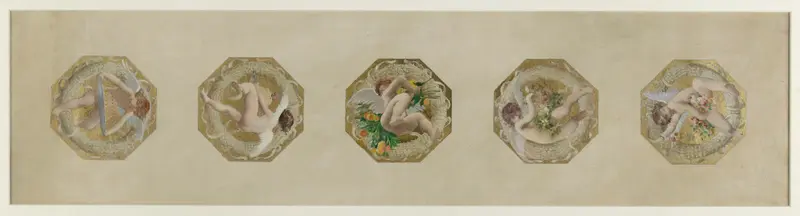
Esquisse pour l'Hôtel de Ville de Paris, escalier des Fêtes , les génies des fêtes
Luc-Olivier Merson
Esquisse pour l'escalier des Fêtes de l'Hôtel de Ville de Paris , Verseau
Luc-Olivier Merson





