
Esquisse pour l'escalier des Fêtes de l'Hôtel de ville de Paris , La Toilette féminine — History & Facts
The first thing that catches the eye is the theatrical gesture of the central figure, a woman arranging her hair with a ribbon, her posture both graceful and commanding. She stands elevated, almost on a stage, while a cherubic child at her feet reaches upward, offering a feather as if to assist or crown her. The scene is framed by lush greenery and intricate decorative motifs, with the woman’s pale gown and the child’s bare skin glowing against the darker backdrop.
The entire composition is bordered by stylized panels bearing the Latin motto “Fluctuat nec mergitur”—a phrase long associated with Paris, suggesting resilience and endurance. Every detail, from the vases of flowers to the scrollwork, is carefully placed to evoke a sense of ritual and celebration, drawing the viewer into a moment of transformation. Created in 1888, this work by Luc-Olivier Merson belongs to a world where allegory and ornamentation were prized in public art, especially in the grand civic spaces of Paris. Such esquisses—preparatory sketches—were often commissioned for major decorative cycles in newly rebuilt or restored public buildings, reflecting both the city’s pride and its aspirations.
The presence of the city’s motto hints at the intended site: a place of municipal dignity, perhaps the Hôtel de Ville itself, where art was meant to uplift and instruct. While history has kept few traces of this specific design’s fate, it remains a window onto the ambitions of late nineteenth-century Paris, inviting us to imagine the grandeur such images once brought to everyday life. The longer one looks, the more the painting’s layered symbols and elegant forms reward the eye.
More Artworks by Luc-Olivier Merson

Esquisse pour l'escalier des fêtes de l'Hôtel de Ville de Paris , Bélier
Luc-Olivier Merson
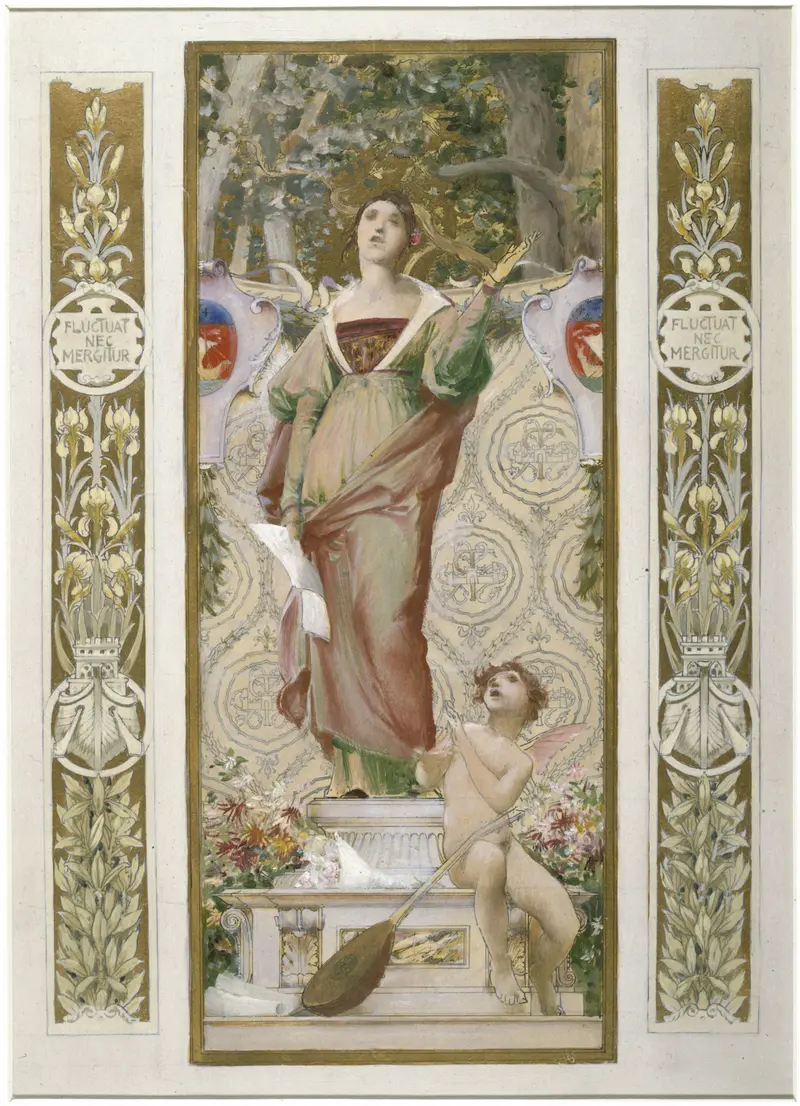
Esquisse pour l'escalier des Fêtes de l'Hôtel de Ville de Paris , Le Chant
Luc-Olivier Merson
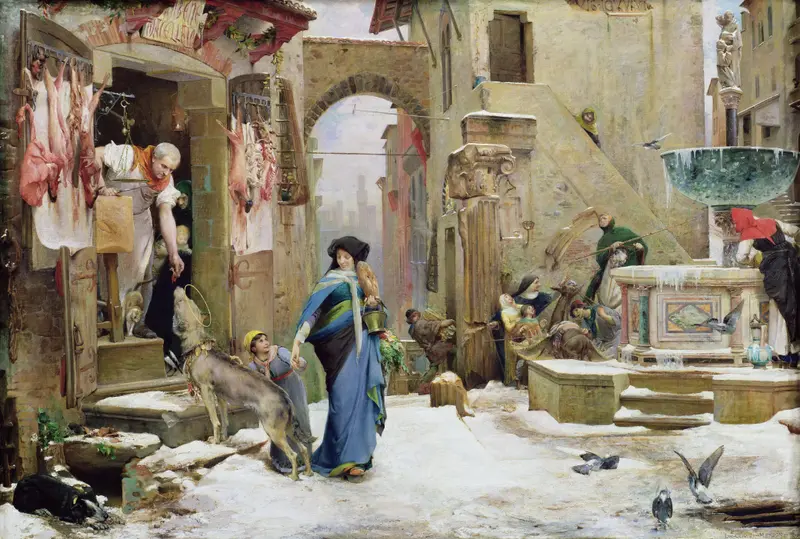
The Wolf of Gubbio
Luc-Olivier Merson
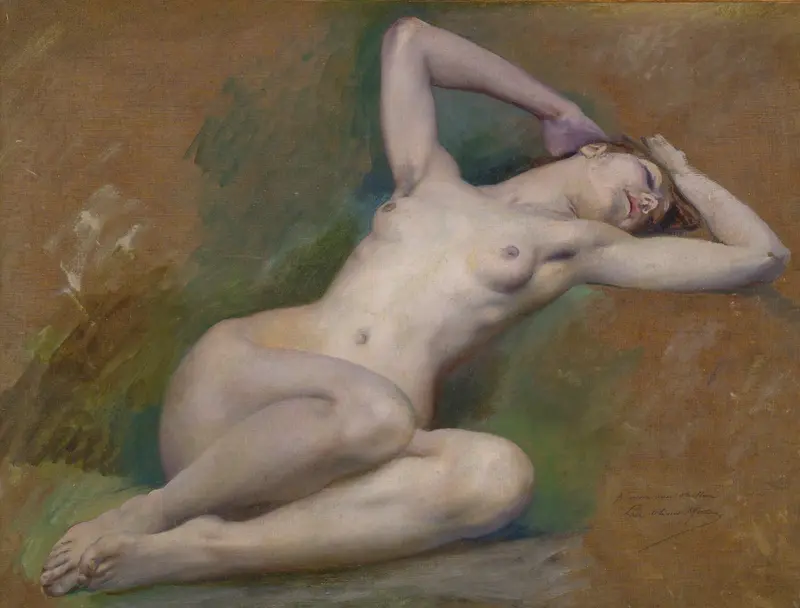
Luc Olivier Merson Study for the figure of Spring
Luc-Olivier Merson
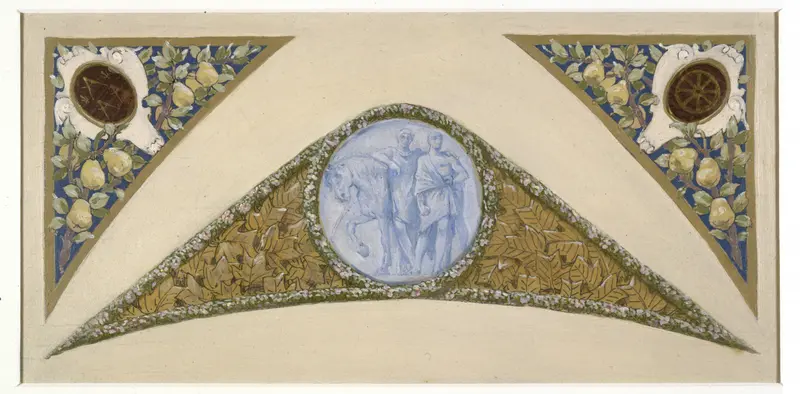
Esquisse pour l'escalier des Fêtes de l'Hôtel de Ville de Paris , Gémeaux
Luc-Olivier Merson
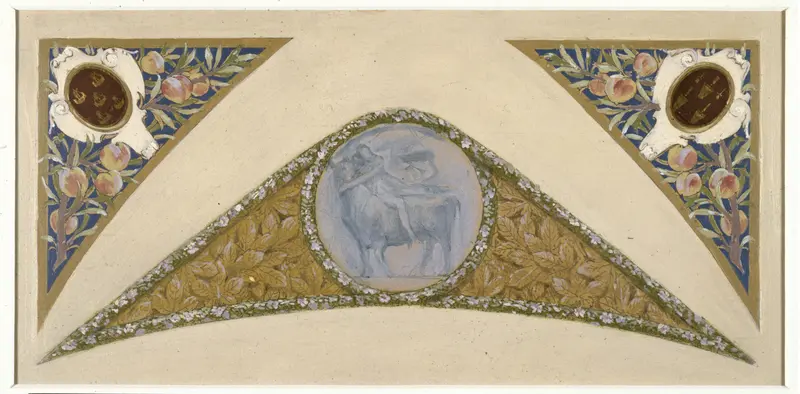
Esquisse pour l'escalier des Fêtes de l'Hôtel de Ville de Paris , Taureau
Luc-Olivier Merson
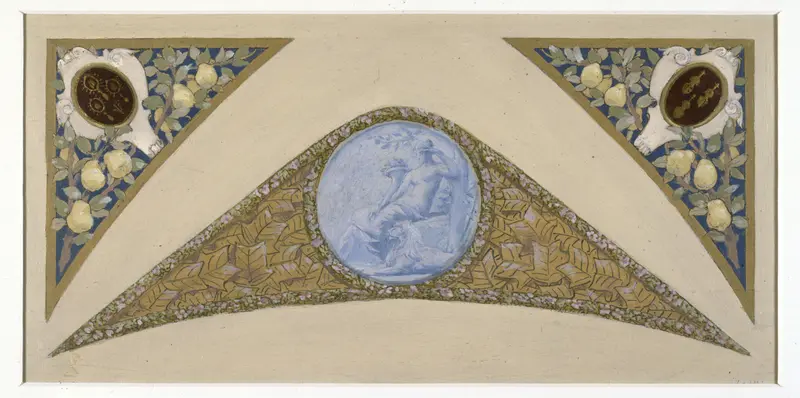
Esquisse pour l'escalier des Fêtes de l'Hôtel de Ville de Paris , Vierge
Luc-Olivier Merson
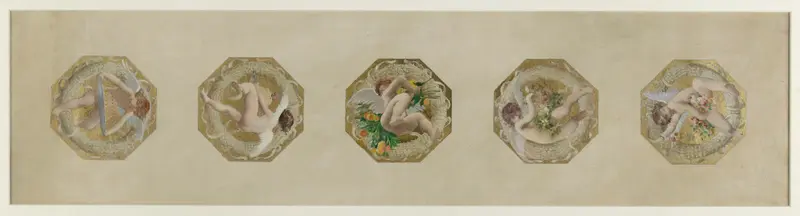
Esquisse pour l'Hôtel de Ville de Paris, escalier des Fêtes , les génies des fêtes
Luc-Olivier Merson
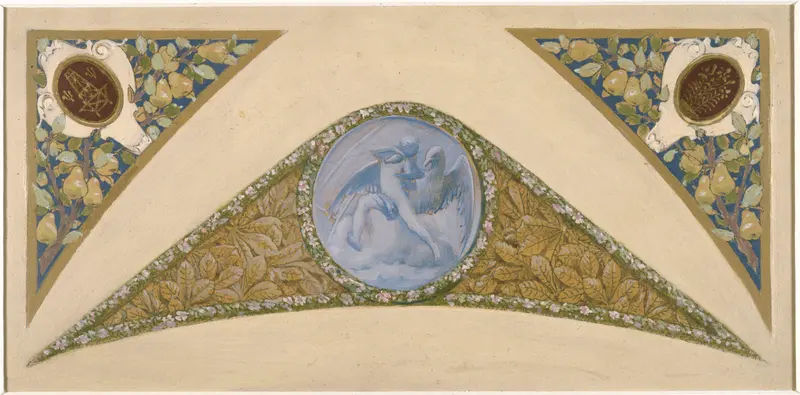
Esquisse pour l'escalier des Fêtes de l'Hôtel de Ville de Paris , Verseau
Luc-Olivier Merson
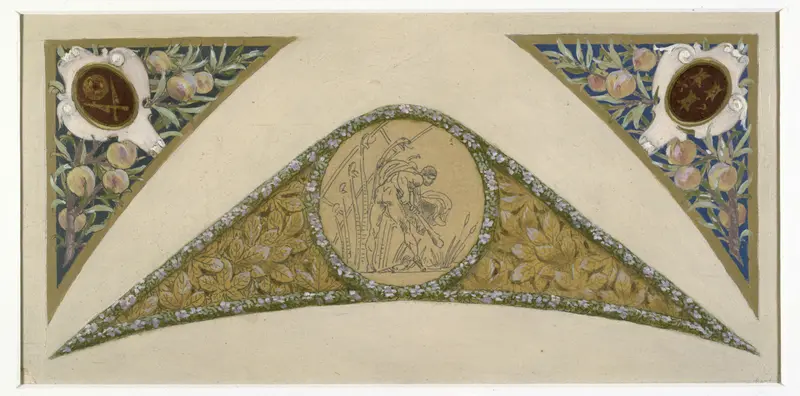
Esquisse pour l'escalier des Fêtes de l'Hôtel de Ville de Paris , Scorpion
Luc-Olivier Merson





