
Esquisse pour l'escalier des Fêtes de l'Hôtel de Ville de Paris , Le Chant — History & Facts
It is the upward gaze that first seizes the viewer’s attention—a woman, poised like a muse or allegory, lifts her voice and her eyes toward some unseen height, while a cherubic figure at her feet echoes her song. The composition is staged as if on a decorative panel or the wall of an imagined palace, with the woman’s gesture and parted lips suggesting a moment caught mid-aria. Ornate patterns and gilded borders frame the scene, while the lush foliage behind her hints at a world beyond, half-real, half-theatrical.
The scroll in her hand and the paddle at the child’s side are not mere props: they signal the union of art, music, and myth, inviting the viewer to read the image as both performance and emblem. Created in 1888 by Luc-Olivier Merson, this work belongs to the world of late nineteenth-century France, when public buildings and civic spaces were often adorned with allegorical figures celebrating the arts and virtues. The inscription “Fluctuat nec mergitur”—the motto of Paris—anchors the work in the city’s identity, while the decorative style, with its gold accents and floral motifs, recalls the grandeur of municipal commissions from the era. Though little is recorded about this specific piece beyond its home in Paris Musées, it stands as a testament to the period’s belief in art as a public good and a civic celebration.
Look again at the interplay of gesture, ornament, and motto: here, the spirit of song is not only heard, but seen, enshrined for all who pass.
More Artworks by Luc-Olivier Merson

Esquisse pour l'escalier des fêtes de l'Hôtel de Ville de Paris , Bélier
Luc-Olivier Merson
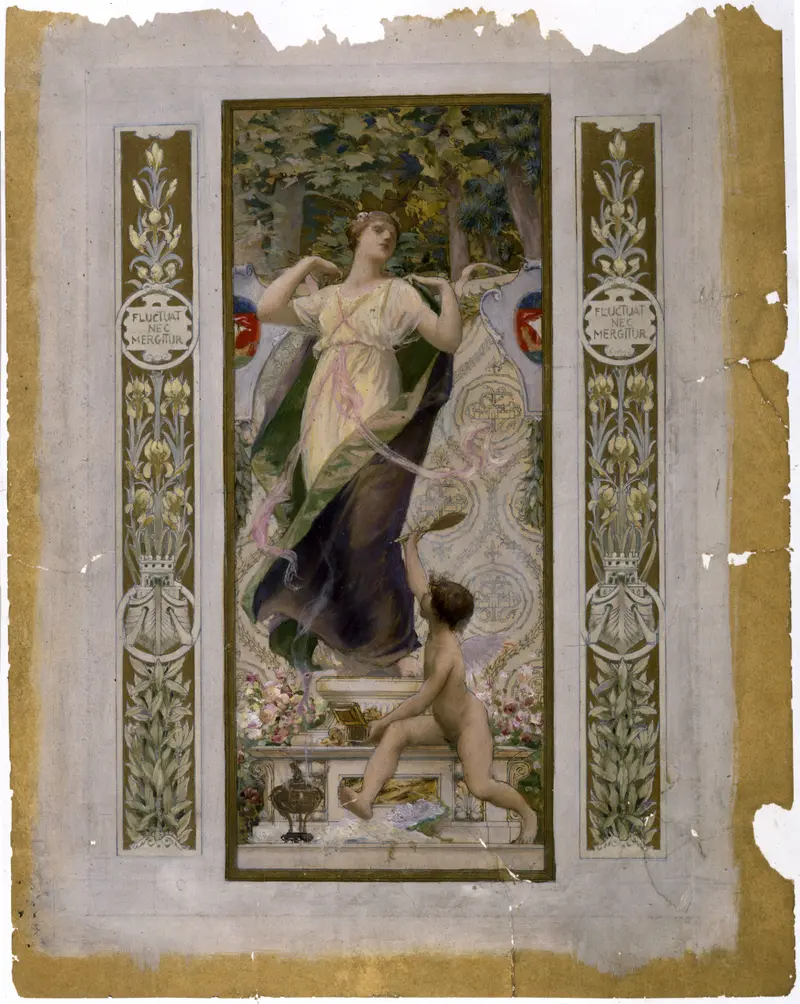
Esquisse pour l'escalier des Fêtes de l'Hôtel de ville de Paris , La Toilette féminine
Luc-Olivier Merson
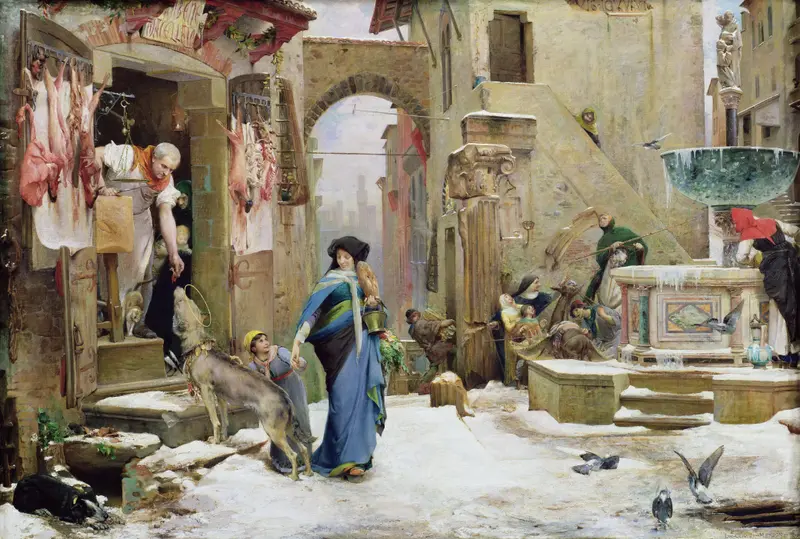
The Wolf of Gubbio
Luc-Olivier Merson
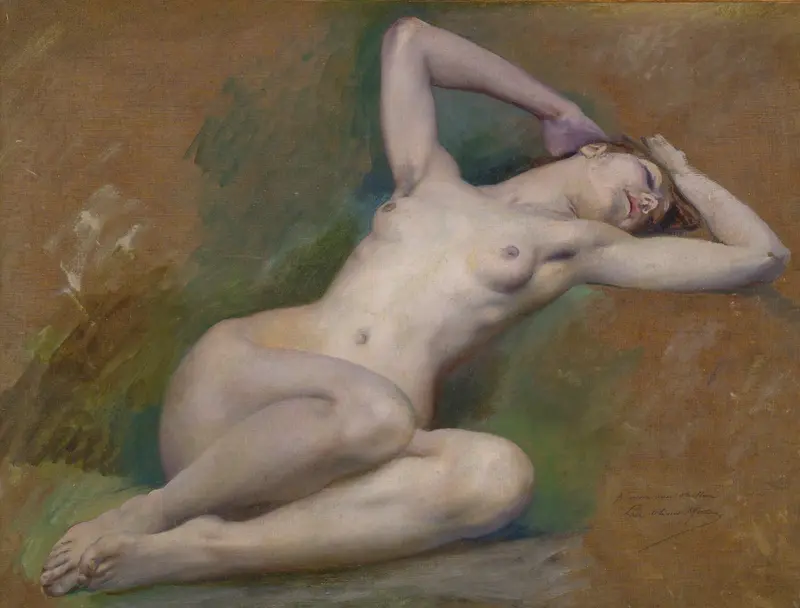
Luc Olivier Merson Study for the figure of Spring
Luc-Olivier Merson
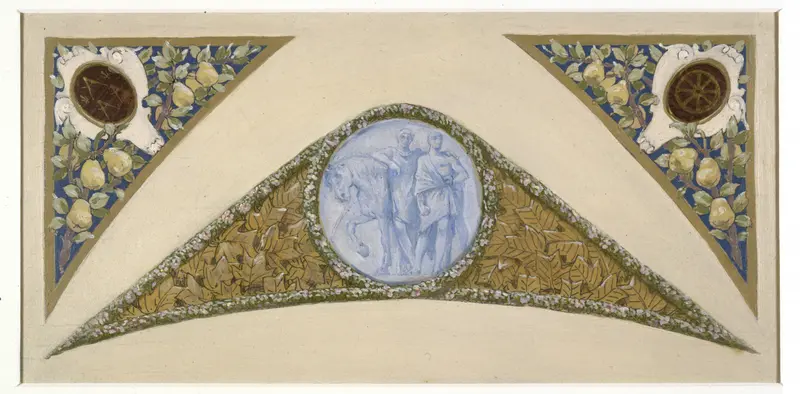
Esquisse pour l'escalier des Fêtes de l'Hôtel de Ville de Paris , Gémeaux
Luc-Olivier Merson
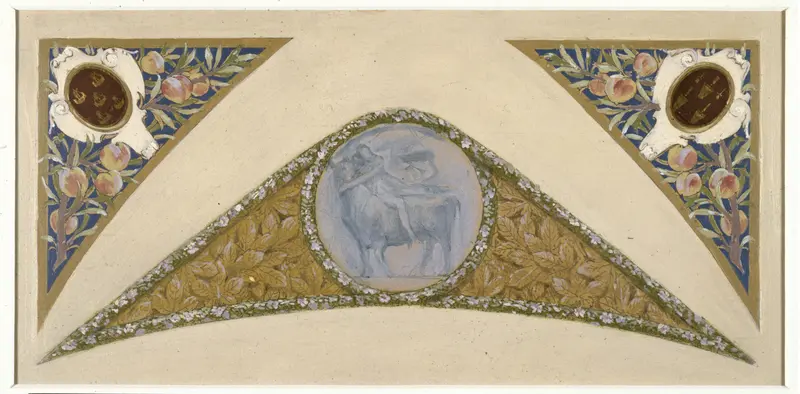
Esquisse pour l'escalier des Fêtes de l'Hôtel de Ville de Paris , Taureau
Luc-Olivier Merson
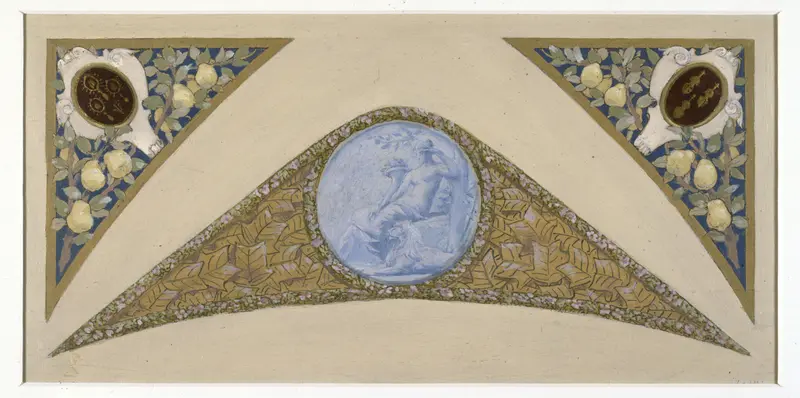
Esquisse pour l'escalier des Fêtes de l'Hôtel de Ville de Paris , Vierge
Luc-Olivier Merson
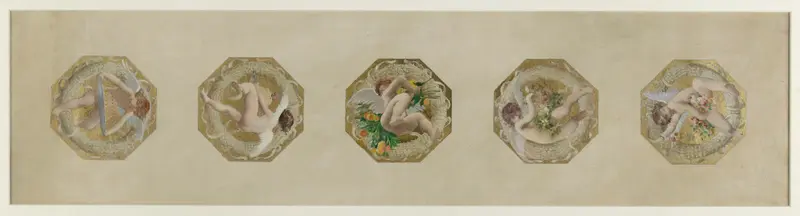
Esquisse pour l'Hôtel de Ville de Paris, escalier des Fêtes , les génies des fêtes
Luc-Olivier Merson
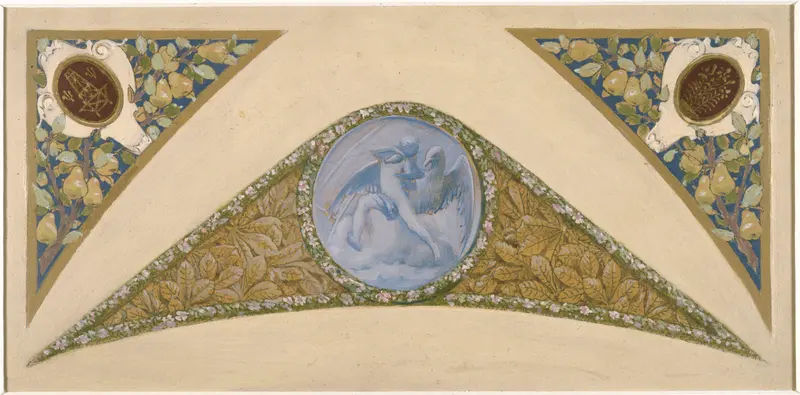
Esquisse pour l'escalier des Fêtes de l'Hôtel de Ville de Paris , Verseau
Luc-Olivier Merson
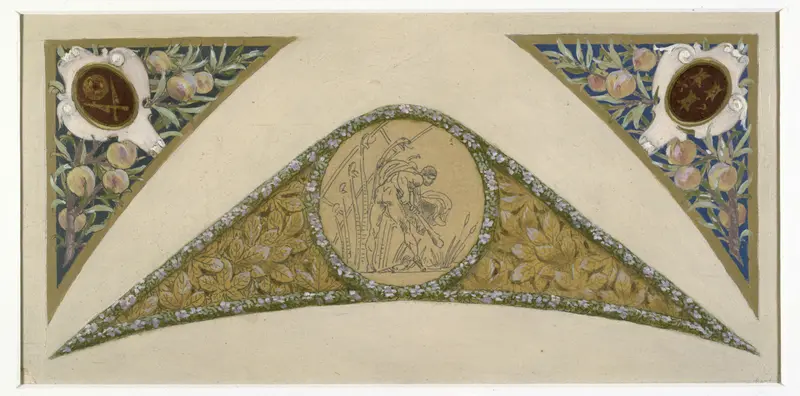
Esquisse pour l'escalier des Fêtes de l'Hôtel de Ville de Paris , Scorpion
Luc-Olivier Merson





