
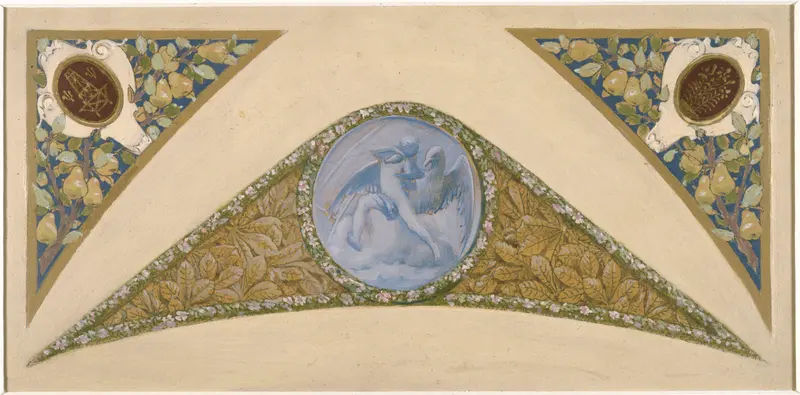
Esquisse pour l'escalier des fêtes de l'Hôtel de Ville de Paris , Juin — History & Facts
A feast of allegory and ornament, this ceiling design by Luc-Olivier Merson draws the viewer into a world where architecture and painting meet in celebration. The eye is immediately caught by the symmetry: four radiating arms divide the square, each quadrant alive with classical figures and curling foliage, as if the very air of the Hôtel de Ville were meant to bloom with myth and meaning. At every corner, pairs of figures—some draped, some winged—lean in, whispering secrets across the void, their gestures guiding us from one painted plaque to the next.
The palette is delicate, almost porcelain, with soft pinks and cool blues lending the whole scene a sense of cultivated refinement. Look closer, and the careful placement of each figure and garland becomes a dance, each detail an invitation to linger. This work belongs to the late nineteenth century’s grand tradition of decorative schemes for public buildings, when artists like Merson were called upon to create visual narratives that would ennoble civic spaces. Between 1888 and 1898, Paris was still healing from the scars of the Commune, and the Hôtel de Ville—rebuilt and newly adorned—stood as a symbol of renewal and pride.
Such esquisses were not merely technical exercises; they were proposals for how history, myth, and the ideals of the Republic might be woven into the very ceilings above the heads of citizens. Today, preserved in the collection of Paris Musées, this design reminds us how even preparatory works can pulse with the ambitions and anxieties of their age. Let your gaze wander the painted borders, and imagine the ceiling as it might have been, high above the grand staircase, a silent chorus to every step.
More Artworks by Luc-Olivier Merson

Esquisse pour l'escalier des fêtes de l'Hôtel de Ville de Paris , Bélier
Luc-Olivier Merson
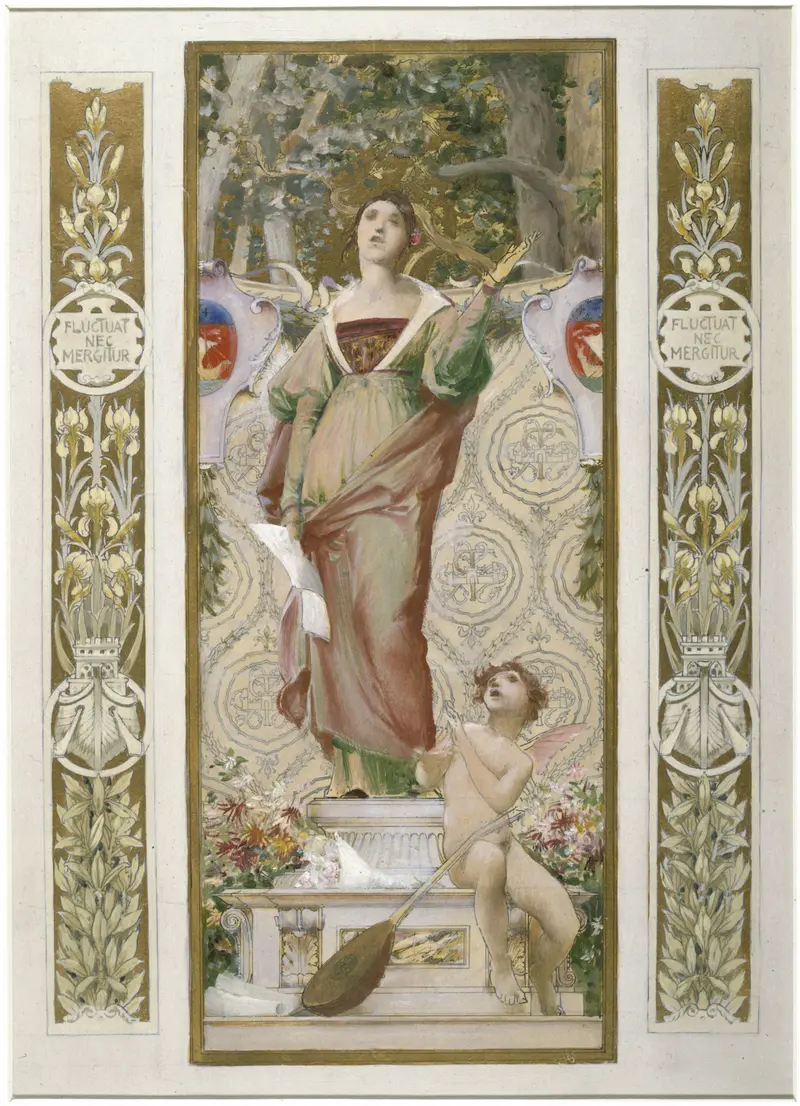
Esquisse pour l'escalier des Fêtes de l'Hôtel de Ville de Paris , Le Chant
Luc-Olivier Merson
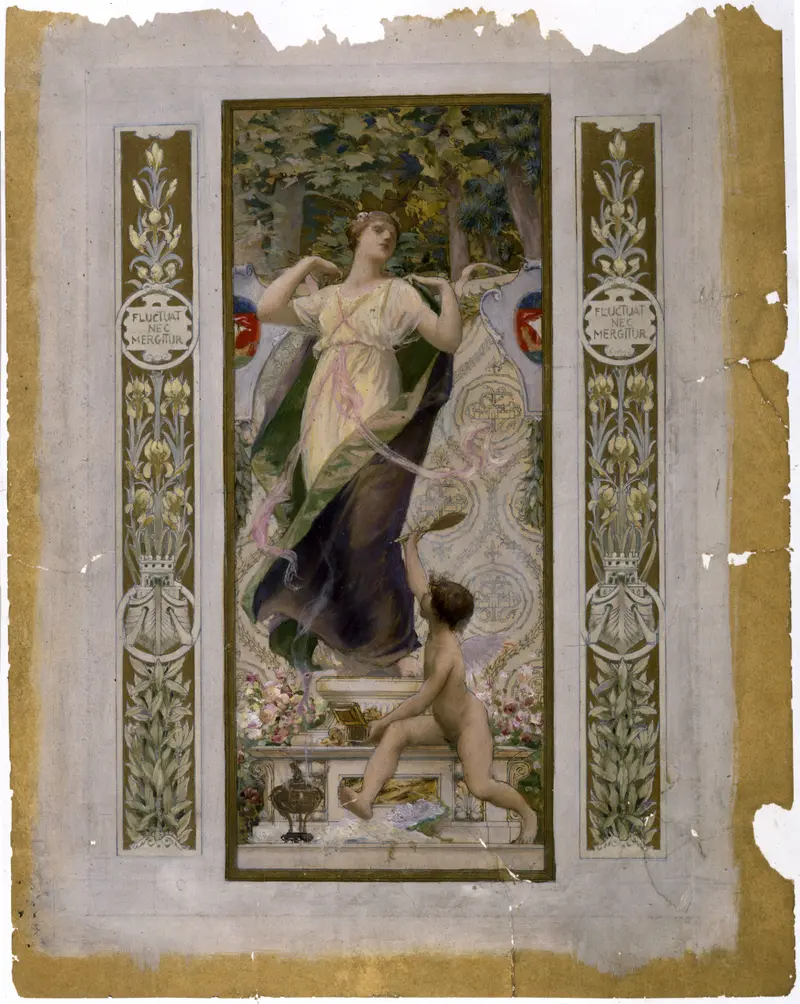
Esquisse pour l'escalier des Fêtes de l'Hôtel de ville de Paris , La Toilette féminine
Luc-Olivier Merson
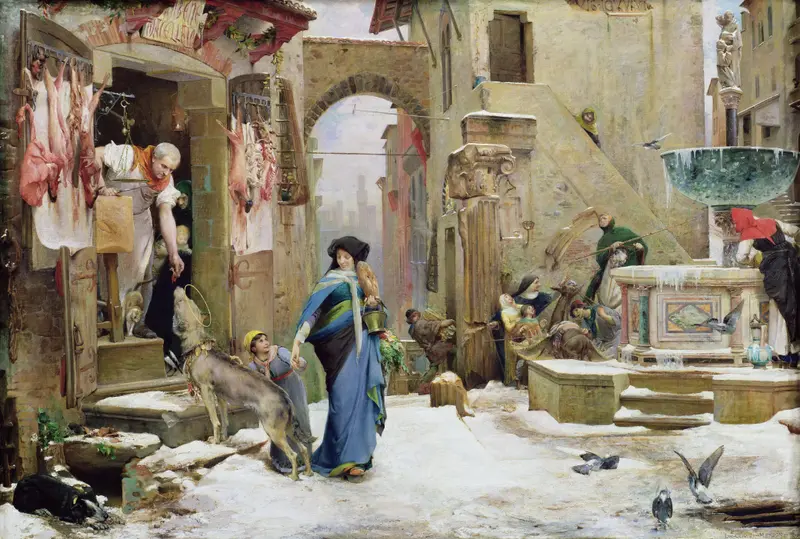
The Wolf of Gubbio
Luc-Olivier Merson
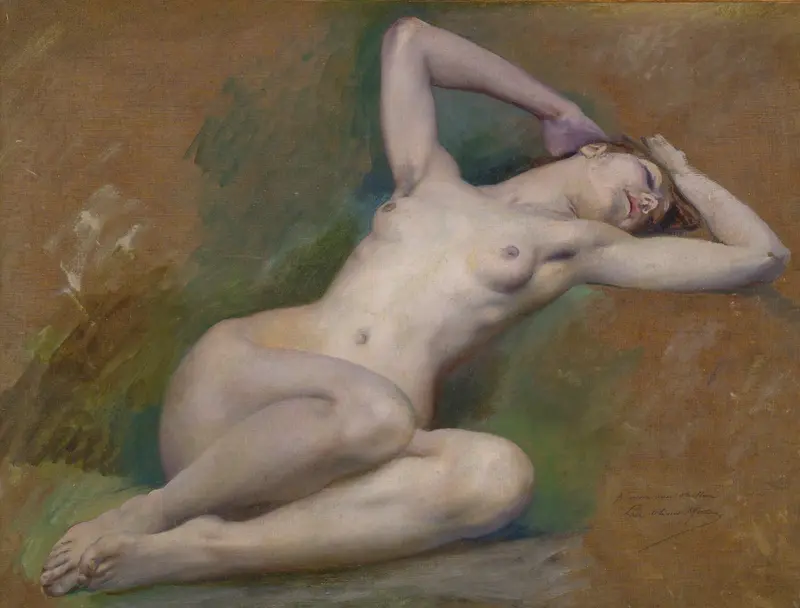
Luc Olivier Merson Study for the figure of Spring
Luc-Olivier Merson
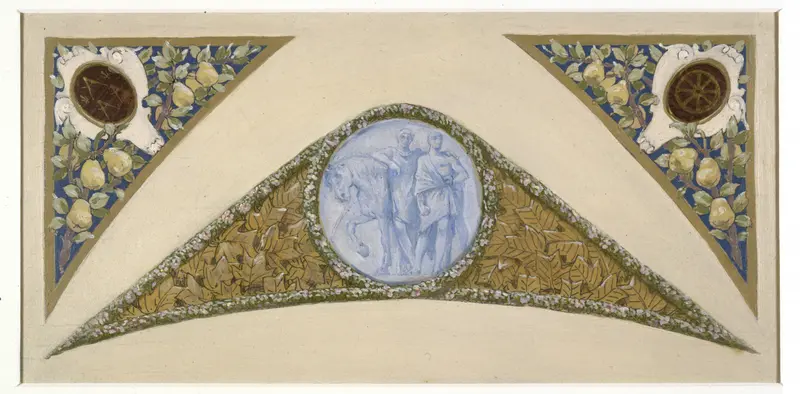
Esquisse pour l'escalier des Fêtes de l'Hôtel de Ville de Paris , Gémeaux
Luc-Olivier Merson
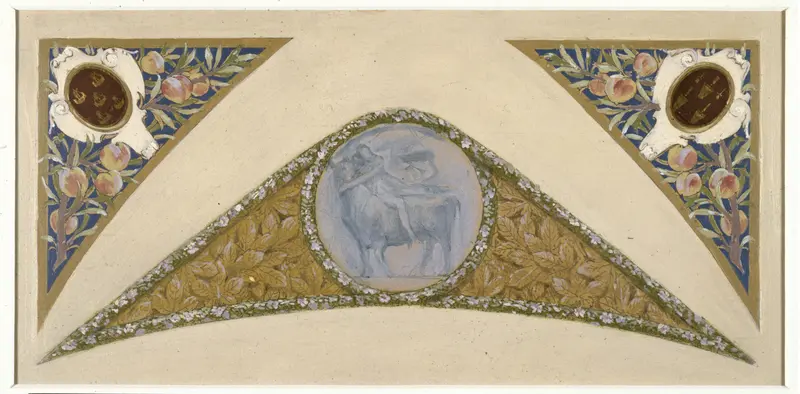
Esquisse pour l'escalier des Fêtes de l'Hôtel de Ville de Paris , Taureau
Luc-Olivier Merson
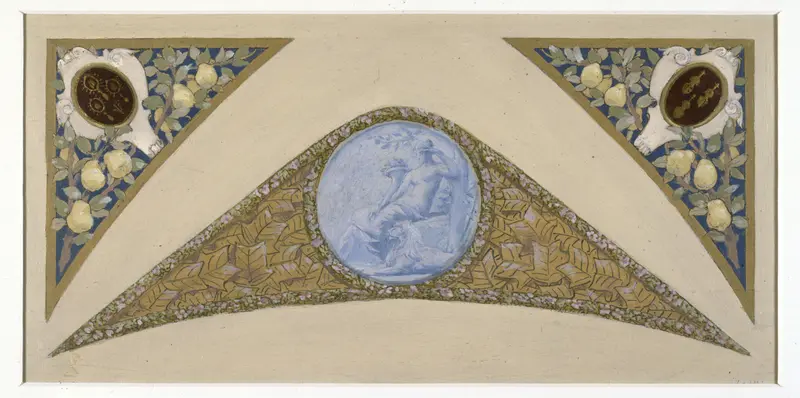
Esquisse pour l'escalier des Fêtes de l'Hôtel de Ville de Paris , Vierge
Luc-Olivier Merson
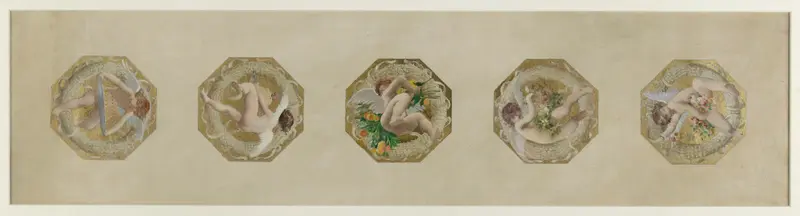
Esquisse pour l'Hôtel de Ville de Paris, escalier des Fêtes , les génies des fêtes
Luc-Olivier Merson
Esquisse pour l'escalier des Fêtes de l'Hôtel de Ville de Paris , Verseau
Luc-Olivier Merson





