
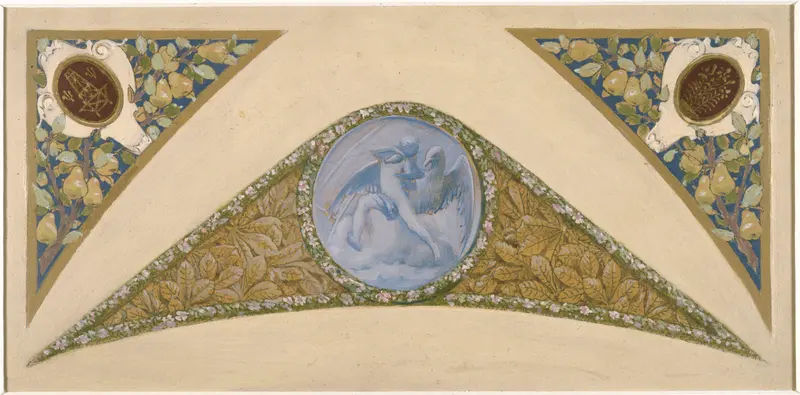
Esquisse pour l'escalier des Fêtes de l'Hôtel de Ville de Paris , Scorpion — History & Facts
What first catches the eye in Esquisse pour l'escalier des Fêtes de l'Hôtel de Ville de Paris , Scorpion is its careful orchestration of form and ornament, a design that seems to invite the viewer into the world of grand civic decoration. At the center, a delicate, almost ghostly line drawing of a mythic figure—muscular, poised, and intent—emerges from a field of reeds. This is not a finished painting but a proposal, a vision for something larger, and every detail is a clue to its intended grandeur: the triangular framing, the garland of tiny flowers, and the lush foliage that borders the central scene all speak to a decorative scheme meant to harmonize with architecture.
The two medallions in the upper corners, each encased in a white cartouche and surrounded by fruiting branches, hint at heraldry or astrological symbolism, their emblems rendered with a precision that rewards close inspection. Created in 1888 by Luc-Olivier Merson, this work belongs to a moment when artists were called upon to embellish the great public buildings of Paris with allegory and myth. The Hôtel de Ville, restored and redecorated after the turmoil of the Commune, became a showcase for the talents of painters like Merson, who moved fluidly between easel painting, illustration, and mural design. Such esquisses were both working tools and persuasive arguments, bridging the world of the studio and the ceremonial spaces of the city.
While history has kept few traces of the finished decorations themselves, this surviving sketch—now in the care of Paris Musées—offers a rare glimpse into the imagination and ambitions of the late nineteenth-century decorative arts. Stand before it, and you are drawn not just into a single image, but into the vanished grandeur of a public dream.
More Artworks by Luc-Olivier Merson

Esquisse pour l'escalier des fêtes de l'Hôtel de Ville de Paris , Bélier
Luc-Olivier Merson
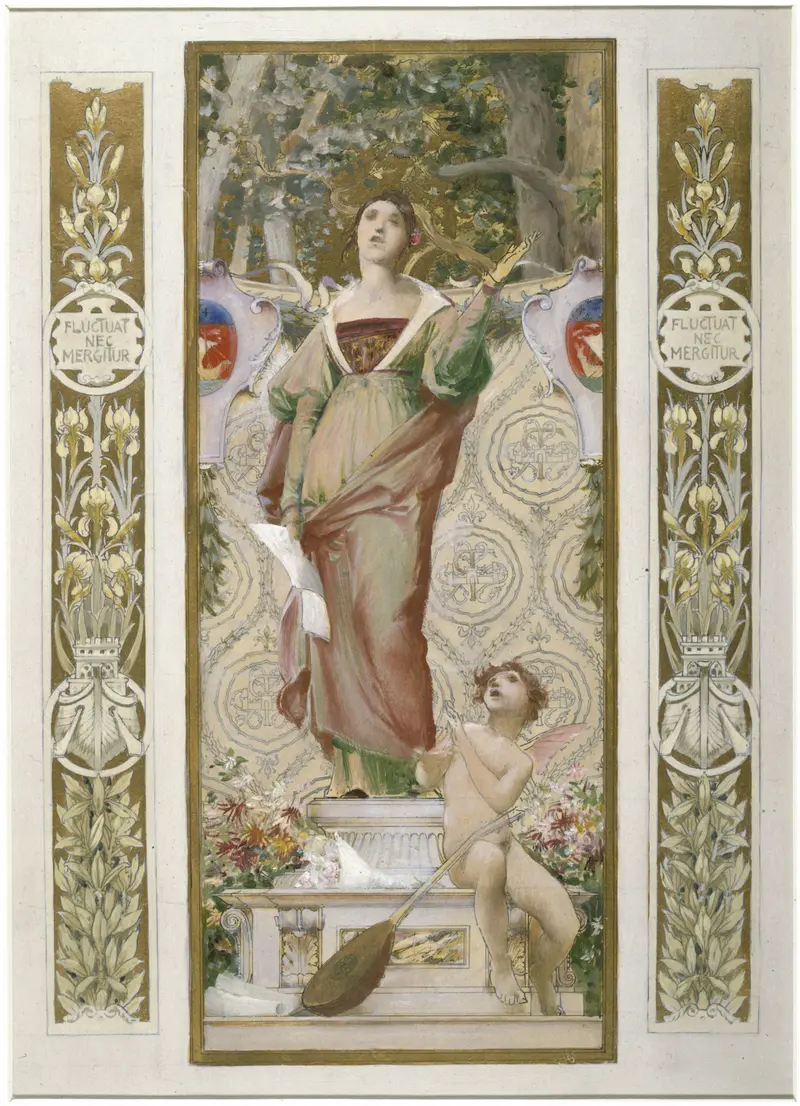
Esquisse pour l'escalier des Fêtes de l'Hôtel de Ville de Paris , Le Chant
Luc-Olivier Merson
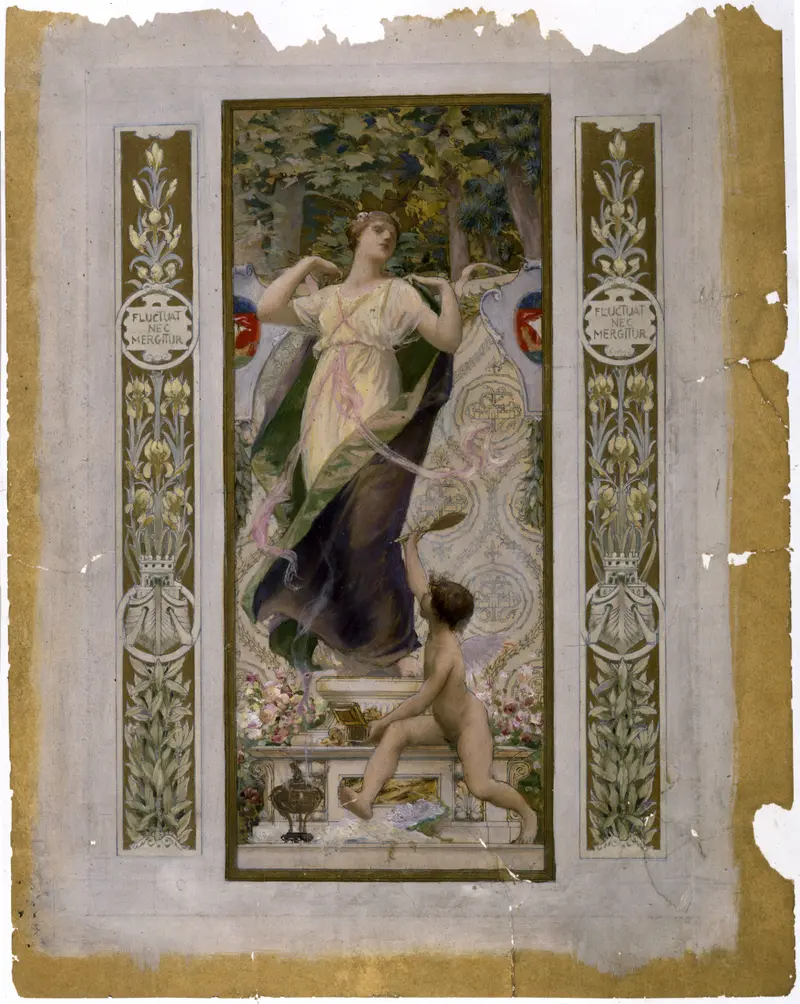
Esquisse pour l'escalier des Fêtes de l'Hôtel de ville de Paris , La Toilette féminine
Luc-Olivier Merson
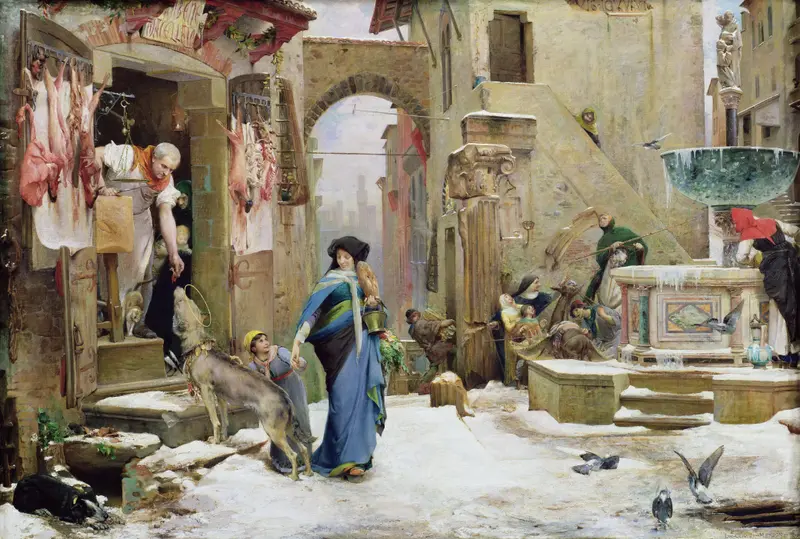
The Wolf of Gubbio
Luc-Olivier Merson
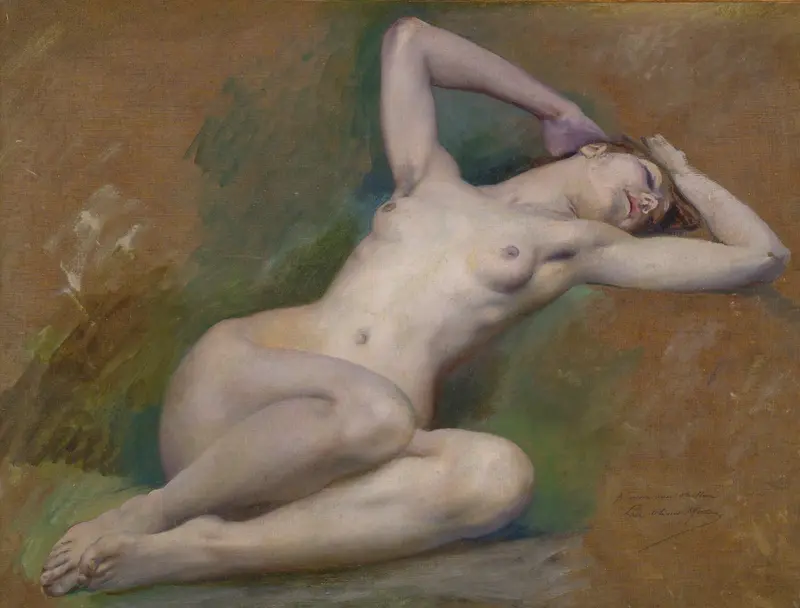
Luc Olivier Merson Study for the figure of Spring
Luc-Olivier Merson
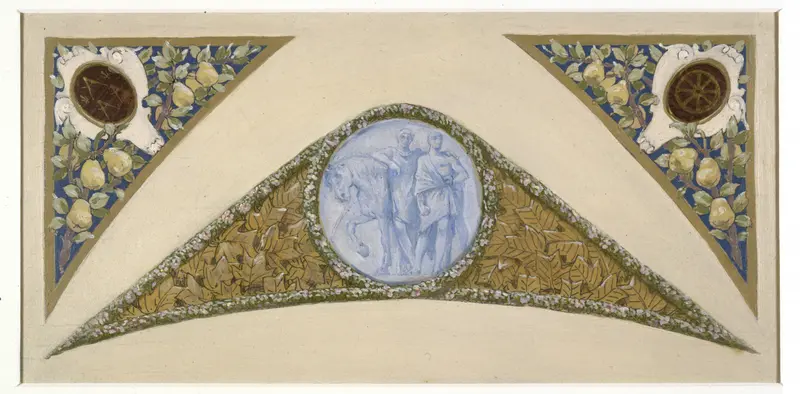
Esquisse pour l'escalier des Fêtes de l'Hôtel de Ville de Paris , Gémeaux
Luc-Olivier Merson
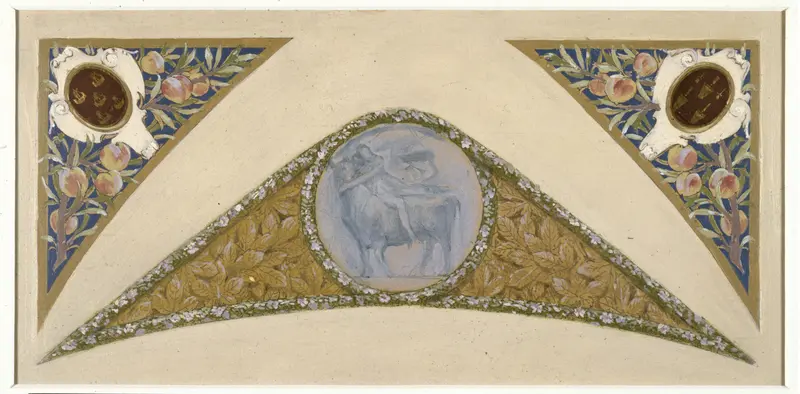
Esquisse pour l'escalier des Fêtes de l'Hôtel de Ville de Paris , Taureau
Luc-Olivier Merson
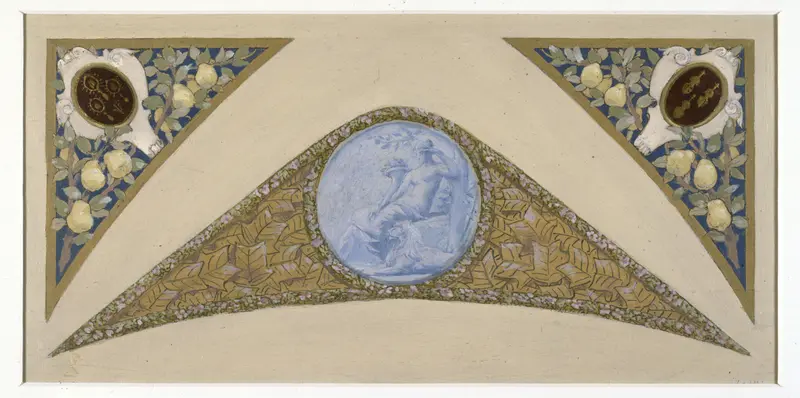
Esquisse pour l'escalier des Fêtes de l'Hôtel de Ville de Paris , Vierge
Luc-Olivier Merson
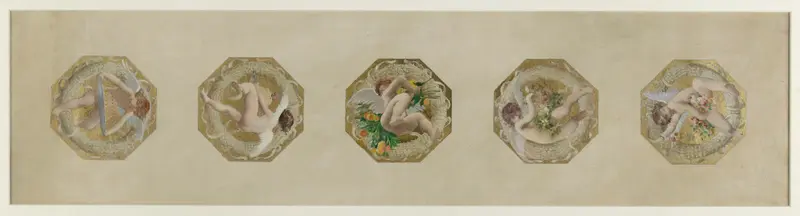
Esquisse pour l'Hôtel de Ville de Paris, escalier des Fêtes , les génies des fêtes
Luc-Olivier Merson
Esquisse pour l'escalier des Fêtes de l'Hôtel de Ville de Paris , Verseau
Luc-Olivier Merson





