
Esquisse pour l'escalier des Fêtes de l'Hôtel de Ville de Paris , Poisson — History & Facts
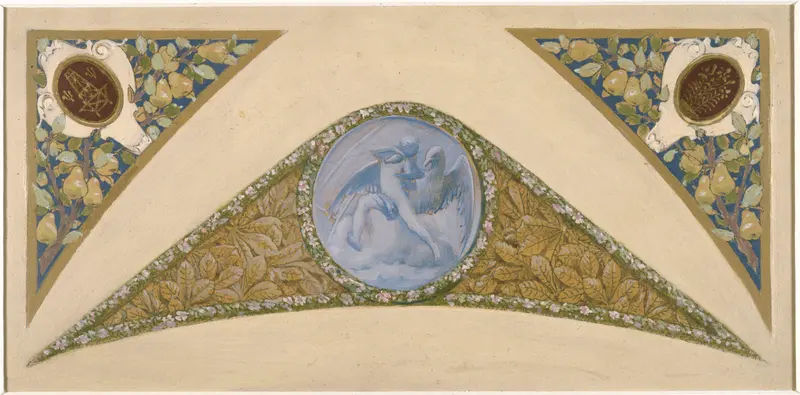
A swirling, almost dreamlike figure emerges from the cool blue medallion at the heart of Esquisse pour l'escalier des Fêtes de l'Hôtel de Ville de Paris, Poisson, inviting the eye to linger on its mysterious dance. This central motif, rendered in a soft monochrome, feels like a fleeting vision—its lines and curves suggesting movement, perhaps even transformation, as if the figure is both of the water and rising from it. Around this, a garland of delicate blossoms frames the scene, while the surrounding panels burst with ripening fruit and curling leaves, their warm golds and greens a lively counterpoint to the medallion’s calm.
At each corner, a heraldic shield—one bearing a spade and pickaxe, the other a hammer and tongs—anchors the composition, hinting at industry and labor. Created by Luc-Olivier Merson between 1888 and 1898, this work belongs to a world where public buildings were canvases for allegory and civic pride. In late nineteenth-century France, artists like Merson were often called upon to design grand decorative schemes for municipal spaces, blending symbolism, nature, and the virtues of work into a visual language that citizens could read as they ascended a staircase or crossed a hall. The Hôtel de Ville in Paris, rebuilt after the fires of 1871, became a showcase for such collaborations.
While history has kept few traces of this particular sketch’s journey, its presence in the Paris Musées collection today lets us glimpse the ambitions—and the artistry—of a city eager to celebrate both myth and modernity. Look again, and see how every detail is a quiet argument for beauty in the spaces of everyday life.
More Artworks by Luc-Olivier Merson

Esquisse pour l'escalier des fêtes de l'Hôtel de Ville de Paris , Bélier
Luc-Olivier Merson
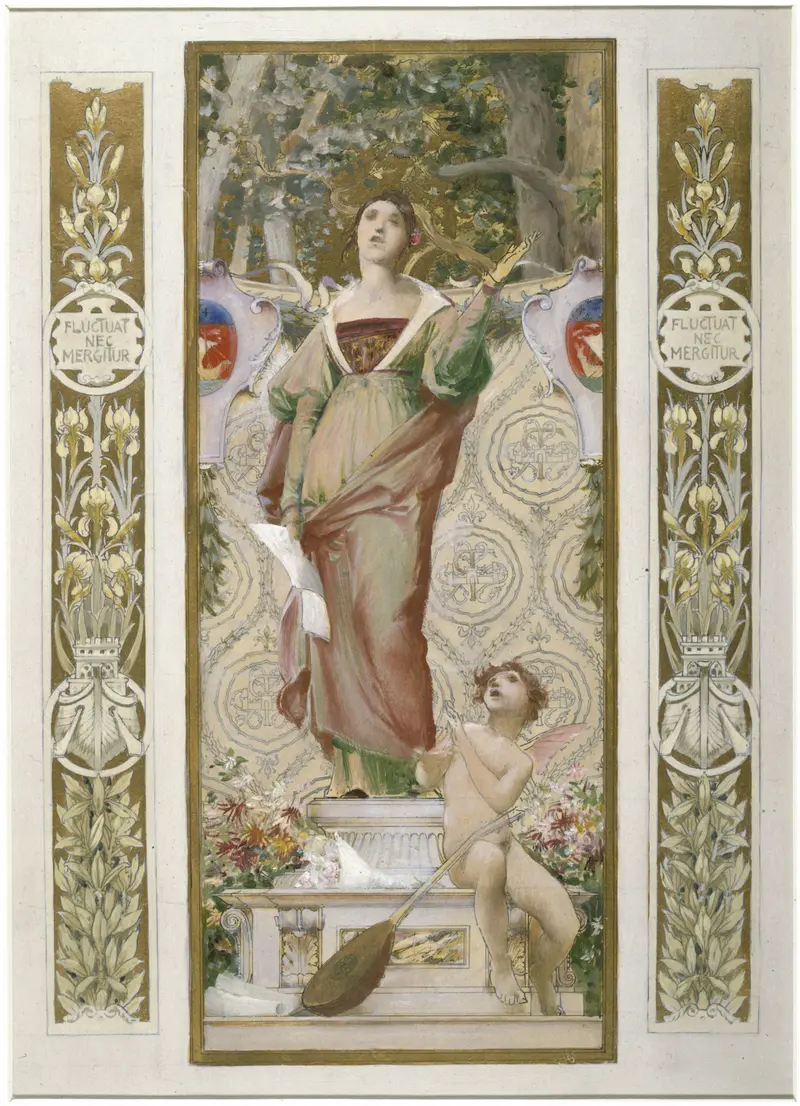
Esquisse pour l'escalier des Fêtes de l'Hôtel de Ville de Paris , Le Chant
Luc-Olivier Merson
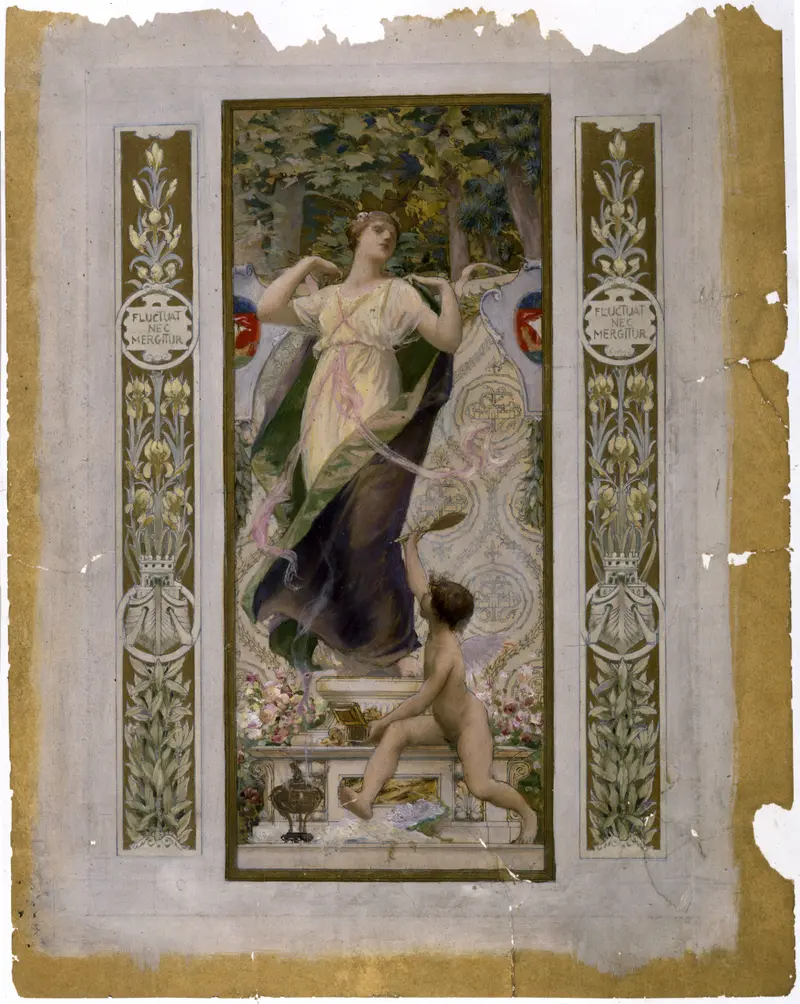
Esquisse pour l'escalier des Fêtes de l'Hôtel de ville de Paris , La Toilette féminine
Luc-Olivier Merson
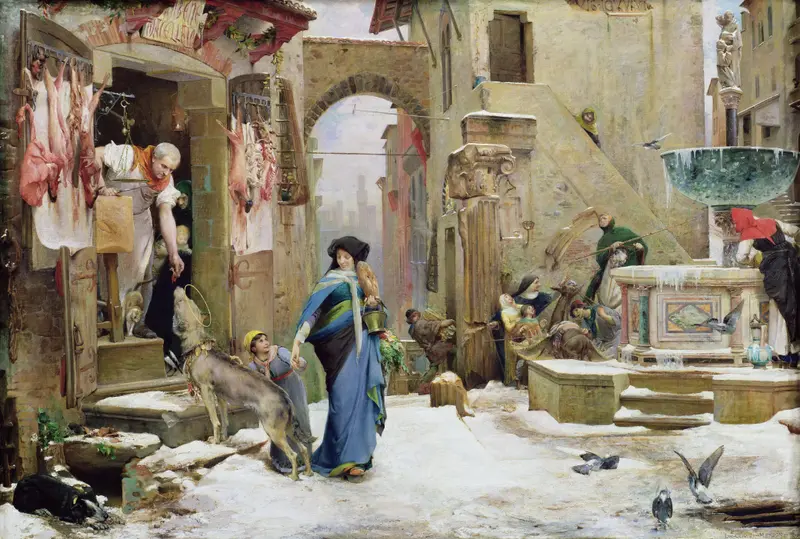
The Wolf of Gubbio
Luc-Olivier Merson
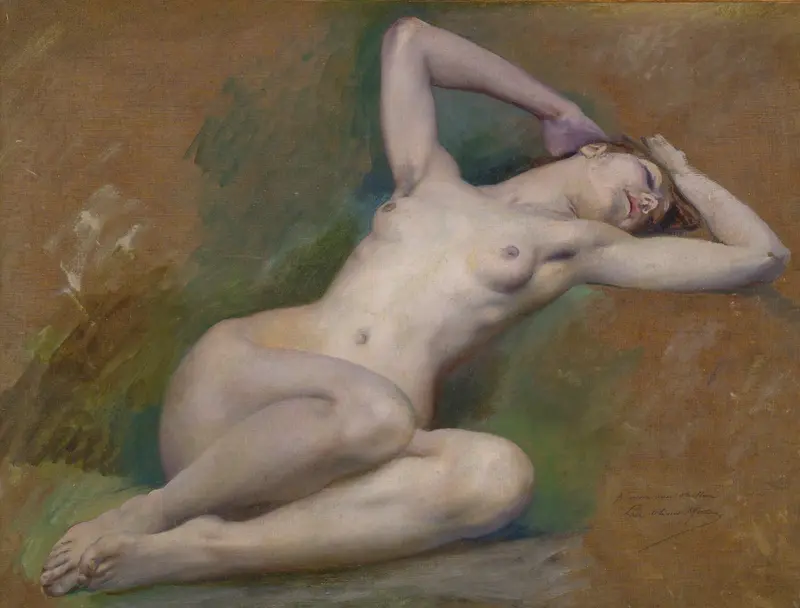
Luc Olivier Merson Study for the figure of Spring
Luc-Olivier Merson
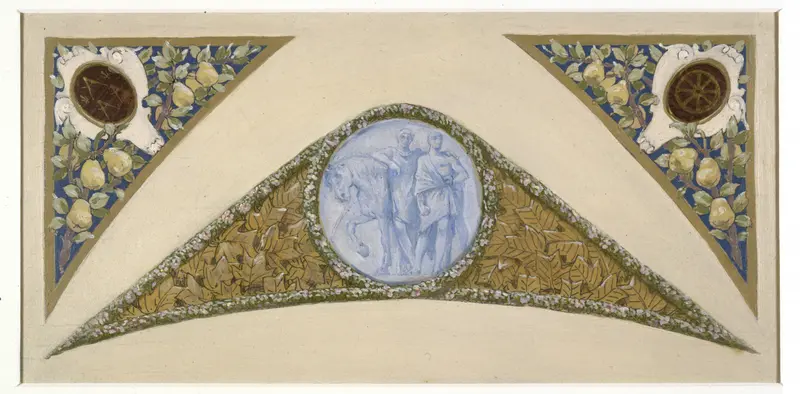
Esquisse pour l'escalier des Fêtes de l'Hôtel de Ville de Paris , Gémeaux
Luc-Olivier Merson
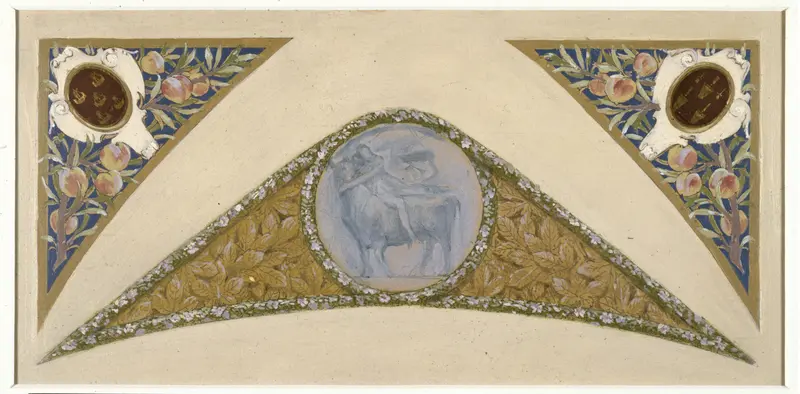
Esquisse pour l'escalier des Fêtes de l'Hôtel de Ville de Paris , Taureau
Luc-Olivier Merson
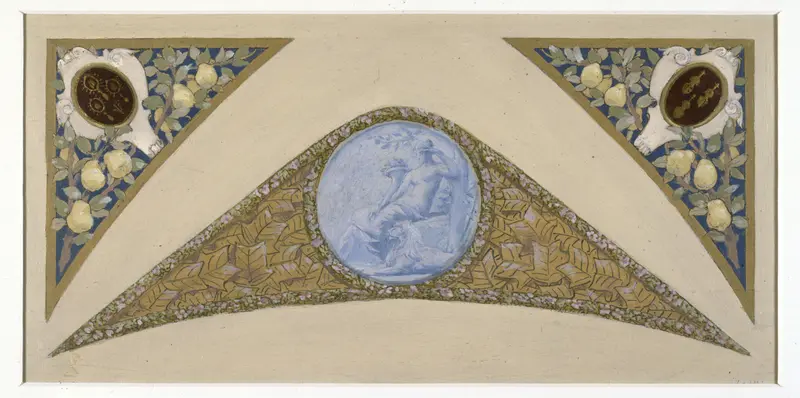
Esquisse pour l'escalier des Fêtes de l'Hôtel de Ville de Paris , Vierge
Luc-Olivier Merson
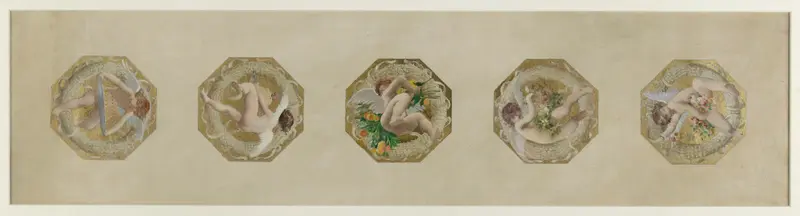
Esquisse pour l'Hôtel de Ville de Paris, escalier des Fêtes , les génies des fêtes
Luc-Olivier Merson
Esquisse pour l'escalier des Fêtes de l'Hôtel de Ville de Paris , Verseau
Luc-Olivier Merson





