
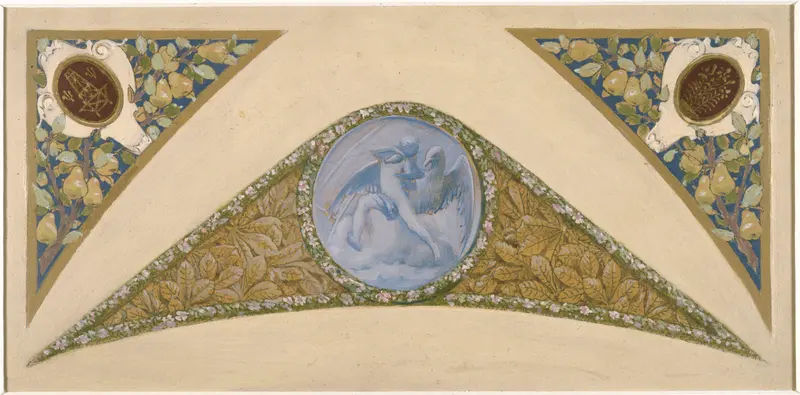
Esquisse pour l'escalier des Fêtes des l'Hôtel de ville de Paris , Cancer — History & Facts
A sweep of pale blue draws the eye to the center, where a figure—almost spectral—emerges within a roundel, poised in a moment of myth or allegory. The surrounding field is not empty but bordered with a delicate garland of pink blossoms and intricate golden foliage, their stylized forms recalling the decorative ambitions of late nineteenth-century Paris. At each upper corner, branches heavy with yellow fruit and cool leaves frame medallions bearing cryptic emblems, adding a note of heraldic mystery.
The composition is measured and intentional: the triangular format, the framing of the central figure, and the careful balance of color and ornament all speak to a design meant for a grand architectural setting, inviting the viewer to imagine its place high above, perhaps crowning a ceremonial staircase. Works like this, created between 1888 and 1898 by Luc-Olivier Merson, belong to a moment when Paris was remaking itself, and artists were called upon to clothe civic spaces in new mythologies. The Hôtel de Ville, rebuilt after the fires of the Commune, became a showcase for such decorative schemes—where allegory, zodiac, and natural abundance could mingle in painted plaster and gilded wood. History has kept few traces of the precise intentions behind each sketch, and the medium here remains uncertain, but the work survives in the Paris Musées collection as a testament to the era’s fusion of symbolism and civic pride.
Pause before the image and let your gaze travel from the enigmatic figure outward, following the artist’s own journey from myth to ornament.
More Artworks by Luc-Olivier Merson

Esquisse pour l'escalier des fêtes de l'Hôtel de Ville de Paris , Bélier
Luc-Olivier Merson
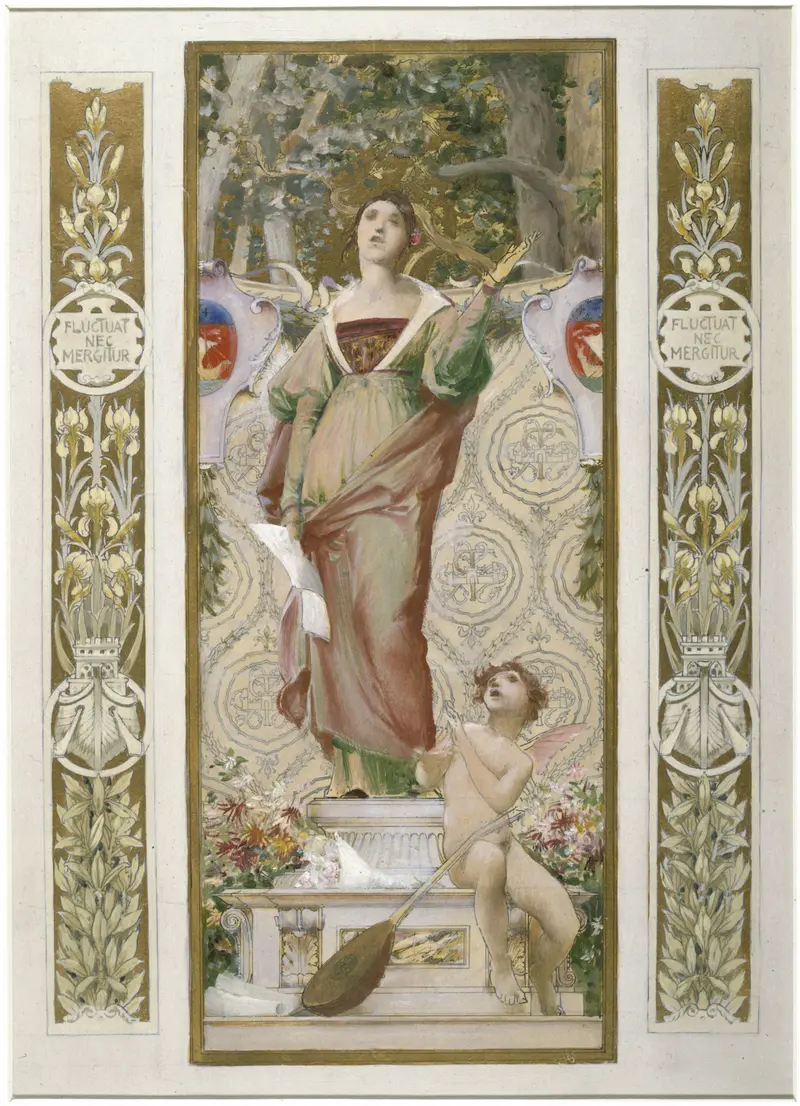
Esquisse pour l'escalier des Fêtes de l'Hôtel de Ville de Paris , Le Chant
Luc-Olivier Merson
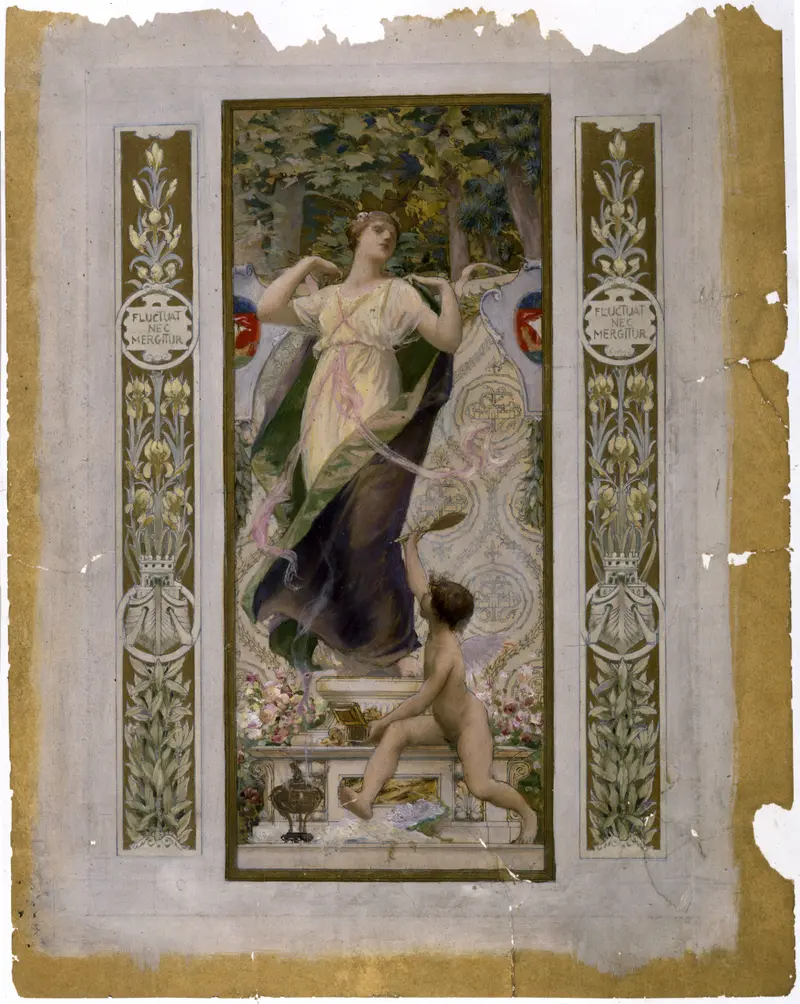
Esquisse pour l'escalier des Fêtes de l'Hôtel de ville de Paris , La Toilette féminine
Luc-Olivier Merson
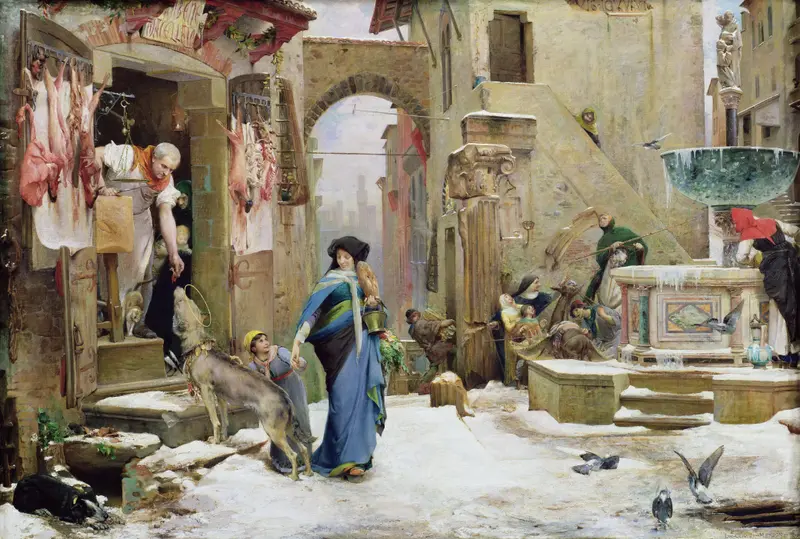
The Wolf of Gubbio
Luc-Olivier Merson
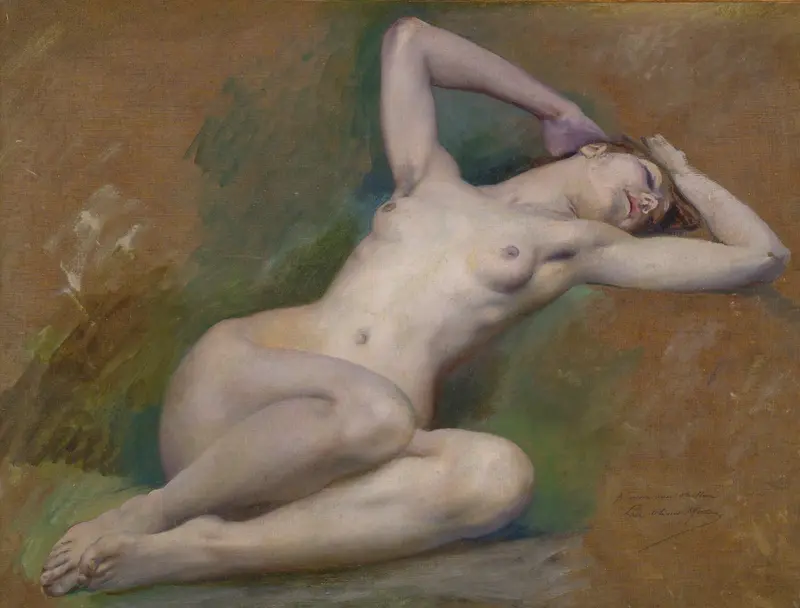
Luc Olivier Merson Study for the figure of Spring
Luc-Olivier Merson
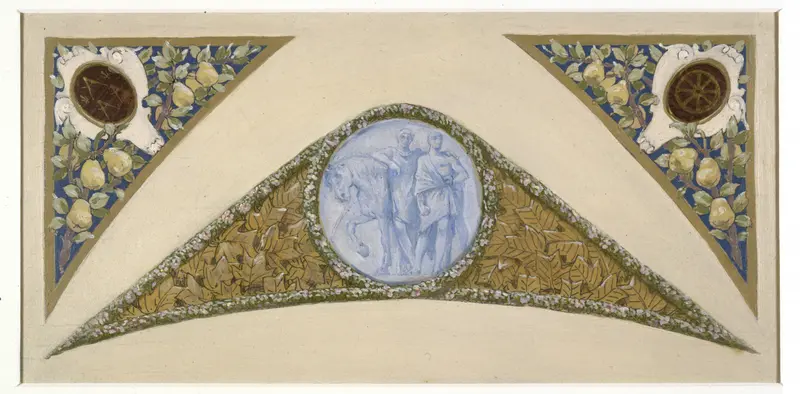
Esquisse pour l'escalier des Fêtes de l'Hôtel de Ville de Paris , Gémeaux
Luc-Olivier Merson
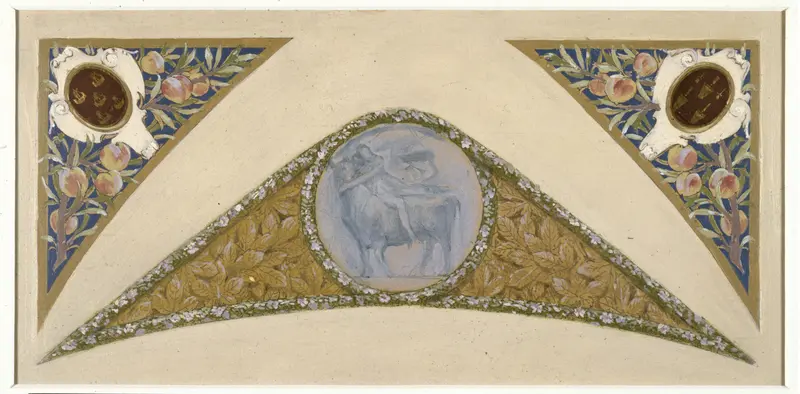
Esquisse pour l'escalier des Fêtes de l'Hôtel de Ville de Paris , Taureau
Luc-Olivier Merson
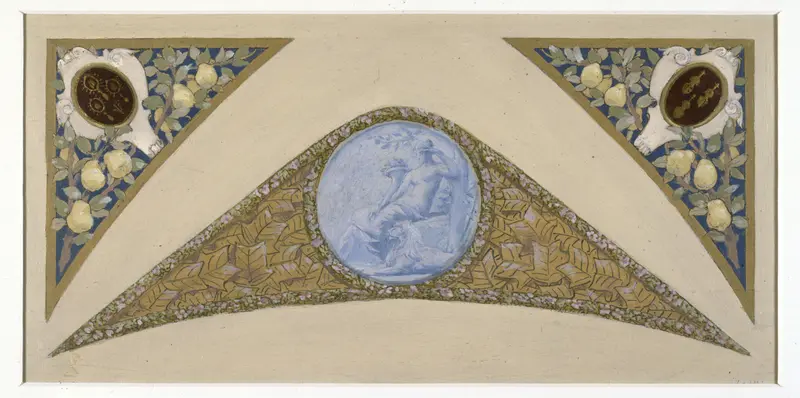
Esquisse pour l'escalier des Fêtes de l'Hôtel de Ville de Paris , Vierge
Luc-Olivier Merson
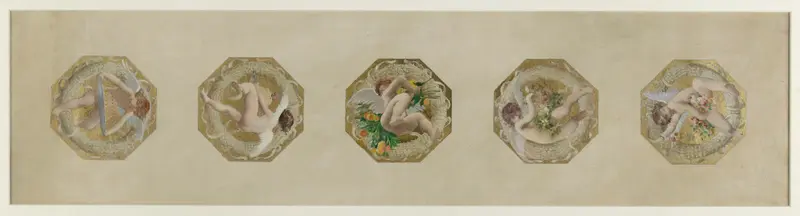
Esquisse pour l'Hôtel de Ville de Paris, escalier des Fêtes , les génies des fêtes
Luc-Olivier Merson
Esquisse pour l'escalier des Fêtes de l'Hôtel de Ville de Paris , Verseau
Luc-Olivier Merson





