
Esther at the Palace Gate — History & Facts
In 1475, Sandro Botticelli turned his attention to a rare Old Testament subject for Florentine art: the moment when Esther, a Jewish queen in ancient Persia, risked her life to save her people. This painting, Esther at the Palace Gate, stands out as one of the earliest Italian depictions of Esther’s story, a narrative more commonly found in Northern European art of the period. Its commission remains a mystery, but its subject—a woman’s courage in the face of royal power—would have resonated in a city where political intrigue and the role of women in public life were hotly debated.
The work’s date places it at the dawn of Botticelli’s mature style, just before his celebrated Adoration of the Magi. At the heart of the scene, Esther stands hesitantly at the threshold of King Ahasuerus’s palace, her body turned as if caught between fear and resolve. She clutches her robe, a gesture that signals both humility and the gravity of her mission: to plead for her people’s lives after a decree of destruction. The palace gates loom behind her, rendered with the crisp architectural lines and perspective that Botticelli had begun to master.
Light falls across Esther’s face, highlighting her isolation and the moral weight of her decision. Compared to Rembrandt’s later, more introspective treatment of Esther, Botticelli’s version focuses on the public, almost theatrical moment of confrontation, drawing the viewer into the drama of the threshold. The painting’s early provenance is unclear, and scholars continue to debate whether it was intended for a private home or a small devotional space. No contemporary records mention its commission, and its medium remains uncertain, though it is likely tempera on panel, typical for Florentine works of the 1470s.
Over the centuries, Esther at the Palace Gate has been overshadowed by Botticelli’s mythological masterpieces, yet it offers a rare glimpse into his engagement with biblical heroines. Today, the painting is held in a private collection, its appearance in exhibitions a rare event for scholars and the public alike. Its survival and attribution to Botticelli are a testament to the enduring interest in stories of courage and moral choice.
More Artworks by Sandro Botticelli

Virgin and Child
Sandro Botticelli

Madonna and Child and the Young St John the Baptist
Sandro Botticelli

Madonna and Child with six angels and Saint John the Baptist as Child
Sandro Botticelli

Adoration of the Magi
Sandro Botticelli

Virgin and Child with the Young Saint John the Baptist
Sandro Botticelli
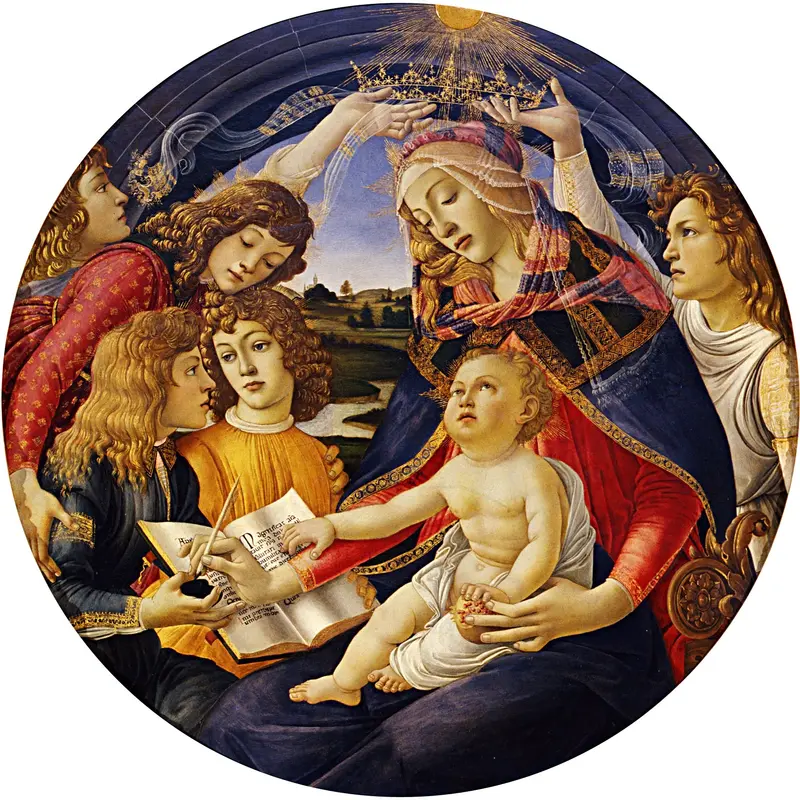
Madonna of the Magnificat
Sandro Botticelli
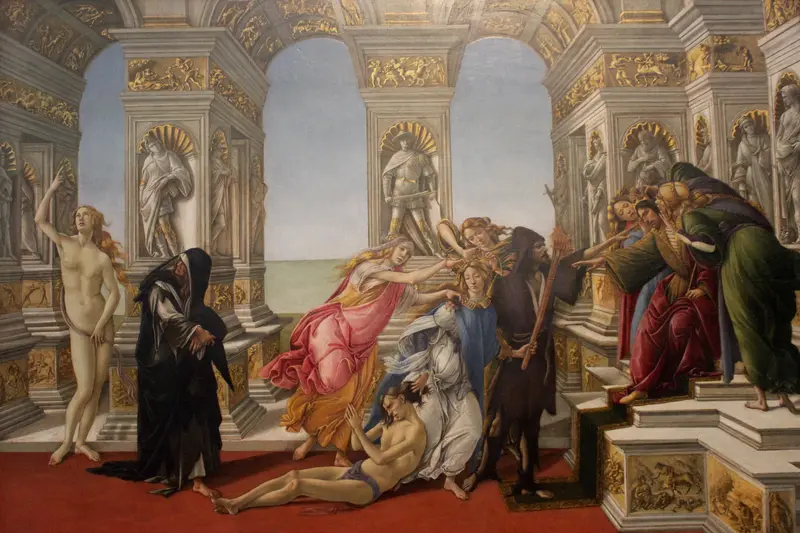
Calumny of Apelles
Sandro Botticelli

Portrait of a young man holding a roundel
Sandro Botticelli

The Trinity with Saint Mary Magdalene and Saint John the Baptist, the Archangel Raphael and Tobias
Sandro Botticelli

Idealized Portrait of a Lady (Portrait of Simonetta Vespucci as Nymph)
Sandro Botticelli





