
Etable près de Dieppe II — History & Facts
Is this a mirror — or a memory? The echo of past violence lingers within the stillness of the pastoral landscape, urging us to confront the tensions hidden beneath its serene surface. Look to the right at the bold strokes of blue and green, where the verdant fields rise and fall like silent waves beneath a brooding sky. The fields are punctuated by patches of vibrant color, an intentional choice that breathes life into the canvas while revealing an underlying disquiet. Notice how the figures in the foreground, seemingly caught in a moment of leisure, are rendered in darker hues, their silhouettes both alive and spectral against the landscape that surrounds them. The contrast between the idyllic setting and the somber tones of the figures speaks to a deeper emotional undercurrent, suggesting the fragility of peace in a world marked by turmoil.
Each brushstroke captures not just the beauty of nature, but a haunting reminder of the violence birthed from humanity’s struggles. The radiant colors, while evocative, serve a dual purpose; they mask the tension inherent in the scene, inviting a closer inspection of how tranquility can coexist with underlying strife. In 1885, Gauguin painted this work while living in France, a time marked by his growing discontent with the art establishment and the social realities surrounding him. He was seeking new artistic inspiration and meanings beyond the familiar, reflecting a period of intense exploration and critique of both society and self.
This canvas stands not only as a representation of the natural beauty near Dieppe but also as a testament to the dissonance between outward appearances and the truth waiting to be revealed.
More Artworks by Paul Gauguin
Browse all →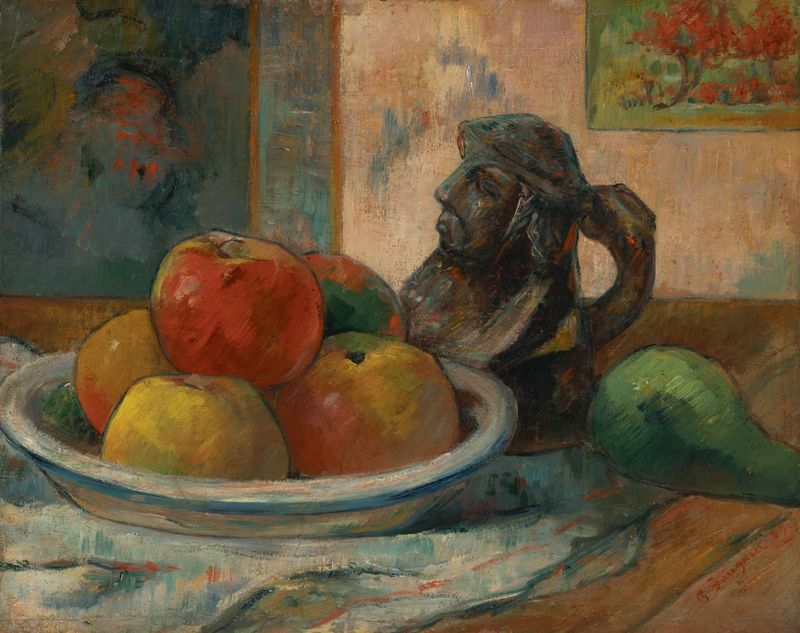
Still Life with Apples, a Pear, and a Ceramic Portrait Jug
Paul Gauguin
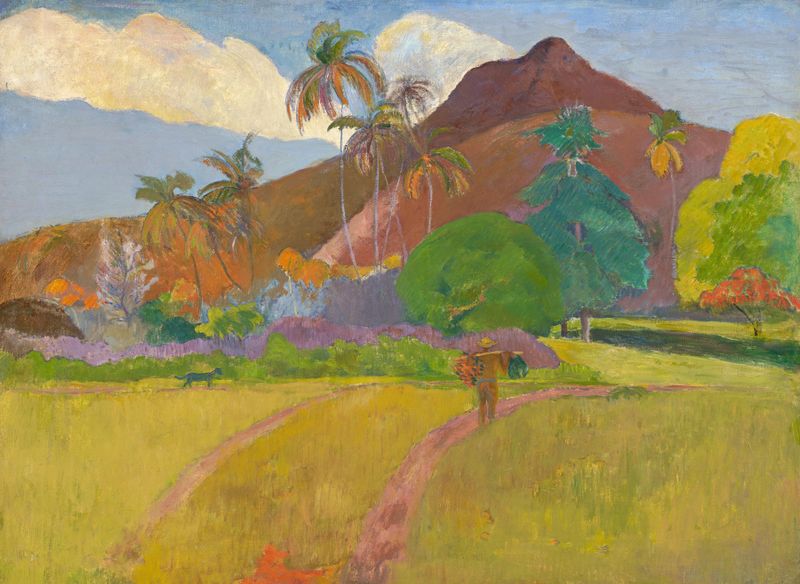
Tahitian Landscape
Paul Gauguin

Landscape near Pont-Aven
Paul Gauguin

No te aha oe riri (Why Are You Angry?)
Paul Gauguin
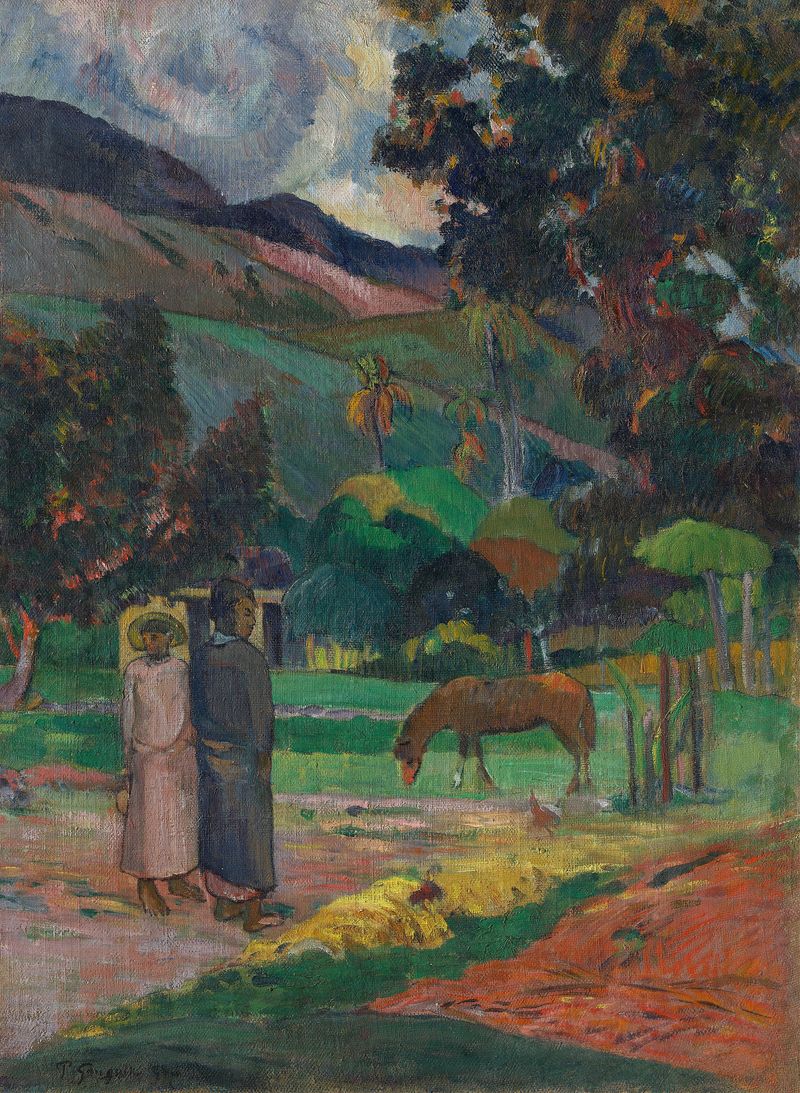
Tahitian Landscape
Paul Gauguin
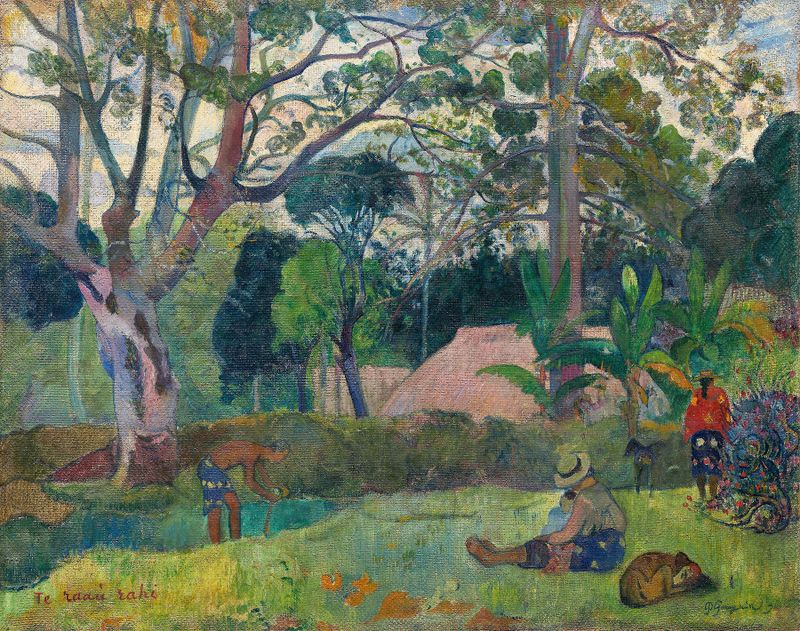
Te raau rahi (The Big Tree)
Paul Gauguin

Landscape at Le Pouldu
Paul Gauguin

Landscape of Brittany
Paul Gauguin

Poèmes Barbares
Paul Gauguin
Mahana no atua (Day of the God)
Paul Gauguin





