
Evening — History & Facts
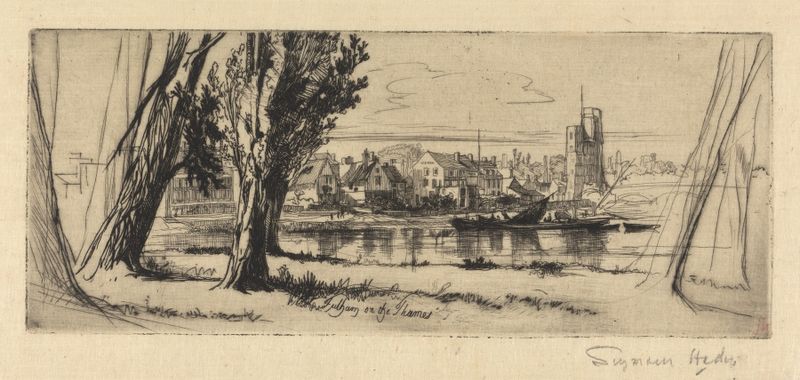
In the stillness of twilight, a world both tranquil and profound invites reflection on the nature of faith and solitude. Look to the left at the soft, fading light that wraps around the horizon, casting an ethereal glow over the landscape. Your eyes are drawn to the subtle interplay of shadows and hues, where the deep blues of dusk mingle with warm earth tones. Notice how the delicate lines of the trees emerge from the background, their silhouettes reaching upward as if yearning for something beyond the visible, hinting at the spiritual dimension of the scene. Beneath the surface, the painting conveys a sense of quiet introspection.
The contrast between vibrant colors and darkened zones reflects the tension between hope and despair, suggesting a faith that exists even in the absence of light. Each brushstroke captures a moment where nature and emotion intertwine, signifying the unspoken prayers of a weary heart, and the acceptance of solitude as a path to understanding. In 1864, Francis Seymour Haden produced this work during a time when he was searching for his own voice amid the evolving landscape of art. Living in England, he embraced the etching medium, contributing to the printmaking revival.
His exploration of natural beauty and emotional depth resonated amidst a world grappling with industrial change and human isolation, marking a significant period in his artistic journey.
More Artworks by Francis Seymour Haden
Browse all →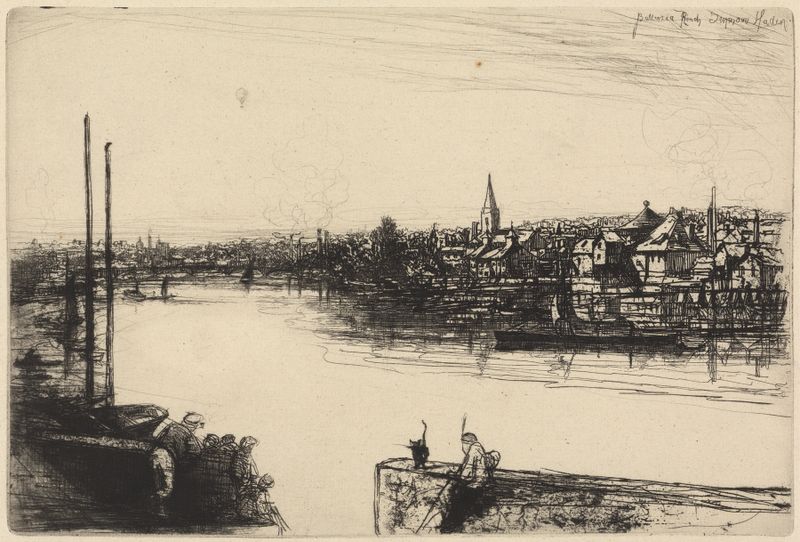
Battersea Reach
Francis Seymour Haden

Nine Barrow Down
Francis Seymour Haden
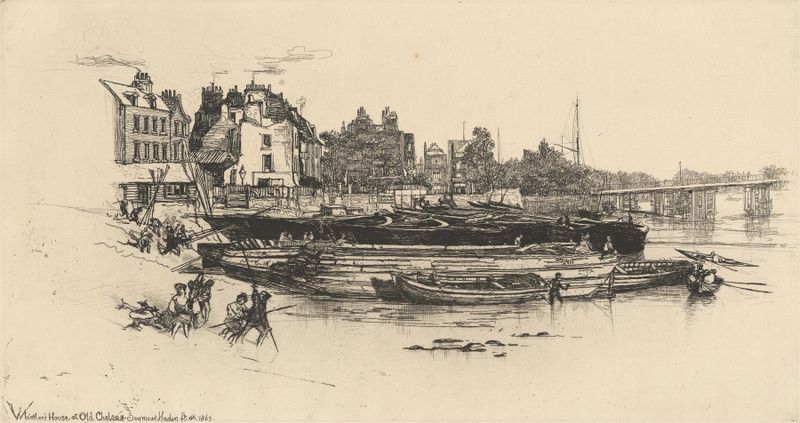
Whistler’s House at Old Chelsea
Francis Seymour Haden

The Mill-Wheel
Francis Seymour Haden
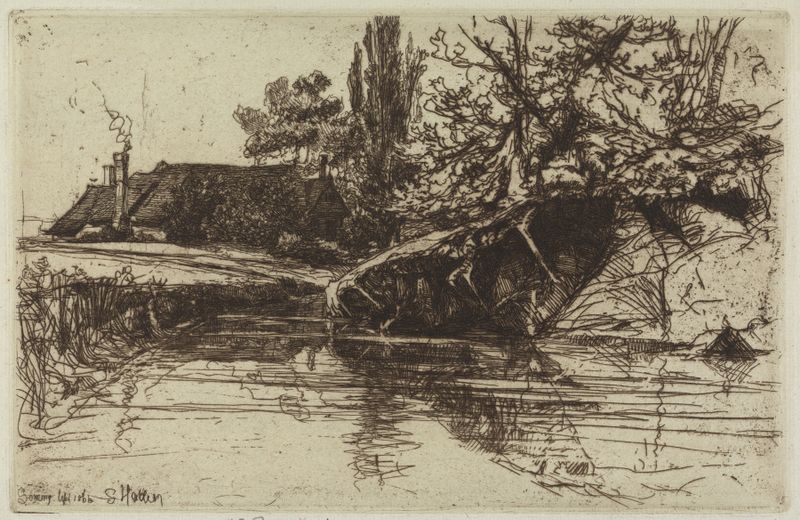
The Moat House
Francis Seymour Haden

By Twickenham
Francis Seymour Haden

Newcastle Emlyn
Francis Seymour Haden
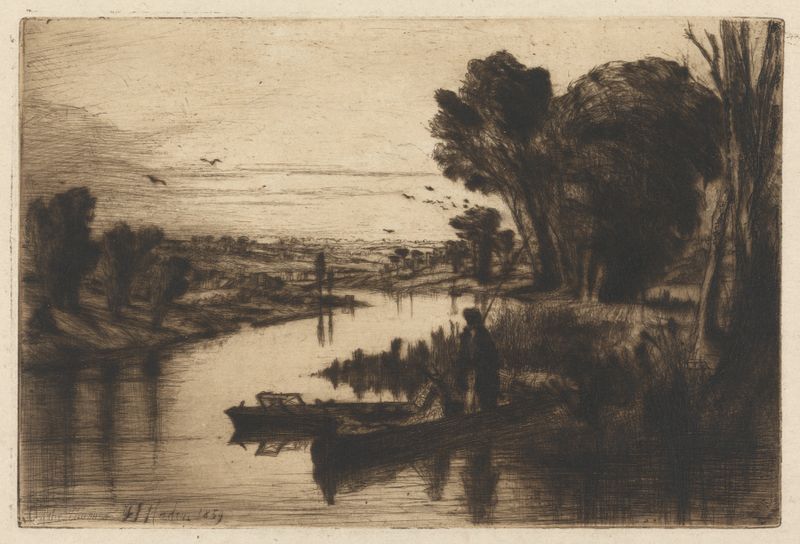
On the Thames
Francis Seymour Haden

Kidwelly Castle
Francis Seymour Haden
Fulham on the Thames
Francis Seymour Haden





