Evening (Datur Hora Quieti) — History & Facts
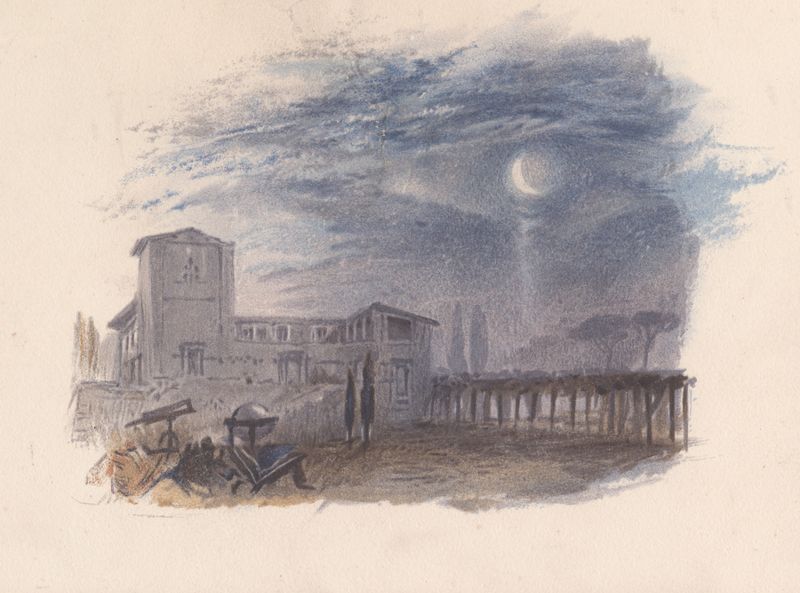
In the stillness of twilight, the weight of solitude hangs palpably in the air, inviting introspection. Each brush stroke whispers of a vulnerability that echoes through the muted palette, drawing the viewer into a world that feels at once serene and profoundly isolated. Look to the foreground, where a solitary figure stands, draped in dusk’s tender embrace. The blues and purples flow seamlessly into one another, evoking the melancholy of fading light.
Notice how the light dances delicately across the figure’s form, illuminating the details of their attire while casting deep shadows that elongate, creating a sense of both presence and absence. The soft blending of colors instills a sense of quiet longing, as if the scene itself breathes with unspoken words. The emotional tension of Evening (Datur Hora Quieti) lies in its contrasts. The calmness of the landscape is pierced by the figure's solitude, suggesting a deeper yearning for connection amidst the beauty of nature.
The interplay of light and shadow captures not only the transition from day to night but also the journey from companionship to solitude. Each element within the composition—be it the distant horizon or the gentle sway of grass—mirrors the inner landscape of isolation, asking the viewer to acknowledge their own silences. In 1884, M.H. Long painted this intimate scene during a period marked by the exploration of Impressionism, capturing fleeting moments in time.
Artistic circles were expanding, with a growing emphasis on emotion and individual perspective. It was a time when artists sought to convey the complexities of human experience, a pursuit that echoes vividly in this poignant reflection on loneliness.