
Rome, Castle of St. Angelo — History & Facts
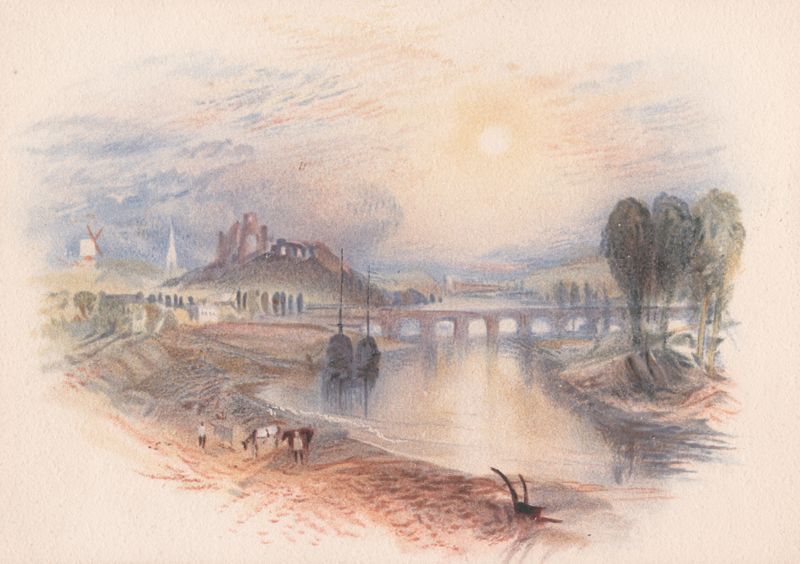
In the soft embrace of evening light, a sepia-toned nostalgia envelops the viewer, evoking memories of both grandeur and decay. The canvas whispers with a contemplative longing, inviting us to step into a world where the echoes of the past linger in every brushstroke. Look to the left where the majestic silhouette of the Castle of St. Angelo rises against a sky softly painted with hues of orange and violet.
The delicate interplay of light and shadow brings the ancient stonework to life, showcasing its weathered texture and the weight of history it bears. Notice the reflections shimmering in the tranquil waters below, mirroring the monument and amplifying its presence, creating a harmonious balance between land and sky. As we delve deeper, the contrast between the vibrant sky and the muted earth tones of the castle reveals a tension between life and memory. The stillness of the water suggests a moment frozen in time, evoking a sense of introspection.
This juxtaposition of vivid color and silent reflection captures the essence of nostalgia, as if the painting itself yearns for a time long past, when the castle stood in the heart of a living city. In 1884, M.H. Long painted this piece during a period of profound artistic exploration marked by the move towards impressionism. Living in the throes of a vibrant Roman art scene, he sought to capture the essence of his surroundings.
This work reflects not only his technical prowess but also the deeper emotional currents that defined the era, inviting viewers to reminisce about their own connections to place and memory.
More Artworks by M.H. Long
Browse all →



More Architecture Art
Browse all →
The statue of Liberty
Frédéric Auguste Bartholdi

View of Houses in Delft, Known as ‘The Little Street’
Johannes Vermeer

View of Houses in Delft, Known as ‘The Little Street’
Johannes Vermeer

The Cathedral in Rouen. The portal, Grey Weather
Claude Monet

The yellow house
Vincent van Gogh

The Church in Auvers-sur-Oise, View from the Chevet
Vincent van Gogh