Discover insights about this artwork
Evening (Melancholy III) — History & Facts
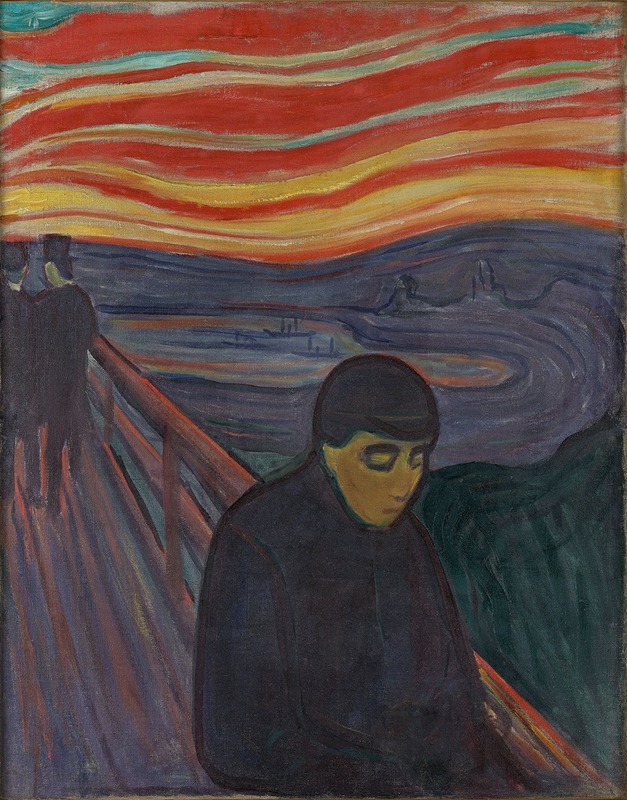
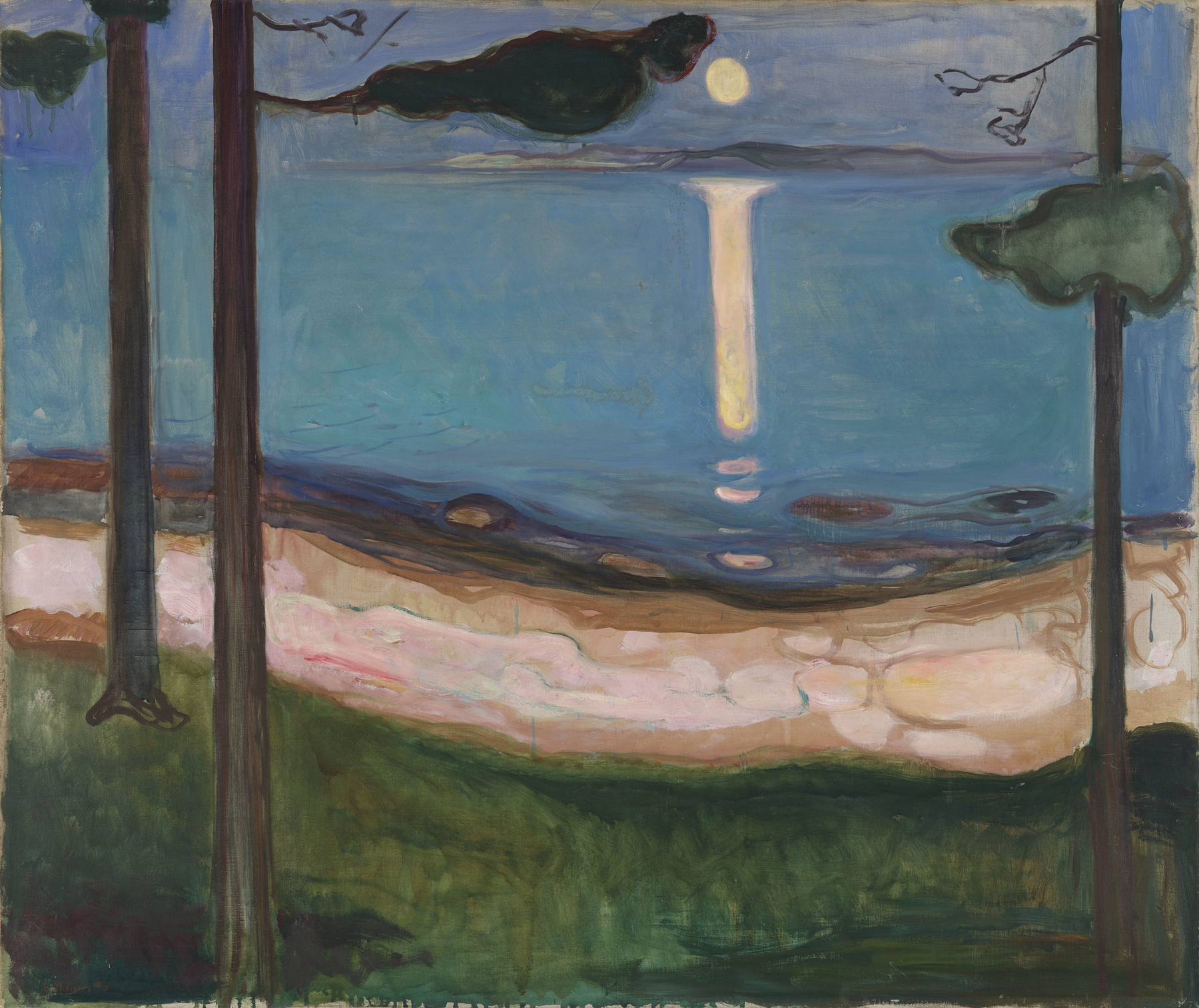
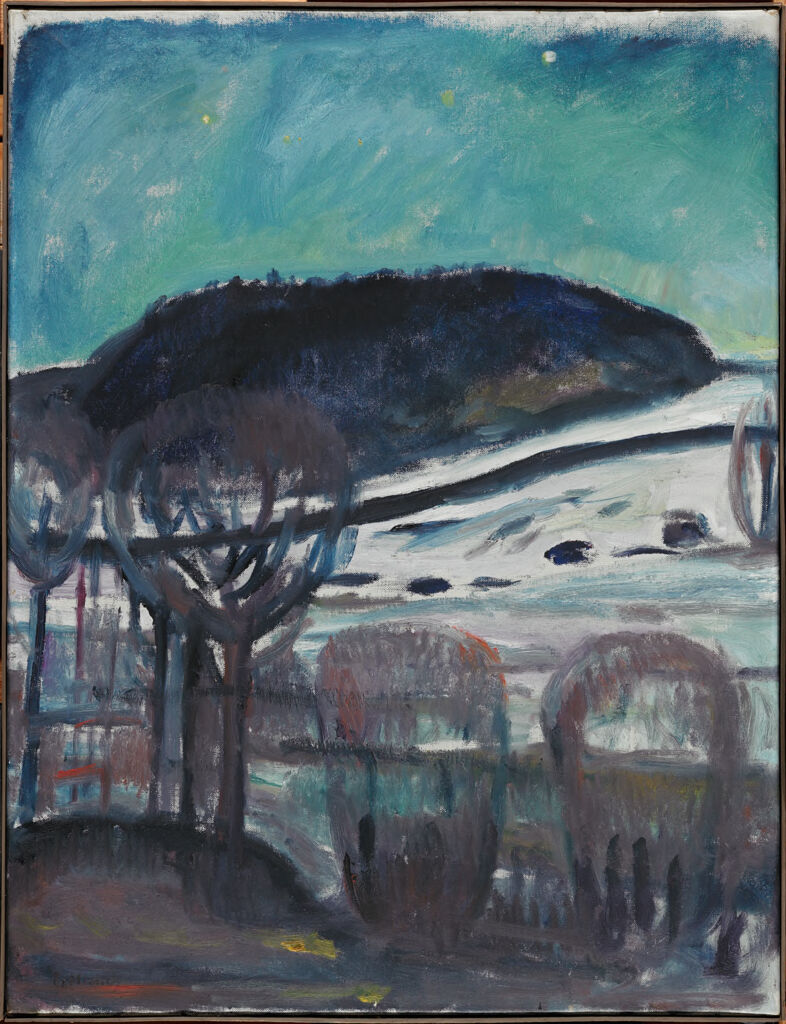
In Evening (Melancholy III), Edvard Munch presents a landscape dominated by deep blues and muted earth tones. The scene features a solitary figure, possibly reflecting on their thoughts, amidst a backdrop of rolling hills and a darkening sky. The colors create a somber atmosphere, suggesting feelings of isolation and introspection.
The composition draws the viewer's eye towards the horizon, where the last light of day fades away. The painting is executed in oil on canvas, a medium that allows Munch to blend colors seamlessly and create depth. The approximate dimensions of the artwork are 100 x 80 cm, making it a substantial piece that commands attention. Munch's brushwork is expressive, with visible strokes that add texture and emotion to the landscape.
The use of light and shadow enhances the overall mood of melancholy. Evening (Melancholy III) is part of Munch's exploration of themes related to human emotion and existential angst. Created around the late 1890s, this work reflects the Symbolist movement's focus on subjective experience. Munch often drew inspiration from his own life, and this painting may represent his feelings of loneliness.
An interesting fact is that Munch created several variations of the 'Melancholy' theme throughout his career, indicating its significance in his artistic journey.