Evening Sky over Dresden — History & Facts
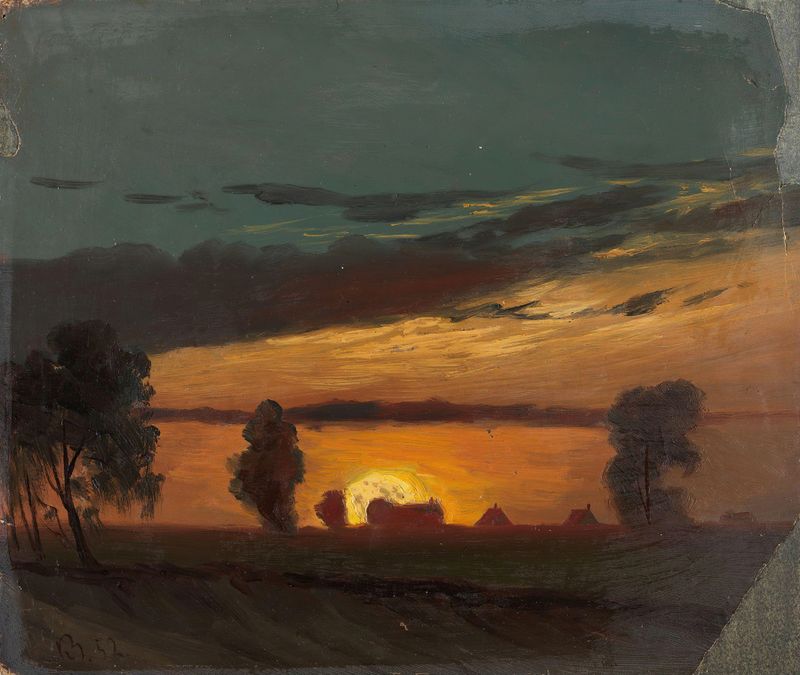
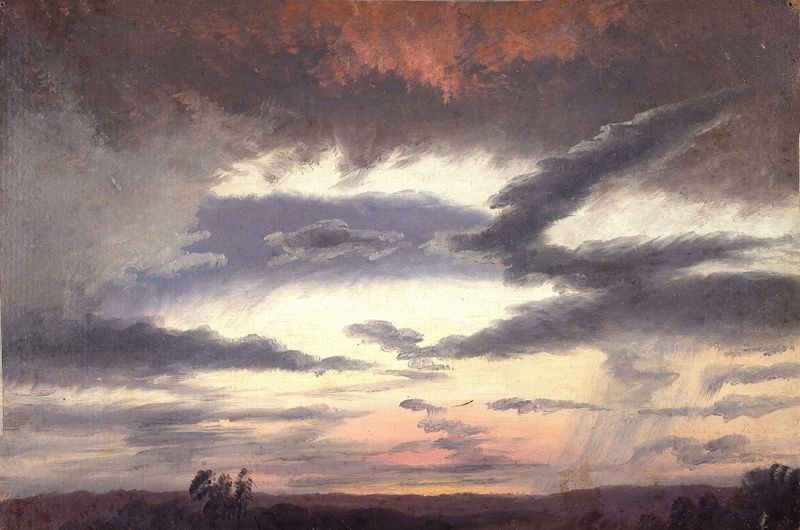
Can paint confess what words never could? In Evening Sky over Dresden, the brush captures the very essence of movement — not just in the swirling clouds but in the air itself, pulsating with an almost tangible energy. Look to the center, where the vibrant hues of oranges and purples merge into deep blues, creating a stunning gradient as day surrenders to night. Notice how the clouds swirl, alive with kinetic energy, drawing the viewer’s gaze upward, while the tranquil silhouette of Dresden rests peacefully below. The dynamic strokes convey a sense of transition, suggesting that the day’s end is a prelude to something new, an invitation to explore the sublime interplay of light and shadow. Delve deeper into the details, and you'll find contrasts that reveal emotional undercurrents.
The lively sky, with its tumultuous colors, is juxtaposed against the serene architecture of the city. This tension hints at the fleeting nature of time and existence; while the sky is in constant motion, the city stands still, a silent witness to the unfolding drama above. The painting reflects both the chaos of nature and the solace of humanity, a reminder of our place within the world's grand narrative. Knud Baade created this evocative piece in 1844 while residing in Dresden, a time when Romanticism was blossoming across Europe.
His work emerged from a period marked by exploration and introspection, as artists began to delve deeply into emotional expression and the power of landscape. In this context, Baade’s masterful representation of the sky reflects both personal and collective yearning for connection—a prominent theme in the art world of his time.