Discover insights about this artwork
Evening (The Voice) — History & Facts
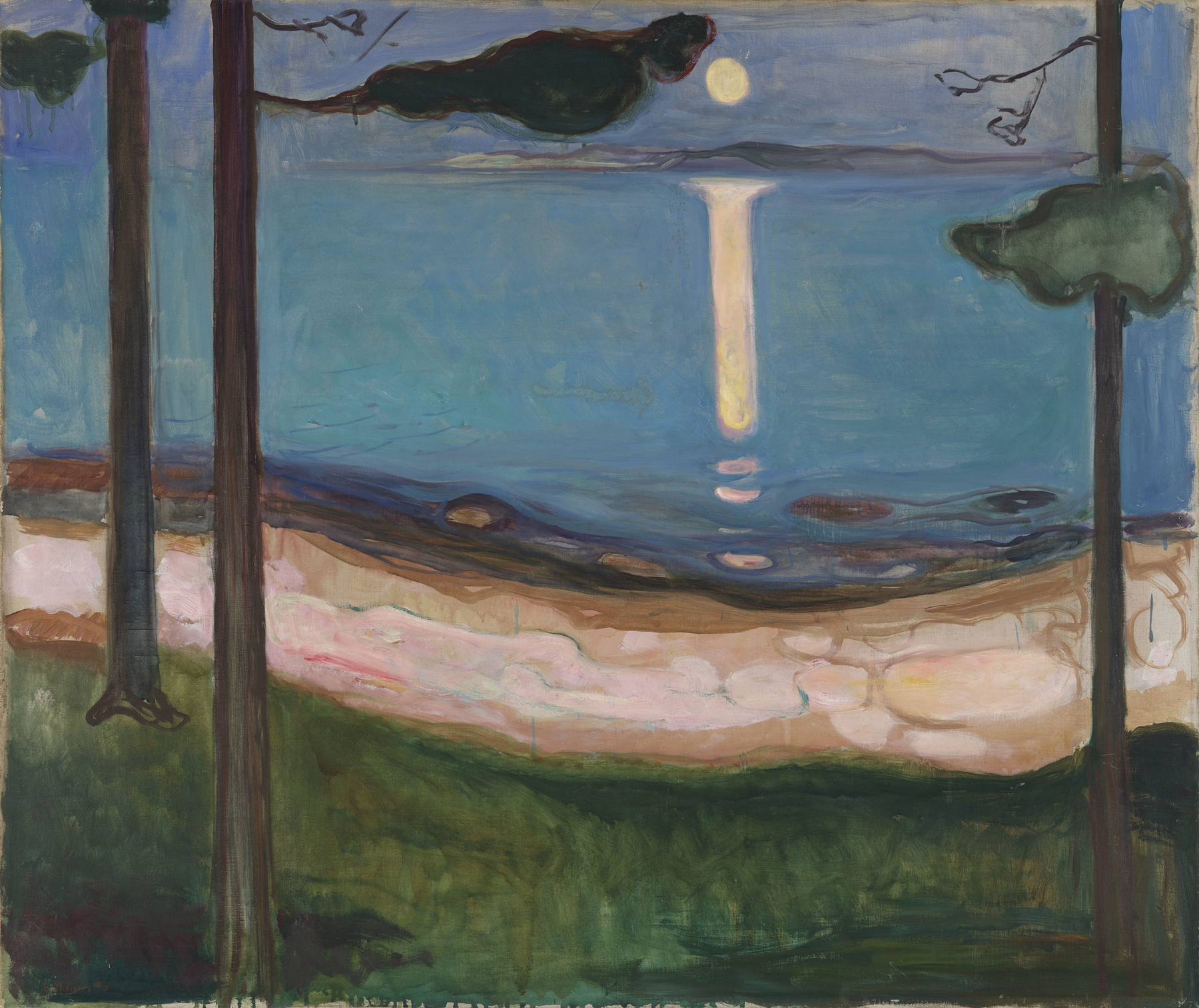
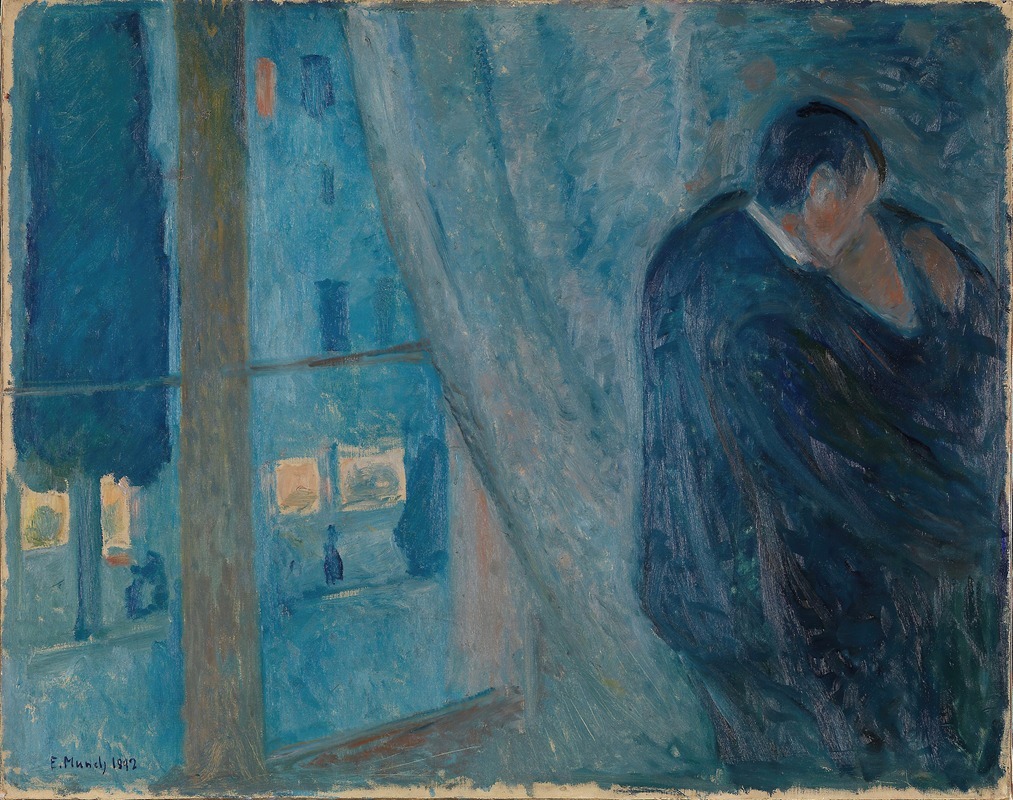
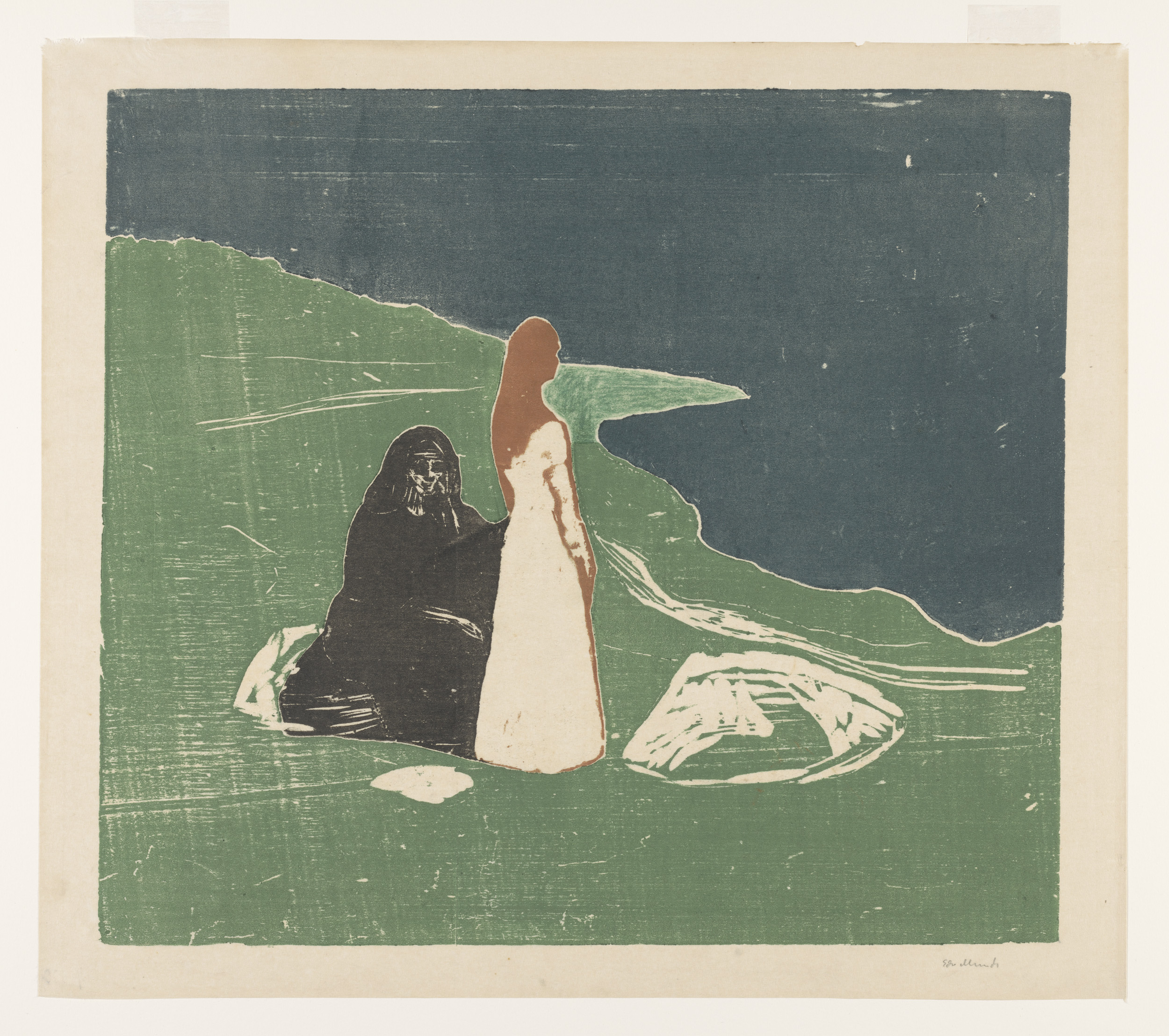
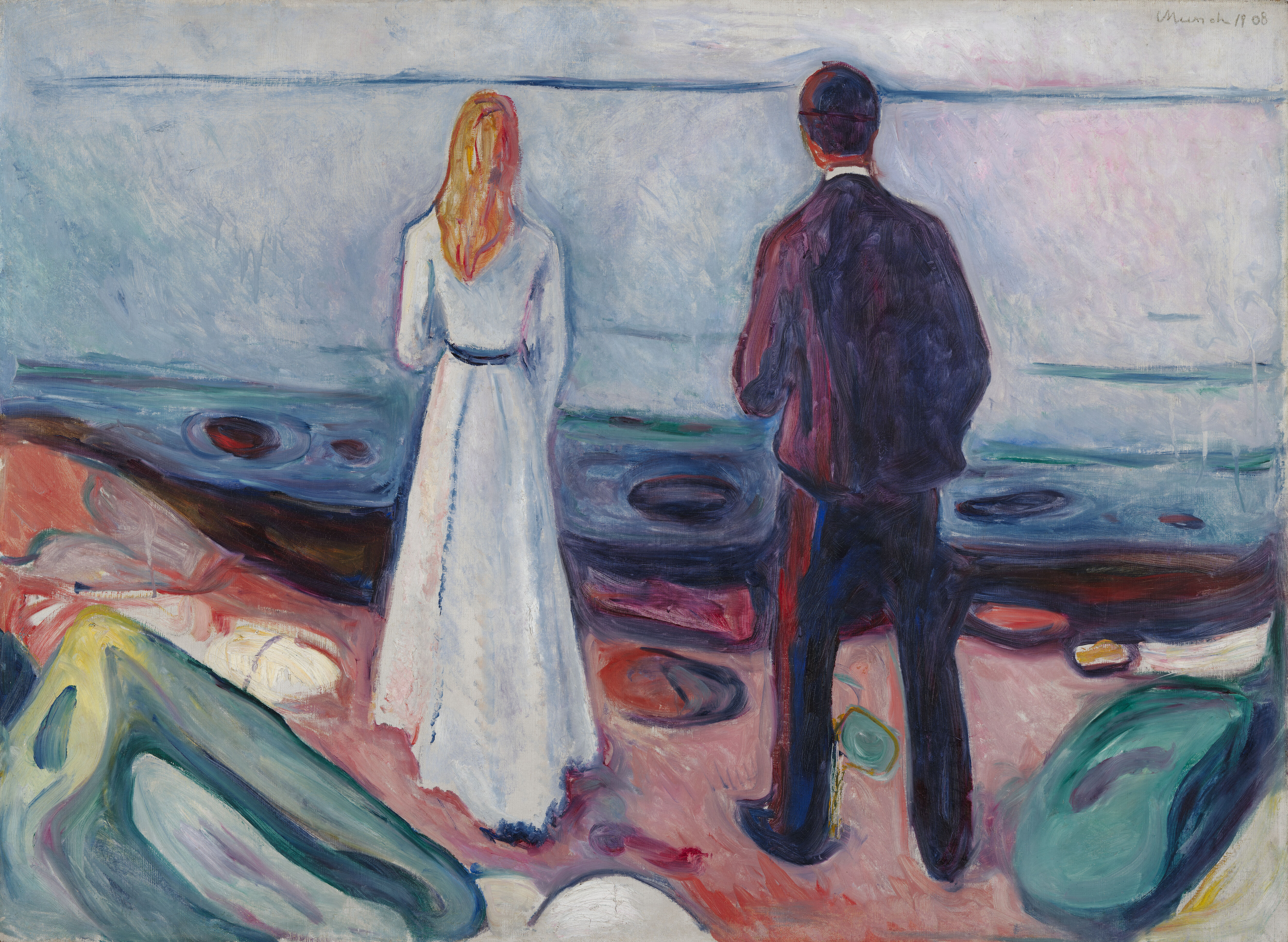
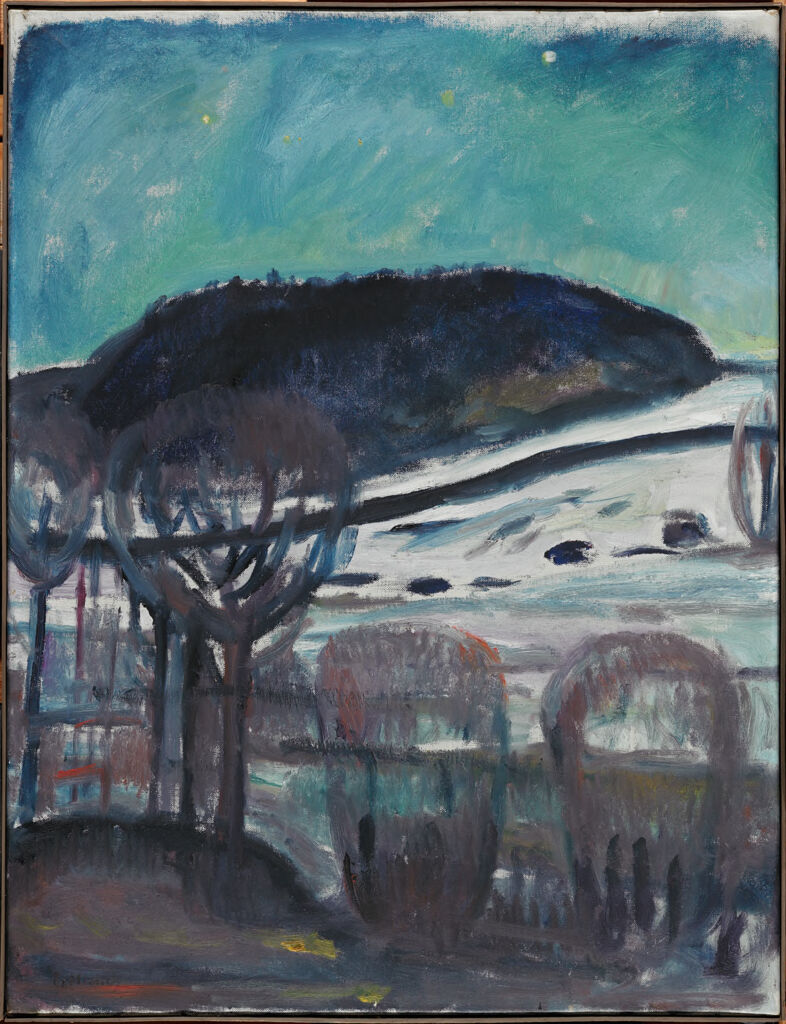
In Evening (The Voice) by Edvard Munch, we see a dramatic interplay of colors, primarily deep blues and purples, creating a somber atmosphere. The figures are depicted in a stylized manner, with elongated forms that convey a sense of emotional tension. The setting suggests a twilight scene, where the fading light adds to the overall mood of introspection.
This painting captures a moment that feels both intimate and universal, inviting viewers to reflect on their own experiences. The painting is executed in oil on canvas, a medium that allows for rich texture and depth. Munch's brushwork is expressive, with visible strokes that enhance the emotional weight of the scene. The approximate dimensions of the artwork are 90 x 70 cm, making it a medium-sized piece that draws viewers in without overwhelming them.
The use of color and form is characteristic of Munch's Symbolist style, emphasizing emotional expression over realistic representation. Edvard Munch is best known for his exploration of psychological themes and emotional depth, which is evident in this work. Created around c. 1896, Evening (The Voice) reflects Munch's interest in the human condition and the complexities of relationships.
An interesting fact about this painting is that it was inspired by Munch's own experiences with love and loss, making it a deeply personal piece. This work exemplifies the Symbolist movement, where artists sought to convey emotional experiences through visual means.