
Façade d’église — History & Facts
In the stillness of an abandoned moment, the façade of a church stands resolute, a solemn witness to the betrayals of time and belief. The stone surface, weathered and cracked, seems to whisper secrets of those who once sought solace beneath its archways. Shadows play across the intricate carvings, hinting at narratives lost through the ages, inviting contemplation. Look to the left, where delicate sculptures cling to the stone walls, their expressions frozen in a silent dialogue with the past.
Notice the interplay of light and shadow across the reliefs, accentuating the contours of their faces and the drapery of their garments. The muted palette—ochres and grays—evokes an air of melancholy, while the vertical lines of the façade draw the eye upward, suggesting the divine yet contrasting with the weight of earthly despair. This façade unveils a deeper resonance; it is not merely a structure but a metaphor for faith’s fragility. The crumbling stone represents betrayal, as though the very foundation of belief is eroded over time.
The fading details reflect a loss of connection, a retreat from the sacred. Each weathered inch speaks of hope and loss, inviting the viewer to confront their own disillusionment in the face of relentless change. Auguste-Sébastien Bénard created this work during a period marked by a growing disillusionment with traditional artistic themes. In the late 19th century, the art world was in a state of flux, grappling with the advent of modernism and the shifting societal values.
Bénard’s exploration of architectural subjects reflects his desire to capture the essence of human experience against a backdrop of eroding faith and changing times.
More Artworks by Auguste-Sébastien Bénard
Browse all →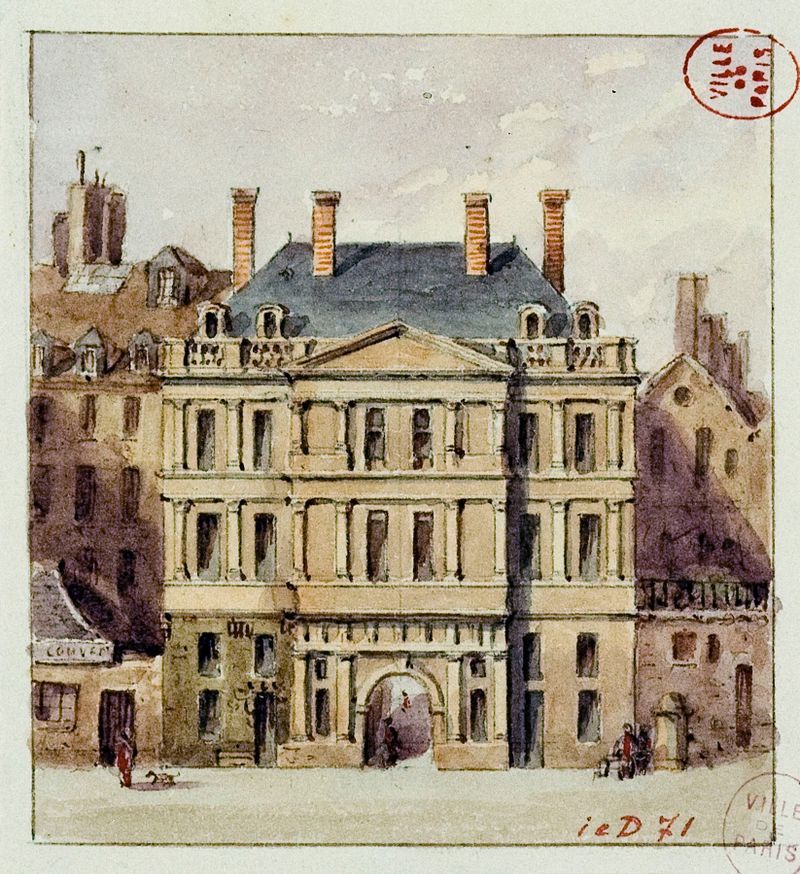
Cour de la Sainte Chapelle.
Auguste-Sébastien Bénard
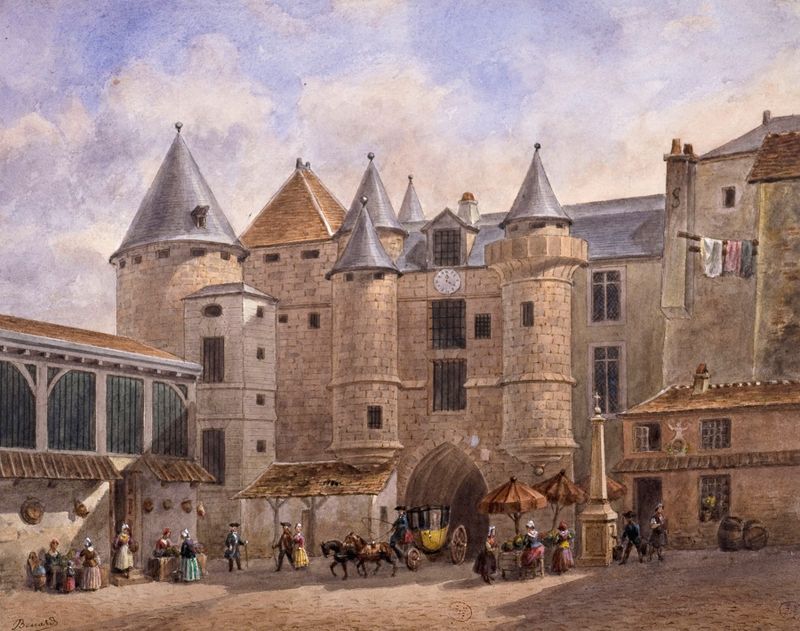
Le Grand Châtelet du XVIIIème siècle.
Auguste-Sébastien Bénard

Place de l’Hôtel de Ville.
Auguste-Sébastien Bénard

Salle souterraine du Palais de Justice.
Auguste-Sébastien Bénard

Voûtes du quai de Gesvres
Auguste-Sébastien Bénard

Monument expiatoire élevé à la mémoire du duc de Berry, à l’emplacement de l’ancien Opéra
Auguste-Sébastien Bénard
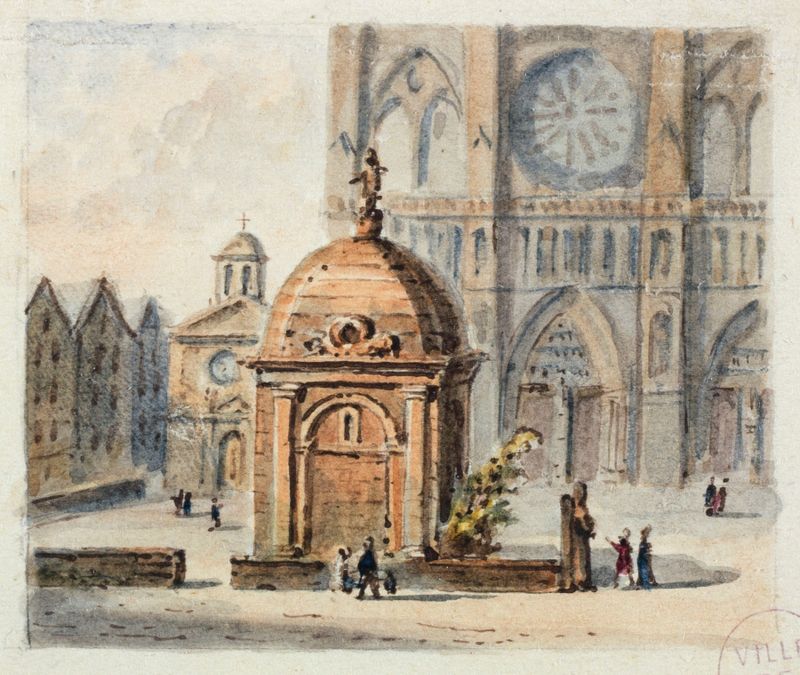
Le parvis de Notre-Dame de Paris
Auguste-Sébastien Bénard

Rue des chantres (entre le quai aux fleurs et la rue Chanoinesse).
Auguste-Sébastien Bénard

L’entrée de l’ancienne forteresse du Grand Châtelet, un jour de Carnaval
Auguste-Sébastien Bénard
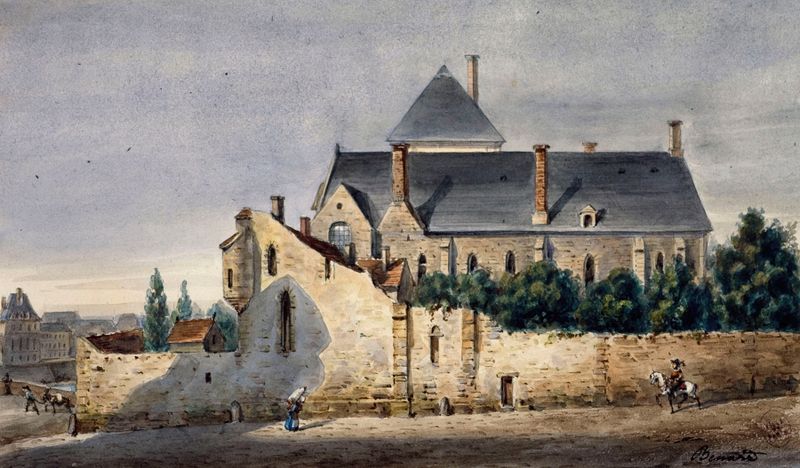
Les restes des bâtiments de l’hôtel du Petit Bourbon.
Auguste-Sébastien Bénard
More Architecture Art
Browse all →
The statue of Liberty
Frédéric Auguste Bartholdi

View of Houses in Delft, Known as ‘The Little Street’
Johannes Vermeer

View of Houses in Delft, Known as ‘The Little Street’
Johannes Vermeer

The Cathedral in Rouen. The portal, Grey Weather
Claude Monet

The yellow house
Vincent van Gogh

The Church in Auvers-sur-Oise, View from the Chevet
Vincent van Gogh