Faraglioni Felsen Capri — History & Facts
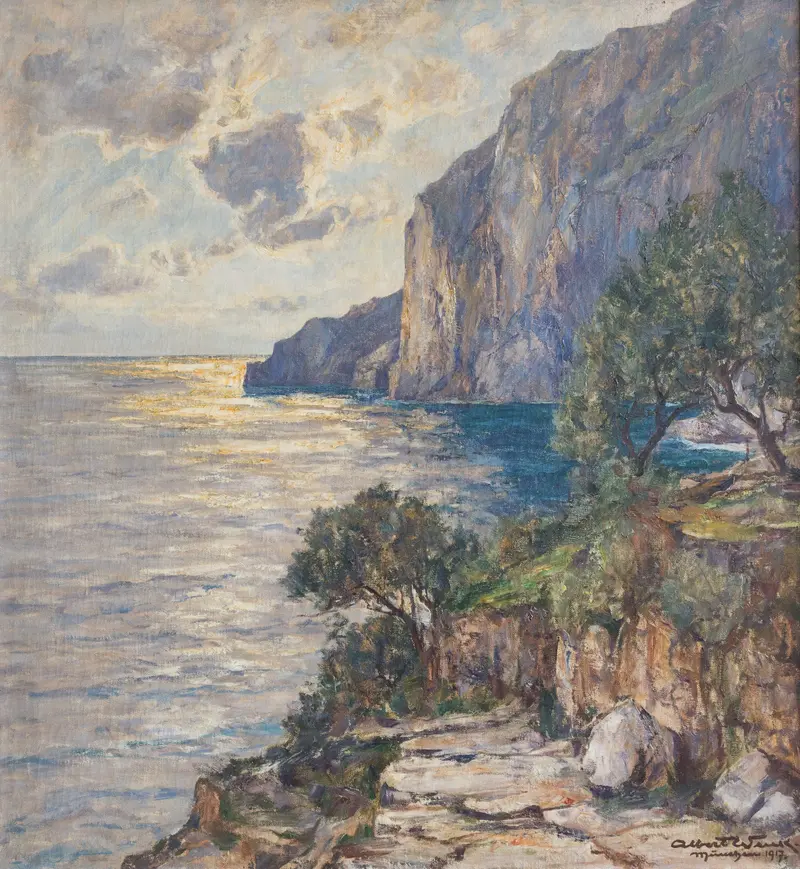
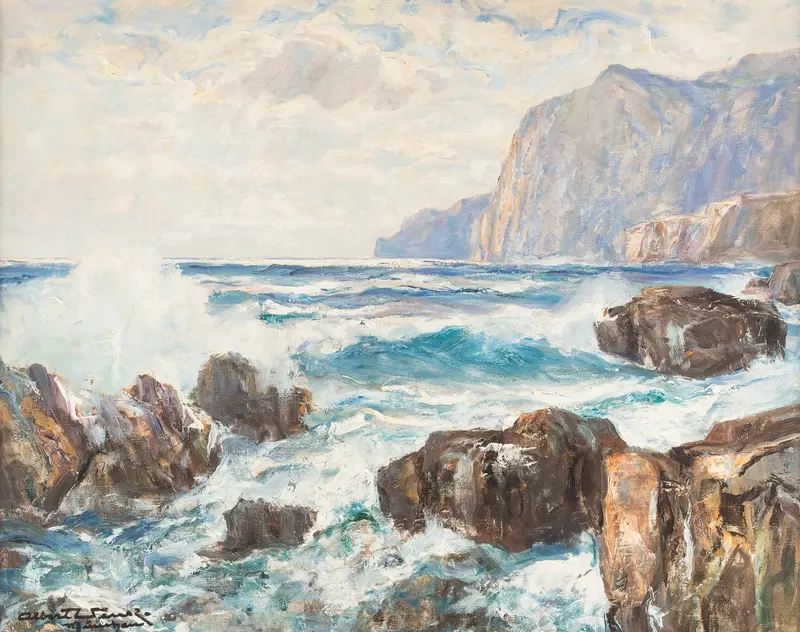
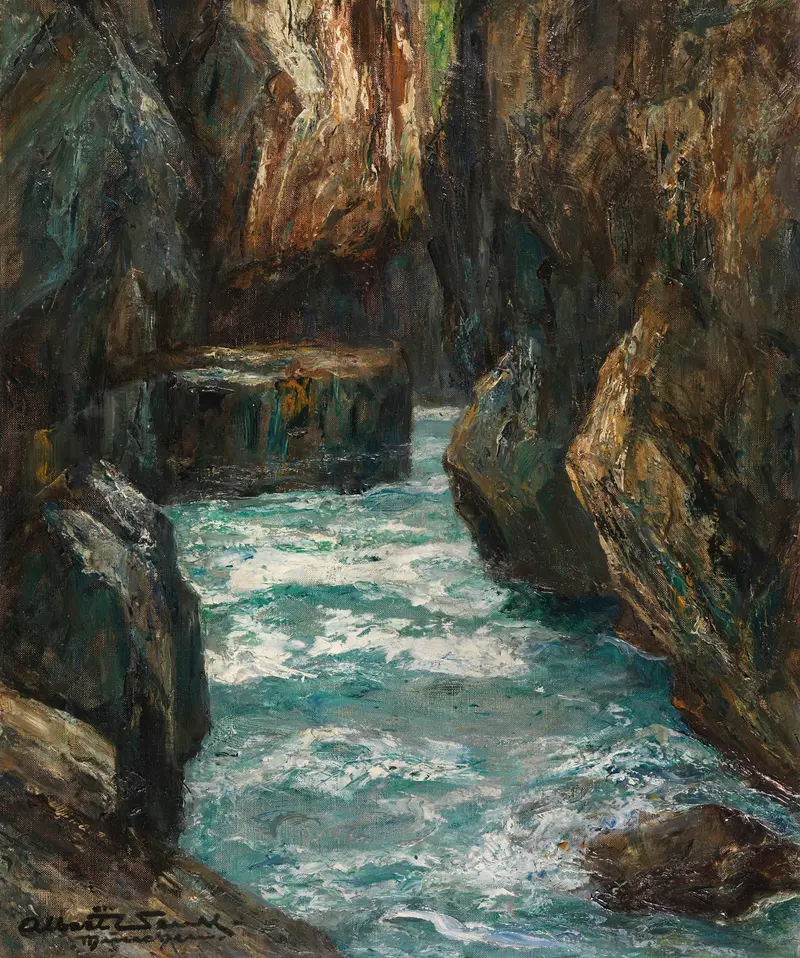
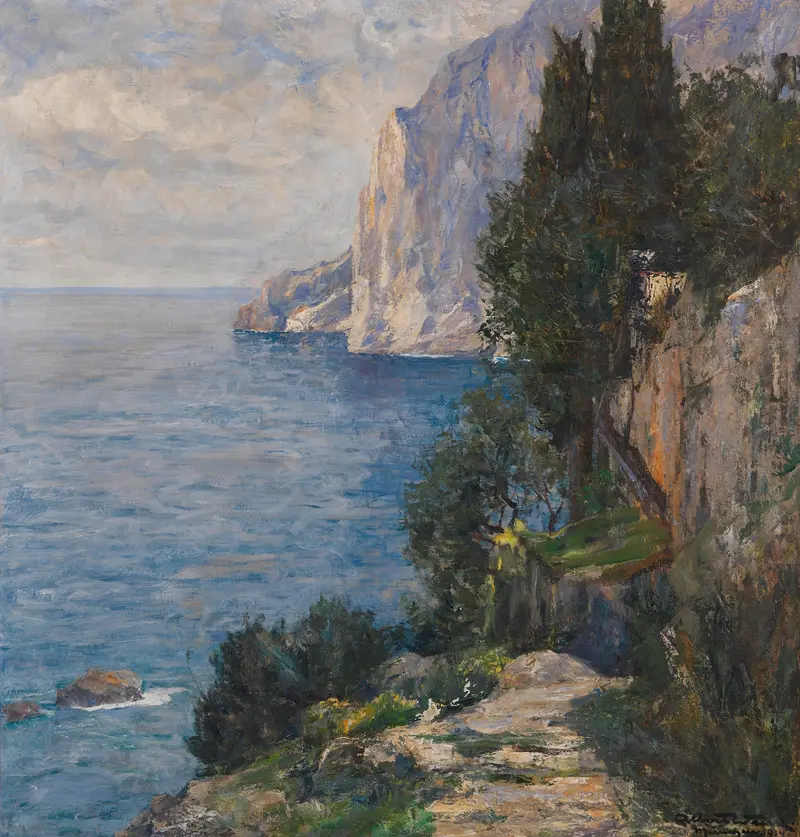
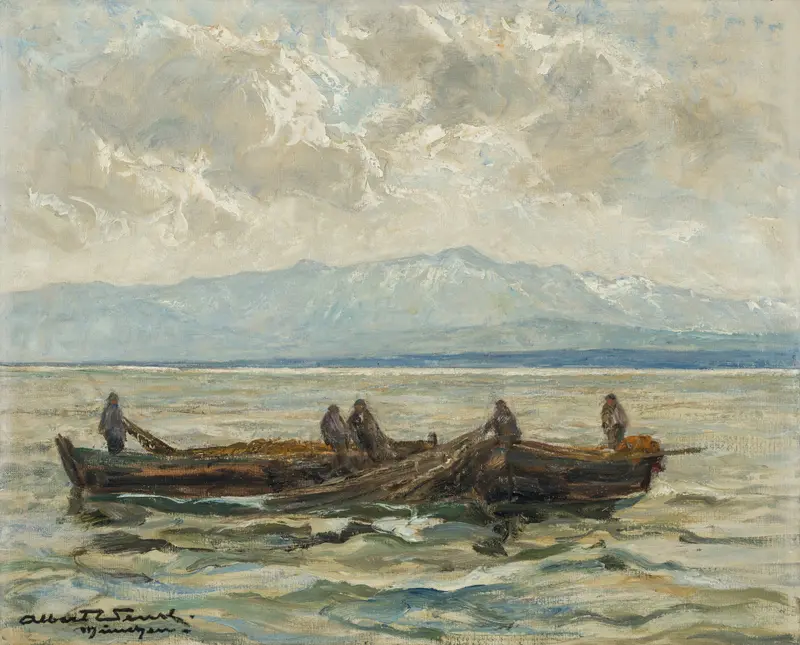
What first seizes the eye in Faraglioni Felsen Capri by Albert Wenk is the restless energy of the sea, captured in a tangle of blue and white that seems almost to move before you. The cliffs rise abruptly, their sheer faces streaked with ochre and slate, while the water churns and foams at their base. Wenk’s brushwork is urgent and tactile, the paint laid on thickly to mimic the spray and surge of waves against rock.
The light, filtering through a sky heavy with cloud, glances off the distant horizon, drawing the gaze outward and hinting at the vastness beyond the frame. Rather than offering a tranquil vista, the artist immerses the viewer in the drama of sea meeting stone, where every detail — from the jagged rocks to the shifting reflections — is a testament to nature’s ceaseless motion. Works like this, painted in an era when artists traveled in search of the picturesque and the elemental, were often collected by those wishing to bring a piece of the Mediterranean’s wild beauty into their own homes. The Faraglioni rocks off Capri have long been a magnet for painters, drawn by their iconic forms and the challenge of rendering such a dynamic scene.
Though the exact date and medium of this piece remain undocumented, and its journey is traced only as far as its listing with www.zeller.de, it stands firmly in the tradition of late nineteenth- and early twentieth-century landscape painting. In this tradition, the artist’s hand is visible, the paint itself echoing the textures and rhythms of the world it depicts. Stand before it and let your eye follow the foam — you may find yourself hearing the surf.