
Farm Interior from Skjønne in Numedal — History & Facts
The first thing that draws the eye in Farm Interior from Skjønne in Numedal is the way sunlight, filtered through a small window, falls in a precise patch onto the rough wooden floor. This shaft of light is not just a technical flourish; it acts as an invitation, guiding us into the quiet world of the cabin. The interior is spare but full of character: a traditional bedstead with carved details, a heavy-beamed ceiling, and a vast hearth where firelight flickers against the stone.
A solitary figure sits by the fire, hands folded, gaze lost in thought or memory. The warmth of the flames and the cool daylight create two separate realms within the same room, suggesting the rhythms of daily life—work and rest, solitude and shelter. Painted in 1848 by Adolph Tidemand, this scene belongs to a moment in Norwegian art when national identity was being carefully constructed through images of rural life. Artists like Tidemand traveled the countryside, recording architecture, costume, and customs that seemed threatened by modernity’s advance.
Works such as this, now held in the National Museum of Art, Architecture and Design, were not just souvenirs but part of a larger project to preserve and elevate the everyday. Few records survive about the specific stories behind each painting, but their quiet observation still speaks: look again at the slant of light, the sturdy furniture, the figure by the fire—each detail a testament to a world both ordinary and cherished.
More Artworks by Adolph Tidemand

Bridal Procession on the Hardangerfjord
Adolph Tidemand
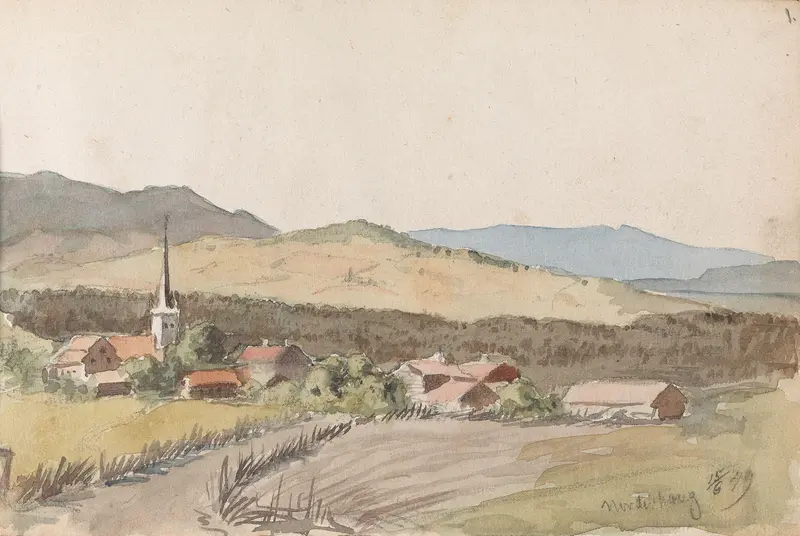
Fra Haugsbygd
Adolph Tidemand
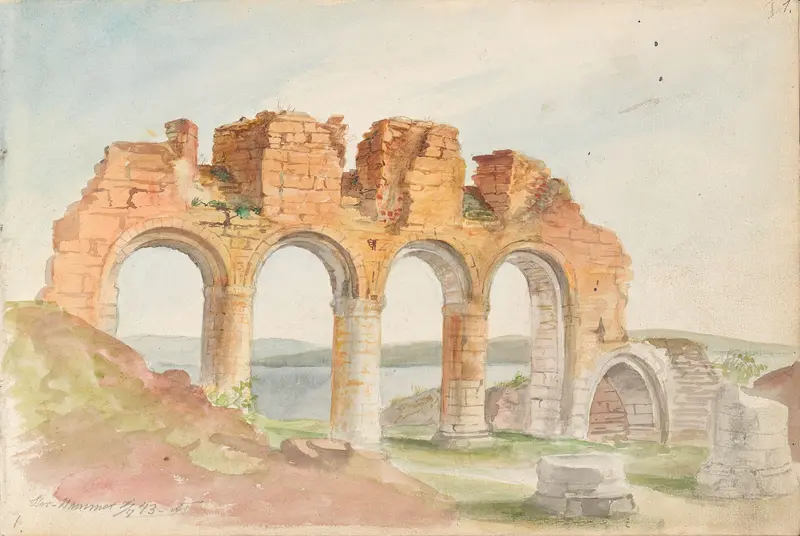
Domkirkeruinen, Hamar
Adolph Tidemand
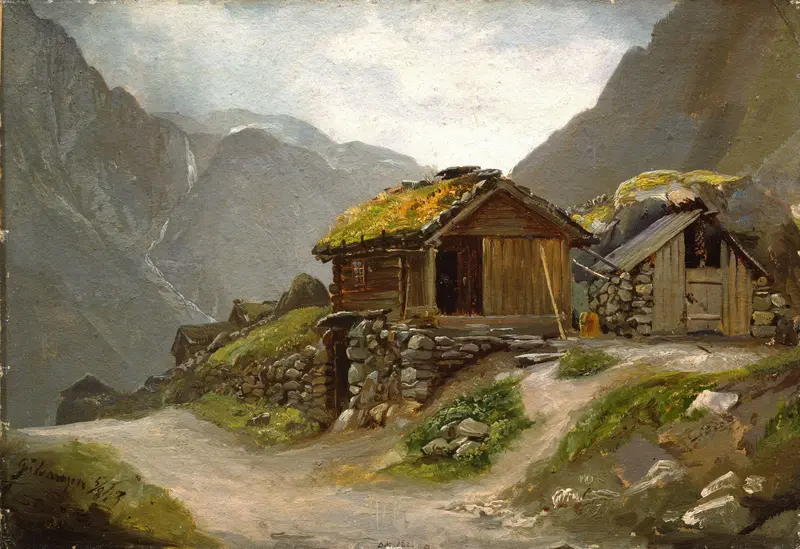
View from Gudvangen
Adolph Tidemand
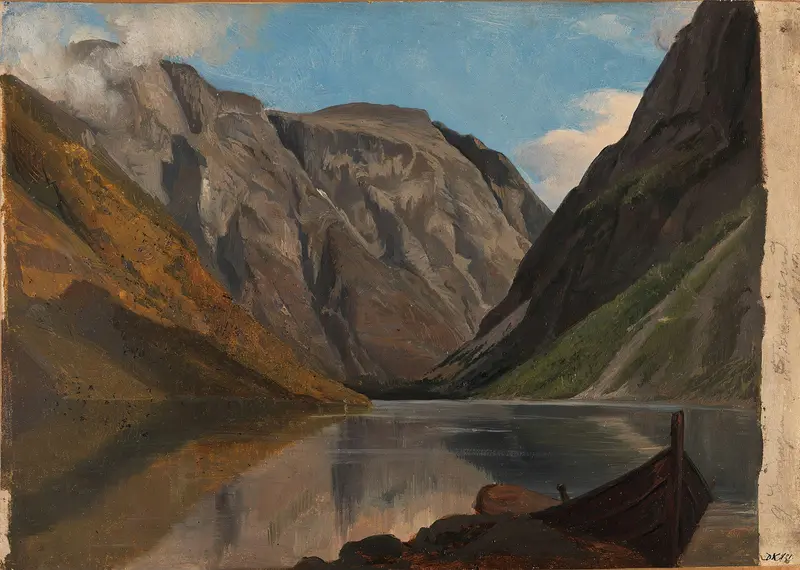
View of Gudvangen
Adolph Tidemand
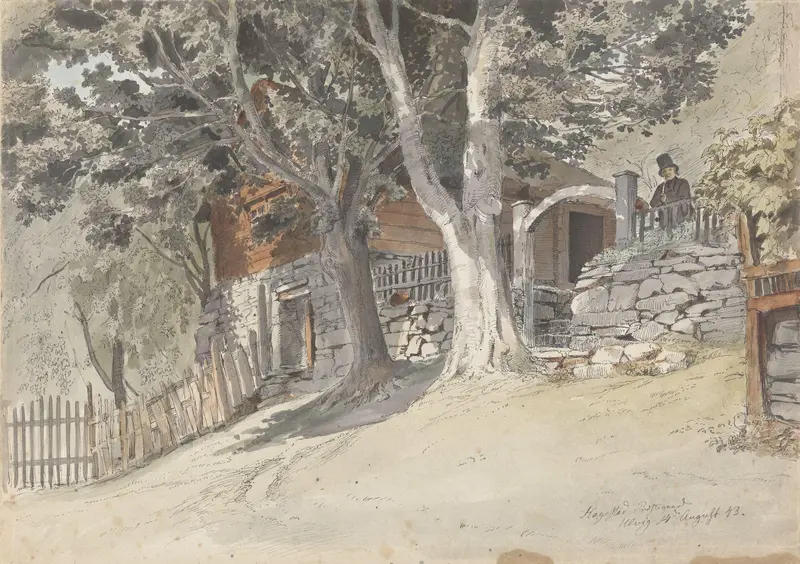
Hagestad prestegård, Ulvik i Hardanger
Adolph Tidemand
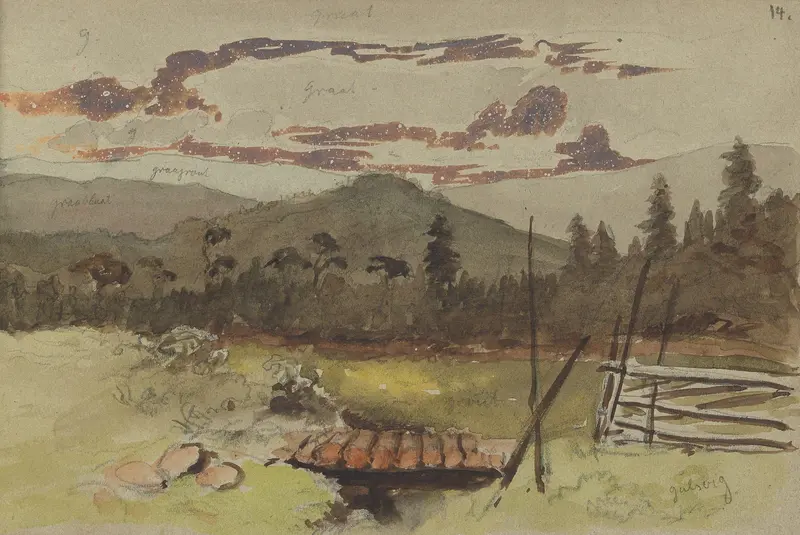
Fra Gulsvik
Adolph Tidemand
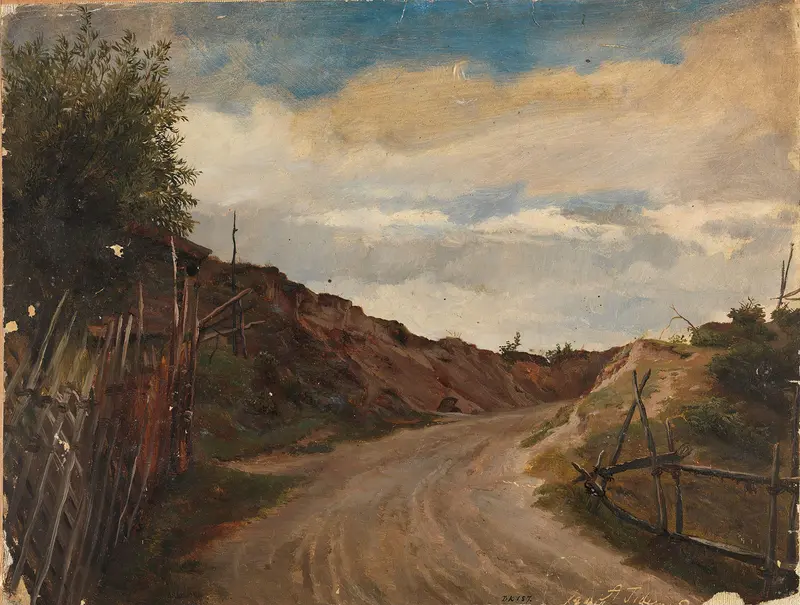
Country Road
Adolph Tidemand
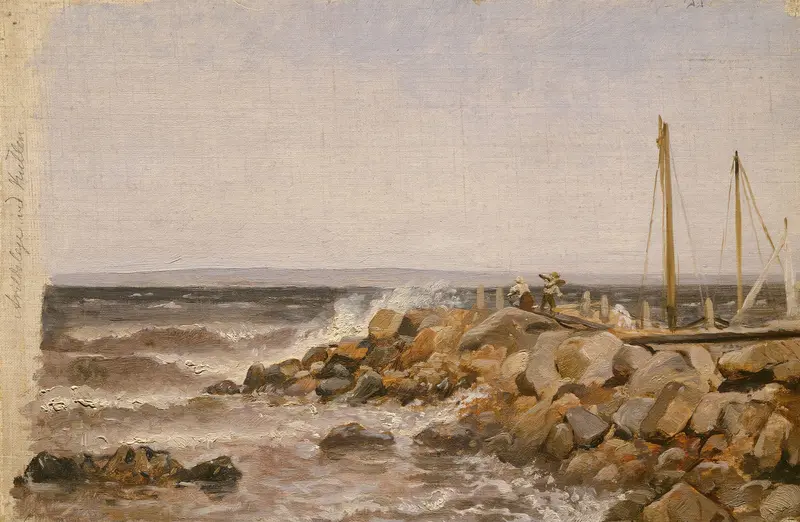
From Kullen in Sweden
Adolph Tidemand
Untitled
Adolph Tidemand





