
Farmer and Wife returning from Church — History & Facts
What draws the eye first in Farmer and Wife returning from Church is the tender, almost theatrical gesture at its center: a woman, bright in her red shawl, reaches up to adjust or fasten the collar of the weary man astride a sturdy dun horse. The world around them is damp and heavy, the sky a brooding mass of grey, but the couple is lit with a quiet intimacy, their figures reflected in the shallow puddle at their feet. The horse, unconcerned, lowers its head to graze, anchoring the moment in the everyday.
The woman’s gesture is not just practical—it signals care, routine, and the small rituals that bind people together after a communal rite like church. The rough stone wall and distant cottage press in, making the couple’s connection feel even more immediate, as if the landscape itself is a witness to their return. Painted in 1846, this work belongs to a period when artists across Northern Europe, including Adolph Tidemand, turned their attention to rural life, capturing the customs and quiet dramas of ordinary people. Such scenes were often cherished by a rising middle class eager to see their own values—piety, family, resilience—reflected in art.
While history has kept few traces of this particular painting’s journey, its presence in the DigitaltMuseum collection today allows us to glimpse the world Tidemand knew: a Norway where tradition and hardship met in muddy lanes and Sunday best. The image lingers, inviting us to look again at the way a simple act can anchor two lives against the sweep of mountains and sky.
More Artworks by Adolph Tidemand

Bridal Procession on the Hardangerfjord
Adolph Tidemand
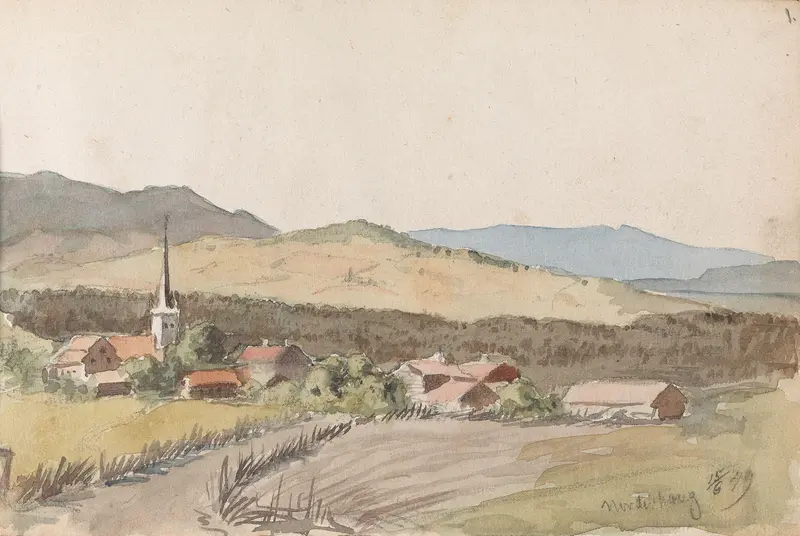
Fra Haugsbygd
Adolph Tidemand
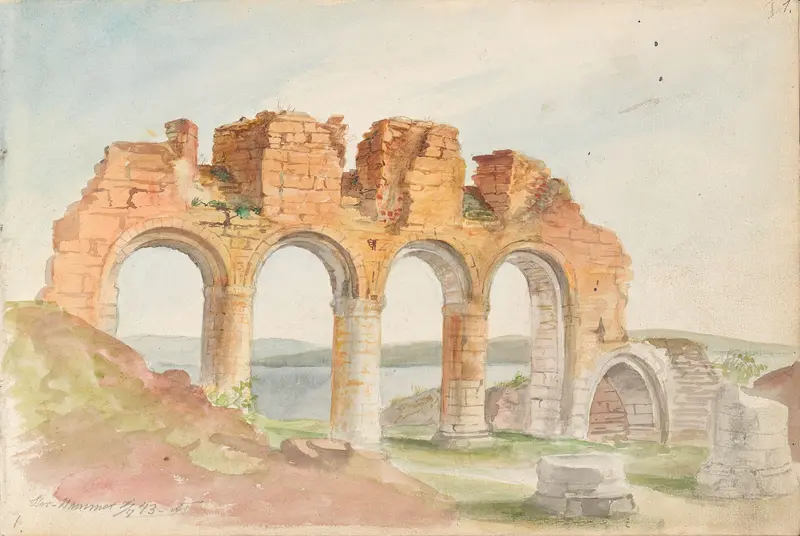
Domkirkeruinen, Hamar
Adolph Tidemand
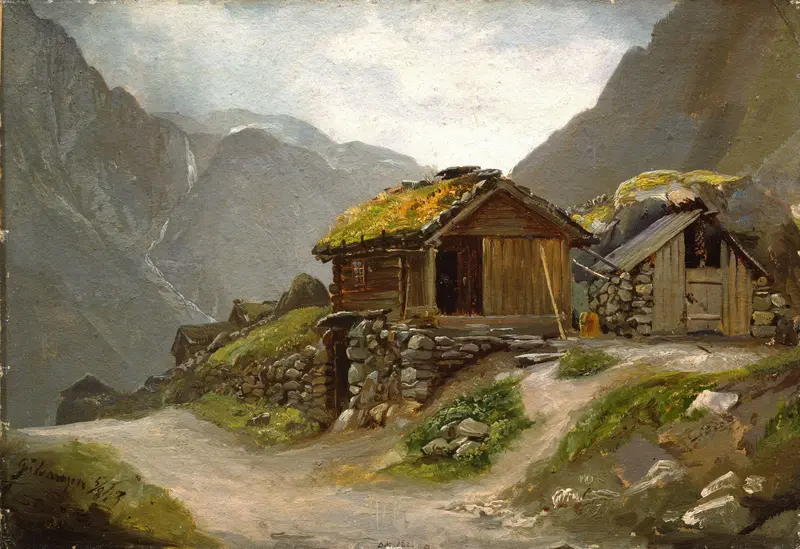
View from Gudvangen
Adolph Tidemand
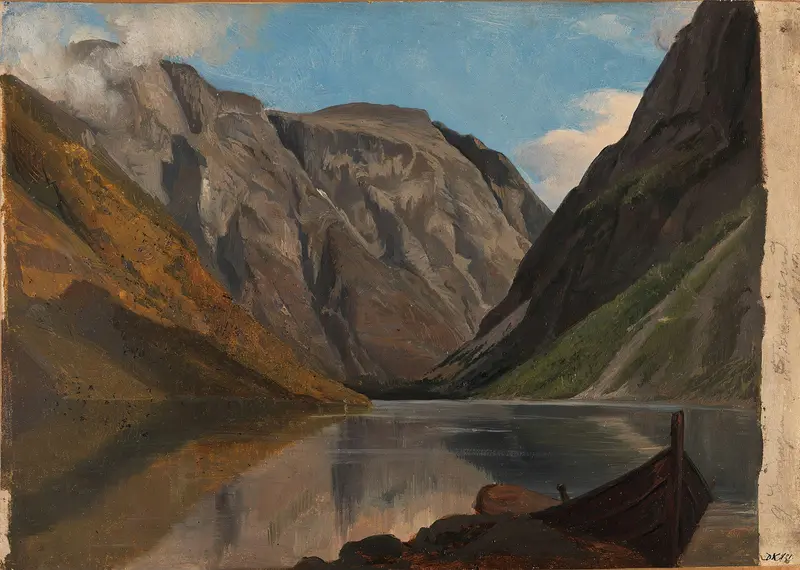
View of Gudvangen
Adolph Tidemand
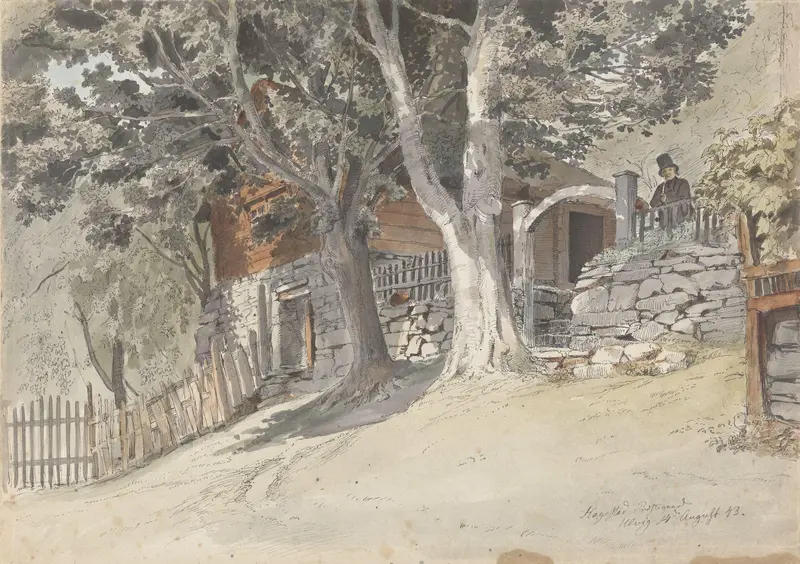
Hagestad prestegård, Ulvik i Hardanger
Adolph Tidemand
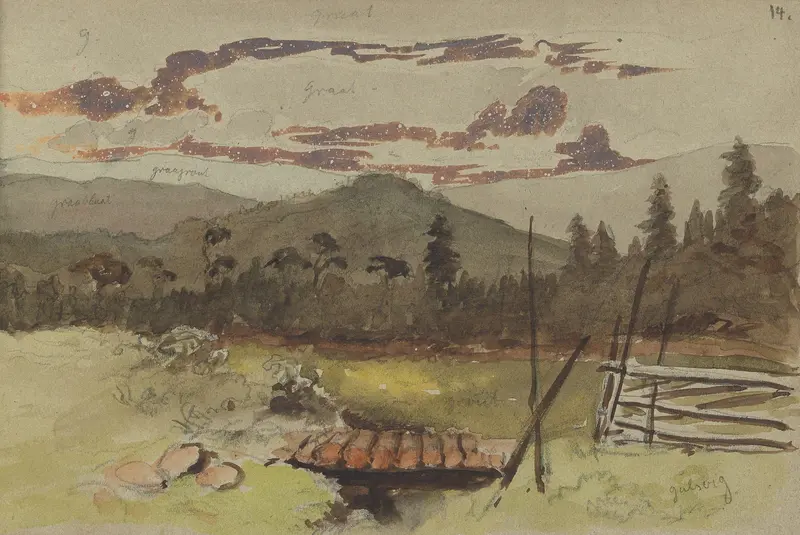
Fra Gulsvik
Adolph Tidemand
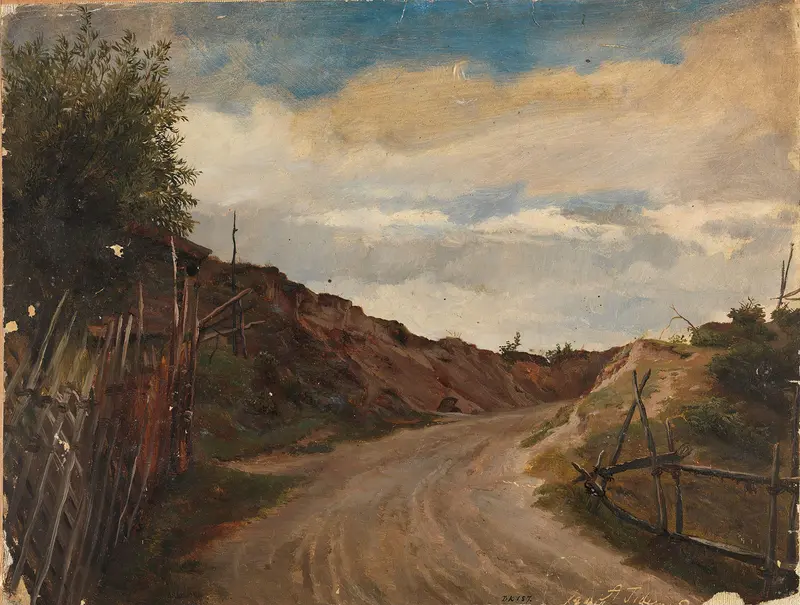
Country Road
Adolph Tidemand
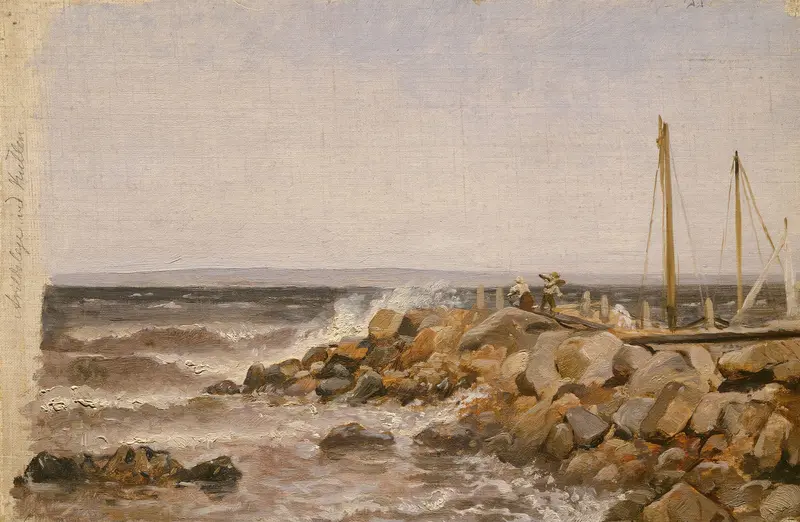
From Kullen in Sweden
Adolph Tidemand
Untitled
Adolph Tidemand
More Genre Scene Art

Banquet of the Officers of the St George Civic Guard
Frans Hals

Rembrandt and Saskia in the Scene of the Prodigal Son
Rembrandt van Rijn

Bal du moulin de la Galette
Pierre-Auguste Renoir

Quadrille at the Moulin Rouge
Henri de Toulouse-Lautrec

A Burial at Ornans
Gustave Courbet

When Will You Marry?
Paul Gauguin